
Episode 5
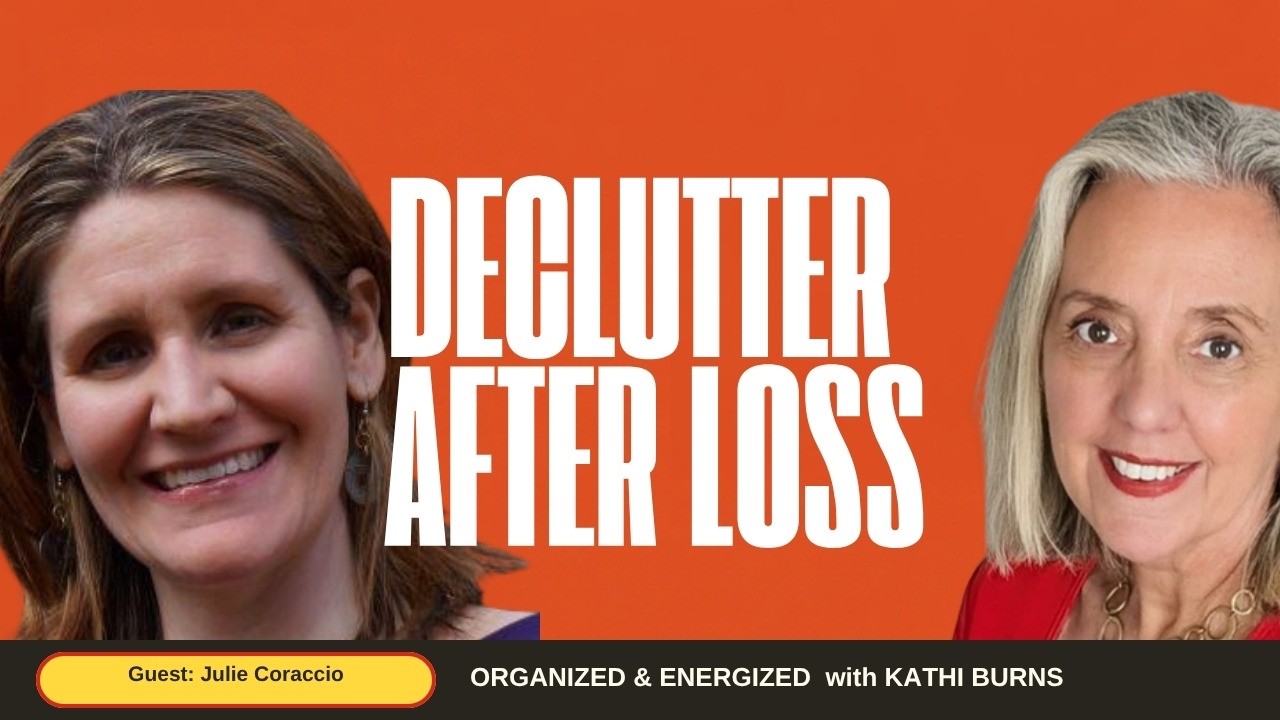
with Julie Coraccio, award-winning professional organizer, certified life coach and end-of-life organizer at Reawaken Your Brilliance · December 3, 2021 · 17 min
Julie Coraccio is an award-winning professional organizer, certified life coach and end-of-life organizer who hosts the podcast Clear Your Clutter Inside & Out.
She began end-of-life organizing after her father sat her and her brother down to explain his end-of-life wishes, which she found brought peace of mind.
Her end-of-life work covers paperwork, health care documents and a health care proxy, where important papers are stored, legacy plans and what happens to your social media accounts.
Julie says her biggest early lesson as an entrepreneur was learning to say no, and that choosing sustainable organizing as her niche brought her success instead of failure.
Her free self-assessment on reawakenyourbrilliance.com asks 10 questions to find your clutter priority and gives a quick action tip.
Published · Updated
What is this episode about?
Kathi Burns, CPO®, Business FLOW Strategist, talks with Julie Coraccio, an award-winning professional organizer, certified life coach and end-of-life organizer, about end of life planning and building an organizing business. Julie spent years as a director of development writing grants before a move from Los Angeles to Raleigh and a bad job pushed her to turn her knack for decluttering into a career. You'll hear how a conversation with her father led her into end-of-life organizing, what that work covers, from health care documents to your digital afterlife, and why getting organized before you see an attorney saves money. Julie also explains why saying no was her biggest early lesson, how a sustainable organizing niche set her apart, how to process email instead of answering it, and why she wants everyone to remember they are good enough.
You're setting the energetic boundary, saying, I believe in myself. I have worth, and I'm going to say no.Julie Coraccio
Jump to links and resources · Part of How do I organize my home and closet? · All episodes · Every guest
What are the key takeaways?
- Julie Coraccio moved from nonprofit grant writing into professional organizing after realizing she had been helping people declutter for years without knowing it was a job.
- When she first asked SCORE for help, the volunteers were surprised that professional organizing was a profession at all.
- Julie's end-of-life organizing covers paperwork, health care documents and a health care proxy, where important papers are kept, legacy plans such as a foundation or scholarship, and your digital afterlife.
- Arriving at an attorney's office with your papers organized means you are not paying the attorney $200 an hour to go through them.
- Early in her business Julie turned down a client 90 minutes away who couldn't pay her rate, and she says setting that boundary told everyone, including herself, that her work had value.
- Julie was the first professional organizer in North Carolina to focus on sustainable organizing; people told her she would fail, and she found success instead.
- She suggests treating email as something to process, not answer: act on it, delete it, delegate it, or come back to it later.
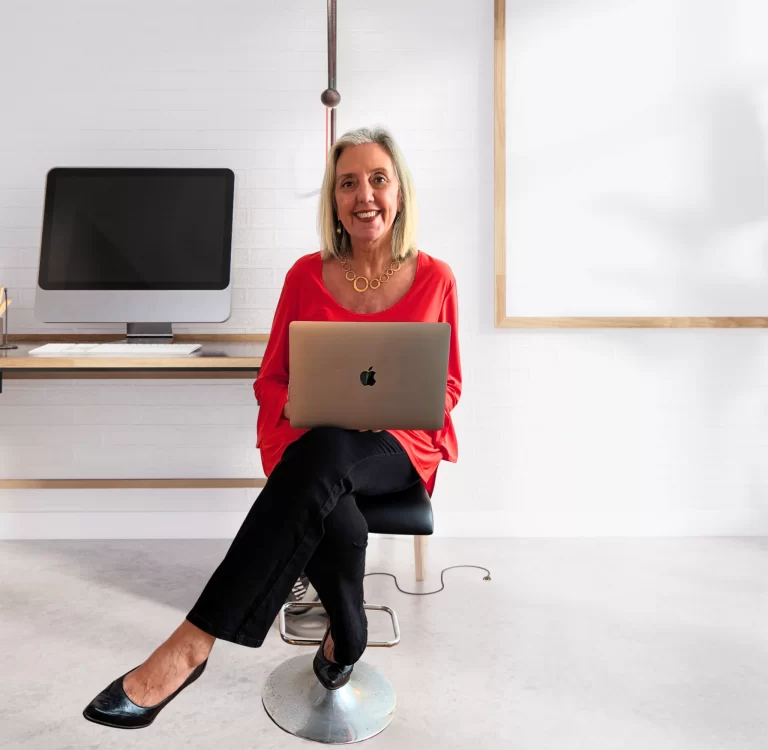
This episode is brought to you by the Business Logjam Session
A private 75-minute online session with Kathi Burns to find the one thing holding your business back and leave with your next steps. It is the same F.L.O.W. process Kathi uses with her own clients: Focus on your goals, Locate your logjams, Outline your solutions, Walk away knowing your next steps.
Find What's Holding Me BackInterested in sponsoring the show? Get in touch.How do you become a professional organizer?
For Julie Coraccio, it started with realizing that what she already did for people was a job. She had been a director of development in the nonprofit world, mainly writing grants. After an intuitive move from Los Angeles to Raleigh, North Carolina, she landed what she calls the worst job of her professional life and decided not to jump to another one. She asked herself what she could do that would help people, pay her and be enjoyable, and saw she had been organizing and helping people declutter all along.
Can SCORE help you start a business?
Yes. Julie went to SCORE, where retired entrepreneurs share their expertise, when she first started her organizing business. The volunteers were shocked that people did organizing for a living, and she had to tell them about NAPO. Kathi says SCORE, the SBA and SBDCs are great resources for anyone switching careers because they help you build a good business infrastructure.
What does end of life planning include?
End of life planning includes organizing your paperwork, your health care documents and proxy, where important papers are stored, your legacy wishes and your digital afterlife. Julie Coraccio began this work after her father explained his wishes to her and her brother. She says it brings peace of mind, so families can focus on the person when the time comes.
Why is saying no important in business?
Saying no keeps you from being scattered, so you can be your best for clients. Julie Coraccio learned this early when she turned down a client 90 minutes away who couldn't pay her rate, even though she had little business. She says that boundary told everyone, including herself, that she believed in her worth and her work.
How do you choose a niche as a professional organizer?
Choose a niche that reflects who you are. Where Julie lived, there were so many professional organizers you could throw a stone and hit one, so she had to decide who she would serve. She became the first professional organizer in North Carolina to focus on sustainable organizing, and people told her she would be dead in the water. She stayed with it because it's who she is, and she found success. Kathi niched as an organizer and image consultant because she was already in clients' closets.
How do you manage email as an entrepreneur?
Process your email instead of answering it. Julie Coraccio decides for each message whether to act on it, delete it, delegate it or come back and respond later. She also replies to everyone, even people who aren't a good fit, and refers them to a partner who is, because what you put out comes back to you.
What is the best advice for life from a professional organizer?
Remember that you are good enough, you are worthy and you are loved, no matter what. Julie says that if you feel worthy, you'll shine your light even when someone wants you to dim it, and if you feel loved, you won't feel you have to compete and go out and buy a bunch of things. Kathi adds that the way to find your unique gift is to experiment and notice what feels exciting. Julie agrees: there are no mistakes, only lessons, and you course correct until you are in joy.
Where does each part of the conversation start?
- 0:00 Meet Julie Coraccio
- 0:46 From grant writing to organizing
- 2:02 Getting help from SCORE
- 3:04 End-of-life organizing
- 5:40 Learning to say no
- 8:00 Finding her niche
- 10:18 Email and referral partners
- 12:52 You are good enough
- 15:00 Being in joy
- 15:43 Wrap-up
What resources were mentioned?
- Clear Your Clutter Inside & Out (Julie's podcast)
- Julie's end-of-life resources
- Got Clutter? 365 journal prompts series by Julie Coraccio
- SCORE
- SBA (U.S. Small Business Administration)
- SBDCs (Small Business Development Centers)
- NAPO
These episodes continue the same thread as this one: Donna Zalter, Amy Stone, Adele Bernard, Kitti Andrews also answer the question "How do I organize my home and closet?", and the rest are the most recent conversations on the show.



See every episode on the podcast archive or filter by topic on the How do I organize my home and closet? hub.
How can I support the show?
- Subscribe on Apple Podcasts, Spotify or YouTube, or add the RSS feed to any app.
- Rate and review. A rating on Apple Podcasts helps new listeners find the show, and Kathi reads every review.
- Share the episode with one business owner who needs it; the share buttons are at the top of the page.
- Grab a free eBook: 6 Steps to Organize & Energize Your Home, 6 Steps to Organize Your Home Office or 6 Steps to Organize & Energize Your Life.
- Work with Kathi. The Business Logjam Session is a private 75-minute session to find what is holding your business back.
- Be a guest. Apply here if you have a story about clearing the obstacles in your business.
What did they say, word for word?
The transcript below is edited for readability: filler words and false starts are removed and speaker names are added. Nothing was added or summarized.
Read the full transcript +
Kathi: Hi everyone, this is Kathi and I'm back. I am with Julie Coraccio. She's an award-winning professional life and end-of-life organizer and certified life coach. She's passionate about helping people declutter and supporting people in clearing their stuff in all areas of their life, getting organized and becoming more mindful. She hosts a popular self-help podcast, Clear Your Clutter Inside and Out, and she's also the author of 14 books, including the Got Clutter? 365 journal prompts series. She's happily married and she's at the beck and call of four rescue cats. She is my girl. I have two cats myself. This will be an insightful interview with my colleague Julie. So, let's get started. Hi, Julie. Thanks for being here.
Julie: Hey Kathi, I'm thrilled to be here.
Kathi: It's a good day today. You're a certified life coach and professional organizer. Can I ask what you did prior to that?
Julie: Prior to starting my business, I was in fund development. I was a director of development, so in the nonprofit world, writing grants mainly and saying, "Hey, give us money."
Kathi: Okay, cool. Why did you decide to become a life coach and professional organizer, girl?
Julie: I had just moved from Los Angeles to Raleigh, North Carolina. It was a very intuitive move. I woke up one morning and heard, move to Raleigh. So I've learned to always follow my intuition. I had gotten a job, probably the worst job I've ever had in my professional life, and I knew right away, this is crazy town. So I said, I just don't want to jump to another job. What can I do that will help people and make a difference in their lives? I've got to get paid also, and it has to be something I'd enjoy doing. And so I thought about it and thought about it, and I was like, I've been organizing and helping people declutter. I just never knew it was a job. And so that's how it started.
Kathi: Yeah. I think a lot of us have a similar path where we're like, "Is that really a job?" Oh, yeah. I guess people actually do that for a living. Wow, that's pretty cool.
Julie: When I first started… do you know what SCORE is?
Kathi: Oh, yeah.
Julie: So for people listening, if they don't know, SCORE helps. They're retired entrepreneurs who, whatever their specialty is, help people. So when I first went to them for help, they're like, "You want to do what? What? Really? People do that?" And I was like, yeah, there's a whole… it's NAPO, people do it. And they were shocked, because a lot of the old-school people had never heard of it.
Kathi: Yeah, that's the thing about SCORE. I love SCORE. I think they're a great resource, but a lot of them are older, and for new things maybe not so much. But business is back to the basics, and they still really help you build a really good infrastructure. So if any of you out there are looking to switch careers or explore what you might want to do, well, I always say when you grow up, your real career, or the career that has purpose, check out SCORE and SBA and SBDCs. Great resources. So, yay. That's good. So let's talk a little bit about what you do now. I'm very intrigued about the end-of-life decluttering and end-of-life help. When I help clients declutter after transition, after someone in their life has transitioned, it's really precious work to me. So talk to me about how that process works and how you help clients with end-of-life clearing.
Julie: Sure. So I got started because about three years ago my dad had a meeting with me and my brother saying, here's what I want to do at end of life. And it kind of shocked me. I was upset, but my mom passed recently, so a lot of stuff had been done, not everything. And I knew in that moment, as upset as I was, it brings peace of mind, because when someone dies or is in the process of dying, you want to focus your attention solely on that. And so I consider it a gift to support people in doing that prior. You never know when your number's called, so I think the earlier you do that, the better, especially if there are things that are important to you. Whether it's passing on your legacy, that's something maybe we can write up that's important. Maybe you want to start a foundation. Maybe you want to start a scholarship in your name. So I really look at it holistically. Of course there's the physical stuff, and I'm not an attorney, I don't play one on TV, but I have to tell you, as you know, you get to help people organize and declutter, and then they can go to the attorney and say, here's what I want, and have everything organized, so they're not paying the attorney $200 an hour to go through paperwork or whatever. So it's getting paperwork organized. It's thinking about end-of-life care. Do you have all your health care stuff together? Who's your health care proxy? Where are we going to store all these important papers? And we have to let people know that. What do you want to do with your digital afterlife? Do you want to can your Facebook page, or do you want it to continue? Do you want to do something cool and set up messages to be sent to people after you've died? So it's thinking about all of those things that you want to do.
I knew in that moment, as upset as I was, it brings peace of mind, because when someone dies or is in the process of dying, you want to focus your attention solely on that.
Kathi: Wow. Yeah. There are so many moving pieces and so many pieces that people don't consider, just like Facebook messages in the afterlife. I've seen that, and it's hugely impactful when it's done properly. What amazing work you do. Like I say, there are so many moving pieces, there's a lot to consider, and thank goodness we have people like you, and our profession in general, who can help people with that. So that's really good. I really want to touch on that because I think it's super important right now. But let's pop back into entrepreneurship. What do you feel is the biggest obstacle that you encountered when you started your new life profession as an organizer? What type of obstacle did you have to overcome as an entrepreneur?
Julie: I think for me, one of the biggest, and this might sound counterintuitive, was saying no, because I think it is so important to say no. One, you can work on your business 24/7. Well, in order to be amazing for your clients, you have to be your best possible self. And if you are constantly scattered, you're constantly doing things, you have to learn to be able to say no. And something else that I knew right from the beginning, I'll never forget. I had just started my business and someone said, "Hey, I want you to drive about 90 minutes from where I was living in Raleigh, and I want you to do all this work," but they couldn't really afford me. They could pay me this amount of money. Well, when you look at my time… And I said no. I had just started out. I didn't have a lot of business. But I set that boundary, because I believe you're not just setting the physical and emotional boundary. You're setting the energetic boundary, saying, I believe in myself. I have worth, and I'm going to say no, and I'm going to let everyone else know that. So saying no is a huge thing. You can't go to every networking event. You can't be everything to every client. So saying no is really important.
You're setting the energetic boundary, saying, I believe in myself. I have worth, and I'm going to say no.
Kathi: I totally agree with that. And I found that out early in my career when I had a publishing and design agency. Saying no is really the biggest sign of professionalism that you can show, for yourself and for your clients. The ability to say no with grace and without stress, knowing that it's all going to be fine. You're a much better businessperson and you're much better able to help your clients.
Julie: I love that.
Kathi: So saying no is a huge, huge thing. So you overcame that, you learned how to say no, but did you have any other things that were like hiccups when you first started, that you had to figure out as an entrepreneur?
Julie: I'm trying to think. Well, I don't know if I'd consider this a hiccup, but where I lived at the time, there were a lot of professional organizers. You could almost throw a stone and hit someone. And this ties into it, I believe: I had to figure out what's my niche. Who is it that I'm going to serve? And very early on, I was the first professional organizer in the state of North Carolina to focus on sustainable organizing. And people said to me, you're going to be dead in the water. You have made a huge mistake. Just get out now. Bow out gracefully. And I thought, well, one, it's who I am, and I can't change who I am. I'll never force anyone to be sustainable, but if I'm green, I'm always going to share that. And instead of tanking, I found success. Does that answer the question a little more?
Instead of tanking, I found success.
Kathi: Yeah, absolutely. Finding a niche is so important, and I think as professional organizers, we all start general, and the sooner we can niche down, the better, because we are our own avatar. I'm sure that your clients are like you. My clients are like me. We are our own beacon in the darkness, right? So we shine our light, and those that need what we have will have it. But if you're not specific about who you are, the beacon's not there. It's just a big white light. It doesn't really help. Like you say, there are a lot of professional organizers. I love the fact that there are a lot of professional organizers, and I love interviewing other organizers like you, because there's so much business out there and there are so many people that need specific things from us. So I commend you for that. It takes a while to figure out. When I first started, I was a professional organizer and image consultant, and I still am. At the beginning there was no one else who did image, and for me it made total sense, because I'm in their closet and I'm not just saying, have you not worn it for a year? I'm like, why are you not wearing this, or you shouldn't be wearing this. For me it made sense. Now I'm one of the old-timers in the industry, and there are a lot of new, artistic, creative organizers coming on the scene who are also image consultants, and they get it, because it totally works. So I niched out as well, and also, being a serial entrepreneur for 30 years, helping other entrepreneurs. So what do you think would be another piece of advice that you would give to entrepreneurs who are trying to stay organized and keep their business together? Do you have any quick tips that you'd like to provide to the listeners?
Julie: I would say get a handle on email. I think that's so important. And a tip is to think of it as processing instead of answering. Oh, I've got to answer email. But if you say, hmm, I've got to process email: am I to do something? Am I going to delete it? Am I going to delegate it? Or is it something where, okay, I need to think more thoroughly and respond later? So I think email is important. I believe also in responding to everyone. Even if it's not the right client for you, say, "Hey, you know what? I'm not a good fit for you." But having a good referral system, you may say, hey, talk to Kathi. She's an image consultant. I can help you clear your closet, but she can take you a step further and say, you might not be wearing it because it doesn't look good. So I think it's always important to have good referral partners. And then again, know that you can't be everything to everyone. Find out who you like to work with and what your skills are, and don't worry about that. What you put out, you get back in life. So if you're always referring people, that'll come back to you. If you're honest and you don't waste their time or yours, that is a good thing for you. It's not a bad thing.
Think of it as processing instead of answering.
Kathi: I love that. I think having a good referral network just makes you more professional, and it allows you to let go of that potential business that you shouldn't be doing anyhow, because it'll come right back around again. We're on the same page, girlfriend. So I love that. Okay, so you have something you could give our readers. What is it that you're going to offer that's a valuable free product they can grab? And I'll put the link down below, by the way.
Julie: Perfect. Thank you. So go to reawakenyourbrilliance.com. I have a free self-assessment. I'm going to ask you 10 questions and you can discover your clutter priority. If you're like, ah, I feel kind of cluttered, but I don't know where to start, we've got 10 questions for you. And depending on what your priority is, I give you a quick action tip. So bam, you do the assessment and you can get started on decluttering your life.
Kathi: Yep. Because you know what, the most important thing is to just start. That's what I always say. It doesn't matter where you start, just start somewhere. So take the questionnaire, and that might help you get kick-started on your projects. So as we end this interview, the only thing that I wanted to ask you, Julie, is: what's the one thing that I should have asked you that I did not ask you?
Julie: I guess I'd probably say, what's your best piece of advice for life? Because we can't separate our professional and our personal. So I'd like to say to everyone listening and watching: remember that you are good enough, you are worthy and you are loved, no matter what. Because if you feel worthy, then you're going to shine your light even if someone wants you to dim it. If you're loved, then you don't have to feel like you're competing with someone and go out and buy a bunch of things. So it's important to remember that, and that we need you to share your gifts with the world now, more than at any other time, in my view.
Remember that you are good enough, you are worthy and you are loved, no matter what.

Kathi: Absolutely. And we all have our own unique gifts. I truly believe that by putting it out there and shining your light, you're a beacon for those who need what you have. And even if you don't feel that you have something unique, you do. There's something very unique that you can offer, and it's just a matter of finding out what that is. And tell me if you think this is right, Julie: I think the way to find out what it is, is experimenting. Do something and see how it feels. Does that feel really exciting to you and really cool? If it does, that could be the gift that you have to offer. Do you agree with that?
Julie: A thousand percent. You want to wake up and be filled with joy: oh yeah, I get to work with a client today. I'm going to get to help them. I'm going to have fun. You want to be in joy. How many of us are like, ugh, Monday morning, right? And here it comes around again. Life's short. Embrace it. You have to do what you're meant to do. Everyone listening has a skill. Everyone listening has a talent. Sometimes we get these messages that maybe our parents or our friends or family or society told us: you can't do that. No. Like you said, there are no mistakes. It's about learning lessons. Try something. Eh, I thought it'd be fun. Not really. And then you course correct and you try something else. It's about being in joy.
Kathi: Yes. Being in joy. We are so synchronistic. I am just so enjoying this interview. We think alike. And I think our profession in general is a bunch of optimists, and we're a bunch of people who grab the opportunity to do what we really love, because there are so many other things we could do in life. But helping people release the stuff that's holding them back, really, that's my juice. People think I'm disorganizing their stuff or whatever. It's really allowing them to be more free so that they can find their purpose, so that they can live in joy. I always say we're kind of sneaky like that, aren't we, as professional organizers?
Julie: It's true. It's true. There's a bigger purpose.
Kathi: Yeah, absolutely. Well, you know what? This has been a delight. I'm so appreciative of your time. Everybody, grab the resource down below and have a stellar week. And thank you so much, Julie, for being a guest. I really appreciate it.
Julie: Thanks so much for having me, Kathi.
Kathi: Absolutely.
Where can I find the links and resources from this episode?
Connect with Julie
Organizations and companies
Inspired? Here Are Your Action Steps:
- Write down your end-of-life wishes and tell the people who need to know.
- Gather your health care documents and name your health care proxy.
- Decide where your important papers will be stored and let your family know.
- Choose what should happen to your social media accounts after you die.
- Organize your paperwork before you meet with an attorney so you're not paying by the hour for sorting.
- Say no to work that doesn't pay what your time is worth.
- Pick a niche that reflects who you are.
- Process each email: act on it, delete it, delegate it or schedule it for later.
- Reply to every inquiry, and refer people who aren't a fit to a trusted partner.
- Take Julie's free 10-question self-assessment to find your clutter priority, then just start.
Frequently asked questions
What is end-of-life organizing?
+
Julie Coraccio describes it as getting your affairs in order while you can: your paperwork, your health care documents and health care proxy, where important papers are kept, and what happens to your social media accounts. It also covers the legacy you want to leave, such as a foundation or a scholarship in your name.
Why plan for the end of life early?
+
Julie's father sat her and her brother down to explain his wishes, and she found it brought peace of mind. When someone is dying, the family can focus on them instead of on paperwork. Arriving at the attorney's office organized also means you're not paying by the hour for someone to sort your papers.
What was Julie Coraccio's biggest obstacle as a new entrepreneur?
+
Learning to say no. Early on she turned down a client 90 minutes away who couldn't pay her rate, even though she had little business at the time. She says setting that boundary told everyone, including herself, that her work had value.
Why does choosing a niche matter?
+
Julie was the first professional organizer in North Carolina to focus on sustainable organizing, and people told her she would fail. She found success instead, because her niche reflected who she is. Kathi adds that organizers attract clients like themselves, so being specific makes you easier to find.
How should entrepreneurs handle email?
+
Process it instead of answering it. For each message, decide whether to act on it, delete it, delegate it or come back to it later. Julie also suggests replying to everyone, even if it's to refer them to someone who's a better fit.
Who is talking in this episode?

About the Host, Kathi Burns
Kathi Burns, CPO®, is a Business FLOW Strategist based in San Diego. For the last 20+ years, Kathi has helped clients create systems they can stick to. She is the author of How to Master Your Muck, Organizing With Tetris and Home Organization, The Smart Guide, and co-author of four more titles; all are in Kathi's shop. Kathi's business has been featured on Good Morning America, and her advice has been featured in Oprah Magazine, Martha Stewart Living, Better Homes and Gardens and Entrepreneur Magazine.
More about Kathi · Shop Kathi's books · Business Logjam Session · Apply to be a guest

About Julie Coraccio
Julie Coraccio is an award-winning professional organizer, certified life coach, end-of-life organizer, author and speaker who runs Reawaken Your Brilliance. Before organizing, she was a director of development in the nonprofit world, mainly writing grants. After an intuitive move from Los Angeles to Raleigh, North Carolina, and what she calls the worst job of her professional life, she realized she had been organizing and helping people declutter for years without knowing it was a job. She was the first professional organizer in North Carolina to focus on sustainable organizing. Julie hosts the self-help podcast Clear Your Clutter Inside & Out and has written 14 books, including the Got Clutter? 365 journal prompts series.
Want help putting this into practice?
Book a Business Logjam Session with Kathi
A private 75-minute online session to find the one thing holding your business back and leave with your next steps, using the same F.L.O.W. process Kathi uses with her own clients: Focus on your goals, Locate your logjams, Outline your solutions, Walk away knowing your next steps.
Prefer to start small? Download Kathi's free eBook 6 Steps to Organize & Energize Your Home.
Published · Updated
This episode page is for general information. Guests speak for themselves, and their opinions, statistics and examples are their own. Nothing here is legal, financial, medical or mental-health advice; talk to a qualified professional about your own situation. Some links go to the guest's own products or free offers; addSpace does not earn a commission from them unless stated.