

TL;DR
A well-organized home office needs a desk at least six feet long with 60% of the surface clear, an ergonomic chair, a file cabinet with rails for hanging folders (never lidded baskets), and a shelf or cabinet. An L-shaped layout puts the monitor in the corner, the clearest side facing the door and your action files on the other side. Above all, make it a dedicated work area.
Some of my readers feel that they don’t have the proper office set-up to become super organized and efficient. They are over their head in papers and muck and are looking for tips to help them set up their office space for more efficiency. This is what I recommend for all office set-ups in an excerpt from my book How To Master Your Muck.
What is the minimum furniture for a home-based office?
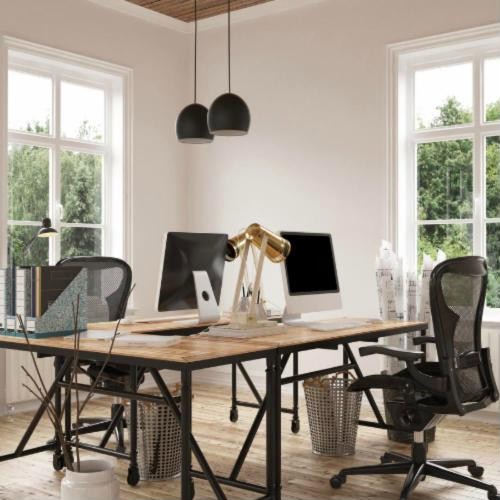
The minimum furniture requirement needed in a home-based office is a desk, chair, file drawer and cabinet or shelf. A computer, printer, phone, and scheduling device are the items that will round out a well-equipped office.
Your desk can be a large table (think dining table size) or an actual office desk. Small folding tables are too restrictive and won’t hold your computer plus other necessary paperwork. Check your local thrift store for office furniture if you need to save money as you start your business. The best desk set-up leaves 60% of the flat area empty. This is why you need a large surface. Six feet is the minimum for optimum efficiency.
Why is an L-shaped desk the best layout?
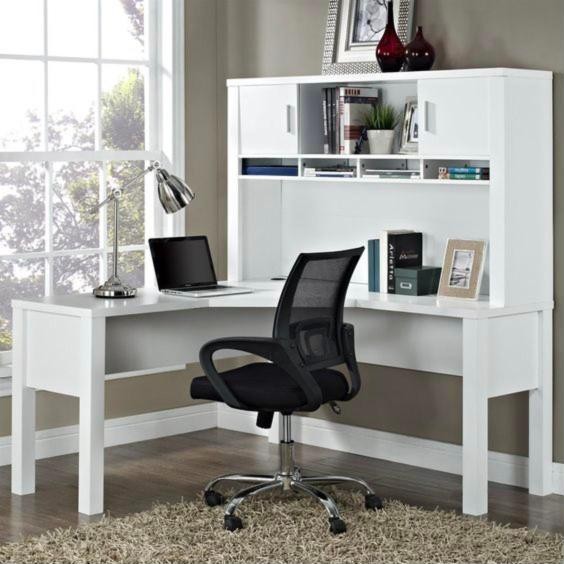
The ultimate desk for most businesses will have an L-shaped configuration. With computers, phones and printers, an L allows you to position your computer monitor in the corner and your work to flow on either side. If you have a hard drive tower, it should be placed below the desk, not on the desktop. The side of the L that is facing the door should provide the most spacious surface with the least amount of collateral items, possibly only a phone beside the monitor. If you have frequent visitors, position a guest chair on the opposite side of this section of the desk.
The other side of the L can hold your papers in progress (your Action Files) using the vertical, stepped vertical file holder described in the “Master Your Papers!” chapter of How To Master Your Muck. If you do not have a shelf to hold your printer above or below the desktop, move it to a side table or file cabinet within arm’s reach.
Does the chair really matter?
An ergonomically designed desk chair is worth more than the money you invest. Your old dining room chair will bring quick fatigue and leave your back tweaked at the end of the day. You might also want to elevate your monitor and check into ergonomic wrist and foot rests if you spend over six hours a day at your desk.
What should you file in, and what should you avoid?
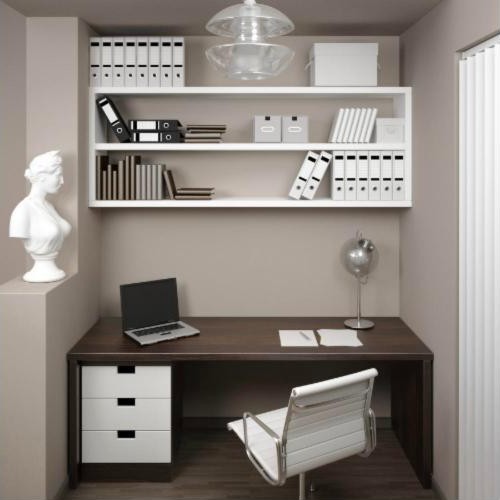
File cabinets with rails to hang files inside will protect your desk from overflowing paperwork. Many of my clients have tried to use “pretty” or decorative file baskets for their paperwork. File boxes pose several hazards: You pile things on top because you don’t take the time to remove the lid so that you can actually file. Sound familiar? They also tend to fall apart and don’t have rails for hanging file folders. If you can’t or don’t use hanging files, your folders fall down and slip around, making it impossible to retrieve files without a time-consuming investigation.
What matters most of all?
The most important thing you can do is create a dedicated work area. I’ve found that having a dedicated space away from distractions has been key to feeling engaged and connected to my team. This can be a separate room in the house or a low-traffic corner of another room. The key is to have an area that is for “work.”
At some point, working from your bed can hurt your posture (and get a little too relaxing), so a decent office desk chair is a must. If you are lacking a table that can function as a dedicated workspace, a standing desk is worth a look. Boost your energy and productivity by just one click.
If you don’t have the space (or the need) to invest in an entirely new office chair, but would like to make any chair that you already own a bit more comfortable, consider a seat cushion as well as a chair mat for smooth gliding and to protect your floors. If you have hardwood floors you will thank me later!
While a flat desk and comfortable chair is a great way to start, it doesn’t end here. I would invest in noise cancelling headphones.
Once the office is set up, the next job is the papers: File papers into hanging folders ‘heads to the right’ and How To Organize Your Home Office In 9 Steps. If the office is organized and the business still feels stuck, a Business Logjam Session finds the bottleneck.
Keep reading
- How To Organize Your Home Office In 9 StepsFrom the vision to the zones to the paper piles.
- File papers into hanging folders ‘heads to the right’The filing habit that lets you read a paper without pulling it out.
- The Do’s and Dont’s When Working From HomeTwelve do’s and seven dont’s for a productive home office.
Frequently asked questions
What furniture does a home office need at minimum?
+
A desk, chair, file drawer and a cabinet or shelf. A computer, printer, phone and scheduling device round out a well-equipped office. The desk can be a dining-table-sized table or a real office desk, but small folding tables are too restrictive to hold a computer plus the necessary paperwork.
How big should an office desk be?
+
Six feet is the minimum for optimum efficiency, because the best desk set-up leaves 60% of the flat area empty. If you need to save money as you start your business, check your local thrift store for office furniture rather than settling for a small table.
Why does Kathi recommend an L-shaped desk?
+
An L lets you position the monitor in the corner with work flowing on either side. The side facing the door stays the most spacious, with perhaps only a phone beside the monitor, and a guest chair can sit opposite it. The other side holds your papers in progress in a stepped vertical file holder.
Are decorative file baskets a good idea?
+
No. File boxes and lidded baskets pose several hazards: you pile things on top because you don’t remove the lid to file, they fall apart, and they have no rails for hanging folders, so folders slip and fall. Use a file cabinet with rails so retrieving a file never becomes a time-consuming investigation.
What is the single most important thing in a home office?
+
A dedicated work area. Having a space away from distractions, whether a separate room or a low-traffic corner, is key to feeling engaged and connected. Working from your bed hurts your posture and gets a little too relaxing, so a decent desk chair is a must as well.