

TL;DR
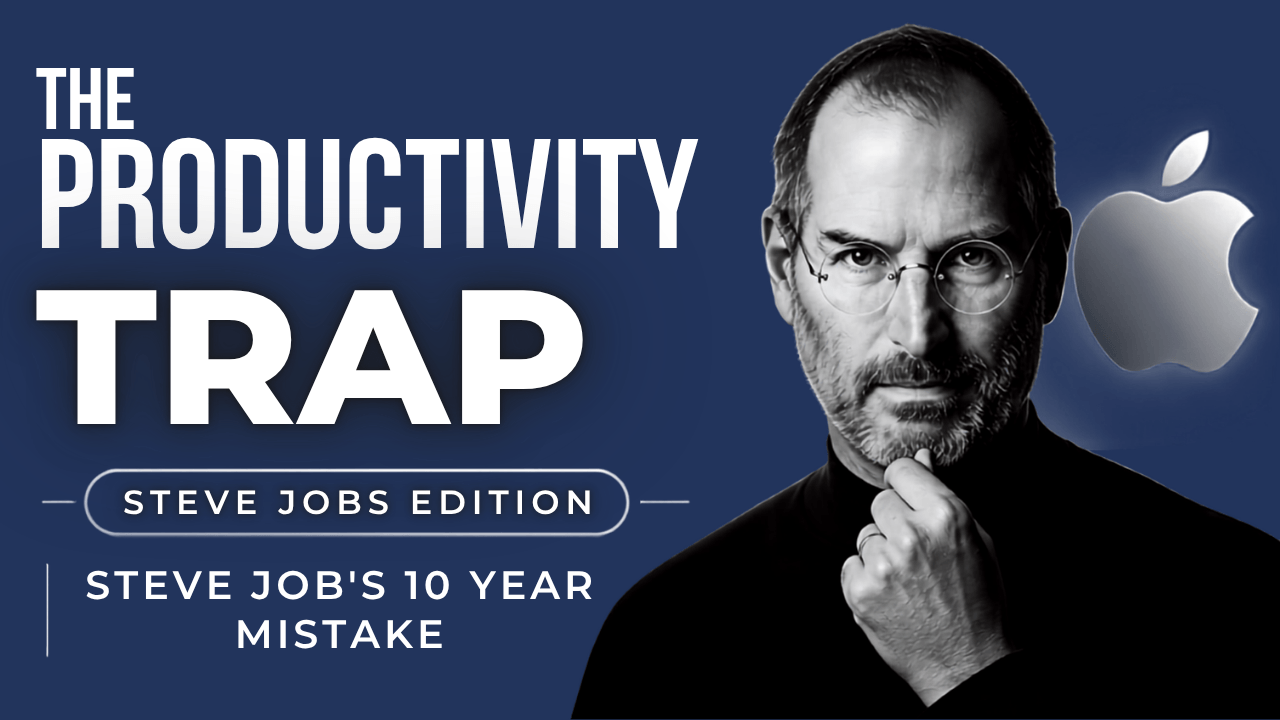
Working harder won’t fix a stuck business. Kathi points to Steve Jobs telling MIT students in 1992 that he had wasted ten years on the wrong kind of productivity. When work stalls, the cause is usually congestion, unclear decisions or systems that have outgrown their design, so find where work waits and remove the friction instead of demanding more effort.
Why working harder will never fix a stuck business
If you have felt behind this week, you are not alone.
Have you ever spent an entire week putting out fires, only to realize your most important projects barely moved forward?
The visible problem is familiar. Your team is busy. Meetings multiply. Projects crawl. You and your leaders are working incredibly hard, yet the business still feels stuck in the mud.
I recently read an article about a moment from 1992 that perfectly captures this feeling.
Steve Jobs was speaking to business students at MIT, and he openly admitted he had wasted ten years of his career. He did not waste that time on the wrong product. He wasted it on the wrong kind of productivity.
That small aha moment matters because it points to something many business owners learn the hard way.
You cannot effort your way out of operational friction.
If productivity becomes synonymous with mere activity or speed, you can accidentally create a high motion company that still cannot move.
You do not need more hustle. You need clearer leverage.
The good news is that if you are feeling overwhelmed by bottlenecks right now, it does not mean you are failing. It usually just means your current operating system is being asked to carry a larger load than it was designed for.
Here are three operational truths you can use immediately to find some relief and get your time back.
1. The real problem is congestion, not a lack of output.
When a business is under strain, it is tempting to treat the symptoms. You might demand a faster turnaround or try to implement better project management.
But often, the underlying issue is congestion in the system. Work piles up in progress, handoffs are unclear, and decisions bounce right back to you. Asking for more productivity in that scenario is like asking cars to drive faster in a traffic jam.
Your practical next step: Pick one critical workflow like onboarding, fulfillment, or billing. Map it simply from start to finish. Identify exactly where the work waits. That waiting area is usually where your capacity is leaking.

2. Your business is missing decision clarity, not effort.
Your team is likely working very hard. But when a productive team stalls out, it is often because they are working without enough shared clarity.
Who actually decides? What does “done” mean? What is the standard path versus an exception? What happens when things are unclear?
When those answers are missing, people compensate with endless message threads, duplicated work, and extra meetings. That is not a people problem. That is a system problem. Ambiguity creates invisible work, which drags everyone into the weeds.
Your practical next step: Choose one area of recurring confusion. Write down exactly who owns the decision and what is required before a project can move forward. You are not writing a massive policy manual. You are just removing recurring uncertainty.

3. Growth exposes hidden infrastructure gaps.
At a smaller scale, you can survive with heroics. You might rely on a strong team member who just knows how everything works, or you simply step in and override problems yourself.
As your load increases, those informal coping mechanisms stop working. It is not because anyone failed or got worse at their jobs. The system is simply operating beyond its design limits.
This is exactly why leaders often feel like growth is strangely taxing. What used to be easy is suddenly hard, because it used to be subsidized by informal infrastructure.
Your practical next step: Look for signals in your week. Are you the default approver for too many things? Does urgent work constantly displace planned work? Are your best people spending their time chasing down information? Those signals point to where a small operational redesign can unlock real capacity.

A calmer way to lead
If you are feeling the pressure of operational friction today, you do not need to become a stricter manager. You do not need to demand more output.
You just need to shift the question.
Instead of asking how to get more productive, ask where friction is creating hidden work. Ask what you can do to remove it.
That is a calmer, much more powerful way to lead. It respects the tremendous effort of your team while refusing to let your systems waste it.
You do not need more hustle. You need clear, operational leverage.
To help you find that leverage, I created a focused tool over at http://OperationalFlow.co called the Capacity Readiness Diagnostic.
This is a private, 45-minute 1:1 working session directly with me.
Together, we will look under the hood of your operations to pinpoint where work is piling up, where decisions are getting stuck, and where your backend infrastructure is limiting your ability to scale.
A few things to know about how we will spend our time together:
-
It is not a sales pitch in disguise. This is a true operational assessment. You will leave with absolute clarity on what is constraining your business.
-
We focus on relief and clarity. We will identify the exact structural leaks so you can delegate with confidence and reclaim your executive capacity.
-
It is practical and focused. In 45 minutes, we get straight to the root of the operational friction without fluff or buzzwords.
The investment for this private diagnostic session is $297.
If you are ready to stop being the bottleneck in your own business and build a calm, capable system that supports your growth, you can reserve your session using the link below:
Keep reading
- How to Create a Customer Follow-Up System That Works for a Small BusinessOne contact list, a next step for every contact and a regular follow-up time.
- Organizing Business FinancesA business bank account, a realistic budget and twice-monthly reviews.
Frequently asked questions
Why doesn’t working harder fix a stuck business?
+
Kathi says you cannot effort your way out of operational friction. When productivity becomes mere activity or speed, you can build a high-motion company that still cannot move. Feeling overwhelmed by bottlenecks usually means your operating system is carrying a bigger load than it was designed for, not that you are failing.
What did Steve Jobs say about wasting ten years?
+
Speaking to business students at MIT in 1992, Steve Jobs admitted he had wasted ten years of his career. As Kathi tells it, he did not waste them on the wrong product but on the wrong kind of productivity, a lesson many business owners learn the hard way.
How do I find where work is getting stuck in my business?
+
Pick one critical workflow, such as onboarding, fulfillment or billing, and map it simply from start to finish. Identify exactly where the work waits. That waiting area is usually where your capacity is leaking, because the real problem is congestion in the system, not a lack of output.
Why does my team stall even when everyone works hard?
+
Often the team lacks shared clarity about who decides, what done means and what the standard path is. People compensate with endless message threads, duplicated work and extra meetings. Choose one area of recurring confusion and write down who owns the decision and what is needed before work can move forward.
Why does growth make running a business harder?
+
At a smaller scale you can survive on heroics, such as one team member who knows how everything works, or stepping in yourself. As the load grows, those informal fixes stop working. Watch for signals: you approve too many things, urgent work displaces planned work, or your best people spend their time chasing information.