


Episode 31
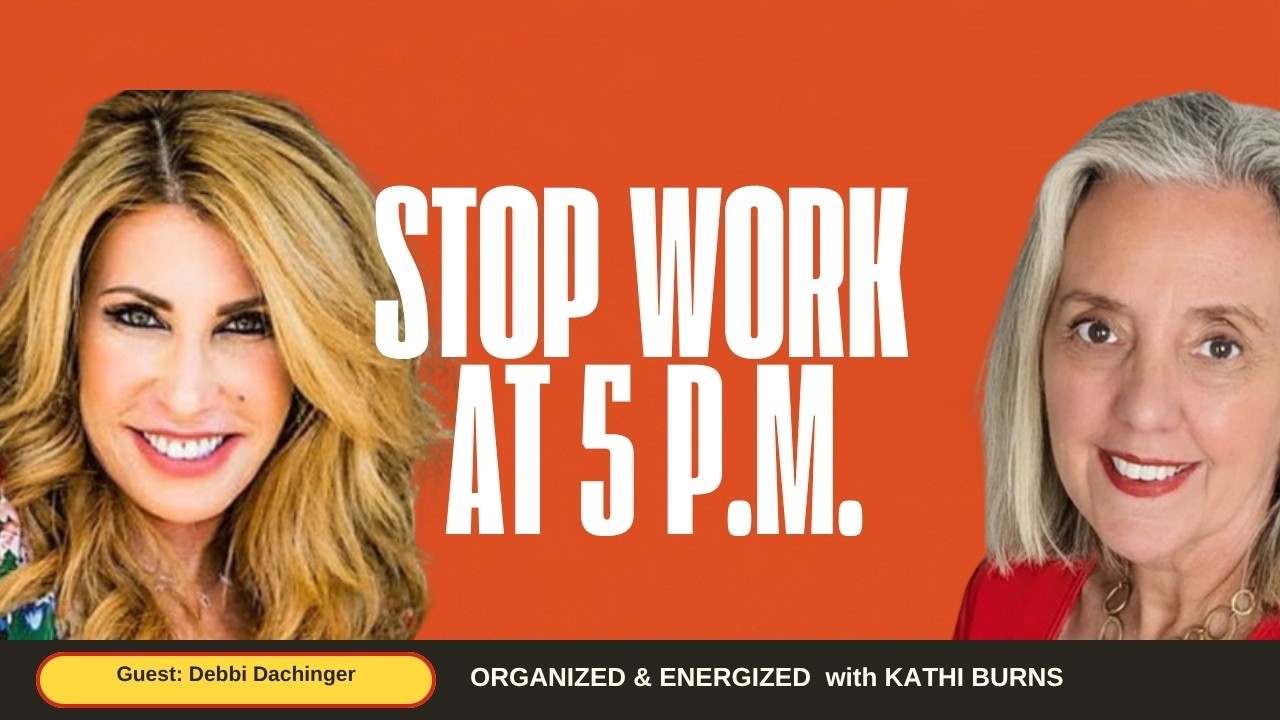
with Debbi Dachinger, media visibility expert, book coach and host of the Dare to Dream podcast · June 8, 2022 · 27 min
Debbi Dachinger was a professional actress and singer having her biggest year ever when she felt a pull to do something different, and she gave herself about three years to figure out what came next.
Radio led her to writing books, being interviewed and hosting the Dare to Dream podcast, and her business grew out of people asking her to teach them how she did it.
With her first book clients she overdelivered, and she learned that clients who get everything at once feel overwhelmed, so she now paces herself and her clients.
Debbi says the one lesson every business owner should know is to pivot, because tactics stop working once everyone uses them.
She stops work at 5 p.m., takes a lunch and a nap or meditation every day, does not work weekends, and says she is probably getting more done.
Published · Updated
What is this episode about?
Debbi Dachinger is a media visibility expert, book coach and host of the Dare to Dream podcast. She was deep into a career as a professional actress and singer when a new feeling told her to do something else, and she spent about three years trying things before radio, books and interviews turned into a business. Kathi Burns, CPO®, Business FLOW Strategist, asks her how she knew she had found her "it" and what it takes to pivot your career when you're already successful. You'll hear why overdelivering left her first book clients overwhelmed, why she runs her courses and her Visible Visionaries group on Thinkific, how one post in a Nextdoor group led to two calls in a week, why she stops work at 5 p.m., why she thinks every expert should be interviewed on podcasts, and why she deleted the disengaged names from her email list.
Literally a business was born just by me following the energy of doing what was right and light for me at the time.Debbi Dachinger
Jump to links and resources · Part of How do I become known as an expert? · All episodes · Every guest
What are the key takeaways?
- Debbi left a successful acting and singing career after a feeling that would not go away, then spent about three years singing with bands, making jewelry and doing voiceover work before radio set her direction.
- She knew she had found her "it" because doors kept opening, the work kept getting exciting, and she could see the people she served succeeding with ease.
- Overdelivering to her first book clients got them results but left them overwhelmed; she learned to pace herself and her clients because people can only digest so much at once.
- Debbi uses discernment instead of jumping on every bandwagon, and she experiments: one short introduction in a Nextdoor group led to calls with two people that same week.
- She committed to finishing work at 5 p.m., taking a lunch and a nap or meditation every day and stopping weekend work, and says she is probably getting more done.
- She keeps one to-do list for what is important today and one ongoing list, and refuses to be a mean boss to herself.
- Debbi deleted completely disengaged contacts from her email list because she believes engagement matters more than database numbers.

This episode is brought to you by the Business Logjam Session
A private 75-minute online session with Kathi Burns to find the one thing holding your business back and leave with your next steps. It is the same F.L.O.W. process Kathi uses with her own clients: Focus on your goals, Locate your logjams, Outline your solutions, Walk away knowing your next steps.
Find What's Holding Me BackInterested in sponsoring the show? Get in touch.How do you pivot your career when you're already successful?
To pivot your career, Debbi Dachinger says you honor the pull to change and give yourself time to find what's next. She was having her biggest year as an actress and singer when the feeling came. She spent three years singing with bands, making jewelry and doing voiceover work, then went into radio, which led to books and interviews.
How do you know when you've found your calling?
Debbi knew because doors kept opening and the work kept getting exciting. Speaking at Toastmasters, starting in radio and her Dare to Dream podcast, and writing books each brought a good challenge and the question of what the next piece was. Every time she served groups and individuals and saw them succeed, she felt her passion and her mission come together. Kathi adds that your natural talents and the yeses people keep asking of you are often clues to your "it".
Why is overdelivering a mistake?
Overdelivering overwhelms clients. Debbi wanted to give her first book clients everything so they would never need her again, and while they got results, they felt overwhelmed. She learned that people can only digest so much, so she paces herself and her clients. Kathi adds that overwhelmed clients freeze and can't take action.
What does Debbi Dachinger use Thinkific for?
Debbi uses Thinkific to host all of her courses and her Visible Visionaries book-writing group. The group has a private space on the platform, and after each twice-monthly meeting the material goes up for them. She can also run live classes and webinars there. She calls the customer service excellent: support answers within two days with short step-by-step videos, and it feels like part of her team.
Why do entrepreneurs need to keep pivoting?
Because nothing stays the same: platforms and ways of doing business change, and a tactic that works stops working once people are flooded with it. Debbi uses discernment rather than jumping on every bandwagon, and she experiments with things that present themselves. She introduced herself in a Nextdoor group, mentioned her book coaching, and had calls with two people that week. She also emails her list to offer check-in calls, which shows her the pain points she can write copy about.
How do entrepreneurs avoid burnout?
Debbi avoids burnout by stopping work at 5 p.m., taking a lunch and a nap or meditation every day, and not working weekends. She says this contrary action opened up space and capacity, and she is probably getting more done. She also keeps one list for today's priorities and one ongoing list, and refuses to be a mean boss.
Why should experts be interviewed on podcasts?
Being a podcast guest puts you in front of an audience that already wants your subject. Debbi notes there are over 2 million podcasts, so there is a niche for almost anything. If a show reaches 10,000 people and you appear on five in a month, you have reached 50,000, more than most people reach from a stage. Her free gift at debbidachinger.com/gift has templates and videos on how to do it.
Should you delete inactive subscribers from your email list?
Debbi did, because she thinks engagement matters more than database numbers. She looked for the people who were completely disengaged from her newsletters and deleted them, which she compares to clearing clutter in feng shui. She says it made room for people interested in what she offers and freed up her energy right away.
Where does each part of the conversation start?
- 0:00 Kathi's welcome
- 0:46 Meet Debbi Dachinger
- 1:02 From actress and singer to entrepreneur
- 2:08 Radio, books and a business born
- 3:14 How she knew she'd found her "it"
- 5:44 Human design and natural talents
- 8:08 Her first book client
- 8:47 The cost of overdelivering
- 10:59 Why she loves Thinkific
- 13:16 Pivot, pivot, pivot
- 14:52 Finding clients on Nextdoor
- 17:47 Learning to push away from the desk
- 18:50 Her 5 p.m. cutoff
- 21:03 Two to-do lists and no mean bosses
- 22:44 Why everyone should be interviewed
- 24:44 Clearing dead weight from her email list
- 26:30 Wrap-up
What resources were mentioned?
- Debbi's free gift: templates and videos on getting visible and interviewed
- Dare to Dream podcast with Debbi Dachinger
- Visible Visionaries, Debbi's ongoing book-writing group
- Thinkific
- Nextdoor
- Toastmasters
- Human design
These episodes continue the same thread as this one: Dr. Julie Marty-Pearson, Vince Warnock, Anne Bartolucci, Ally Machate also answer the question "How do I become known as an expert?", and the rest are the most recent conversations on the show.
 PodcastingEpisode 146
How to Grow Your Confidence Through Storytelling & Podcasting with Julie Marty-Pearson


See every episode on the podcast archive or filter by topic on the How do I become known as an expert? hub.
How can I support the show?
- Subscribe on Apple Podcasts, Spotify or YouTube, or add the RSS feed to any app.
- Rate and review. A rating on Apple Podcasts helps new listeners find the show, and Kathi reads every review.
- Share the episode with one business owner who needs it; the share buttons are at the top of the page.
- Grab a free eBook: 6 Steps to Organize & Energize Your Home, 6 Steps to Organize Your Home Office or 6 Steps to Organize & Energize Your Life.
- Work with Kathi. The Business Logjam Session is a private 75-minute session to find what is holding your business back.
- Be a guest. Apply here if you have a story about clearing the obstacles in your business.
What did they say, word for word?
The transcript below is edited for readability: filler words and false starts are removed and speaker names are added. Nothing was added or summarized.
Read the full transcript +
Kathi: Hi everyone. I am back with Debbi Dachinger, and I'm so excited to have her as a guest on the show. I wanted to welcome you, Debbi, and thanks for being here.
Debbi: Yeah, Kathi. It's great to be here. Happy to play with you.
Kathi: Well, we will play and play. So tell me, Deb, before you became who you are, tell me about your journey into entrepreneurship.
Debbi: Had no idea I was going to be here. That's the first thing. Very interesting question, because I was fully committed and aligned with being an actress and singer. I had done it professionally, and something came over me. I mean, I was deep into my career. I had the biggest year ever. And all of a sudden, I had a different feeling inside, one I had never had before. It spooked me, because I was like, what do you do with this when all you've wanted to do is act and sing since you were born? And I had to honor it, because it wasn't going away. And I honored it. I surrendered. Three years. Three years I had no clue what to do. But I let it go. I sang with a jazz band, with a big band. I made jewelry and I sold it. I was doing entrepreneurial things, but it wasn't the it. And I was doing voiceover work. And suddenly I thought, oh, I'll get into radio, and that'll get my voice out there. Thank God. Thank God. Thank God I did it, thank goddess, because it was really the right thing to do. And that led me into writing books, which led me into becoming known as an expert and being interviewed, which led to people, this is 15 years ago, 15 years ago, people were coming to me then and saying, "How did you write the book? Can you teach me? How did you become an international bestseller? Can you do that for me? How are you being interviewed and positioning yourself?" So literally a business was born just by me following the energy of doing what was right and light for me at the time, and it created everything I'm doing today. Both what I still do out in the world and what people come to me for.
Literally a business was born just by me following the energy of doing what was right and light for me at the time.
Kathi: I love that story. And I think what you did is you gave yourself the advantage of space to figure it out. You don't have to know everything right off the bat, right? I mean, I don't think we ever do anyhow. But you started creating, you started doing this, you started doing that. How did you know that it was it, once you figured out what the it was? What was that indicator for you?
Debbi: Yeah, the universe just was saying it was right, because doors were opening and it was getting exciting. Like when I started doing things, for instance, with Toastmasters during that time, and speaking, I loved it. And by the way, I was meant to do that, but not to be full-time speaking. It was because I needed that in my arsenal and I needed to learn how to do it. Once I stepped into radio and doing a podcast, so I've been doing Dare to Dream with Debbi Dachinger for 15 years.
Kathi: Wow.
Debbi: And then I started writing books. It was this continual challenge and excitement, like a good challenge. What's the next piece? What's the next piece? It was all about visibility. Being on a microphone, being on camera, helping people, leading people, I just found a love, like a passion. And I found that every time I served both groups and individuals, I felt so good, because I could see them out in the world doing great things and feeling a lot of ease being successful. And I was like, yeah, this is it. It just was working. And so it was, I think, a marriage of my passion and feeling like I was doing something that was serving my mission, and it felt good.
Kathi: And your talents, your talents that were naturally there already, are now in place for your new business. So I think that's very important for people to remember: your skills and your talents, the things that you can do easily, are probably part of what your it is in life, don't you think? I mean, we have the natural gifts, and maybe we don't know exactly what that it is, but if we just start using them and give yourself the space to listen to what people are saying. So when the universe responds, "Yes, Debbi, can you help me with that? Yes, Debbi." When you hear all these yeses, it's like, okay, something's going on here. This is something that, maybe I found the it. And I do believe too, like you said, it's the service thing. If we can use our skills and talents in service, or to help others expand, that's it.
Debbi: I didn't know back then, Kathi. I do now, but it was perfection, because my human design, I don't know if you know about human design, I'm a 2/4 Generator. And if you know about human design, I was literally doing what I was built to do. Just be myself, have the gifts and talents. Even though they got parlayed from entertainment into something quite different, still the raw talent was there. And then the rest of it was, people had to need and come to me and ask for it, and then I could fulfill the need. So I'm so grateful that I had some kind of smarts to just say yes a lot. I was baffled, honestly. I was often baffled, like, you want me to do what? Okay, I'll do that. And I would think, oh, I'll just teach a class and it'll be over. I had no idea it would become this industry. I really didn't. So I give a lot of kudos to my innocence, that I was just following stuff and it just kept working out.
Kathi: Yeah. If in doubt, just say yes and see what happens.
Debbi: Yeah.
Kathi: See what manifests. And you can say yes, but I'm not quite sure about that, but sure. Yes.
Debbi: Yeah. And to a point, because I think sometimes we feel a doubt. Not so much doubt in ourselves, because that will crop up; we can supersede it and do it anyway. But sometimes there's this doubt, and I would say that if there's enough in there and it has a wonky feeling, it's probably a no, and I would hold back, because our energy is everything. Better to put it into something that's going to work out. But I always got curious, because I would think, yeah, I could totally rock that. I know I could help you. I could get your book written, highly engaged. I'm not writing it. I'm going to show you how. And I can take your book to bestseller. Yeah, we could do that. And it became very exciting, very challenging, because it was never the same, right? A book is never the same. And probably a piece of that is very important to me, that nothing I do is cookie cutter. It's always based on the person, and I need that element of change. That's really good for me.
Kathi: Yeah, it's critical for me as well as an entrepreneur. It's got to be different every time, and there's no one way to do anything. Yeah, for sure. I get you on that. So when you landed your first book client, talk to me about that story. How did it happen? How did you find this person, or how did this person find you, and what happened?
Debbi: I was found. I was often found in the beginning, and so I'll tell you that it was beautiful, by word of mouth. She recommended me to other people, thankfully, in a big group of people, and so more and more people were coming, and then the organization was saying, can we work with you? It was a beautiful flow. So for whatever doubts I had about what I was doing, the universe just kept encouraging me. The one thing I did wrong was I overdelivered. I wanted to give people everything, right? Let me give you everything so you never need me again. There really was a feeling about that, like I wanted them to feel so complete. And what I learned is people actually felt overwhelmed. So they were getting the results, they were getting the information and then some. And so I had to learn that people can digest. You don't want them to overeat your information. Nobody feels good then. So I had to learn about pacing myself, pacing my clients. That was a big lesson. Otherwise, the other lesson for me was believe in yourself. Keep going forward. It was a great experience. I was grateful. It opened a ton more doors for me, and then caused me to look at these other pieces of visibility that I was working on and say, yeah, I need to really investigate these. Because people would often say, "Aren't you too busy? Isn't it too much? How do you handle all that?" I actually felt it was this perfect, beautiful marriage. And nothing was too busy. Everything just flowed exactly as it should. The bestseller thing, I've got a whole team. So I'm not laboring to produce what I produce. I've got a really amazing system. So I have systems that work for me. That's super important. And then the way I disseminate: often I do have private clients, but I like to do a lot of groups, because it's easier to reach more people. So I just started to learn as I went along all these things that would help me and the other people coming, so that we got the best results.
I had to learn that people can digest. You don't want them to overeat your information.
Kathi: Yeah. And I think as young entrepreneurs, back when we first start, we want to overdeliver, because we're still not quite confident that we're really all that, right? So we overdeliver. But then what happens is our clients do get overwhelmed, especially in my industry, and then they can't take action, because they're just too overwhelmed. We're immobilizing them, as opposed to mobilizing them, because they just get locked down. So yeah, that's really good advice. And having systems put in place, of course. So what's your favorite organizing system? Talk to me about that, Deb.
Debbi: Organizing system. Right now I think Thinkific is. I use that platform. I love it. And of course they're growing, by the way. They're getting better and better. I should have an affiliate link right now. And they don't actually even have affiliate links right now. But no, it's a great platform, because all of my courses are up there. That's first of all. Second of all, as I build things in real time, like I have an ongoing book-writing group, they're called the Visible Visionaries. They have a private platform on Thinkific, and I meet with them twice a month, and every time we're done, everything from that particular course gets uploaded for them. Now in the future that may become something or not. And then I can shoot live, right? You could do live Zooms on there, live classes, live webinars there, and immediately become something else. And they're just doing a new thing with their sales page. They're thinking a lot ahead, and I have to say I think their customer service is excellent. When I write to them on their support page, within two days I hear back, and it's not one of those really frustrating things like asking more questions, or go to our FAQ page, and you just want to hit someone and go, you think I didn't do that? I spent 30 minutes. Help me out here. Help a brother out. I'm paying you, man. And so they're awesome, because what they'll do, they'll send you little videos and step by step how to really look into your dashboard and how to answer it. I need that. Or if I have a client, or somebody bought something from me and they've got a question about it, I go right to them and they answer it. And it really is like having part of my team there. That's what I consider them. So, highly recommended. My favorite system.
Kathi: So it's Thinkific.
Debbi: Yes. T-H-I-N-K-I-F-I-C.
Kathi: Okay. Just for you listeners out there. And we'll put the link in the show notes for you as well, so you can check it out. Okay, great. So what's the one lesson that your business has taught you over the years that you think everybody should know as a business owner, as an entrepreneur?
Debbi: Oh, girl, pivot. Pivot. Pivot. Really, because nothing stays the same. Social media platforms change, the way of doing business. Case in point, right now, can I get an amen?
Kathi: Amen.
Debbi: We will all learn stuff, right? Or we'll see things being done out there. It's like, oh my gosh, people are driving traffic, people are creating sales, they're doing launches, this is working. And we'll learn how to do it. We'll get on the bandwagon and we'll do fine. And then bam, your business hits a wall. Why? Because people become inundated and they become Switzerland. They're neutral. They don't want to do it anymore, and they're out, and we have to constantly find new ways. The two things I do personally: I have a lot of discernment. I do not jump on any bandwagon. I just can't. I get a feeling about stuff, and some things, the EKG is flatlining, and I'm like, it's not for me. And every so often I will get something like, I know I need to learn that, and I know I need to implement that. And the other thing I do is I play around with things that present themselves. Right now I'm playing around with something called Nextdoor. So in every neighborhood, right, there's something called Nextdoor. You could buy and sell things. And so there was a group, and I just introduced myself and said, hey, I am new here, and it's really great to meet everybody, and this is what I do. I very briefly, only one piece, recommended: I do this book coaching, if you guys have any questions or want to know anything, you can DM me. Boom, two people. That week I had calls, and that's so interesting. They also have a business page. You could set up a business page there, which I've done. And you have to have three recommendations, by the way, for them to post your business page. So make sure you have three people write a recommendation. That's just one example. But in pivoting, I find new ways for new blood. I just do, and I trust that the people who are supposed to come to me do. Always perfect clients. And I recently sent out an email to some of my database just saying, how are you? Checking in. What's going on for you, and do you want to jump on a call? I'm amazed how many people don't take you up on it. It's like, really? I would. But the people who did, we've been setting up Zooms together, and it is amazing to connect with them and find out what's going on and have them tell you their challenges. At the very least, when people tell you their challenges, boom, there's the pain points for your business if you're writing copy. It's really a win-win. And of course I make sure that every one of those Zooms, people leave with something. So if you want to get on my database, go to debbidachinger.com, because I'm doing it. I'm going to send it out again in a couple of months. First of all, I just love connecting with people. I really do. And second of all, I make sure everybody leaves with something they needed, that they feel like, "Wow, I connected with Debbi, and that was really a nice experience, and she actually introduced me to somebody, or sent me something, or gave me this advice that changed what I'm doing." That's important to me. So those are just examples, but I experiment, and I think it's really important.
In pivoting, I find new ways for new blood.
Kathi: It totally is. And there's always new stuff. And for those of you that don't know nextdoor.com, I think it's a great resource. I've been on it for quite some time. I found my cat. People find their animals all the time. And it's good for business, and it's good for neighborhoods. It's just people in your neighborhood that can help you in one way or the other, that you can help them. So that's a great resource, and we'll have that down below as well. So tell me about a time when you felt stuck and overloaded and overwhelmed, and what do you do to get your mojo back? I know we all experience things like that, where we're just exhausted.
Debbi: Yeah, I used to feel that a lot. I used to not know how to push away from my desk. And it's so interesting, because the bubble over your head, the soul being inside of you who loves you, is like, it's 7:00, I don't think this is healthy, you've been at it since. And I would still go and still go and still go. And at some point I just decided that entrepreneurship had to be different, and I was to commit to that, that it was going to be a very healthy version instead of the really messed-up version that most of us are used to: if you want to finish that to-do list, here's what it has to look like. And so I literally made this commitment to myself: no matter what, I am finishing at five o'clock. There's a couple of times, rarely, and I mean it rarely, I might go till six. But in general, by five o'clock I'm done, period. I push away from the desk. I do take a lunch every day. I take a nap or a meditation every day. So I started building things in that meant it was going to look different. And you would think, oh my god, well, what do you do? You don't get things done. I'm telling you, contrary action creates magic. Doing all those things on my behalf just opened up all this space and capacity to complete things. And the other thing was no weekends, and I was doing all weekends. It was just sad. It was sad. So yeah, I stopped, and I'm probably getting more done. It's just easier.
Contrary action creates magic.
Kathi: Well, they've said that too. In all the case studies that they're doing with people who are working four-day business weeks as opposed to five, they generally get as much done or even more. And I think by giving yourself breaks, by eating lunch, by doing a meditation in the afternoon, you're more clear-minded, and it's easier to get things done. So kudos to you. Everybody should use that tip. By the way, girls, if you're feeling overwhelmed and burned out, start taking time for yourself and make yourself stop working, because your boss is not mean, contrary to what you might think.
Debbi: Yeah, that's a good point. It's a really good point, because you are your boss. You are the CEO. You are the board members. And yeah, you may have a team. And you have to have a life outside of your business. You must. We're here to have fun, mostly. And so besides making a living that you love, I think it's so important to build in fun and things to look forward to. It's very important. And by the way, I know it seems impossible in the moment, like if I do this, nothing will get done. I get it. I totally get it. But there's also something to be said. I could show you my to-do list. It's right here. And I finished what was important for today. That's one piece of paper. And then the other one is this ongoing to-do list. And so I'm checked, and now here I am with you late in the afternoon. Ta-da. And do I wish these were all done? Yeah. Awesome. But they're not; they're the other list. And it's okay, because I know tomorrow what my day looks like, and I know if I could check one of these off, because they're big projects, by the way, they're not little things like make a call, I'll be thrilled, and I know I'll be deep in that project, and the rest, it's okay. I often will look at my to-do list and say, does that really need to get done? If I get to that in April, I'm going to live, because actually the thing with number one next to it, that project, that's everything. So I'm really clear about giving myself the space with that, too. I'm not mean. No mean bosses.
Kathi: Very important. Don't be a mean boss, and have your priorities clear. Okay. So I know that we can go to your website and find out stuff about you. Do you have anything that you're going to offer the listeners here? A free resource that they can download, listen to, upload, do whatever they want with?
Debbi: Yes, I do, because I want people to feel like they can be visible. If I may just talk about the importance there: if you write a book, and I'm going to give it an or, an and/or, because not everybody wants to, and that's okay. You've got to follow what's right and light for you. I do think everybody should be interviewed. Why? Because there's a niche out there for your subject. There are over 2 million podcasts right now in 150 languages, countries, and there is a subject for everything. And if you will learn how to do that, all those late nights and weekends will be done, because your tribe is finding you every time you're on a show, speaking to 10,000 people at a pop. And if you do it five times in a month, you just reached 50,000. You couldn't even do it if you spoke from stage, unless you're Tony Robbins, right? So honestly, learn how to do it, so you get results when you do it. I have a free gift that takes people through it. There's templates, there's videos, and it's at debbidachinger.com/gift. That's D-E-B-B-I D-A-C-H-I-N-G-E-R dot com slash gift. Because I think coming out of COVID, talk about pivoting, everybody learned, oh my god, if I'm not online, if I can't be seen and heard right now, if I don't know how to find my tribe and have them find me, people suffered. So going forward, learn how to do this. Have this in your tool belt. It's a wonderful tool that creates ease.
Your tribe is finding you every time you're on a show, speaking to 10,000 people at a pop.
Kathi: Yeah. It can work for anything and anybody. I agree with you. There are so many podcasts that there's at least one, two, three, four, or maybe 20 that would like your topic, that you are an expert on, that you can speak about. So for sure, that's a good download. And the link will also be below in the show notes. If you didn't write that down fast enough, you can grab it in the show notes. So go for that. Okay. Is there one question that we should have talked about, or anything that I should have asked you that we haven't touched on yet?
Debbi: I will just say the question might be something I've done recently in my business that I'm so proud of, or that created a difference. And it's a funny one, but I took a look at my database, my emails and names, and literally for the first time I was like, who is not engaging? Who just lets my newsletters, even though they don't come all the time. I do that purposefully, so don't cringe, people. But I'm like, well, who's completely disengaged? Because that's like feng shui. I feel like I'm carrying dead weight with me. And I know everybody thinks, oh, database numbers are so important. Well, you know what? I think engagement is more important. So I went through the dead weight, completely disengaged people, and I disenfranchised them and deleted them from my database. And Kathi, it felt so good, because I thought, first of all, just like feng shui, when you clear up clutter and you have good lines and right things in your space, that's what I just did. And I feel like now I created space for the right people to come in, who are interested in what I have to offer. And I just feel like all the energy that was, if it was in any way an obstacle or a block, bye-bye. I don't need to be carrying you forward. So that felt really good. Literally, I pressed the button, and my energy felt, poof, so freed up right away.
Kathi: Yeah. You don't need to carry the dead weight in any way, shape or form, but definitely on an email list of people who aren't reading or opening. Who cares, right? Doesn't even matter. It's good feng shui. So that's a great tip. And of course, it went into my organizing area. So I love you for that.
Debbi: Absolutely. That's why you do what you do.

Kathi: That's right. All right, girl. It's been a pleasure and it's been real, and I always enjoy speaking with you. So make sure everybody listening checks out Debbi's website, and we'll talk to you next week. And meanwhile, Deb, thanks so much.
Debbi: Thanks, Kathi. Take care.
Where can I find the links and resources from this episode?
Connect with Debbi
Inspired? Here Are Your Action Steps:
- If a pull to change won't go away, honor it and give yourself time to try things.
- Notice where doors keep opening and people keep asking for your help.
- Pace what you give clients so they can act on it instead of freezing.
- Put your courses and group material on one platform your clients can reach.
- Use discernment before jumping on a marketing bandwagon, and test one new channel at a time.
- Introduce yourself briefly in a local group like Nextdoor and say what you do.
- Email your list to offer check-in calls, and make sure everyone leaves with something useful.
- Pick a daily stop time, take a lunch break and protect your weekends.
- Keep one list for today's priorities and one ongoing list.
- Delete completely disengaged contacts from your email list.
Frequently asked questions
How did Debbi know she had found her "it"?
+
Doors kept opening and the work kept getting exciting. She gave herself about three years to figure it out, singing with bands, making jewelry and doing voiceover work. Once she started in radio, wrote books and saw people succeed with her help, the passion and the mission came together.
Why is overdelivering a mistake?
+
With her first book clients, Debbi wanted to give them everything so they would never need her again. They got results, but they felt overwhelmed. She learned to pace herself and her clients, because people can only digest so much at once. Kathi adds that overwhelmed clients freeze instead of taking action.
Why is pivoting the most important lesson in business?
+
Platforms and ways of doing business change, and tactics that work stop working once everyone uses them. Debbi uses discernment rather than jumping on every bandwagon, and she experiments. Introducing herself in a Nextdoor group led to two calls in the same week.
How does Debbi avoid burnout?
+
She made a commitment to finish work at 5 p.m., take a lunch every day, take a nap or meditate every day, and stop working weekends. She says she gets more done now. She also keeps two to-do lists, one for what is important today and one ongoing, and refuses to be a mean boss to herself.
Why should every expert be interviewed on podcasts?
+
There are more than 2 million podcasts, so there is an audience for almost any subject. If a show reaches 10,000 people and you appear on five in a month, you have reached 50,000 people, more than most speakers reach from a stage.
Who is talking in this episode?

About the Host, Kathi Burns
Kathi Burns, CPO®, is a Business FLOW Strategist based in San Diego. For the last 20+ years, Kathi has helped clients create systems they can stick to. She is the author of How to Master Your Muck, Organizing With Tetris and Home Organization, The Smart Guide, and co-author of four more titles; all are in Kathi's shop. Kathi's business has been featured on Good Morning America, and her advice has been featured in Oprah Magazine, Martha Stewart Living, Better Homes and Gardens and Entrepreneur Magazine.
More about Kathi · Shop Kathi's books · Business Logjam Session · Apply to be a guest

About Debbi Dachinger
Debbi Dachinger is a media visibility expert, book coach and international best-selling author who hosts the Dare to Dream podcast, which she had been running for 15 years at the time of this interview. She was a professional actress and singer having the biggest year of her career when she felt a pull to do something different. After about three years of singing with bands, making jewelry and doing voiceover work, she went into radio, wrote books and began being interviewed, and a business grew out of people asking how she did it. Debbi helps people write their books, take them to bestseller and get interviewed, working with private clients and groups, including her Visible Visionaries book-writing group.
Want help putting this into practice?
Book a Business Logjam Session with Kathi
A private 75-minute online session to find the one thing holding your business back and leave with your next steps, using the same F.L.O.W. process Kathi uses with her own clients: Focus on your goals, Locate your logjams, Outline your solutions, Walk away knowing your next steps.
Prefer to start small? Download Kathi's free eBook 6 Steps to Organize Your Home Office.
Published · Updated
This episode page is for general information. Guests speak for themselves, and their opinions, statistics and examples are their own. Nothing here is legal, financial, medical or mental-health advice; talk to a qualified professional about your own situation. Some links go to the guest's own products or free offers; addSpace does not earn a commission from them unless stated.