


Episode 80
with Jenny Pippin, home designer, founder and lead designer of Pippin Home Designs · June 14, 2023 · 32 min
Jenny Pippin grew up on a tobacco farm in eastern North Carolina and has designed homes for 38 years as owner and lead designer of Pippin Home Designs.
She finds that people are drawn to rooms with windows on at least two sides, and that the room everyone wants to be in has windows on three.
To add closet space without adding on, she adds a second row of hanging space under a 10-foot ceiling or raises the closet ceiling into attic space.
After a car wreck left her in a body cast for four months, she studied accessible design and now hides ramps in deep garages and frames elevator-ready closets.
Jenny is opposed to putting a workspace in the bedroom and designs a separate quiet room for meetings instead.
Published · Updated
What is this episode about?
If you're unhappy in your home, Jenny Pippin says to start with how you feel in each room and where the light comes in. Jenny is the owner and lead designer of Pippin Home Designs near Lake Norman, North Carolina, a Certified Professional Building Designer and a Certified Green Professional who has designed homes for 38 years. She tells Kathi Burns why everyone gravitates to the room with windows on three sides, how light tubes brighten dark hallways and closets, and how art, plants, fresh flowers and color make a home feel like you. You'll also hear how to get more closet space without adding on, how a car wreck that left her in a body cast changed the way she designs, why she hides ramps inside garages, and why she keeps work out of the bedroom.
Don't let anybody dull your sparkle.Jenny Pippin
Jump to links and resources · Part of How do I organize my home and closet? · All episodes · Every guest
What are the key takeaways?
- Jenny Pippin finds people are drawn to rooms with windows on at least two sides, and the favorite room in a house usually has windows on three.
- A dark house changes with added windows, lighter furnishings, trim or paint, or light tubes through the roof; Jenny has four light tubes in her own home.
- Art you love, plants, weekly fresh flowers, color and your pets are low-cost ways to make a home feel more like you, and moving your art around helps you see it again.
- A 10-foot closet ceiling can hold a second row of hanging space with pull-down arms for off-season clothes; attic space above a closet can let you raise the ceiling instead of adding on.
- After her car wreck, Jenny studied accessible design: she hides ramps inside deep garages and designs closets the size of an elevator shaft with removable floors.
- Jenny calls light fixtures the jewelry of the home and puts color in the main living spaces.
- She wants everyone in a household, kids included, to have their own space, and she keeps workspaces out of bedrooms.
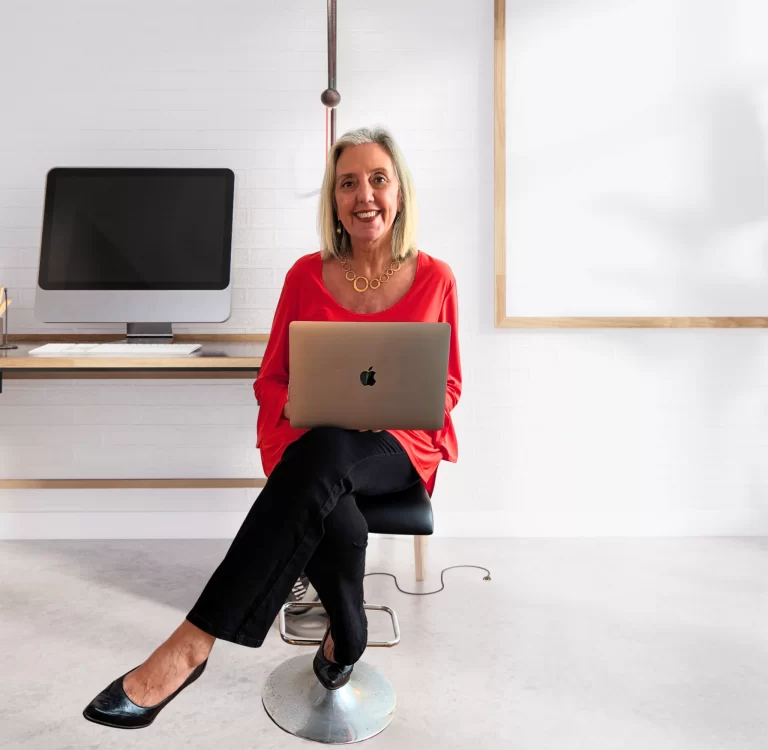
This episode is brought to you by the Business Logjam Session
A private 75-minute online session with Kathi Burns to find the one thing holding your business back and leave with your next steps. It is the same F.L.O.W. process Kathi uses with her own clients: Focus on your goals, Locate your logjams, Outline your solutions, Walk away knowing your next steps.
Find What's Holding Me BackInterested in sponsoring the show? Get in touch.What can you do if you're unhappy in your home?
If you're unhappy in your home, Jenny Pippin says to start by noticing how you feel in each room and which one you're drawn to. People gravitate to rooms with windows on at least two sides, and the room everyone wants to be in has windows on three. Adding windows changes a space dramatically.
Do light tubes work in dark rooms?
Yes. Jenny has four light tubes in her own home, in the kitchen, an interior stairwell to the basement, an interior hallway and closets. The kitchen one has a built-in light fixture, so it gives natural light by day and artificial light at night. She says they bring in light even on a cloudy day and let in moonlight after dark. Kathi notes they're a way to add light where you can't add a window.
How do you make your home feel more like you?
Surround yourself with things you find beautiful: art that sings to you, plants, fresh flowers and color. Jenny Pippin suggests moving your art around so you notice it again, bringing home fresh flowers each week, and creating a private space with natural light for your own creative work, such as painting or quilting.
How do you get more closet space without adding on?
Use the height you already have. With a 10-foot ceiling, Jenny adds a second row of hanging space up high, with arms that come down at the push of a button, for off-season clothes. If there's attic space above the closet, you can raise the ceiling into it instead of adding onto the house.
How did Jenny Pippin start her own home design firm?
She started her firm after moving from Raleigh to Charlotte, building on design work she had begun on the side. Before that she worked for a spec home builder, a contemporary builder in Chapel Hill and a custom home designer. In Charlotte she offered overflow support to designers and builders, and one builder asked her to design a Street of Dreams tour home. It won best in show and best architectural design, and the exposure brought her a lot of custom clients.
How do you design a home for accessibility?
Jenny plans for it without making it obvious. When there are steps to the front door, she makes the garage deep enough to hide a ramp inside, out of the weather, which also helps with wheeling in groceries. For clients who may want an elevator later, she designs a closet the size of an elevator shaft with a self-supported floor that can be removed. She started designing this way after a car wreck left her in a body cast, living in a hospital bed in her front room for four months.
How do you add color, texture and shine to a home?
Start with the lighting: Jenny calls light fixtures the jewelry of the home and the place to bring in sparkle and shine. She loves color; her last home had 14 paint colors. Some people prefer neutral, calm spaces, so she suggests keeping some rooms that way and using your favorite colors in the main living spaces.
Should you put a home office in your bedroom?
No. Jenny is adamantly opposed, because she says the energetics of work and sleep don't mix, so she finds other places for a workspace and lets the bedroom stay a sanctuary. Many people work from home now, so she plans a Zoom room or other quiet place for meetings. Kathi shares how a client who taught class from her dining room during COVID turned a backyard shed into her teaching office.
Where does each part of the conversation start?
- 0:00 Meet Jenny Pippin
- 0:31 From a tobacco farm to home design
- 2:29 Why she wanted to live in a barn
- 3:29 The room everyone is drawn to
- 4:57 Light tubes for dark rooms
- 6:14 Art, plants and fresh flowers
- 9:37 More closet space without adding on
- 11:07 Starting her own design firm
- 13:05 The Street of Dreams home
- 15:06 The car wreck that changed her designs
- 16:37 Hidden ramps and future elevators
- 17:58 Don't let anybody dull your sparkle
- 18:58 Color, texture and shine
- 20:25 Making room for fun
- 21:54 A space of your own
- 23:10 Keep work out of the bedroom
- 25:06 Where to find Jenny
- 26:26 Your home and your health
- 28:03 Wrap-up
What resources were mentioned?
- Pippin Home Designs blog
- Pippin Home Designs email list (for news about Jenny's book series)
- Light tubes (tubular skylights)
- Street of Dreams home tour
These episodes continue the same thread as this one: Donna Zalter, Amy Stone, Adele Bernard, Kitti Andrews also answer the question "How do I organize my home and closet?", and the rest are the most recent conversations on the show.



See every episode on the podcast archive or filter by topic on the How do I organize my home and closet? hub.
How can I support the show?
- Subscribe on Apple Podcasts, Spotify or YouTube, or add the RSS feed to any app.
- Rate and review. A rating on Apple Podcasts helps new listeners find the show, and Kathi reads every review.
- Share the episode with one business owner who needs it; the share buttons are at the top of the page.
- Grab a free eBook: 6 Steps to Organize & Energize Your Home, 6 Steps to Organize Your Home Office or 6 Steps to Organize & Energize Your Life.
- Work with Kathi. The Business Logjam Session is a private 75-minute session to find what is holding your business back.
- Be a guest. Apply here if you have a story about clearing the obstacles in your business.
What did they say, word for word?
The transcript below is edited for readability: filler words and false starts are removed and speaker names are added. Nothing was added or summarized.
Read the full transcript +
Kathi: Hey everyone, as I said, I'm here with Jenny Pippin today, and we're going to talk about home design. We're going to talk about her expertise and why she does what she does, and how you can glorify and beautify your home and make it more of a Zen retreat type of space. So welcome to the show, Jenny.
Jenny: Thank you. Thank you. I'm excited to be here, Kathi. Thanks for inviting me.
Kathi: Absolutely. Let's talk home. It's a little bit of a break from what I normally do on the podcast, so I think it's going to be a fun exploration of what you're up to. So talk to me about, have you always been aesthetically inclined and always been a home designer? Or talk to me about your backstory.
Jenny: So I was actually raised on a tobacco farm and farmed tobacco for as long as I could, until I got a driver's license and could go do something else. And then I put myself through school learning about architecture, waiting tables. So I was a waitress for a while. And then I got into a program where I was able to get some on-the-job experience while I was still in school, and just fell in love with designing homes. My co-op experience was for a designer that did only residential work. We didn't do any commercial work. And that's where I found that my love was in doing residential only. So that's where my focus has been for 38 years.
Kathi: That's pretty amazing. So where's the tobacco farm? Were you in the South?
Jenny: Yes, I'm actually in North Carolina. I grew up in the eastern part of the state, and my mom still lives on the tobacco farm. And now I'm over in the Charlotte region on the western part of the state, up around Lake Norman.
Kathi: So when you started doing this, did you go back into the farmhouse and do some redesign for your mom?
Jenny: I did actually design an addition for my parents while my dad was still alive. Yeah, I sure did.
Kathi: Oh, that's fantastic. One of my friends, my aunt and uncle, not by blood but by family, their son actually designed a home as an architect for them and built the house and everything. And it means a lot. I'm sure your mom is just thrilled to have a little bit of your touch in her life, even though you don't live in the same place anymore.
Jenny: Absolutely. And I've designed homes for my cousins too, around there.
Kathi: Ah, that's awesome. That's awesome. So what made you get into design and architecture and that kind of thing?
Jenny: Well, I just loved drawing, and I loved houses, and I loved the ideas that kept coming to me about how a space could live. And I loved barns. I wanted to live in a barn. So I actually designed a remodel for my husband and me back in 2006 that looked like the shape of a North Carolina barn, even though it wasn't a barn.
Kathi: That's fantastic. Did you make it with white trim?
Jenny: No, it's actually corrugated metal and a standing seam metal roof.
Kathi: I love that. I've always wanted a metal roof, and it rains a lot in the Carolinas, so I bet it just sounds fantastic when it rains.
Jenny: Yes. Yes. And I filled it with skylights too, so there was tons of natural light.
Kathi: Fantastic. Fantastic. So if someone's living in a house that they're not really quite happy with, what kind of tip would you give them?
Jenny: I would say, think about how you feel in your space now. Is there a room that you're particularly drawn to? Or is there not anywhere in your house that you're drawn to? I find that people are drawn to rooms that have windows on at least two sides of the walls, and the room that everybody wants to be in is a room that has windows on three sides.
Kathi: Yes.
Jenny: So it's like a sunroom. So if you have a space that's like that, where you could add additional windows, that's going to be where everybody wants to be.
Kathi: Oh, that's interesting. I hadn't thought of that, but that's true. That's in the kitchen, right? But usually the kitchen has some good light as well.
Jenny: So yeah, humans are drawn to natural light, instinctively. And so when you're living in a house that's too dark, natural light is going to change it dramatically. And then going with maybe some lighter furnishings or lighter trim, or even just lighter wall paint, those kinds of things. Anything to help brighten it up. But adding windows is a big factor that we bring a lot to our clients.
Humans are drawn to natural light, instinctively.
Kathi: I love that. Now, how do you feel about those, not the solar tube, the light tube things you can put through your roof, and then it gives you your ambient light? Do you use those frequently in your designs?
Jenny: Yes. And I have four of them in my own home.
Kathi: It's always amazing to me. Oh, here's my cat. He wants to be in the podcast. This is Ying.
Jenny: Hi, Ying. Hi.
Kathi: It's always amazing to me how this one little hole can bring so much light into a room. It's crazy to me.
Jenny: Yes. And we put one in our kitchen, and it's the kind that has a light fixture in it. So when it's dark at night, we can still turn that on, and it serves both purposes: the daytime natural light and the evening artificial light. And we find that even when there's a little bit of moonlight, it still brings that natural moonlight into the house. Even on a cloudy day, you still get natural light from those.
Kathi: That's crazy.
Jenny: Yeah, they're wonderful.
Kathi: That's also a way to add light, I guess, if you're in a room that you can't add a window to.
Jenny: That's right. Yes. We have an interior stairwell going to our basement where we added one, and an interior hallway has one. And our closets. They're a great resource.
Kathi: That's a great idea for a closet, because all closets are just way too darn dark, even with a light. What other tips do you have for us as far as sprucing up our home or making our home feel more like us?
Jenny: I would say anything that you have around you that's maybe artwork that you're drawn to. Or maybe you create art: create a space where you can actually do your own art, crafting. I have a lot of quilting clients and clients who love to paint. Create a space for that if you don't already have one. Create a private space where you can go and have natural light in it, where you can go and be creative. But bring in natural light, bring in the artwork that you like, and bring in plants. Plants bring nature inside. It's an easy thing to do. I mean, there are lots of things you can do that will cost a lot of money, but those are easy things. Make sure it's a piece of art that really sings to you. And after a while, you might not notice it anymore, so switch your art around so then you start to see it again.
Kathi: Yeah, moving it around is a really good idea. I love that. I like to just take everything off the wall, move the furniture and then put everything back, and it makes it a completely different room. And I like the plants. I just brought six plants into my living room. And even if you have a brown thumb, there are some plants that you just really can't kill, like the mother tongue, whatever it's called, the spiky thing. So there's a lot of stuff that you can do, even if you have a brown thumb.
Jenny: That's right. That's right. And another thing, if you don't have a lot of art, bring in flowers. Fresh flowers every week. I go to the farmers market on Saturdays, and I always bring home a bundle or two of fresh flowers. It just makes me happy.
Kathi: Yeah. Me too. Especially the smell. I had never really experienced aromatherapy as much until I had an operation, and one of my girlfriends sent me over three bundles of Stargazer lilies, and I'm now in love with them. It made me feel so good and so energized, just flowers. So I'm with you on the fresh flower type of thing. So go on.
Jenny: Anything that you feel is beautiful will make you feel good. It actually makes you feel happier. So anything that you can bring into your space, be it flowers or color or a piece of art or sculpture, anything like that. Your pet: make sure you have your pets with you.
Kathi: Yeah, my cat had to be here with me too. He's never been on the podcast before. So welcome, Ying. Here he goes.
Jenny: Well, it's no wonder my cat wanted to be in here with me too. She's gray and white, so she wanted to meet your kitty.
Kathi: Ah, that's funny. That's funny. So I know that this has happened to you. People say, "I don't have a big enough closet." I hear this all the time. What do you do for the people who feel like they don't have a big enough closet? Do you have advice or tips or anything that you do to help them feel like at least they have more closet, or maybe bust out a wall to give more closet?
Jenny: Yeah, if they have a 10-foot-tall ceiling, then we can add another layer of hanging space in that upper area. I have a client who actually has a company that makes the arms that you can bring down. You can hit a button, and it brings the arm down to you with that whole extra row of storage.
Kathi: Yes. Yes. Yes. I have a couple of clients who have those. It's fantastic. And that is where you put your off-season clothes you don't need. You stick those off-season clothes there and bring them right back up. Oh, I hadn't thought about doing that inside of a… A lot of my clients just have the really small closets. They're in the old homes, and they have the really small closets, the one-door thing, but they do have the high ceilings. I never considered putting the drop-down in there.
Jenny: Yes. Or if there's attic space above that closet. If they don't have a 10-foot ceiling, but there's some attic space they could bump into, they could raise that ceiling without having to bump out and add onto the house.
Kathi: Love it. Love it. That's smart. I'm learning new things that I had never considered before, Jenny. That's prime. Awesome. So tell me about the beginning of your entrepreneurial journey. What happened with you? So you graduated, and then did you start working for someone, or did you launch? How did that work?
Jenny: I went to work for a builder at first, and we did a lot of what we call spec homes, speculative. We didn't have custom clients for them, and they had a set style that they were building. It was what we called a five-four-and-a-door. It's really a Williamsburg style: the five windows across the top and four on the bottom, with the door in the middle. Your basic colonial type box. And then I went to work for a builder in Chapel Hill who built only contemporary houses. So I had a mix of the very traditional and then the very contemporary. And then I went to work for a designer who did only custom homes. And so every client that he worked with wanted something unique: unique to their taste and their budget, and also unique to the building site that they had, versus going in and clearing a piece of land, like the development type. These were individual lots in different places. And I just love that. I love the variety. I love the uniqueness of each project that we got to work with. And my husband wanted to relocate to do a business partnership with a friend of his in a surveying company in Charlotte. So we relocated to Charlotte, and instead of trying to find another job with another firm, I decided to start my own, because I had started a little bit on the side before we moved. We lived in Raleigh at that time. So I decided it was time to go full bore on my own. And I approached a number of designers and builders in the area to ask if they needed help, that I could offer some overflow support. And one of those builders actually decided to build a spec home in something called the Street of Dreams, which was a home tour for the public to come through, and asked me if I wanted to design the home for that tour. And I said, "Absolutely. I would love to do that." That was my first opportunity to do anything like that, and our house won best in show and best architectural design. Being open for the tour for, I guess it was maybe two weeks, hundreds of people went through that home. And as a result of having that exposure, I got a lot of custom clients that started coming my way for what they saw that I had done there on the tour and just loved. And my specialty is designing for a view, and this home was on a golf course, and directly across the street was the lake. So we had a view front and back.

Kathi: That's fantastic. The story arc of your career just seems like it was perfect. To start with, what do you call it, the five-four-and-a-door? I never heard that phrase, but that's pretty cool. To start with that and do the cookie cutter, and then progress and progress and progress into custom, and then to have the opportunity to actually design your own on the Street of Dreams. You had a dream career. Absolutely. You are blessed, girl. It just sounds like the perfect circumstances have worked for you all throughout your career. That's amazing.
Jenny: Yeah, there's a whole other piece to that story. Before I moved from the Raleigh area to the Lake Norman area, I was living in a home that my husband and I were renting at the time. It was a passive solar home that had been designed by the homeowner himself and built by him. And so it was my first experience in being in passive solar, and I thought, "This is so awesome. Why isn't everybody building this way?" So I wanted to learn about that. But shortly after we moved in, I was in a bad car wreck, and I was thrown out the sunroof of my car. My back was broken in two places, and I wound up in a body cast. And I realized that this same home was not going to be able to accommodate me in a body cast, in a physically challenged position. And so I wound up having to rent a hospital bed and put it in the front room of the house, and that's where I stayed for four months. And so I learned that you don't have to be old to need a house that can support you in a challenging situation. You don't have to be in a wheelchair to have somebody come and visit you who is in a wheelchair. You need to make your home visitable by others as well as functional for yourself. So once I was able to get back to work, I went ahead and studied accessible design and passive solar design, and I've incorporated those two elements in with what I do for my clients now too.
You don't have to be old to need a house that can support you in a challenging situation.
Kathi: You probably don't do a lot of two-stories at this point. Your specialization is probably one-story.
Jenny: Actually, we do a lot of multi-level houses, because our specialty is designing for view. A lot of our properties are on either a lakefront or a mountainside, so we're putting elevators in.
Kathi: Okay. All right.
Jenny: And so when you want to get somebody into your house, if you've got steps to the front door, we actually make the garages deep enough so that you can hide a ramp inside that garage. So it doesn't speak to the world that there's someone with a physical challenge in that house. But it also provides safety from the weather, so you don't have a slippery, icy ramp outside in the weather. It gives you a place that you can come and go. And even if you don't need it for a physical challenge, you can always put your groceries in one of those buggies and wheel it up into the house. So it makes your home a whole lot more functional.
Kathi: Yeah, that's a smart idea, because I think whenever we drive by and see the ramps, it's like, ah, I feel a little bit sad. And this way you don't even have that sadness coming through your house. Oh, that's smart.
Jenny: And not everybody can afford the elevator. So what we do is design a closet essentially the size of an elevator shaft. And then we design the floor to be self-supported and not connected to the other floor system, so it can be easily removed at some point down the road if they ever do decide that they want to add the elevator in. If they never need the elevator, they've got great storage closets on every level.
Kathi: Yeah. Smart. You're so smart.
Jenny: Thanks.
Kathi: So if you had to look back and talk to yourself before you became a business owner, what would you tell your teenage self?
Jenny: Well, I grew up in a family of entrepreneurs. Everybody was farming, so I knew that I wanted to be an entrepreneur. I really didn't know exactly what direction I was going to take it, but I would tell myself to never take no for an answer. If there's something you want, go for it. And persevere.
Kathi: Yeah.
Jenny: And don't let anybody dull your sparkle.
Don't let anybody dull your sparkle.
Kathi: Ah, don't let anybody dull your sparkle. That's a great quote. We're going to have to put that one underneath the podcast right there.
Jenny: Yes.
Kathi: I love it. I love that. And okay, so as a stylist, I always tell people you need color, texture and shine if you put together an outfit. And I would expect that there's something to be said about that in the design of a home. How would you interpret that?
Jenny: Well, light fixtures tend to be a place where you can bring in that sparkle and shine. It's the jewelry of the home. So that's a great way to bring in that sparkle.
Light fixtures tend to be a place where you can bring in that sparkle and shine. It's the jewelry of the home.
Kathi: Uh-huh. And how about color and texture?
Jenny: Well, I personally love color. My whole house is full of color. My last home had 14 paint colors in it. I think this one probably only has about six or seven. But color lights me up. And what I found with the former home with all of that color, everyone who walked through the front door just lit up, literally. So color is really important. I think there are some people that prefer to be very neutral and very calm, so you can have spaces in your home that are that way. But I think in your main living spaces, having color, your favorite colors, just makes you happier.
Kathi: Yeah, I totally agree. And for those who are listening, you need to jump over to my YouTube channel and look at Organized and Energized! The Podcast so you can see what Jenny's wearing, because she is popping color all over the place. I love your shirt.
Jenny: Thank you. Thank you. I wear color all the time.
Kathi: Yeah. Plus you can meet Ying, my cat, right here. You can see him. So that's fantastic. Now, what else should we talk about? I love the way that this is the energetics of your space, right? We talk about that. Anything else you'd like to add to this conversation?
Jenny: Well, what are people doing for fun at their homes? I think that's a really important thing to think about. Are they planning in fun spaces? Are they planning in places to enjoy themselves, to relax? A lot of people are really into their outdoor living spaces now. And I know you like to ask people how they celebrate. And so for me, my fun place is where I celebrate. I actually have four acres in the country, and the back side of the tree line opens to a cow pasture. It's our neighbors' cows, but we overlook it. And I put in a she-shed, and I have dance parties at my she-shed with live bands and invite all my friends over, and we have a great time. We dance barefoot on the grass and watch the stars, and we have a bubble machine. Everybody lights up like little kids with the bubbles. It's great. It's a fun way to hang out.
Kathi: I have a bubble machine too. Girl, you're the only person I know that has one like me.
Jenny: Yeah. Yeah, we love it. We have a fog machine. We have a disco ball. We have the colorful canopies everywhere.
Kathi: Oh, I would love to see this. Oh my gosh. You send me a picture of your she-shed. That reminds me of whenever we were talking earlier, and I lost that thought, but I think it's so important that every person has their own space within the home.
Jenny: Absolutely.
Kathi: For my husband, when we moved to this house, it was very important that he had his workout space. And how's that going to happen? It's a whole room. He has all this stuff, and he took over half of the garage. It worked out perfectly, right? And I have my reading area. I have a whole corner of the bedroom that's my space, with my lazy girl, my bookshelf, my special light. And that's my space that I can go to. And I think that no matter how small of a space you live in, you can carve out a place that's just for you. And I think it's super important.
Jenny: Absolutely it is. And we've just worked on one for a client where we created a nook for her under the stairs.
Kathi: Yes. Yeah.
Jenny: I've done that actually for kiddos. Little playrooms in the space underneath the stairs, because kids need their own space too.
Kathi: Yes, they do.
Jenny: Yeah. Something for everybody. And I like to get everybody involved when I'm designing a home, to find out what everybody wants in it, so we make sure that everybody has all of their dreams considered when we're putting a design together. And then, speaking of energetics, so many people work from home now. We have to have what we call a Zoom room, or a quiet place where we can have those meetings and things. We have some clients who want to put their workspace in their bedroom, and I am adamantly opposed. The energetics of the two just don't mix. You don't want to have your business and your sleeping space in the same room. So we find ways to give them other places to make that happen, so that they can keep their bedroom their sanctuary.
You don't want to have your business and your sleeping space in the same room.
Kathi: Super smart. Super smart. During COVID, one of my clients is a schoolteacher, and of course she was doing her classroom from her home, and her dining room actually is where she was leading the classroom. Well, one day her little six-year-old son went cruising through naked in the back.
Jenny: Oh my goodness.
Kathi: And at that point, she's like, "Oh my gosh, we've got to do something." So, speaking of sheds, she had a shed out in her backyard. We actually gutted it, turned it around, and turned it into her teaching office space, where she could shut the door and not have anybody cruising around naked behind her, and she could actually focus on teaching her curriculum. So God bless the teachers during COVID. And taking that shed and turning it into whatever. I have several clients who have she-sheds too. I think they're fantastic.
Jenny: They are. They're awesome. They're awesome.
Kathi: I want to come visit you.
Jenny: Yeah. Have a dance party. And where we're located is really near where the Statesville balloon festival happens every year. So in October, the balloons come flying over us, and we've had one land in our yard. So it's a great space for people to watch the balloons.
Kathi: Wow. All right, so we're all going to show up. Yes, let's all go to Jenny's place. Find Jenny Pippin and let's go there. I'm excited. Okay, so is there anything that you'd like to offer the people that are listening? Anything at all that they can use to make their home feel a little bit better for themselves?
Jenny: Absolutely. We have a great resource on our website. It's called my blog. We have so much valuable information in our blog to help people, from learning about how to be happy in their home, to learning about indoor air quality, to water quality, to bringing in natural light in various ways. And now we're talking about regenerative design and working with nature, and biophilia and biomimicry. All kinds of great information is on that blog. So it's at pippinhomedesigns.com, and that's P-I-P-P-I-N home designs, with an S, dot com.
Kathi: Perfect. Check it out, gang. I'm going to look it up, and I hope you have pictures of your little she-shed on there. I'd love to have it in one of your blogs. You need to blog about that so I can see it.
Jenny: We do. And I really want people to know that surrounding yourself with beauty is really important. It helps you be happier. We just have to think of it differently. It's not just shelter anymore. It's so much more of our life experience.
Kathi: Amazing. Wow. All right. Cool. I'm all excited about this talk, and I'm energized around it, energized around thinking about home that way. I've always considered home a haven, but I think it's a reframe that most of us don't really consider.
Jenny: That's right. When you think about the things that you buy to put in your house, think about what it's made of. Indoor air quality is important, and healthy water is really important, and lots of natural light, and bringing in nature. All of those things can really transform a space.

Kathi: Love it. Love it. Well, thank you so much for your time. I'm sure that everybody out there has learned a lot. I've learned a lot, and I'm going to pop some of those mic drop quotes down below for you as well. And I appreciate your time, Jenny. Have fun designing your next home. I can't wait to see what you're up to.
Jenny: Thank you. Thank you. I really appreciate the opportunity too, Kathi, and I look forward to talking with you again.
Kathi: You got it. Take care of yourself.
Jenny: Thank you. Have a great afternoon.
Kathi: Okay. You too. Bye.
Jenny: Oh, one more thing. We have a book coming out.
Kathi: Really?
Jenny: Yes. I almost forgot to share this with you. We're writing a book.
Kathi: Okay. Yeah, we need to know about this.
Jenny: We're writing a series, actually. And so we're working on book one of the series, and it will also help people to learn about how to design their home for their specific soul's desire. So we use what we have coined as our You Inspired discovery process. And so there are six key elements that we look at when we're designing a home that is designed to really bring out what your soul wants, so that you can live your best life in your home.
Kathi: Well, you were holding out on us, Jenny. So now it's good to know this book is coming out. So when are you expecting to publish?
Jenny: Our intention is going to be this fall, maybe around October, is the goal, I should say.
Kathi: Yeah. All right. Well, if we go to your website, is there a way for us to get on that list so that we know when your book's going to drop?
Jenny: Oh yes, absolutely. Go to our website and sign up for our email list. We actually just announced it today in a newsletter, so we'll be sending that out again tomorrow, and we'll keep everybody up to date as much as we can on how it's developing.
Kathi: That's quite exciting. I wish you much luck with that. Thanks for popping that in at the last second.
Jenny: Thank you.
Kathi: Okay, signing off for now. This week, gang, we will see you next week, same time, same bat channel, and we will see you there. Bye-bye.
Jenny: Bye.
Where can I find the links and resources from this episode?
Connect with Jenny
Organizations and companies
Inspired? Here Are Your Action Steps:
- Walk through your home and note which rooms you're drawn to and which ones you avoid.
- Look for a room where you could add windows so it has light on two or three sides.
- Brighten a dark room with lighter paint, trim or furnishings, or ask about a light tube where you can't add a window.
- Hang art that sings to you, and move it around when you stop noticing it.
- Bring in plants and pick up fresh flowers each week.
- Check your closet's ceiling height and add a second hanging row for off-season clothes if you have the room.
- Pick light fixtures as the jewelry of your home, and use your favorite colors in the main living spaces.
- Carve out a space of your own, and one for each person in the house, kids included.
- Move your workspace out of the bedroom and set up a quiet spot for meetings.
Frequently asked questions
Why am I unhappy in my home?
+
Jenny Pippin's first question is how you feel in your space now and whether there's any room you're drawn to. She finds a house that's too dark is a common problem, and that people are drawn to natural light. Adding windows, lighter paint, trim or furnishings, or a light tube can change a space dramatically.
How do you make a dark house feel better?
+
Start with the rooms you're drawn to. Jenny finds people love rooms with windows on at least two sides, and the room everyone wants to be in has windows on three. Adding windows, lighter paint and trim, or a light tube through the roof (she has four in her own home) changes a space dramatically.
How do you get more closet space without adding on?
+
With a 10-foot ceiling, add a second row of hanging space up high, with pull-down arms for off-season clothes. If there's attic space above the closet, you can raise the ceiling into it without bumping out and adding onto the house.
Why does Jenny Pippin design for accessibility?
+
After a car wreck broke her back in two places, she spent four months in a body cast in a hospital bed in her front room, because the house couldn't accommodate her. She learned you don't have to be old to need a home that supports you. Now she hides ramps inside deep garages and designs a closet the size of an elevator shaft, with a removable floor, for clients who may need an elevator later.
What simple changes make a home feel more like you?
+
Bring in art you love and move it around so you see it again, add plants and fresh flowers, and use color in your main living spaces. Jenny calls light fixtures the jewelry of the home. She makes sure everyone, kids included, has a space of their own, and she keeps the workspace out of the bedroom.
Who is talking in this episode?

About the Host, Kathi Burns
Kathi Burns, CPO®, is a Business FLOW Strategist based in San Diego. For the last 20+ years, Kathi has helped clients create systems they can stick to. She is the author of How to Master Your Muck, Organizing With Tetris and Home Organization, The Smart Guide, and co-author of four more titles; all are in Kathi's shop. Kathi's business has been featured on Good Morning America, and her advice has been featured in Oprah Magazine, Martha Stewart Living, Better Homes and Gardens and Entrepreneur Magazine.
More about Kathi · Shop Kathi's books · Business Logjam Session · Apply to be a guest

About Jenny Pippin
Jenny Pippin is the founder and lead designer of Pippin Home Designs in North Carolina, serving Lake Norman, Charlotte and Blowing Rock. She grew up on a tobacco farm in the eastern part of the state and has focused on residential design for 38 years. She is a Certified Professional Building Designer and a Certified Green Professional. She worked for builders and a custom home designer before starting her own firm in Charlotte. Her first big project, a Street of Dreams tour home, won best in show and best architectural design. After a car wreck left her in a body cast, she studied accessible design and passive solar design. Her firm specializes in designing for a view.
Want help putting this into practice?
Book a Business Logjam Session with Kathi
A private 75-minute online session to find the one thing holding your business back and leave with your next steps, using the same F.L.O.W. process Kathi uses with her own clients: Focus on your goals, Locate your logjams, Outline your solutions, Walk away knowing your next steps.
Prefer to start small? Download Kathi's free eBook 6 Steps to Organize & Energize Your Home.
Published · Updated
This episode page is for general information. Guests speak for themselves, and their opinions, statistics and examples are their own. Nothing here is legal, financial, medical or mental-health advice; talk to a qualified professional about your own situation. Some links go to the guest's own products or free offers; addSpace does not earn a commission from them unless stated.