


Episode 140
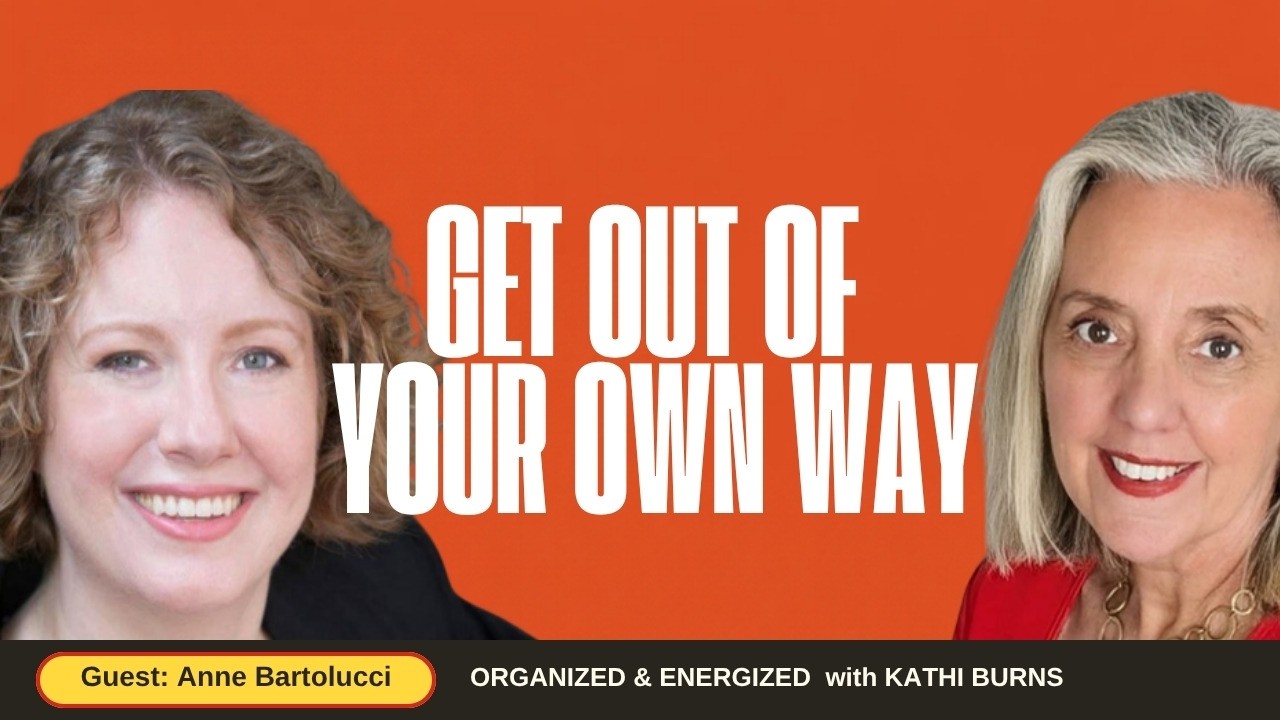
with Anne Bartolucci, psychologist, founder of Psych Up Academy and USA Today bestselling author (as Cecilia Dominic) · March 18, 2026 · 26 min
Psychologist and USA Today bestselling author Anne Bartolucci says a first book rarely makes its author rich, so decide what job it will do in your business before you write.
Anne's first publisher stopped taking her books in about 2016; she kept her fiction editor and went on to self-publish, and she now has 17 novels, four novellas and two nonfiction books.
If you self-publish, Anne says to pay professionals for two things: editing and, unless you are a graphic designer who knows the book market, the cover.
Whether to self-publish or hold out for a traditional deal depends on your goals, values and audience, and Anne says to work out positioning before you write a word.
Anne keeps each book in Scrivener, a one-time-fee program that holds the manuscript, research and outline in one place with a corkboard for moving sections around.
Published · Updated
What is this episode about?
Kathi Burns, CPO®, Business FLOW Strategist, talks with Dr. Anne Bartolucci, a sleep psychologist, founder of Psych Up Academy and USA Today bestselling novelist who writes as Cecilia Dominic. Anne picked up a copy of Writer's Digest in grad school, landed her first book contract in 2013 with a werewolf medical thriller, and kept going on her own after her publisher stopped taking her books. If you want to write your book, you'll hear why Anne treats a book like an employee in your business, how to choose between a traditional deal and self-publishing, where to spend money when you publish yourself, how she survived a one-star review, why anchoring to your values keeps you writing when avoidance kicks in, and how she keeps a whole manuscript organized in Scrivener.
It's thinking about the goal for your book, how it fits in your business ecosystem, and how it's basically going to be like an employee.Anne Bartolucci
Jump to links and resources · Part of How do I become known as an expert? · All episodes · Every guest
What are the key takeaways?
- Anne says most first-time authors expect their book to make a lot of money; she asks them instead to decide how it fits their business and what work it will do, like an employee.
- There is no one-size-fits-all answer to traditional versus self-publishing; the choice depends on your goals, your values, your audience and your book's subcategory.
- When self-publishing, pay for professional editing and a professional cover; Kathi adds that a book design agency gave her organizing book the white space it needed.
- Anne's first publisher wanted books every four to six months, then dropped her and other authors around 2016, so she got her rights back and continued on her own.
- A harsh review usually says more about what the book triggered in the reviewer than about the author, and Anne says there is no failure, only learning experiences.
- Writing a book can feel scary, so the brain pushes avoidance; Anne's free values-based goal-setting workshop gives writers something to anchor back into.
- Anne wrote Business Basics for Private Practice as a trainer for her new contractors, because she was tired of answering the same questions.

This episode is brought to you by the Business Logjam Session
A private 75-minute online session with Kathi Burns to find the one thing holding your business back and leave with your next steps. It is the same F.L.O.W. process Kathi uses with her own clients: Focus on your goals, Locate your logjams, Outline your solutions, Walk away knowing your next steps.
Find What's Holding Me BackInterested in sponsoring the show? Get in touch.Do you need a writing degree to become an author?
No. Anne Bartolucci has 17 novels, four novellas and two nonfiction books, and she says she has no formal writing training: she majored in math and psychology after leaving a piano major. She wrote all through childhood, lost the joy of it to academic writing in grad school, then picked up a copy of Writer's Digest and realized people get paid to write.
How do you find a publisher for your first book?
Anne found hers through a writers' group: the Georgia Romance Writers brought in publishing professionals to speak, and she sent her book to one of them, Samhain Publishing in Cincinnati. About seven months later she got an email asking if the book was still available. She had pitched many publishers and agents before that one took, and she got her first contract in 2013.
How do you deal with a bad book review?
Don't take it personally: a harsh review is usually about the reviewer. Anne's first review, from Library Journal, was good, but her next major one, from Romantic Times, gave her one star. She says something in the book had triggered the reviewer, who didn't have the insight to see that. There's always a lesson.
What should you spend money on when you self-publish a book?
Spend money on two things: professional editing and a professional cover. Anne says you can skip paying for the cover only if you are a really good graphic designer who knows the book market. She kept her fiction editor from her old publisher. Kathi adds that hiring a book design agency gave her organizing book the white space it needed.
What should you decide before you write your book?
Decide what job the book will do in your business. Anne says first-time authors often expect to make a lot of money, so she has them think about how the book fits their business ecosystem and how it will work for them, like an employee. Positioning and audience come before writing. Her own nonfiction book trains her new contractors.
Should I self-publish or get a traditional publisher?
It depends on your goals, your values and your audience; Anne says there's no one-size-fits-all answer. She walks clients through identifying their values and looks at which subcategories their book will sit in before recommending a path. She admits a traditional deal feels great: getting Business Basics for Private Practice published by Routledge, Taylor & Francis made her feel legit in nonfiction.
How do you stay motivated to write a book?
Anchor the work to your values before you start, or as soon as you notice you're stuck. Anne says writing a book feels scary, so your brain pushes avoidance and everything else starts to seem more important. She runs a free values-based goal-setting workshop for writers every couple of months, timed to the new moon, and gives her students two co-writing times and peer feedback.
What is Scrivener and how does it help you write a book?
Scrivener is a writing program that keeps your manuscript, research and outlines in one place. Anne compares it to a three-ring binder that turns your headings into an outline, with a corkboard where you move cards instead of copying and pasting text. There's a learning curve, but it has a good tutorial, and it's a one-time fee rather than a monthly license.
Where does each part of the conversation start?
- 0:00 Meet Anne Bartolucci
- 0:55 How grad school almost killed her writing
- 3:21 Her first book: a werewolf medical thriller
- 4:57 Landing her first book contract
- 7:34 When her publisher dropped her
- 8:34 Don't take reviews personally
- 9:38 Going from traditional to self-publishing
- 10:35 Where to spend money: editing and covers
- 11:22 Your book is an employee in your business
- 12:10 Traditional deal or self-publishing?
- 14:20 How Psych Up Academy started
- 18:26 Advice to her 18-year-old self
- 19:38 Values-based goal setting for writers
- 21:48 Scrivener: one place for your whole book
- 24:22 Wrap-up
What resources were mentioned?
- Scrivener free trial (Anne's link)
- Anne's free Values-Based Goal Setting for Writers workshop (Psych Up Academy)
- Work with Anne: group programs and 1:1 mentorship
- Writer's Digest
- Georgia Romance Writers
- Lightning Source
These episodes continue the same thread as this one: Dr. Julie Marty-Pearson, Vince Warnock also answer the question "How do I become known as an expert?", and the rest are the most recent conversations on the show.
 PodcastingEpisode 146
How to Grow Your Confidence Through Storytelling & Podcasting with Julie Marty-Pearson


See every episode on the podcast archive or filter by topic on the How do I become known as an expert? hub.
How can I support the show?
- Subscribe on Apple Podcasts, Spotify or YouTube, or add the RSS feed to any app.
- Rate and review. A rating on Apple Podcasts helps new listeners find the show, and Kathi reads every review.
- Share the episode with one business owner who needs it; the share buttons are at the top of the page.
- Grab a free eBook: 6 Steps to Organize & Energize Your Home, 6 Steps to Organize Your Home Office or 6 Steps to Organize & Energize Your Life.
- Work with Kathi. The Business Logjam Session is a private 75-minute session to find what is holding your business back.
- Be a guest. Apply here if you have a story about clearing the obstacles in your business.
What did they say, word for word?
The transcript below is edited for readability: filler words and false starts are removed and speaker names are added. Nothing was added or summarized.
Read the full transcript +
Kathi: Hi, Anne. I am so glad you're here. I really wanted my people to meet you because you're a writer, you're a publisher, you've had so many books. So, welcome to the show.
Anne: Thank you, Kathi. I'm so happy to be here.
Kathi: So, talk to me about your journey as a writer. I mean, you're pretty much prolific with what you do.
Anne: Yes. As somebody said when they saw all my books lined up, "Wow, that's a lot of words." And I said, "Well, I use a lot of them repeatedly, but yes." So, my journey as a writer. Apparently it started when I was two. My mother said that I wrote my first story. So, I think I dictated my first story. I have yet to see evidence of this, but apparently it was about a bunny, and what it lacked in plot and character development, it more than made up for in enthusiasm. And so, I wrote all through childhood and adolescence. It was an outlet. And then I got to graduate school, and that killed the joy of writing for a while, because nothing kills the joy of writing like doing academic writing.
Nothing kills the joy of writing like doing academic writing.
Anne: And I had a little setback in grad school and went to a bookstore to do a little retail therapy. In grad school you don't have that much money, so you buy books, not clothes. And I picked up a copy of Writer's Digest, and I was leafing through it, and I was like, "Oh my gosh, people actually get paid to write." Mind blown.
Kathi: Yes. What?
Anne: So that is when I started getting serious about being published as a fiction author. And of course it took a while, because there's a lot to learn. I got my first book contract in 2013, so I've been in the publishing world now for over a decade. I had seven books with my first publisher. They went under. I got the rights back and continued on my own. And now I have 17 novels, four novellas and two nonfiction books.
Kathi: That's amazing. So let me ask you, in college then, did you do undergrad in English?
Anne: No.
Kathi: That's awesome.
Anne: I started off as math and music. I was a piano major, and I'm not built to be a piano major. I have a flat, bony butt, which was not comfortable for all of the hours they expect you to practice. So I switched music to a minor and picked up psychology as my second major, because, as my adviser said, I have an aversion to free time. So no, I don't have any formal writing training or writing classes.
Kathi: That's pretty amazing. I started as a violinist music major, and it's six hours in the room every day for technique and everything. A piano, a mirror, a violin, and that's it, right? It gets really boring.
Anne: Yeah. And of course, everybody quickly figures out the practice rooms that have the padded benches or the comfortable seats, and those are the ones that get snatched up the most quickly.
Kathi: Yes.
Anne: No, it's something that you have to absolutely love. And for me, that's writing. I mean, I love being a psychologist, but writing is really my passion.
Kathi: I love that. So, your very first book. Let's talk about the very first book you published. How did you find the publisher? How did you get signed? What was it about?
Anne: So the first book was at that time called The Mountain's Shadow. It has since been re-released as The Wolf's Shadow. It is a werewolf medical thriller.
Kathi: Yes.
Anne: And the inspiration came when I was doing my predoctoral internship near the Ozark Mountains. I was in Little Rock, at the Central Arkansas VA, and veterans would come in from the mountains and have the best stories about all the weird stuff they'd see. And so I was like, "Oh, that's going to be a great setting for a book. And what creature would go there?" Okay, werewolves. So that was in '03, '04. Oops, my supervisor has arrived. Hello. Yes, this is Timothy Mouse. I can't lock him out, because if I do, he will yell in the exact pitch to echo in the headphones. So he just wants to be on screen.
Kathi: He's a star.
Anne: He is. Yes. He likes to come in and greet his adoring public.
Kathi: That's fantastic. Well, Anne, we all have to have our muses. I have a couple. Surprised they're not here.
Anne: Exactly. Yes. My podcast co-host and I recorded the first episode of our season 3 podcast a few weeks ago, and I was reviewing it, and the cat definitely had opinions, like, I'm here, I'm here.
Kathi: How did you find your publisher?
Anne: When I moved back to Georgia, I joined the Georgia Romance Writers, and they had publishing professionals who would come in and speak to us every so often. Somebody came from that publisher, Samhain Publishing, which was a midsize publisher based out of Cincinnati, and I sent in the book and waited and waited and waited. And finally, about seven months later, I got an email: "Hey, is this still available?" And I said, "Well, yes, it is." And so that is how I got my first book contract.
Kathi: Holy smokes. So, you only pitched one publisher?
Anne: Oh, no. I had pitched many publishers.
Kathi: I was going to say.
Anne: And agents. Yes. No, that was the one that took.
Kathi: Right. Oh, that's fantastic. So, let me ask you, when your first book was released, what type of celebration did you do?
Anne: At the time, we had a coffee shop here. I'm in Decatur, which is kind of a suburb of Atlanta, still part of the city. The coffee shop was named Java Monkey, and my friends and I would go and do their wine tastings every other week, and we got friendly with the owner. So I had my book release party at Java Monkey.
Kathi: Yay.
Anne: Yes.
Kathi: That's fantastic. That's great. I mean, you have so much going on. So talk to me about a point in your writing, because I'm sure you didn't just spin off another book. What happened with the sequence of your publishing journey?
Anne: Well, this was in the mid-2010s, and this was when the idea of, quote unquote, rapid release came in. Typically in traditional publishing, they'll release series books a year apart, and Samhain wanted them every four to six months. So I had three books in the Lycanthropy Files series, and then I was like, "Hey, let me try steampunk." And so I ended up having three steampunk books with them. And my poor little one lone contemporary romance, A Perfect Man. You can tell by the title it's fiction. No, I'm happily married.
Kathi: You're funny.
Anne: And yes, the big setback, I will say the big psychological setback, came probably in about 2016, when my editor called me and said they don't want any more books from you. Which was shocking. I mean, I knew I wasn't selling great, but I later found out that that was the beginning of the end for them. They weren't selling anybody. It was just a bunch of us got the "well, we don't want any more books from you." And I had not finished the steampunk series, and I had other ideas. So I basically continued on my own. And of course, there have been ups and downs. There have been times when my books haven't sold great. In the past couple years I've been working hard on building Psych Up Academy, and so I haven't been marketing my books, so they haven't been selling well, although I'm getting back to it now. But that's part of being a writer. It's like we were talking about before we got on: there are things that happen, and you can't take them personally. It's really easy to take them personally, because these books are your words, and you do put a little bit of your soul into them, whether they're fiction or nonfiction, and if people don't like them, it's really harsh.
Kathi: This is part of you. Yeah.
Anne: My first book review for The Mountain's Shadow was from Library Journal, and thank goodness it was a good review, because then my next review from a major outlet was from Romantic Times, and they gave me one star.
Kathi: Ouch.
Anne: Yeah. Big ouch. They have since gone under. No schadenfreude here. Obviously they did not have great taste. No, I'm kidding. They were a good magazine. They reviewed me well later. But basically something in that book had triggered the reviewer, and the reviewer didn't have the insight or maturity to realize that and pass it along.
Kathi: Yeah. It's never about you. It's always about them. For sure. There's always some little trigger that happens. So then you became a self-published author after that. Wow.
Anne: I did.
Kathi: Okay. That's really good. And that was around the time when Lightning Source and all that was coming around, right? So good for you.
Anne: Exactly. Thank you. I took many courses, did many, many hours of training and learning. But I'm happy that I had the traditional publishing first, because I knew what the process was to make a good book and to make a professional book. That way I was really able to be very discerning about what professionals I trusted and what my process was. And thankfully, I kept my fiction editor from the publisher, which was amazing.
Kathi: I was going to ask that. You have to have that, for sure.
Anne: Yes, absolutely. If you're going to spend money on two things in self-publishing: editing, and, unless you are a really good graphic designer who knows the book market, you need a professional cover.
Unless you are a really good graphic designer who knows the book market, you need a professional cover.
Kathi: Absolutely. I'm with you on that. I made the mistake of having two editors at the same time, so I was double edited upon. That was ouchie. But it worked out okay. And I think hiring a professional book design agency was critical. Not just the cover, but especially for mine, adding white space. Since it's an organizing book, adding a lot of white space on the pages was very important. So, speaking of that, what advice would you give people that want to have their first book, that have never published? What would you tell them?
Anne: I would tell them to really sit and think about not just your goal for your book. People typically think their first book goal is that they want to make a lot of money with it.
Kathi: Well, let's be realistic.
Anne: Yeah. Bless your heart. Let's be realistic. No, it's thinking about the goal for your book, how it fits in your business ecosystem, and how it's basically going to be like an employee and how it's going to work for you. And as for the publishing path, because people ask me all the time, "Should I hold out for a traditional book deal? Should I self-publish?" It's not an easy answer. It's going to be different for everyone. It's going to depend on your goals. It's going to depend on your values. It's going to depend on your audience. And so I'll bring people through a process of identifying their values and really educating them on these different facets, because, unfortunately, like I said, there really are no one-size-fits-all answers. I couldn't even say to you, "Well, since you're writing an organizing book, you need to do this, this, this and this." It's like, no, we need to look and see what subcategories you're going to be in. And so it's so important to sit down and think about positioning and audience and all of that before you even start to write.
It's thinking about the goal for your book, how it fits in your business ecosystem, and how it's basically going to be like an employee.
Kathi: Well, and I love your idea of making your book your employee. What is it here to do for you? I think that's a great way to think about it, because people don't consider that. They think, oh, it's just going to be whatever. For some people it's just a calling card. Okay, it's your employee. It's your calling card. Works great like that. But not the money maker, that's for sure. That's not what it's all about, really.
Anne: No. And it feels great to get a traditional publishing deal. I will not lie about that. When I got the book deal for Business Basics for Private Practice with Routledge, Taylor & Francis, I was over the moon, because it really does feel like, okay, I'm legit now in the nonfiction space. I was already legit in the fiction space. But do I do business consulting? No. Basically this book is my trainer for my new contractors. I wrote it because I got tired of answering the same darn questions over and over again, because we don't get any business training in psychology school.
Kathi: Absolutely. So, we talked a little bit about the down, where you lost your publisher. You have the Psych Up Academy. Do you want to talk about that a bit?
Anne: Yes. Well, in 2020, a friend of mine owned a continuing education platform for mental health professionals. She's since sold it. Prior to 2020, our continuing education was: you block out your calendar, you go sit in a ballroom all day, you drink some bad coffee to try to stay awake, and it's a live in-person lecture. Well, of course, 2020 changed all that. It's so much more accessible now, although I do miss doing in-person trainings. Maybe I'll get back to them. We were having a Zoom lunch, like we did back then, and she said, "So, what else would you like to teach for us? We love your insomnia treatment training course." For those who don't know, in my day job I am a sleep psychologist. I help people sleep without drugs. Hence my book, Better Sleep for the Overachiever. And I said, "Well, how about hysteria and the occult in Victorian times? Because I've got all this great research I did for my steampunk books, and it'll be fun. We could do it around Halloween." She said, "Okay, yes. And how about how to write a book?" I'm like, "Oh, yeah. I can do that, too."
Kathi: Oh, yeah. I might know a little bit about that, possibly.
Anne: Exactly. Because at that point, I was maybe 15 books in, including one nonfiction. So I ended up teaching that class. I've since done it several more times for them. And people wanted to work with me. I got individual clients and set up accountability and goal-setting groups. And I came to realize that people needed a little bit more structure than I was giving them. So I thought, okay, let's make it fun. Let's bring in myth and fairy-tale structure to nonfiction. And that is where my eight-week intensive program was born.
Kathi: Okay.
Anne: And so it's evolved like any business.
Kathi: Right. And where does your passion lie right now with what you're doing in your business? What makes you most excited?
Anne: It is helping people to write their books and figure out the shape of their books, and then also getting back into my own writing. I'm currently writing a book based on this eight-week intensive program so I can have a textbook and also have a way to bring more people in.
Kathi: Smart girl you are.
Anne: Yes.
Kathi: That's fantastic. And it'll benefit the students. It'll benefit you. It'll benefit everybody when you have that done.
Anne: Exactly.
Kathi: That's fantastic. So, what if you had to look back? I mean, you were writing books, a bunny book from when you were a wee bitty child.
Anne: According to legend.
Kathi: According to legend. Well, it makes sense, actually. Of course, we're all enamored by bunnies and kittens. They're so soft when we're little girls.
Anne: Yes. And I had a bunny.
Kathi: Oh, you had a bunny. So you were writing a little story about your bunny, too.
Anne: Yes. Real life. It was based on a true story.
Kathi: Ah, fantastic. It'd be fun. You should pull that one out from the musty, dusty closet and see what's up.
Anne: If I could find it. Like I said, I have no evidence that this actually exists.
Kathi: Have you ever considered going into children's books? You've done fiction, you've done all different time eras, now you're doing self-help. Ever thought about writing for kids?
Anne: Not really. No. I don't have any big exciting ideas for a kids' book.
Kathi: Well, I really think that books are birthed from your consciousness, and whatever you're supposed to be putting out in the world is just like, "Oh, that's it. That's what I'm supposed to be doing."
Anne: Exactly.
Kathi: That's life. Okay. So, back to your 18-year-old self. If you could give her some advice as she's going into college, what would you suggest to her?
Anne: Well, dump that high school boyfriend sooner. He's not worth it. No, I married my college sweetheart, so I replaced the high school boyfriend.
Kathi: Ah, okay.
Anne: So that would be the main thing.
Kathi: Move on faster.
Anne: Yeah. Move on faster. And also, there is no such thing as failure. It's all learning experiences. Sometimes learning experiences hurt and they're not fun, but there's always a lesson.
There is no such thing as failure. It's all learning experiences.
Kathi: Always, always, always. Good advice. Good advice for everyone, even right now. So, what do you have coming up, or what do you have to offer the people that might be interested in your services or in getting a little bit of Anne's brain? What do you have?
Anne: Well, every couple of months I do a free workshop, and it is about those values that I mentioned earlier that are really important to connect with early in the writing process, before you sit down to write. Or if you've already sat down to write, you want to really anchor into them, because writing is hard. You can make it as fun as possible, which I try to do. I have two co-writing times. I have my students give each other feedback and encouragement. But at the end of the day, you have to sit down and write. And there are going to be times when it feels like everything else is more important. Part of that is avoidance, because our brain wants us to be safe, and it wants to protect us from scary unknown things. And writing a book definitely feels like that sometimes, and so you need to have something to anchor back into. So I have a values-based goal setting for writers workshop that I do every couple of months, and it's always the same link. So if you have just missed one, you can always sign up for the next one. And because I have a little bit of a witchy side, I have started tying it to the new moon that is coming up around the time, because new moons are a great time for fresh starts, and each sign has its own lessons as well.
Kathi: That's fantastic. So for anybody who's out there trying to think about whether they write a book, even if you've started, I think doing the values-based assessment is so critical to what type of employee your book is going to be. Is it going to be a construction worker? Is it going to be a superintendent? Is it going to be a business manager, a PR agent? What's it going to be for you?
Anne: Exactly.
Kathi: That's great. Is there anything that I've missed that you wanted to talk about during this little conversation?
Anne: Well, since you are an organizer, I wanted to mention the tool that I have found most helpful with my writing.
Kathi: Excellent.
Anne: And that is a program called Scrivener. Are you familiar with it?
Kathi: I am. For anybody out there, why don't you describe that for them.
Anne: Let's give it a physical analogy. Imagine that you have a large three-ring binder, and in this binder you have your manuscript, you have all of your research, you have all of your outlines. This binder magically turns your manuscript into an outline based on all of your headings, and you can move stuff around. It's got its own corkboard. So that is basically Scrivener. It is a way to keep all of your crap together in one place.
Kathi: Love it. Love, love, love.
Anne: Yes. And to move text around, you don't have to copy and paste, because we all know what a disaster that can be. You can just move the little card. It's great. And there is a little bit of a learning curve to it, but they've got a great tutorial. I actually do have a little Scrivener class that I do for my writing students, because it is such a great tool. And I also have a link to get a free trial period. Oh, and one of the other things I love about Scrivener is that it is a one-time fee. It is not a monthly license.
Kathi: I love those. Definitely.
Anne: Yes. That way you always have it.
Kathi: I played around with it a little bit. It's like when you put your storyboard on little Post-it notes around. So it's a very visual type of tool. And we'll put the link below in the show notes for you. So that's fantastic. There's a bunch of different ways you can get a hold of Anne and speak with her and interact with her. You can take her class. You can sign up for the beautiful free offer that she has for Scrivener. Or reach out to her. She's here for you.
Anne: Yes. I'm here to help you write the book that the world needs and that only you can give it, and to make it fun. Fun is the key word, because writing a book should not be a drudgery. It should just be an outpouring of who you are.
Writing a book should not be a drudgery. It should just be an outpouring of who you are.

Kathi: Exactly. Love it. Well, thank you, Anne. It's been a pleasure. I'm so happy to introduce you to the people that are listening. And until next time, we will see you. Now, folks, if you like this podcast, go ahead and give us a thumbs up. Even more important, if you can, put a comment below. Comments are brilliant for us. It really helps us. And please share it with your friends, anybody who's aspiring, who wants to become a writer, who wants to put out their first book, or even if they're on book number three. This is a great podcast to send over to them, because they're going to learn some information. So, thank you. I very much appreciate your time.
Anne: Thank you so much, Kathi. It was fun.
Where can I find the links and resources from this episode?
Connect with Anne
Organizations and companies
Books and resources
- Business Basics for Private Practice by Anne Bartolucci
- Better Sleep for the Overachiever by Anne Bartolucci
- The Wolf's Shadow (originally The Mountain's Shadow) by Cecilia Dominic
- A Perfect Man by Cecilia Dominic
- How to Master Your Muck by Kathi Burns
- Organizing With Tetris by Kathi Burns
- Home Organization, The Smart Guide by Kathi Burns
- Simple Family Organizing by Kathi Burns
- All of Kathi's books in her shop
Inspired? Here Are Your Action Steps:
- Write down what job your book will do in your business before you write a word.
- Let go of the idea that your first book has to make a lot of money.
- List your goals, values and audience, then use them to choose between self-publishing and a traditional deal.
- Work out your book's positioning and subcategory before you start writing.
- Budget for a professional editor and a professional cover.
- Join a writers' group where publishing professionals come to speak.
- When a review stings, ask what it says about the reviewer and what you can learn from it.
- Anchor your writing to your values so you have something to come back to when avoidance kicks in.
- Keep your manuscript, research and outline in one place, such as Scrivener.
Frequently asked questions
What is the goal of a first book?
+
Anne Bartolucci says it usually isn't money. Decide how the book fits your business and what job it will do for you, like an employee or a calling card. Her own book Business Basics for Private Practice trains her new contractors.
Should I self-publish or hold out for a traditional book deal?
+
There's no one-size-fits-all answer. Anne says it depends on your goals, your values and your audience, and on positioning before you write a word. She takes writers through identifying their values first.
What are the downsides of self-publishing?
+
In the episode, the costs and the work fall on you. Anne says you need to pay for professional editing and, unless you are a graphic designer who knows the book market, a professional cover. She took many courses and spent many hours learning the process, and when she stopped marketing her books while building Psych Up Academy, they stopped selling well.
What should a self-published author pay a professional for?
+
Editing, and a professional cover unless you're a graphic designer who knows the book market. Anne kept her fiction editor from her first publisher when she went out on her own.
How do you handle a bad review?
+
Anne's second major review was one star. She says it's hard not to take reviews personally, but a harsh review is usually about the reviewer, and there's no such thing as failure, only learning.
What tool keeps a book organized?
+
Anne uses Scrivener, which works like a binder holding your manuscript, research and outline, with a corkboard for moving sections around. It's a one-time fee, not a subscription.
Who is talking in this episode?

About the Host, Kathi Burns
Kathi Burns, CPO®, is a Business FLOW Strategist based in San Diego. For the last 20+ years, Kathi has helped clients create systems they can stick to. She is the author of How to Master Your Muck, Organizing With Tetris and Home Organization, The Smart Guide, and co-author of four more titles; all are in Kathi's shop. Kathi's business has been featured on Good Morning America, and her advice has been featured in Oprah Magazine, Martha Stewart Living, Better Homes and Gardens and Entrepreneur Magazine.
More about Kathi · Shop Kathi's books · Business Logjam Session · Apply to be a guest
About Anne Bartolucci
Dr. Anne Bartolucci is a psychologist, writing mentor and the founder of Psych Up Academy, which she started in 2020 after teaching a how-to-write-a-book course for a continuing education platform for mental health professionals. In her day job she is a sleep psychologist who helps people sleep without drugs, and she started Atlanta Insomnia & Behavioral Health Services in 2008. She holds a BA in math and psychology from Huntingdon College and an MS and PhD in clinical psychology from the University of Georgia. As Cecilia Dominic she is a USA Today bestselling author with 17 novels and four novellas, and under her own name she wrote Business Basics for Private Practice and Better Sleep for the Overachiever.
Want help putting this into practice?
Book a Business Logjam Session with Kathi
A private 75-minute online session to find the one thing holding your business back and leave with your next steps, using the same F.L.O.W. process Kathi uses with her own clients: Focus on your goals, Locate your logjams, Outline your solutions, Walk away knowing your next steps.
Prefer to start small? Download Kathi's free eBook 6 Steps to Organize Your Home Office.
Published · Updated
This episode page is for general information. Guests speak for themselves, and their opinions, statistics and examples are their own. Nothing here is legal, financial, medical or mental-health advice; talk to a qualified professional about your own situation. Some links go to the guest's own products or free offers; addSpace does not earn a commission from them unless stated.