

Episode 90
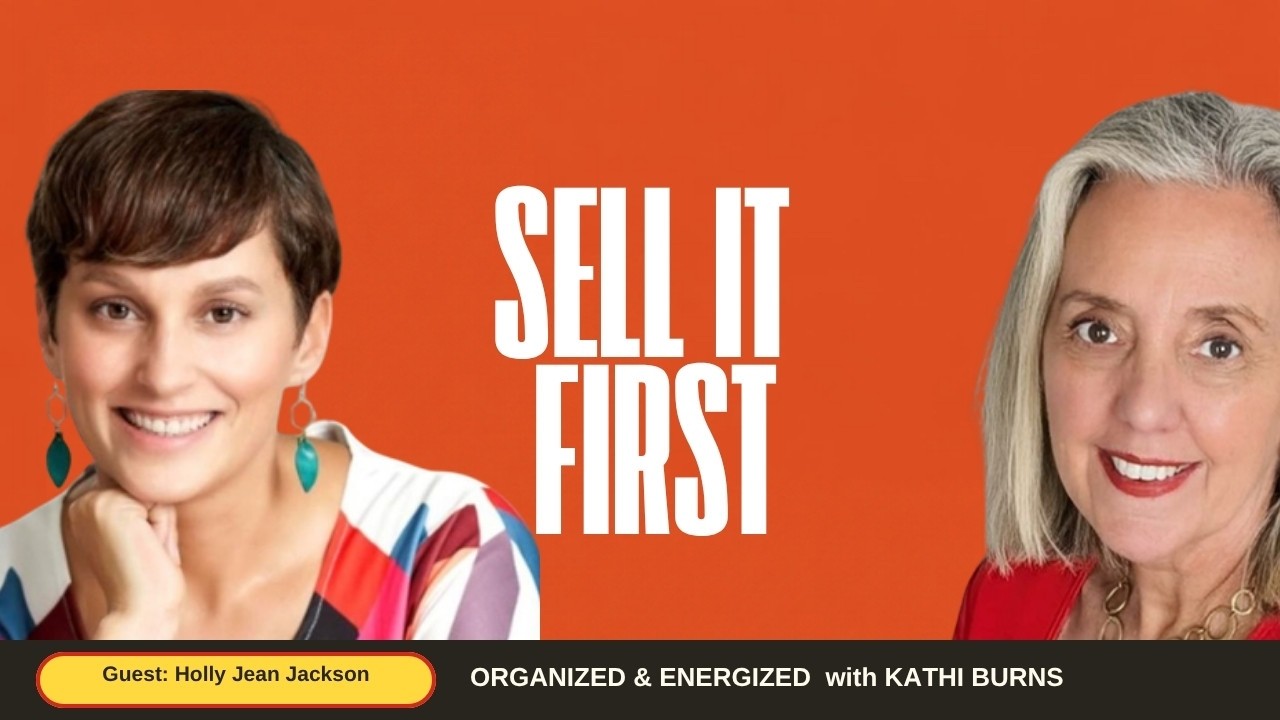
with Holly Jean Jackson, revenue and performance consultant, author, TEDx speaker and founder of Changemaker Impact Co. · November 1, 2023 · 25 min
Holly Jean Jackson went through four corporate layoffs before building a consulting business around revenue and peak performance.
She names five areas where business owners leave money on the table: marketing, lead generation, the sales process, the customer experience and the employee experience.
Her main lesson for new owners is to sell an offer and beta test it first, then build it while delivering it.
Every consulting client starts with her life and business compass, which sets life priorities, three goals for the next quarter and a five-year stretch goal.
She keeps a jar of awesome in her kitchen, filled with notes about wins and things she's grateful for, to read on hard days.
Published · Updated
What is this episode about?
Kathi Burns, CPO®, Business FLOW Strategist, talks with Holly Jean Jackson, a revenue and performance consultant and founder of Changemaker Impact Co. Holly started in nonprofits with a master's degree in public administration, climbed the corporate ladder in technology, marketing and program management, and went through four layoffs before deciding corporate life wasn't a fit. Today she helps business owners who are doing good in the world find more profit, and many of them use it to start foundations or give back. You'll hear why she doesn't believe in 80-hour weeks, how her life and business compass helps you say yes to the right things, the five places owners leave money on the table, and why you should sell before you build. She also talks about her first book, her TEDx talk, and the jar of awesome she keeps in her kitchen.
Get out there and sell that thing before you create it.Holly Jean Jackson
Jump to links and resources · Part of How do I get more clients? · All episodes · Every guest
What are the key takeaways?
- Holly looks at health, clarity and business together, and she says working 80 hours a week to start a business isn't practical or sustainable.
- Her life and business compass lists your life priorities, your three business goals for the next quarter and your five-year stretch goal; anything not on it is probably a no.
- She moved from calling herself a business coach to a consultant because her clients need sales scripts, processes, email campaigns and lead magnets built, not just coaching.
- The five areas where owners leave money on the table are marketing, lead generation, the sales process, the customer experience and the employee experience.
- No course, book, product or YouTube channel gets paying customers on its own, so Holly says you have to market everything and be careful where you spend.
- Her biggest lesson: sell it, beta test it, then build it while you deliver it, instead of spending years on certifications, logos, websites or courses that never sell.
- Holly says publishing a book and giving a TEDx talk made her more credible and more hireable as a speaker, and both brought her clients.

This episode is brought to you by the Business Logjam Session
A private 75-minute online session with Kathi Burns to find the one thing holding your business back and leave with your next steps. It is the same F.L.O.W. process Kathi uses with her own clients: Focus on your goals, Locate your logjams, Outline your solutions, Walk away knowing your next steps.
Find What's Holding Me BackInterested in sponsoring the show? Get in touch.Do you need to work 80 hours a week to start a business?
No. Holly Jean Jackson says starting a business on 80-hour weeks isn't practical and isn't sustainable. She sees many owners who are busy with the wrong things and not balancing. Her approach looks at three areas together: health, clarity and business. On health, she says leaders show up by taking care of themselves and walking the talk, which sets the culture for everyone around them.
What is a life and business compass?
A life and business compass is the tool Holly Jean Jackson starts with for every consulting client. It sets out your life priorities, your three business goals for the next quarter and the five-year stretch goal that fires you up. If an opportunity isn't on your compass, saying yes to it forces you to say no to something that is.
What is the difference between a business coach and a consultant?
For Holly, a consultant builds the work with you instead of only coaching you through it. She used to call herself a business coach, but most of her clients needed more than coaching, so she now builds sales scripts, processes, email marketing strategies, email campaigns and lead magnets with them. These are things owners often don't have the time, capacity or expertise to do efficiently, and she says it gets them past the problem much faster.
Where do business owners leave money on the table?
Holly Jean Jackson names five areas where business owners leave money on the table: marketing, lead generation, the sales process, the customer experience and the employee experience. Most people start a business because they're talented at one thing, and nobody tells them they'll need to learn all of these too. She adds that you have to market everything.
Why should you sell before you build?
Selling before you build tells you whether an offer fits the market before you spend months creating it. Holly Jean Jackson tells new owners to sell it, beta test it, then build it while they deliver it. She has seen people lose years to another certification, a logo, a website or a course that never sells.
How does writing a book help your business?
Holly says publishing her first book made her more credible in her business and more hireable as a speaker, and it brought her clients. The book, Inspiration Contagion, covers health, the first pillar she works on with every client, and it led to leadership retreats she ran with companies in North Carolina. Her TEDx talk took hours of preparation, speaker coaching and rehearsal because it has to be fully memorized, and she says it added credibility, exposure and trust. In her view, a published book and a TEDx talk go a long way when people decide whether to work with you.
How do you celebrate business wins?
Holly celebrates with dinners with friends and family, and she keeps a jar of awesome in her kitchen. She admits she didn't really celebrate her first book for about six months because of personal things going on; it sank in when someone asked her to sign a copy. After her TEDx talk she had dinner with her family, then celebrated a couple of weeks later with four fellow speakers. The jar holds sticky notes about anything exciting or worth being grateful for, and she reads them on bad days or after a harsh review.
How do you define success on your own terms?
Stop, reflect on what you really want, and leave other people's shoulds, woulds and coulds out of it. Holly's advice to her 18-year-old self is to listen to her own internal compass, even if that means coloring outside the lines. She asks what you want to be remembered for, what legacy you want to build, and what fires you up so much that even the tedious admin work isn't painful.
Where does each part of the conversation start?
- 0:00 Meet Holly Jean Jackson
- 0:30 From nonprofits to the corporate ladder
- 1:20 Four layoffs and a new direction
- 1:46 Helping businesses that do good
- 3:04 Client wins and legacy giving
- 4:15 Health, clarity and business
- 5:38 The life and business compass
- 6:49 Why she moved from coach to consultant
- 8:06 Where owners leave money on the table
- 9:32 You have to market everything
- 10:54 Sell it first, then build it
- 12:14 Her first book
- 13:33 Preparing a TEDx talk
- 14:32 A delayed celebration
- 17:11 The jar of awesome
- 17:56 Advice to her 18-year-old self
- 19:19 Define success on your own terms
- 20:47 Wrap-up
What resources were mentioned?
- Holly's life and business compass download
- Inspiration Contagion by Holly Jean Jackson
- Inspiration Contagion podcast
- Complimentary discovery call with Holly
- How to Master Your Muck, Kathi Burns's free book
These episodes continue the same thread as this one: Sue Kirchner, Yvonne McCoy, Louise McDonnell, Allan Ngo also answer the question "How do I get more clients?", and the rest are the most recent conversations on the show.


 Social MediaEpisode 144
How To Use Social Media More Strategically In 2026 To Find New Customers with Louise McDonnell

See every episode on the podcast archive or filter by topic on the How do I get more clients? hub.
How can I support the show?
- Subscribe on Apple Podcasts, Spotify or YouTube, or add the RSS feed to any app.
- Rate and review. A rating on Apple Podcasts helps new listeners find the show, and Kathi reads every review.
- Share the episode with one business owner who needs it; the share buttons are at the top of the page.
- Grab a free eBook: 6 Steps to Organize & Energize Your Home, 6 Steps to Organize Your Home Office or 6 Steps to Organize & Energize Your Life.
- Work with Kathi. The Business Logjam Session is a private 75-minute session to find what is holding your business back.
- Be a guest. Apply here if you have a story about clearing the obstacles in your business.
What did they say, word for word?
The transcript below is edited for readability: filler words and false starts are removed and speaker names are added. Nothing was added or summarized.
Read the full transcript +
Kathi: Hi everyone, we're back, and today I'm with Holly Jean Jackson. We're going to talk about performance. We're going to talk enhancing. We're going to talk about getting more profitable. And I'm really happy to have you on the show, Holly. Thanks for joining me.
Holly: Yeah, it's always fun to be here. And who doesn't like to talk about having more money and better performance? That's exciting. It's good stuff.
Kathi: Very exciting. Very exciting. We all want to know how. Now, before you became this peak performance strategist and learning-how-to-make-more-money person, what's your backstory? How did you get to where you are right now?
Holly: It was quite a windy path, I must say. I started off in the nonprofit space, got my master's degree in public administration, and then eventually started climbing the corporate ladder, and really ended up working in the technology and marketing and program management space, and was an intrapreneur for lots of companies. I had four layoffs during that journey of climbing to the top of the corporate ladder.
Kathi: Did you say interrupter or interpreter?
Holly: Intrapreneur. So you have entrepreneurs and intrapreneurs, where you're creating new products and services and programs for another company.
Kathi: Oh, okay. Okay. Sorry. Keep going.
Holly: Yeah. No, good question. Good question. So after those four layoffs, which were also coupled with health problems and health challenges, I recognized a pattern that corporate America just wasn't a fit for me. So I started dabbling with doing some health coaching initially, and took on a part-time consulting opportunity where I could still build the business on the side holistically. And then I realized I really wanted to help more people. And so my mission in life really is to heal more people, but I do that by helping business owners that are doing good in the world. And I do that by working with health tech companies, startup companies, a lot of holistic practitioners, but also a lot of professional service providers that are having really positive impact in the world, authors and speakers. And I found that instead of just being a holistic business coach, really what I was providing my clients is more consulting. And when we really dialed in the messaging of exactly what I was providing, it was revenue and peak performance. And so when we started looking at that, reaching a broader audience, it allowed those business owners to have bigger impact and start nonprofits and foundations and philanthropic arms of their work. So that's the short version of how I got to where I am today.
Kathi: That's fantastic. I think that when you have the overflow of money, then you can do what your heartstrings call. Oftentimes we're doing what our heart calls us to, but having that extra revenue allows us to do our passion projects on the side. And I think it's a great goal for you to help business owners and entrepreneurs get to. Tell me about one of your success stories from one of your clients.
Holly: Okay. I've helped quite a few clients do that transition from the corporate world into having their own gig. I helped a mom that started her coaching business, and she had very different goals than somebody that didn't have young kids at home, but she started hitting her financial goals within 12 months of us working together. So that was an incredible victory. But I've also worked with multibillion-dollar companies and business owners who own more than one business, and helped them see where they were leaving money on the table. And what we did with that was, then we could focus on their legacy needs of donating a percentage of every service and product to a philanthropic arm and starting a foundation. And since I have a background working with nonprofits, we were able to do that much more smoothly and much more quickly than they anticipated. So they were able to uncover more profit, have better peak performance, improve their employee experience, their customer experience, but also get their nonprofit off the ground a lot faster.
Kathi: Oh, that's fantastic. So when you say holistic, what does that word mean to you, as far as being a holistic entrepreneur or business person?
Holly: So I don't know about you, Kathi, but I see so many business owners and entrepreneurs that are busy, but they're busy with the wrong things and they're not balancing. Of course, it takes time and work and effort to start your business. But I don't believe in starting your business in a way that's not practical and good at taking care of you, because otherwise, what are you doing? I'm talking about people that think they need to work 80 hours a week to start their business. That's just not practical. It's not sustainable for your body. So it's looking at three different things. It's looking at health, clarity and business. This is looking at making sure you're healthily taking care of yourself, but you're also creating the right culture for your environment. You're showing up as a leader, walking the talk of good health. And that means spiritually, mentally, physically. We're dialing those things in, because ultimately, if we haven't learned anything from the last three years, our health is our wealth, and it really matters, and it impacts our ability and output to do anything. And then clarity is really just making sure that you're saying yes to the right things and no to the wrong things. That's why with my consulting clients, we start with their life and business compass. And from that, they dial in their life priorities and make sure that they're actually scheduling their time and living their life by those priorities. We look at their three goals for the next quarter in business, and we make sure they're set up for success. They have a roadmap for that, and they're saying yes to the right opportunities there. And then we look at their five-year goal, that big stretch thing that they're going after that gets them fired up and inspired every single day. And ultimately, if they're saying yes to things that are not on that compass, then it forces you to say no to things that are. And ultimately, we want to be getting at least 1% closer to the outcomes and goals that we have each year. So we focus on those things, and people have tremendous momentum.
Clarity is really just making sure that you're saying yes to the right things and no to the wrong things.
Kathi: And I know you love to look at numbers, and you love to look at percentages, and that's one of your key strengths, I think, as a coach, because I think a lot of coaches will be more ethereal.
Holly: Well, I think also what's different is that I used to call myself the holistic business coach, and now I really call myself more of a consultant. And the reality is that most of the clients that I work with need more than coaching. So I do quite a bit of actual consulting work, where we're building out sales scripts, we're building out processes, we're building out email marketing strategies and actual email campaigns or lead magnets, all of these things that they don't have the time or the capacity to do, or the expertise to do in a way that's efficient for them. So it's helping them get past that problem much faster than just working with a coach.
Kathi: And that's huge, because we all have spent way too much time. I know in the past I've spent way too much time trying to figure out how to write a sales script, what's the right lead magnet, all that. It takes someone who's been there, done that to help. And it does expedite the process for sure. So, yeah, you're doing a really good service.
Holly: Well, and for me, it's really fun. I enjoy creating those things, and I enjoy making my clients more set up for success so that they can really stay in their zone of genius. When we go into starting our business, we're usually pulled towards something specific that we're very talented at. We have a superpower in business around that thing. But nobody tells you, when you first get started, all of the other things you have to do and learn to make that thing a success. So that's the marketing, the lead generation, the sales process, the customer experience, the employee experience, all of these things. And even if you got an MBA, it's not like they cover the real world of doing this for yourself. And so those are the five areas where people leave money on the table, those key elements that I just listed. So that's what I help them with.
Kathi: Oh, it's huge. I've been in business 19 years. I was looking back at the first four years, and all I did was create and write books, do all this stuff without the knowledge or the aptitude to actually bring them to market. It's like, okay, now I've done them. How are people going to find them? So there is always a missing link between our passions and the actual strategy of making it happen and making it go into profits.
Holly: Yeah, and that's a good point and a good reminder. A lot of people, when they start their thing, whether it's I'm going to sell a course, I'm going to make money off of a book, all of these things, the reality is whatever that thing is, that service, that product, that class, that YouTube channel, it's not magically going to have followers and subscribers and paying customers. You have to market everything. And I hate to burst anybody's bubble out there, but being a really good marketer is really nuanced today, and it's extremely competitive. And there are areas where you can waste so many thousands of dollars, millions and billions if you're a bigger organization, in ad spending, in marketing, and doing all of the wrong things that are probably not custom and tailor-fit to exactly what you need today. And so also, if you're listening to this, be really careful where you are investing your dollars, to make sure you're actually getting what you would like out of that.
You have to market everything.
Kathi: Yeah, absolutely. Because we all at the beginning waste too much money on things that aren't even really moving the needle at all. I agree with you. What's the one thing that your business has taught you that you would like to pass on to the people that are listening?
Holly: There's so many things. We could do a whole three books on what my business has taught me. The one thing that's calling to me in this moment is this. Instead of building the course and building the things, and really just hiding behind this smoke curtain of nonsense: sell it, beta test it, and then build it while you fly the plane. I can't tell you how many times I've had people waste countless years getting another credential, another certification, hiding behind the excuses of building a logo or a website or all the things, or this course, and then it never sells. So I would much rather you beta test and just get into the marketing and the sales side of things, and then build it while you deliver it, so that you're actually creating money and income, which is the definition of a business. Like you've talked about the first four years, people waste so much time in creation. And they don't know how it's going to fit the market. They haven't tested that. Get out there and sell that thing before you create it.
Sell it, beta test it, and then build it while you fly the plane.
Kathi: Yeah, that's really sage advice and something I could have used a couple decades ago, for sure. Oh, darn. I should have met you back then.
Holly: I wasn't doing what I'm doing yet, but yes.
Kathi: I'm with you on that. So what's been the most memorable moment in your career so far?
Holly: Most memorable moment? Well, a couple come to mind, in particular from last year. I published my first book, which was a bucket list thing for me. Thank you. Thank you. And what was incredible about that was it was very healing, but it also gave me a lot more tools that I use with my clients. The first book is Inspiration Contagion: Health Secrets for Raving Success. So it talks about that first pillar of health that I go over with all my clients. And the reason that was important to me is a lot of the stuff that business owners get stuck with, especially when it comes to lead generation, sales, et cetera, is really mindset related. We get in our way around money. We get in our way around a lot of other things that hold us back. And we wonder, when we're taking all the right action, we have the right processes, the right systems set up, but we're not seeing the income we would expect. For example, we're not hitting the goals that we would expect financially. It's always what's going on between these two ears here. And so that really helped me fine-tune and dial that in. But also, as a byproduct of that, it made me more credible in my business, made me more hireable as a speaker, and I got clients out of it. So I ended up running a couple of leadership retreats based on that with different companies locally in North Carolina. So that was incredible. That was a huge highlight. And then, of course, doing my TEDx talk last year was also a huge highlight. That was a lot of work. It was extremely stressful. It takes hours of preparing and dialing in the content, working with the different speaker coaches, rehearsing, because you are fully memorizing that thing. Most of the time when I speak, I'm not memorizing a script. I'm just flowing with the audience vibe and pivoting where I need to, tailoring stories and customizing it to them. With a TED talk, you can't do that. And so it's a very unforgiving stage. But it was incredible. I made really good friends and got clients from that. It gives you even more credibility and exposure and a bigger trust factor. And I really think if you're a business owner, having a bestselling published book and being a TEDx speaker go a long way for people working with you. Like, oh, she must know what she's doing.
Kathi: Yeah, absolutely. So you did that. These are huge successes. How did you celebrate?
Holly: Oh, so the book. I had a lot of personal things going on, and so I didn't really celebrate the book for, I think, six months. I was in survival mode, because you have all the PR things lined up. So that was a delayed celebration. And I think for those who have published a book, it's a very heady kind of thing. You do all this work, and there's all of this marketing, all this launch stuff. We went on this trip right before launch, and I only got back a week before the actual launch, and I don't know why I thought it wouldn't be stressful. Any kind of launch is stressful. Let's just be real here. And it was so stressful. So I think it took me a long time to fully acknowledge and celebrate that. And I think it was when somebody I ran into said, "Oh, I bought your book. Can you sign it?" that I finally arrived at, wow, I'm an author. This is pretty cool. Or I had some people start sending in reviews of how it changed their mother's life, and that was really profound. I celebrated with some friends. We went out for dinner, and I had a book signing party with my family a few months after it published and launched. So those were mini celebrations. And then for the TEDx, my family came out and we had dinner right after I did the TEDx event. And then I became very close friends with four of my fellow speakers, and we went a couple of weeks later, so that we could come back down to earth and actually be celebrating just us and reflecting on the experience. We had drinks and dinner, and that was amazing.
Kathi: That's fantastic. I'm asking this because I think that a lot of people don't stop to smell the roses, so to speak. They do their big thing, they make their big accomplishment, and then they're like, oh, on to the next one. I was in that habit for way too long. And that's why I'm always talking about success.
Holly: Yeah. I actually have something in my kitchen. It's called the jar of awesome. We all have those days where you're in the doldrums, or you're chemically off, or your hormones or whatever, and you don't feel great, or you have a really rough financial quarter. And so the jar of awesome, I have Post-its and a pen next to it. And anytime something awesome or exciting or something I'm grateful for happens, I write it down and put it in there, so that when I have really bad days, or if somebody gives a negative, scathing review or has a really gnarly comment, I go back to that, or I go to my book reviews or my podcast reviews, and I'm like, wait, things are good.
Kathi: Yeah. That's a really good thing. A jar of awesome. Love, love, love. If you had to tell your 18-year-old self something now, what would be the advice?
Holly: I would tell her that, first of all, she is loved and she is perfect as she is. And I would tell her that she should really question what everybody's telling her that she should do, and instead listen to her own internal compass and the beat of her own drum. And even if that is coloring outside of the lines and breaking outside of the so-called box that we're put in, to do what makes her happy and do what makes her body feel happy specifically.
Kathi: I love that. Don't be should upon. People say you should do this, you should do that. Because we all create our own path, and it's never what anybody else says we should do, typically. And if it is something that someone told you to do, generally it's not you anyhow. It's not necessarily your path. It's preordained by someone else. So I think that's great advice for an 18-year-old. All those listening out there, if you're 18 or so, don't get should upon.
Holly: Yeah, for sure. For sure. And even don't should yourself. It's more of what feels aligned. And I truly believe, after dealing with chronic pain for most of my life, that when we are aligned to what our soul, our bodies, whatever you believe, is meant to do, you generally feel good. Of course, things happen. That's life and that's nature. But if you're consistently not feeling good, you're feeling a lot of anxiety and stress or physical pain, I believe that is our body's way of telling us we are off course and we are off track. And so I think we need to just stop. We're so busy, like you said, people don't celebrate. We're so busy doing that we don't spend time being. And so you really need to spend time reflecting on what you really want, and not having other people's shoulds or woulds or coulds be part of that, but really define success on your own terms. Really tune into your own body, your own mind, your own spirit. And what is that thing you want to be remembered for? What is the legacy you want to build? What fires you up, even when you have to do the administrative, boring, tedious stuff, so much that even doing that is not painful?
We're so busy doing that we don't spend time being.
Kathi: That's really good advice. Absolutely. Perfect. So I know you have something valuable for the listeners here that you can pass on to them. What is it that they could listen to, download, or take you up on for your offer?
Holly: Yeah. What's coming to me right now is a couple of things. First of all, I think that given our conversation, so I'm throwing you for a loop a little bit here, I want to offer the life and business compass download, because we've talked a lot about what we would tell our 18-year-old self, and we've talked a lot about pivots and clarity and trying to be successful. And that's one of the tools that I find helps everybody so much. Even if you're not an entrepreneur, it's just going to give you a lot of clarity. So that's something I highly recommend you download and be with and sit with as you map that out, and start using it. Print it out, share it, put it on your phone, make it wallpaper on your screen, and start making decisions based on that, and things will change very, very quickly. I'd also invite folks to listen to the Inspiration Contagion podcast. That's my podcast. We interview super inspiring and amazing people. And then, of course, if there's anything that you feel I could help you with in your business as a revenue and performance consultant, I'm more than happy to do a complimentary discovery call and see if we're a fit, so that we can find the money that you might be leaving on the table, which pretty much everybody is, and help you start building that legacy that you want to build, whether it's a nonprofit or donating back to a cause that's important to your heart.
Kathi: Fantastic. I love the fact that you help people build legacies, and you help people give philanthropically to what their heartstrings are. And when you're making the amount of money that you want to make, plus more, you're able to do that and give back. So it keeps rippling out the effect of what you're doing. Holly, I really appreciate your work in the world.
Holly: Thank you. Yeah, I love it. It's really wonderful when you have clients that are celebrating big wins, whether it's speaking engagements that are going to change thousands of lives as they speak on that stage, publishing a book that's an international bestseller and that's healing lives, helping people do more, or making more money, but also giving that back to a foundation, a nonprofit or a cause. I love it. My clients are amazing. They're doing such amazing work in the world.

Kathi: That's incredible. Well, thank you for what you do. And everybody, thank you for listening. Go ahead and download Holly's free offers. They'll be in the show notes below with links. If you're interested in learning how to Master Your Muck, go ahead and download my free book as well. And so you have a lot of opportunity to learn, to grow, to expand through this podcast. Please take advantage of everything that's out there for you. I'm here for you. Holly's here for you. And we really appreciate your attention and your time listening to the podcast. And thanks, Holly.
Holly: Thank you.
Kathi: Until next week. We'll see you then.
Where can I find the links and resources from this episode?
Connect with Holly
Organizations and companies
Inspired? Here Are Your Action Steps:
- Write down your life priorities, your three business goals for next quarter and your five-year stretch goal.
- Check each new opportunity against that compass, and say no to what isn't on it.
- Stop planning 80-hour weeks and schedule time to take care of yourself.
- Review your marketing, lead generation, sales process, customer experience and employee experience for money left on the table.
- Pre-sell and beta test your next offer before you build it.
- Stop hiding behind another certification, logo or website and start selling.
- Be careful where you spend on ads and marketing, and track what you get back.
- Start a jar of awesome: keep sticky notes and a pen next to a jar and add every win.
- Celebrate each big accomplishment before moving on to the next one.
Frequently asked questions
Where do business owners leave money on the table?
+
Holly Jean Jackson names five areas: marketing, lead generation, the sales process, the customer experience and the employee experience. Most people start a business because they're great at one thing, and nobody tells them they'll need all of these too. She says even an MBA doesn't cover the real world of doing it yourself.
What is the life and business compass?
+
It's the tool Holly starts with for every consulting client. It sets out your life priorities, your three business goals for the next quarter and the five-year goal that fires you up. If something isn't on your compass, it's probably a no.
What's Holly's biggest lesson for new business owners?
+
Sell it, beta test it, then build it while you deliver it. Holly says people lose years hiding behind another certification, a logo, a website or a course that never sells. Getting into marketing and sales early tells you whether the offer fits the market.
What does Holly mean by looking at health, clarity and business together?
+
She doesn't believe in building a company on 80-hour weeks, because it isn't sustainable, and she says leaders should model the culture they want. Clarity means saying yes to the right things and no to the wrong ones. The business side covers the systems, sales and marketing that turn a skill into profit.
How does Holly celebrate her wins?
+
She admits she was slow to celebrate her first book. Now she keeps a jar of awesome in her kitchen with sticky notes and a pen next to it. Anything exciting or worth being grateful for goes in, and she reads the notes on hard days.
Who is talking in this episode?

About the Host, Kathi Burns
Kathi Burns, CPO®, is a Business FLOW Strategist based in San Diego. For the last 20+ years, Kathi has helped clients create systems they can stick to. She is the author of How to Master Your Muck, Organizing With Tetris and Home Organization, The Smart Guide, and co-author of four more titles; all are in Kathi's shop. Kathi's business has been featured on Good Morning America, and her advice has been featured in Oprah Magazine, Martha Stewart Living, Better Homes and Gardens and Entrepreneur Magazine.
More about Kathi · Shop Kathi's books · Business Logjam Session · Apply to be a guest

About Holly Jean Jackson
Holly Jean Jackson is a revenue and performance consultant, speaker, podcast host and author, and the founder of Changemaker Impact Co. She started in the nonprofit world with a master's degree in public administration, then climbed the corporate ladder in technology, marketing and program management, working as an intrapreneur who built new products, services and programs inside other companies. After four layoffs, she decided corporate life wasn't a fit. She first called herself a business coach and now calls herself a consultant, because her clients need sales scripts, processes and email campaigns built for them. Many use the added profit to start foundations or give back. She wrote Inspiration Contagion, gave a TEDx talk and hosts the Inspiration Contagion podcast.
Want help putting this into practice?
Book a Business Logjam Session with Kathi
A private 75-minute online session to find the one thing holding your business back and leave with your next steps, using the same F.L.O.W. process Kathi uses with her own clients: Focus on your goals, Locate your logjams, Outline your solutions, Walk away knowing your next steps.
Prefer to start small? Download Kathi's free eBook 6 Steps to Organize Your Home Office.
Published · Updated
This episode page is for general information. Guests speak for themselves, and their opinions, statistics and examples are their own. Nothing here is legal, financial, medical or mental-health advice; talk to a qualified professional about your own situation. Some links go to the guest's own products or free offers; addSpace does not earn a commission from them unless stated.