


Episode 96
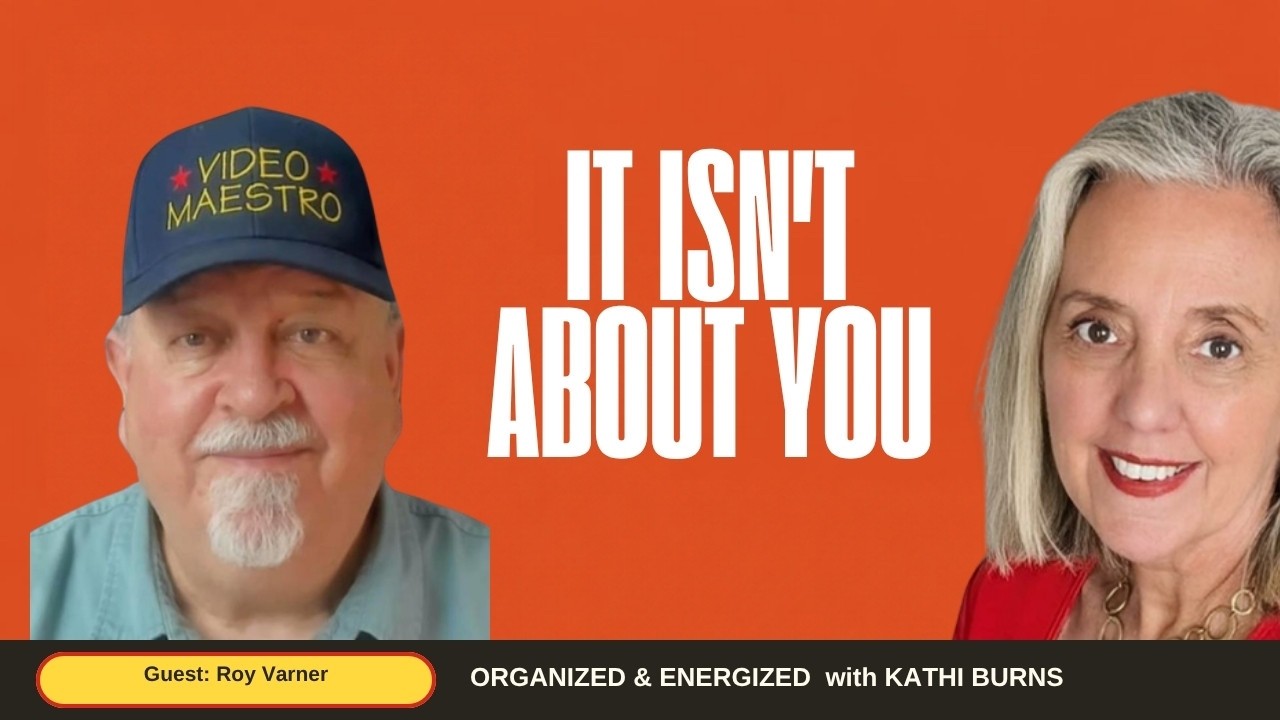
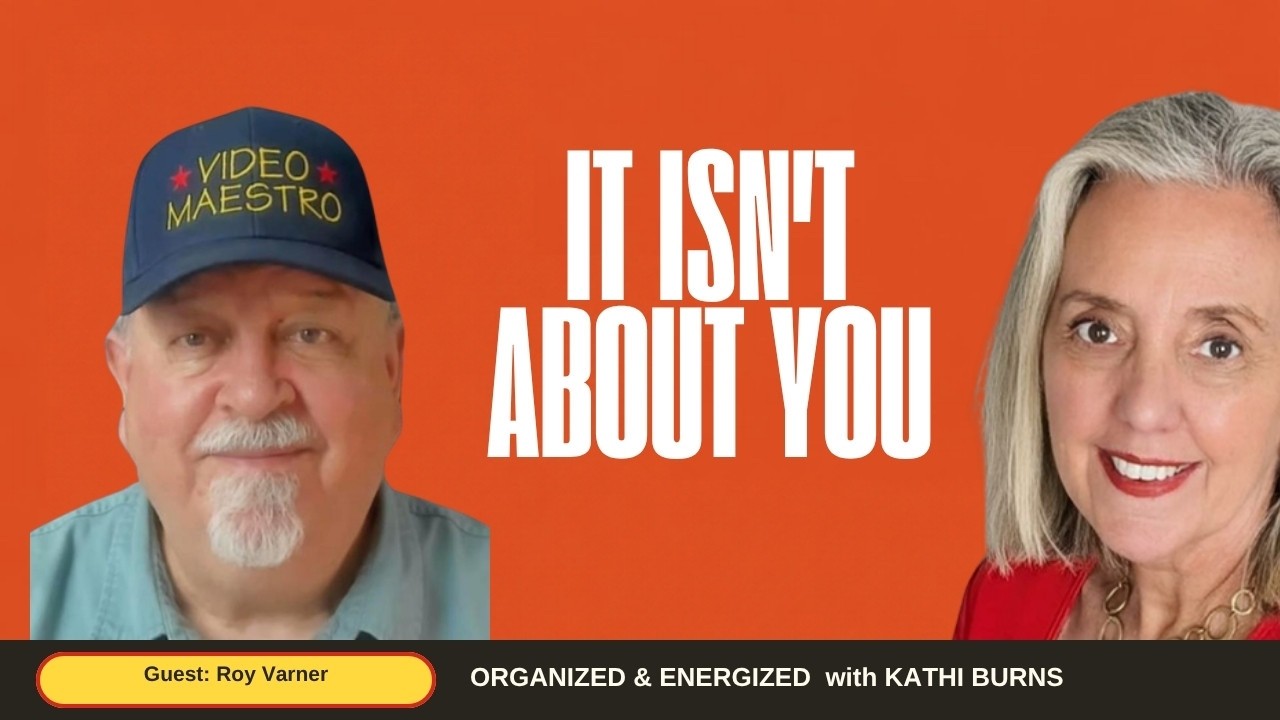
with Roy Varner, video Maestro, video confidence coach and learning systems developer · March 21, 2024 · 26 min
Roy Varner, the Video Maestro, says the number one challenge people face on camera is lack of self-confidence, because they think viewers are judging them.
He says viewers are asking two questions: do you understand my problem, and do I trust you to solve it?
Roy teaches people to remove the distractors that pull attention off the message and to light the face so it is the lightest thing in the scene and viewers can see your eyes.
He says competence with on-camera techniques turns into confidence, and that being your real self is what attracts the right clients.
Roy offers a free 30-minute session, the Breakthrough Gap Analysis, to find what is keeping someone from converting leads to customers.
Published · Updated
What is this episode about?
Kathi Burns talks with Roy Varner, the Video Maestro, about how to be confident on camera and turn viewers into customers. Roy spent 40 years developing learning systems and producing and directing video for major corporations, and he now works with entrepreneurs and coaches one-to-one and in small groups. He explains why fear of the camera comes from thinking it's about you, the two questions every viewer is asking, and how to get rid of the distractors that pull people away from your message. You'll hear his setup advice on lighting and eye contact, the figures he cites on words, tone of voice and body language, the story of a coach who went from hiding behind a 10-year-old photo to posting video almost every day, why he thinks most online programs don't change anything, and his free Breakthrough Gap Analysis.
It isn't about you. It's about the people you're trying to help.Roy Varner
Jump to links and resources · Part of How do I become known as an expert? · All episodes · Every guest
What are the key takeaways?
- Roy says fear of being on camera comes from focusing on yourself, while viewers are only asking whether you understand their problem and whether they can trust you to solve it.
- People feel like imposters on camera because they have never been trained; Roy says learning the techniques makes them competent, and competence turns into confidence.
- He teaches people to remove distractors, the things they do, say and wear and the way things look, that take viewers' attention off the message and away from their eyes.
- Roy's setup advice: make your face the lightest thing in the scene, light it so your skin looks natural and people can see your eye color, and avoid sitting far back or in a corner.
- Roy cites figures that words carry 10% of our persuasive power, tone of voice 38% and body language 52%, and he suggests cutting away in longer teaching videos to show what you are describing.
- He says most online programs only deliver information, while people stay stuck on limiting assumptions such as perfectionism and procrastination until a mentor walks them through it.
- Roy's free 30-minute Breakthrough Gap Analysis is meant to find the gap that keeps someone from converting leads to customers and set a strategy to fix it.

This episode is brought to you by the Business Logjam Session
A private 75-minute online session with Kathi Burns to find the one thing holding your business back and leave with your next steps. It is the same F.L.O.W. process Kathi uses with her own clients: Focus on your goals, Locate your logjams, Outline your solutions, Walk away knowing your next steps.
Find What's Holding Me BackInterested in sponsoring the show? Get in touch.How do you overcome fear of being on camera?
Roy Varner says you overcome it by remembering it isn't about you. People fear the camera because they think viewers will judge how they look or what they say. Viewers are really asking two questions: do you understand my problem, and do I trust you to solve it? Answer those as a real person, not a performer.
How do you look and sound trustworthy on video?
Get rid of the distractors and learn the professional techniques, and trust follows. Roy says people feel like imposters on camera because they have never been trained, so he teaches them to remove the habits, phrases, clothing and setups that pull viewers away from the message and from their eyes. He works with clients in five areas so they look and sound like the go-to expert in their niche every time they sit down. In his words, the techniques make people competent, and competence turns into confidence.
What lighting is best for a Zoom call?
Roy Varner says your face should be the lightest thing in the scene, so viewers are drawn to it. Light it well enough that your skin looks natural and people can see your eye color, as if they were across the table from you. Avoid big shiny glasses, sitting far back or sitting off in a corner.
Why does body language matter on video?
Because Roy says most of our persuasive power comes from what people see. He cites figures that word choice carries 10%, tone of voice 38% and body language, meaning facial expression and gestures, 52%, which is why cartoons and avatars don't connect. In longer teaching videos, he suggests cutting away to show the situations you're describing, citing an Air Force study that found pictures and sound together have far more emotional pull than either one alone. Kathi notes there is always something to fix, like the dark side of her own face on this recording.
How can you become confident on camera if you don't like how you look?
Accept that it isn't about you, then remove the distractions. Roy's favorite client, a smart and successful coach, refused for weeks and months to go on video and used a photo that was 10 years old. Once she agreed it was about the people she could help, they got her lit nicely, dressed well and fitted with thin non-glare glasses. Now he calls her his Tasmanian Devil because she's on video almost every day. Roy did the same himself: after years behind the camera, he decided to walk the talk and get on camera as he is.
Why don't most online programs change anything?
Roy says most online programs only deliver information, while the reason people are stuck is inside them. Using Bloom's taxonomy of learning objectives, he describes those programs as almost strictly cognitive, which means memorizing information. If your coping behaviors are perfectionism, procrastination and flight, he says it doesn't matter how many books you read; you need a mentor to walk you through letting go of those limiting assumptions. He says "just do it" works only for a small share of hard chargers, and the rest of us need help taking a successful first step.
What is the Breakthrough Gap Analysis?
It's Roy Varner's free 30-minute session to find the gap that keeps you from converting leads to customers. He offers it instead of a lead magnet, with no strings and no selling. He helps you identify the gap, figure out what needs fixing, and leave with a strategy to fix it, because outside eyes spot patterns you can't see.
Where does each part of the conversation start?
- 0:00 Meet Roy Varner
- 0:25 Forty years in corporate video
- 1:23 The number one challenge on camera
- 1:31 Lack of self-confidence
- 1:52 It isn't about you
- 1:57 Your viewers' two questions
- 2:22 Be authentic, not a performer
- 3:22 Imposter syndrome on camera
- 3:36 Get rid of the distractors
- 3:52 We decide emotionally
- 4:08 Look and sound like the go-to expert
- 4:25 Trust is the real issue
- 5:07 Shiny object programs
- 5:39 People want to trust you
- 7:06 A setting that feels good
- 7:27 Eye contact and lighting
- 7:55 Words, tone and body language
- 9:06 Show what you're talking about
- 9:37 His favorite client story
- 10:15 Getting her on camera
- 11:10 His Tasmanian Devil
- 12:15 How he celebrates
- 12:32 Hiding behind the camera
- 13:07 Walking his talk
- 14:30 Why most programs don't transform
- 15:19 Information versus change
- 15:47 Limiting assumptions
- 16:13 Just do it works for a few
- 16:50 His small group workshop
- 16:57 Video voodoo
- 17:56 Designing learning experiences
- 18:52 Why he doesn't offer a lead magnet
- 19:11 A free 30-minute session
- 19:28 The Breakthrough Gap Analysis
- 20:22 Spotting the patterns
- 20:45 Even masters have coaches
- 22:37 Look back at your last year
- 23:12 Being yourself is the golden goose
- 24:04 Wrap-up
What resources were mentioned?
- Breakthrough Gap Analysis (Roy's free 30-minute session)
- Roy's small group video workshop with one-to-one sessions
- Bloom's taxonomy of learning objectives
These episodes continue the same thread as this one: Dr. Julie Marty-Pearson, Vince Warnock, Anne Bartolucci, Ally Machate also answer the question "How do I become known as an expert?", and the rest are the most recent conversations on the show.
 PodcastingEpisode 146
How to Grow Your Confidence Through Storytelling & Podcasting with Julie Marty-Pearson


See every episode on the podcast archive or filter by topic on the How do I become known as an expert? hub.
How can I support the show?
- Subscribe on Apple Podcasts, Spotify or YouTube, or add the RSS feed to any app.
- Rate and review. A rating on Apple Podcasts helps new listeners find the show, and Kathi reads every review.
- Share the episode with one business owner who needs it; the share buttons are at the top of the page.
- Grab a free eBook: 6 Steps to Organize & Energize Your Home, 6 Steps to Organize Your Home Office or 6 Steps to Organize & Energize Your Life.
- Work with Kathi. The Business Logjam Session is a private 75-minute session to find what is holding your business back.
- Be a guest. Apply here if you have a story about clearing the obstacles in your business.
What did they say, word for word?
The transcript below is edited for readability: filler words and false starts are removed and speaker names are added. Nothing was added or summarized.
Read the full transcript +
Kathi: Hi everyone. As promised, I'm with Roy Varner, the Video Maestro. He's going to talk to us about how to look good on camera. Very important. And Roy, I'm so glad that you're here. You're going to share a lot of knowledge with us, and we all need this. So, welcome to the show.
Roy: Thanks for the invitation. I'm honored.
Kathi: Hey, well, I know you have a big background. You were working with corporate for quite a long time with video. So talk to me about your backstory and why you're doing what you're doing now.
Roy: Sure. I spent 40 years as a learning system developer and a video producer-director for major corporations, teaching thousands of people, helping lots of folks. Then I retired from that, and I came back into the one-to-one, small group environment of online, because I felt like, well, now maybe that's a better way to do it. I can really change lives directly and really get into the learning system. And that's what I'm interested in now: helping small groups of people, and stepping in one-to-one when they need it. Really getting transformative change in their lives.
Kathi: Yeah, it's such a timely topic, because we're all on video. We have to be on video, even if it's just our phones. We have to look good on camera. We all want to look good. So what do you think is the number one challenge that people have whenever they're starting out putting themselves on screen?
Roy: Yeah, it's lack of self-confidence. It's that fear, that number one fear of public speaking. So many people have told me they're terrified to be on camera, and it's because they're thinking of themselves, and they're worried that people are going to look at them and say, "Oh, you're a dummy. That was a stupid thing to say." Or, "You look funny," or, "You look fat," or whatever. And they don't realize it isn't about you. It's about the people you're trying to help, who have their two questions: Do you understand my problem? And do I trust you to solve it? They're not thinking about you. They're thinking about themselves. When you answer those questions as a real person and you connect with them, they really feel like, oh boy, this person is really mature and wise and understands, and is a perfect one for me to pick to go forward. And it's not about being a performer. It's about being authentic with what you have to offer people, and letting the people that resonate with you come to you naturally. And then you manage the expectations of people who pay you to do things, and they know what they're getting. You are what you are, right? When you're real and authentic.
It isn't about you. It's about the people you're trying to help.
Kathi: Yeah. I find that it's so true. We all think that it's all about us. And people are never thinking about us while they're watching a video. They're thinking about themselves and what they need and what they hope they get out of what they're spending their time watching. Not doing a sharp critique analysis of hair or any of that.
Roy: Well, part of that fear that people have, that focus on self, is based on a couple of things. One is they don't feel competent on camera. They've never done it. They've never been trained to be a camera speaker, a stage speaker, whatever. So it's that imposter syndrome. It makes them start to think, well, why am I here? And what do I have to offer these people? It's just all limited assumptions. It's all assumptions. When they learn a few things, like I teach people how to get rid of the distractors, things they do and say, the way things look, the way they're dressed, et cetera, that take our minds off the conversation and the message, that take us away from looking you in the eyes and connecting with you emotionally. Because we all decide emotionally, everything. We logically justify it. So when people feel like they're imposters, they just don't have the confidence. So they need the techniques to be competent, and then that turns into confidence. And also I help them in five different areas adopt and embrace the professional techniques of how to look and sound like the go-to expert in your niche every time you sit down. What that does is it gives people that automatic authority and trust. You've heard the know, like and trust. Well, trust is the real issue, because if they feel good about you, they'll continue. They'll hook up with you and keep going. And that trust is brought naturally by looking and sounding like you're trustworthy. And so if we can get some basic confidence going here, get rid of the habits we used to have that chase people away, and just look halfway decent, now people are going to be able to focus on your message, look you in the eye, and connect with you.
They need the techniques to be competent, and then that turns into confidence.
Kathi: Yeah. And don't you think that when you're not authentic, you're not trustworthy? And when you are yourself, good, bad, ugly, whatever, you are more trustworthy because you are who you are.
Roy: Absolutely. I mean, so many people have paid so much money for all these shiny object programs from people that don't have the slightest idea how to change you, how to get you from your old ways to your new ways. It isn't about what they tell you. It isn't about rah-rah. It's mentoring. It's walking the path with you and sharing along the way until you get comfortable to adopt these new ways, and then you thrive. But that's not what the internet model is. And so many people have wasted time and money on that, and we're gun-shy. And yet the human spirit is very willing to give trust if you look and sound like you're trustworthy. If you seem to be a real person, like you are. That's what attracted me to you in the first place, that you weren't pretending. I mean, you were friendly and all this sort of stuff, but you were being yourself. And so I got to know the real Kathi right off the bat, and I connected with that, and you've been that way since. That's a sense of trust that we have. We have to have that trust if we're going to adopt you as our mentor and our guide.
Kathi: And if I want to backtrack a little bit, to be the trustworthy person, you have to not be worried about how you look, how you sound. You have to be confident that you are looking your best, the best that you can, and all that. And I think that's really what you do, helping people with their techniques on camera, to know that yes, you're going to look great. This is your lighting. This is your setting and all that. It's just like when I style people with image. If you're wearing the clothes that you know fit you perfectly, then you're confident to do and say whatever you want to say. The same thing when you're on camera. When you teach people how to be on camera, then they don't have to worry about any of that. They can be who they are.
Roy: Exactly. And there's really two issues there. You really hit the hot spots on this. There's two issues that are very important. One is that you want your setting to feel good without them even having conscious thoughts about it. It just feels good, right? And your face is the lightest thing in the scene, and therefore people are drawn to your face, and the colors that you use and all that work with your skin tone, et cetera. So that's one aspect. The other aspect is eye contact. So it's important to get the face lit reasonably well so your skin looks natural, like you're across the table from somebody and they can see your eyes. They could actually tell what color the eyes are. That's when we start connecting with other human beings. People that use cartoons or avatars, or have the big shiny glasses, or sit way back like this, or over here in the corner, they don't connect. We have 10% words, our word choices. 38% of our persuasive power is tone of voice. It's how you say those words that makes a difference, right? And 52% is body language: what you see of facial expression and gestures. So you take advantage of that. You are your natural self. You got the distractions out of the way, and you just take advantage of the gestures and be yourself, your personality. The people that are going to be your long-term best clients are going to like your personality. They connect with you. They resonate. There's a vibe going there, right? But if you're a pretender, and you don't look right, and you pretend to be somebody else, you're selling someone else. And when they get in your program, they're not going to like you.
Kathi: Yeah. They're like, "Who was that person?" I love those statistics. I hadn't heard those stats before. So 52%. Huh. That's interesting.
Roy: Absolutely. That's why video is so powerful. It's got everything going. And when you're doing videos that are longer and are teaching and showing and trying to get people emotionally approving what you're doing, it's so important to cut away and show what you're talking about, because the talking face is only good for a certain part. Then when you're saying important things about how they feel or their problems or their experiences, you want to show somebody in those situations so that they can really connect. The visual and the audio together, according to an Air Force study, are 22 times more powerful emotionally than either one alone.
Kathi: Interesting. So talk to me about one of your clients. You had told me a few stories of some of your clients. So what's your favorite client story from someone who went from shy and uncomfortable and maybe not confident to being able to blossom?
Roy: My favorite one, and I'll try to keep it short because there's so much in it. This woman, who's very smart, an experienced coach, making good money, working with a good business, would not go on camera. She had her picture there that was 10 years old, looked better than she does today, right? But she just wouldn't do it. And her partners and her boss and everybody just could not make her get on video. And so I finally, after begging her for weeks and months, got her to sit down with me and accept the fact that it isn't about her. It's about those people that are hurting. And you've got the magic elixir. You've got the answer to that hurt. And all you have to do is get on camera, eliminate the distractions, dress nicely, and get your face lit nicely so we see your eyes and you're not shining and glowing, because it isn't about you. It's about your message and connecting with the need of the people out there. Well, short story, finally she allowed me to work with her. We got her looking great. We ordered her some glasses that were real thin and went away on her face, with non-glare. I mean, we did all the details to get rid of the distractors. And now I call her my Tasmanian Devil, because she is on video and on YouTube almost every day. She jumps on and just does her thing, and she's authentically herself, having the time of her life. She loves what she does, and now she can be herself. She's given herself permission to be herself and share the genius that she's got, and she's thriving, and people are like, "Wow, I finally get to meet you. You're amazing." One of her friends saw her on the first video and called her up and said it's the first time I've ever seen you in months. And so, real impact, real major impact in her life and other people's lives.
Kathi: And that's an amazing story. We all need it. We all need this. Every single person needs it, and there's always something that can be made better. I mean, I'm looking at me looking, oh, look, this whole side of my face is dark. What? Where's my light? There's always something to be done to make yourself look better, for sure. So after you have a success like that, that's a big success. This is my year of celebration, so I have to ask you, Roy, how do you celebrate your successes as you come by them?
Roy: Well, I share them with other people who would normally go to a therapist, and instead of a therapist, I give them social proof. I tell them my story, because I hid behind the camera for a long time. I mean, I was writer, director, producer, editor. I did everything behind camera for other people. I trained the trainers to get up on stage. I trained the speakers to be on stage. I trained the narrators to be silver-tongued devils on audio, right? And do everything just right. And so when I got to the internet, I realized, wait a minute, nobody even knows I exist. How am I going to get the word out? I could pay an expensive ad agency, or I could just realize it's not about me, and just walk the talk and do what I teach everybody else to do, and jump on camera. I'm old. I'm heavy. I got gray. I mean, there's nothing special about me, but it isn't about me. What is about me is to be myself. Yep. It's to be myself. I love people. I want to help people. Just be that. Just be who you are. And the people that really resonate with you will come. It's as simple as that. And by sharing this woman's experience, where she hid behind, and she's not the first one that's hid behind pictures or had that problem either, by sharing that with someone, they realize, wow. And they see what she looks like, and she's not a movie star, right? She's a very normal person. And they look at that and they see, wow, okay, I think I'll try this. This might work. So it just gives them permission to give it a shot, and that's all you really need.
Just be who you are. And the people that really resonate with you will come.
Kathi: Yeah. That's very true. All you need is to be confident enough to try, and then to be open and receptive to people who are going to suggest things to you to make you look better. And you're a professional at knowing exactly what people need to do on camera to look their best: the distance of the camera and all that good stuff. So I know that you have something coming up around the corner, and I wanted to tell the audience about what you're doing, because I feel that it would benefit any of those people that are on camera and listening out there.
Roy: Yeah. Well, for a long time I've understood that you've got to get two major things done before you have any value to people. And unfortunately, most people on the internet don't do them. So most of the people offering value don't really have value that is transformative and life-changing. They have an idea, and they want to tell you a bunch of things, and they want to motivate you, and they want to give you all the forms and the swipe files and all that stuff. But the reason people are stuck is in here. In the learning system concepts and Bloom's taxonomy of learning objectives, to get technical, there are cognitive learning objectives, which means you're basically memorizing information. And that's what online information programs are. They're almost strictly cognitive. But to hear something new to do, and have someone tell you what you ought to do, and for you to be able to pry yourself out of how you feel about yourself and the way you are? I mean, if your coping behaviors are perfectionism, procrastination and flight, it doesn't matter what they tell you. You could read a hundred books. You could have 50 guys get up in a stadium and give you rah-rah. But the problem's in here. The problem is the limited assumptions that you've adopted, and you're not going to let them go unless you've got a mentor or somebody to walk you through it. Okay? So we have to understand that the Nike "just do it" only works with about 3% of people that are naturally hard chargers, type A, and they'll try anything. They'll eat anything. They'll buy anything. But that's not the other 90% of us. The rest of us, we need help. We need to feel that there's hope. We need to feel comfortable taking the baby step out. And that's really what it's all about: you take that baby step with success.
Kathi: So how can they get in touch with you? What are you going to do to help them?
Roy: I have a small group workshop with some one-to-one. And so we get the awareness part. We get the distractions that I call video voodoo, because they curse your sales and haunt your reputation. We get those out of the way in the general workshop, and we all do some basic things of camera positioning and talk. Then I do the one-to-one with each one, because you've got to get their camera setup right, their lighting, their sound, the background and the way they look. So we go through and get all of that. And by the time you get that, that's where you start feeling competent. That's where you start feeling good about yourself. And then the confidence factor is not that difficult to deal with. So that's all in that first program, to get them with the right mindset so they can get on camera, be themselves and attract the right people.
Kathi: That's such a critical foundation.
Roy: Yes. And my second step after that: that first step is basically that you have a vision of who you are and what you have to say to the world, right? The next step is value, where I teach people how to design, develop and deliver learning systems, learning experiences that take people from here to there. And they're rare, but you can learn how to do it. Those are my two big projects that I want to tell people about.
Kathi: Yeah. And you have all the experience of doing that already, creating the curriculum, creating the educational experience. So I just love what you're offering. I think it can benefit everybody. We all need to look good on camera, and then we need to know how to express and how to educate our people in the right way.
Roy: Exactly.
Kathi: Yeah. I love that. That's great. So anybody who wants to get to know you further, I know they can go to royvarner.com, and also you probably have a free something or other that people can grab. So we'll have that.
Roy: Well, people tell me, "Get you a lead magnet. Get you a little five-pager with 10 steps and all this stuff." But that's just more talk, right? Everybody's got a gap that's keeping them from going from where they are to where they want to be. It's stopping them from converting leads to customers. So I offer a free session, 30 minutes, and it is free, and there's no strings, and I don't try to sell anything. I'm willing to help you find your gap, identify it, figure out what needs fixing, and then help you have a strategy to go fix that gap. And I call it the Breakthrough Gap Analysis.
Kathi: Wow, that's big. That is big.
Roy: People that are open-minded and ready can find what's holding them back, and why 93% of entrepreneurs and coaches online are making less than $400 a month.
Kathi: That's terrible.
Roy: It's because everybody is stuck somewhere, and we can fix that gap.
Kathi: Yep. And they don't know where. Our blind spot is our blind spot. We don't know what we don't know. But an outside observer can say very quickly what you should know, or what you could know, about what you can do better.
Roy: Well, it's like with your business, your specialty of organizing people and getting time management and being efficient at all that stuff. You can walk into a room with somebody and you can spot the patterns. It's human nature. There are patterns that we don't see because we're too close to them. I've been doing it for 40 years. The patterns just jump out at me. I don't even have to think about it. Same with you. You don't have to think about it. Okay, there. Okay, I see what you need. Let's focus on these, and then you'll be fine.
Kathi: Right. It works in any industry.
Roy: It does.
Kathi: Well, masters hire masters. And the most masterful people in the world have coaches and trainers. That's how we become masterful. You have them. I have them. We all have the coaches and the trainers. And we need those because, again, it's the blind spot. And ironically, we're talking video with you, but it's the blind spot of not seeing how you're coming across on camera, because all you're doing is looking at your hair or your skin or something silly that really has nothing to do with the overall impression of your camera.
Roy: If you get focused, pardon the pun, if you really get focused on the right things that are important, you've eliminated everything else. There's nothing else, then, for people to do but connect with you. Most people won't, but they'll appreciate what you do; they won't need it. But the ones that need it, you've got them, because you put the real you out. A real solution to their problem.
Kathi: Yeah. And I am totally in agreement with you, in alignment, that the people that need you are going to find you. The people that resonate with you will find you. And the people that need what you have will find you, and they will buy you, because they need you and you're authentic. They like who you are, along with the information or the training that you can provide for them. And that's why, to circle back around to the top, you've got to look and act like a pro without effort. I think it really needs to be effortless. Just like having the clothes that you wear be effortless, so that you can really focus on your impact, who you are, saying who you are, being authentic with who you are, and not worrying about all the other silly stuff that could be a little bit awry in your environment.
Roy: Yep. Well said.
Kathi: What should we talk about? Is there anything that we missed discussing during this interview?
Roy: Well, I think people should think back on their last year. Are they happy with their progress? Are they making enough money? Are they getting enough clients? Do they enjoy doing what they do? And can they get on camera and just have fun with it, regardless of what happens? Just have fun sharing and giving. That's the byword of 2024. You've got to come into this tremendous opportunity for you to turn everything completely around and be your real self. Being your real self is the goose that laid the golden egg. When you can get to that point, you are going to be successful. You just really are. It's human nature. I've seen it for 40 years in business. It's just the way people are. That's how you win friends and influence people. Be yourself. The ones that relate to you and connect with you have the same frequency, kindred spirits. That's how it works.
Being your real self is the goose that laid the golden egg.
Kathi: Yeah, absolutely. That is a good closing remark, Roy. I love it. I love this talk. For all of you, please go ahead, go to royvarner.com, and book a time with Roy, because you're going to walk away, I guarantee, with a few things that you can do to make yourself feel better, look better and sound better on camera. And then you can go a bit further and really get into the expertise of everything you need to do with Roy. So I appreciate your time, Roy. Thank you so much for the chat.
Roy: Well, thank you for inviting me. I appreciate it.
Kathi: And you guys, thanks for joining the Organized and Energized podcast. Please join me next week. Same time, same bat channel. You know where to find me, and you know where to find Organized and Energized. Until next week, we'll see you then.
Where can I find the links and resources from this episode?
Connect with Roy
Organizations and companies
Inspired? Here Are Your Action Steps:
- Before you hit record, remind yourself it isn't about you; it's about the people you're trying to help.
- Write down how your video answers your viewer's two questions: do you understand my problem, and can I trust you to solve it?
- List the distractors in your videos, from habits and phrases to clothing and background, and remove them one by one.
- Light your face so it's the lightest thing in the scene and viewers can see your eye color.
- Move the camera so you're not sitting far back or off in a corner, and swap shiny glasses for non-glare lenses.
- In longer teaching videos, cut away to show the situations you're describing.
- Look back at your last year and ask whether you're happy with your progress, your income and your clients.
- Book an outside expert to spot the blind spots you're too close to see.
Frequently asked questions
How to overcome fear of being on camera?
+
Roy Varner says the fear comes from thinking about yourself and worrying that viewers will judge you. Viewers are thinking about themselves and asking whether you understand their problem and whether they can trust you to solve it. Focus on the people you're trying to help and answer those questions as a real person.
Why am I so awkward in front of a camera?
+
Roy says most people have never been trained to be a camera speaker or stage speaker, so they don't feel competent, and that feeds imposter syndrome. He calls these limiting assumptions. Learning a few techniques, like removing the distractors that pull viewers away from your message, makes you competent, and competence turns into confidence.
How to speak confidently on camera?
+
In the episode, Roy says it's not about being a performer but about being authentic with what you have to offer. Get your setup and distractions handled so you don't have to worry about how you look, then use your natural gestures and personality. The people who will be your best long-term clients are the ones who like that personality.
What lighting is best for a Zoom call?
+
Roy's rule is that your face should be the lightest thing in the scene. Light it reasonably well so your skin looks natural and viewers can see the color of your eyes, the way they would across a table. He also warns against big shiny glasses and sitting far back or in a corner.
How can I make my face look better on Zoom meetings?
+
Roy suggests lighting your face so it's natural, not shining or glowing, and choosing colors that work with your skin tone. For one client, that meant thin glasses with non-glare lenses that went away on her face. He also checks camera position and distance, background and sound in his one-to-one sessions.
Who is talking in this episode?

About the Host, Kathi Burns
Kathi Burns, CPO®, is a Business FLOW Strategist based in San Diego. For the last 20+ years, Kathi has helped clients create systems they can stick to. She is the author of How to Master Your Muck, Organizing With Tetris and Home Organization, The Smart Guide, and co-author of four more titles; all are in Kathi's shop. Kathi's business has been featured on Good Morning America, and her advice has been featured in Oprah Magazine, Martha Stewart Living, Better Homes and Gardens and Entrepreneur Magazine.
More about Kathi · Shop Kathi's books · Business Logjam Session · Apply to be a guest
About Roy Varner
Roy Varner, known as the Video Maestro, spent 40 years as a learning system developer, writer and video and film producer-director for major corporations, including Chase Bank and Shell Oil, teaching thousands of people along the way. After retiring from corporate work, he moved into one-to-one and small group work online, where he helps entrepreneurs and coaches get comfortable and credible on camera. He teaches people to remove the distractors he calls video voodoo, set up their camera, lighting, sound and background, and look and sound like the go-to expert in their niche. Roy is a published author and a professional still photographer, and he offers a free Breakthrough Gap Analysis session.
Want help putting this into practice?
Book a Business Logjam Session with Kathi
A private 75-minute online session to find the one thing holding your business back and leave with your next steps, using the same F.L.O.W. process Kathi uses with her own clients: Focus on your goals, Locate your logjams, Outline your solutions, Walk away knowing your next steps.
Prefer to start small? Download Kathi's free eBook 6 Steps to Organize Your Home Office.
Published · Updated
This episode page is for general information. Guests speak for themselves, and their opinions, statistics and examples are their own. Nothing here is legal, financial, medical or mental-health advice; talk to a qualified professional about your own situation. Some links go to the guest's own products or free offers; addSpace does not earn a commission from them unless stated.