


Episode 70
with Judy Whalen, strategic growth expert and founder and CEO of the Center for Strategic Change · March 22, 2023 · 44 min
Judy Whalen started the Center for Strategic Change after being laid off from association management, and she has now been in business 30 years.
The one lesson she would pass on to new entrepreneurs is to believe in yourself, because that confidence guides every business decision, including which clients are the right fit.
Judy keeps strategic plans to no more than five goals, with three as the ideal, and says some organizations do best with a single goal.
She says strategic planning is probably more important for a solopreneur than for a large corporation, because a solopreneur is the business.
To avoid missing commitments, she enters appointments in Google Calendar and copies the next day's meetings by hand into a plain notebook every day.
Published · Updated
What is this episode about?
Kathi Burns, CPO®, Business FLOW Strategist, talks with Judy Whalen, founder and CEO of the Center for Strategic Change, about building a game plan for your business and sticking to it. Judy was laid off from association management, where she had watched a facilitator run a big strategic planning project and thought, "someday I'm going to do that." Thirty years later she facilitates strategic planning for boards, nonprofits, government agencies and entrepreneurs. You'll hear how she guided a group of physicians to launch a new association just as the pandemic hit, why her one lesson is to believe in yourself, where entrepreneurs with no role models can find guidance, and why small business strategic planning matters even more for a solopreneur: a three-to-five-year vision and three goals, or one. Judy also shares her Google Calendar and notebook routine, logo-colored client folders and her plastic file tub.
As solopreneurs, we are the business, and we need to be really, really clear on where are we going.Judy Whalen
Jump to links and resources · Part of How do I grow my business without burning out? · All episodes · Every guest
What are the key takeaways?
- Judy Whalen says being laid off was the push she needed to start the business she had been hesitating to start.
- She believes her business would have taken off about six months faster if she had stopped thinking about going back to a job.
- Judy keeps clients to no more than five strategic goals, with three as the ideal, because each goal carries a lot of work.
- Her one lesson for entrepreneurs is to believe in yourself, which takes quiet time, inner work and people who believe in you and are a few steps ahead.
- Entrepreneurs without role models can find guidance through chambers of commerce, university programs for people starting a business, and organizations online.
- Judy facilitates mainly by asking good questions, because the group already has the knowledge base.
- She enters every appointment in Google Calendar and copies the next day's meetings by hand into a notebook, which makes her ask why each meeting is there and what she wants from it.
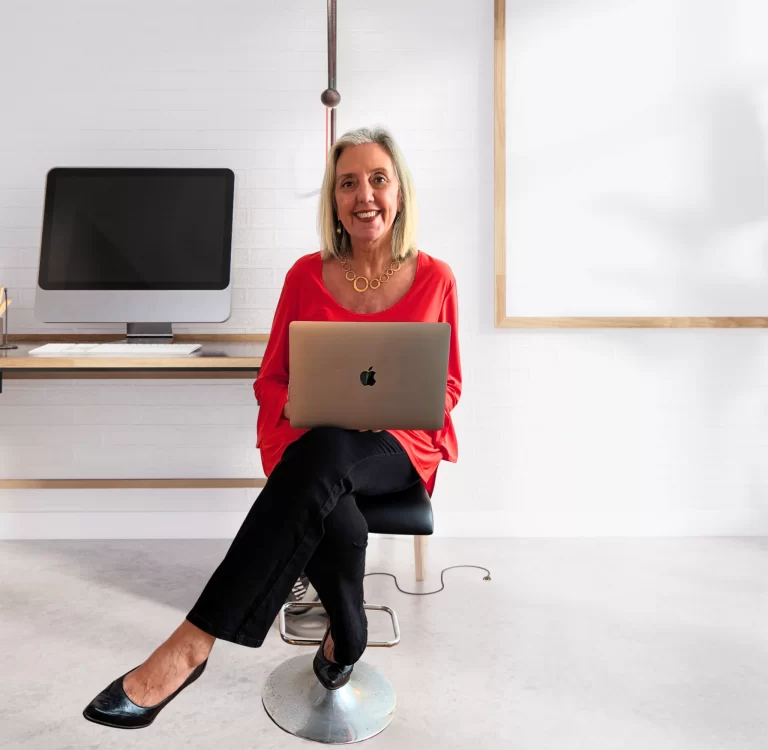
This episode is brought to you by the Business Logjam Session
A private 75-minute online session with Kathi Burns to find the one thing holding your business back and leave with your next steps. It is the same F.L.O.W. process Kathi uses with her own clients: Focus on your goals, Locate your logjams, Outline your solutions, Walk away knowing your next steps.
Find What's Holding Me BackInterested in sponsoring the show? Get in touch.How do you start a business after being laid off?
Judy Whalen treated her layoff as the push to start the business she had been hesitating to start. She says that open space let her think beyond going to the job every day. She had spent years in association management working with leaders and boards, so she built her business around serving boards of directors.
How do you become a strategic planning facilitator?
Judy started by watching a good one at work. While taking part in a large strategic planning project with peers from other states, she kept studying the facilitator and a message kept going through her head: someday I'm going to do that. She tells listeners to pay attention to messages like that. She also says new owners should stop asking whether to go back to a job; her own doubts cost her about six months.
How many goals should a strategic plan have?
Judy keeps her clients to no more than five goals, and three is ideal because each one carries a lot of work. In her example, a foundation of physicians who treat chronic pain set a goal of creating a professional association. That led to a year of governance study, and the new association launched in early 2020, found a management firm in March, and held its first conference that October despite the pandemic.
How do you believe in yourself as an entrepreneur?
Judy says believing in yourself starts with quiet time to hear your own voice, then surrounding yourself with people who believe in you. Pick people who support you and are a few steps ahead of you. Over time, she says, your gut instinct becomes your guide; she now feels her stomach tighten when something isn't a right fit.
Where can new entrepreneurs find business guidance?
Start with your chamber of commerce and university programs for people starting a business. Nobody in Judy's family had ever owned a business, so she had no role model for basics like doing the invoicing every Wednesday night. She also points to entrepreneurs and organizations online, and says to get clear on what gives you fulfillment and then go find the people who can offer you that work.
How should entrepreneurs celebrate a big win?
Judy celebrates twice: once with the client and once on her own. She takes the client out for lunch or dinner to remember how hard the project looked and enjoy where they ended up. Then she takes a day off, sometimes two, with no computer and no office. A CogniFile assessment she uses with clients shows she is a singular, someone who recharges alone.
How does Judy Whalen stay organized?
Judy pairs Google Calendar with a plain paper notebook. Every day she copies the next day's meetings by hand, which makes her ask why each meeting is on her calendar and what she wants from it. She keeps separate special notebooks for each training course, colors client folders to match each client's logo, and drops paper she isn't ready to toss into a plastic file tub; when it fills, anything she hasn't gone back to is recycled.
Why is small business strategic planning important for solopreneurs?
Judy says strategic planning is probably more important for a solopreneur than for a large corporation, because you are the business. Large companies have resources available to them. Get clear on where you want to be in three to five years, then pick three goals, or even one, and keep that focus for the time frame you set.
Where does each part of the conversation start?
- 0:00 Meet Judy Whalen
- 0:27 Her back story
- 0:46 Laid off, then launched
- 1:57 Association management, a hidden field
- 3:49 Watching a facilitator at work
- 4:07 Someday I'm going to do that
- 5:06 When people think together
- 5:55 Should I go or should I stay?
- 7:08 A favorite client story
- 7:24 Physicians who treat chronic pain
- 9:08 No more than five goals
- 9:30 Creating a new association
- 10:40 Launching in March 2020
- 12:48 The lesson: believe in yourself
- 14:11 Is this the right client?
- 15:18 Quiet time
- 15:53 Surround yourself with supporters
- 17:00 Trusting your gut
- 18:19 No entrepreneurs in the family
- 19:03 Where to find guidance
- 20:19 Advice to her 18-year-old self
- 21:09 Putting off public speaking
- 21:45 Facilitating by asking questions
- 22:20 How she celebrates
- 23:19 A day off to recharge
- 24:00 Singular or plural
- 25:54 Her organizing tactic
- 26:49 Google Calendar plus a notebook
- 28:04 Why pen to paper works
- 28:55 Bring your own agenda to meetings
- 31:18 Trying an erasable notebook
- 33:13 Special notebooks for special work
- 36:04 Folders that match client logos
- 37:00 The plastic file tub
- 39:30 Her free guides
- 41:01 Pick three goals, or one
- 41:51 Wrap-up
What resources were mentioned?
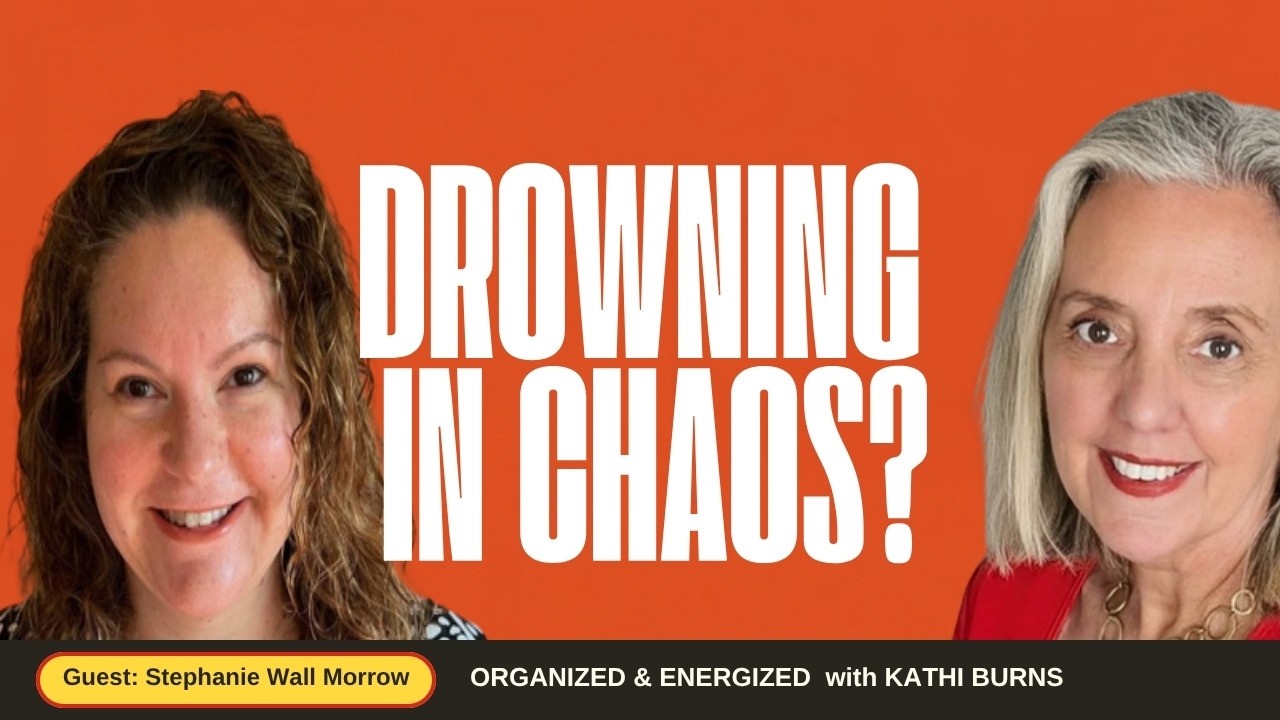
These episodes continue the same thread as this one: Lia Dunlap, Carly Church, Ginny Priem, Stephanie Wall Morrow also answer the question "How do I grow my business without burning out?", and the rest are the most recent conversations on the show.

 MotherhoodEpisode 147
How To Build a Village That Supports Your Business and Your Life with Carly Church

See every episode on the podcast archive or filter by topic on the How do I grow my business without burning out? hub.
How can I support the show?
- Subscribe on Apple Podcasts, Spotify or YouTube, or add the RSS feed to any app.
- Rate and review. A rating on Apple Podcasts helps new listeners find the show, and Kathi reads every review.
- Share the episode with one business owner who needs it; the share buttons are at the top of the page.
- Grab a free eBook: 6 Steps to Organize & Energize Your Home, 6 Steps to Organize Your Home Office or 6 Steps to Organize & Energize Your Life.
- Work with Kathi. The Business Logjam Session is a private 75-minute session to find what is holding your business back.
- Be a guest. Apply here if you have a story about clearing the obstacles in your business.
What did they say, word for word?
The transcript below is edited for readability: filler words and false starts are removed and speaker names are added. Nothing was added or summarized.
Read the full transcript +
Kathi: Hi everyone. I'm back and I'm with Judy Whalen, and she is the founder of Center for Strategic Change. Today we're going to talk about change: how you can tackle it, how you can go about it with ease and flow, and I'm excited. So thanks, Judy, for being on the show. I'm stoked to talk to you about change.
Judy: Well, Kathi, thank you so much for having me. I'm just excited to be here with you.
Kathi: Absolutely. So you've been a change agent for quite some time. So tell me a little bit about the backstory of how you got into all this.
Judy: Okay, the backstory. First of all, let your listeners know that I've now been in business 30 years. So when they hear the backstory, they'll know that there's also the front story. So you asked about the backstory. Well, I started my business after I had been laid off. And for any of your listeners out there who have gone through that experience, or anyone who's maybe sitting on the edge of that experience, it's the change that made the entire difference in the rest of my life. Now, I'm not going to say that it's easy going through it, because there's all kinds of things that you sift and winnow through, but for me, it was, I'm going to just say, the kick in the butt that made me take the step that I was hesitating to take. And sometimes we need those big pushes that show up in ways that we aren't really comfortable with to make us actually take the step that we've been thinking about taking, or even haven't yet thought about. And when you have that, I'm going to say, that open space to think about all kinds of things, instead of just going to the job, going to the job, you then open your mind and are open to all kinds of possibilities. So it was the kick in the butt that I needed.
Sometimes we need those big pushes that show up in ways that we aren't really comfortable with to make us actually take the step.
Judy: And prior to starting my business, I was in association management. And I just want to share this with your listeners, because if they're not familiar with association management, it is a true hidden employment field for all kinds of different expertise, especially if you happen to be writers or event planners or people who want to get into leadership to lead organizations. It's a really hidden employment field. So I was in association management and came out of that into my own business. And the one common thread between what I had done prior to my business and what I'm doing now is I had always, in one way, shape or form, worked with people who were leading an organization. Now, I wasn't always necessarily the leader in charge in the beginning. In the end, I was an executive director of state and national associations, but it gave me the opportunity to observe and participate to some extent in how these people ran these organizations. There's the big financial piece, of course, and then there's the public relations piece and the membership recruitment and all of that. So it gave me an opportunity to see how all of that functioned before I took the step. I said, "Okay, yep. I'm going to go do it." So that's a little tiny bit of my backstory.
Judy: And the common thread is I had always worked with leaders. So when I started my business, the one thing I thought is, I've always served boards of directors in one way or another as an employee. I had been a member on a board of directors and I've worked for them. So I thought, well, that's the piece I know: serve boards of directors. And the piece that absolutely fascinated me prior to starting my business was the whole role that facilitation plays when you're working with a group of people. And one of the functions I was able to do was I was able to participate in this huge strategic planning project with my other peers from other states, and we brought in a facilitator. And while I participated in the exercises she had, I sat there and I kept watching her, thinking, this woman is really, really good at what she does, and I really like how she does it. And all of a sudden this message kept going through my head: someday I'm going to do that.
Kathi: Out of the blue, right?
Judy: Yes. And for your listeners, when you hear these messages that just happen to land in your subconscious, your brain, wherever it comes from and wherever it lands, just pay attention. Let it be, because that is what moved me down a path that I probably may not have gone down otherwise. I had the opportunity to see the power of people thinking together and what they could make happen because of that. And it's fascinating to this day. It's still fascinating. When I work with my clients in strategic planning, I always tell them, there's this process. Yes, we go through this process, but there's all these synergies that start to happen around this process that almost become bigger than the actual strategic plan. It is truly amazing what happens when people think together. So that's the backstory.
Kathi: That's a great backstory. And I like that you had been considering maybe jumping anyhow, right? And then you just got the kick in the butt to do it. And I think a lot of women right now are in the similar phase where they're thinking, should I do it? Should I not? Should I do it? Should I not? No, I'm here to say everybody just jump. Just do it. Especially if you have that small little whisper in your ear that the time is right. And I love the fact that you grab the bull by the horns on things that you really love. Like, you love watching this lady do her craft, and you're thinking to yourself, I can do that, too. That's a good thing.
Judy: Well, and when you mentioned should I go or should I stay, there's this kind of push and pull in the beginning when you're starting to think about it. And I can still distinctly remember, after I had started my business, well, at least I had my business plan on paper, I was looking for my new clients, and I kept thinking I had one foot in that camp. But mentally, I kept thinking, oh, maybe I should just go get a job. And quite frankly, that held me back. If I had just cut the thought process there and just said, "Okay, I'm starting this business. I'm not looking back. There's nothing to go back to. So just go for it," it would have happened probably six months faster.
Kathi: Yeah. I'm with you on that. When I started addSpace, I had a year to reinvent. So I had no ties and no encumbrances. In fact, I just had a year to kind of, the space, as you'd said earlier, having the space to think about where you're going to go. I think that's so very important, to have the space and the time to be able to just deliberate and to create, because I don't think if you don't have space, you can't create anyhow, in my opinion. So I absolutely love that. So, okay. So flash forward. Talk to me about one of your favorite client stories. Then you launched, you got your clients. Give me a story about a client and what happened.
Judy: Okay. I'll give you a story. This now is actually two clients. It started as one client, and I'll just tell you, they are a group of physicians who provide a specialty service that helps people who have chronic pain, and they had hired me to do strategic planning. They're a foundation. So people donate to them, and then this group of doctors go over to international underserved countries, and they use their specialty to help people who are underserved, as well as providing services in whatever offices they are in their own world. So we started that, and this was so fun for me because, first of all, these people have this really special mission. I think that's probably the best part of my business: I get to work with clients that have really special, important things that they want to do in the world. And it doesn't matter whether they're a business or they're a nonprofit or even a government agency. They have this mission of doing something that's going to do something better for the world.
Judy: So this group of physicians, we did strategic planning, and it was a pretty long, comprehensive project, because it was interviewing all of the board members. We had various committees that they worked on, and they had recently lost their founding president, and so they were in transition. And this is like the second project I did with an organization that was in transition because of the passing of a leader. And so it's a matter of getting leaders to step into new roles, solidifying their roles. And as we went through the project, plus they're from all over the world, and they're just such good people to interact with. They think good. We got to the end of the strategic thinking phase, and they decided on one of their goals, because I keep them to no more than five goals. Three is ideal, because you've got a lot of work to do on those three.
I keep them to no more than five goals. Three is ideal, because you've got a lot of work to do on those three.
Kathi: Yeah, I like the three.
Judy: One of their goals was they decided that their specialty has become so needed in this world that it was now time to create, if your listeners don't understand, there's a true 501(c)(6) category. That's a federal IRS designation, and it's a designation for professional organizations. They decided it was time to create that, because now there was enough critical mass, let's just say, an interest in this specialty that they felt it was time to be able to have a true, full-blown association. And so that led us to a full year of governance study. Could this really happen? How would they make it happen? How would they finance the study? How would they get this thing off the ground? And I was so lucky to be able to guide them through the process, because board governance is one of my areas of expertise.
Judy: So I still remember it distinctly. It was November 2019. The board of the foundation said, yes, let's go ahead. The interim board, which is a planning board for this new entity, said, yes, we will go ahead. The new entity got off the ground in December of 2019. They were in existence January 20th, 2020. We got all their legal papers filed. I found them an association management firm in March 2020. The pandemic hit, and here is my brand new International Association of Regenerative Therapies. Just, oh my goodness, how can they make it through this? They're barely off the ground. Well, fortunately, the association management firm had other associations also, and they all were going through the same thing, and they were able to pull off their conference, which was in October. They made it through. They made it through the first year, had more attendees at the conference than they would have had in person. Made it through their second year, and they are off and running and providing training for other physicians in the specialty of prolotherapy. And now, because the pandemic has, let's just say, hopefully subsided, they're able to go back to the countries where they've served the underserved this year. So that's one of the big examples of what I do.
Kathi: That's a great one. Did you say it's cryotherapy?
Judy: It's prolotherapy. P-R-O-L-O.
Kathi: Oh, prolotherapy. Okay.
Judy: I don't want to get into it, because I'm not the actual expert in that field.
Kathi: I get it. There's so many people who suffer from chronic pain.
Judy: Absolutely. For sure.
Kathi: Oh, that's a really good story. And the fact that they made it through, probably because they had a strong basis of what they were doing, and you had put them on with the right association who had the right contacts and all that, right?
Judy: It's that ability to connect people, to help them think carefully about where they're going and what they really, really want to accomplish.
Kathi: So, yeah, I love it. Now, you've been in business for quite some time now. What's the one lesson that you've learned as a female entrepreneur in this world that you would want to talk about to the audience?
Judy: Okay. So I've been in business 30 years. The one lesson that I would love to share with anyone starting out, anybody who is in their five, six, seven, eight, nine, 10, 29, whatever, is believe in yourself. If somebody had told me that when I was first starting, I'm not sure I would have been able to totally do it. But I know those words would have resonated in my head, and it would have been like the other words that resonated in my head to make me take the leap, and it would have moved me through the path faster, with more confidence. And there's ways to go about developing that confidence in yourself. And it's not just the way you present yourself. It's the confidence in, am I making the right decision in my business? Not just even starting a business, but once you're in your business, you have all these decisions that come along that you need to make. And some of them are bigger than others. Some of the small decisions, yeah, you can make like this, but other decisions come along, and it's like, now, should I make that? Is that going to take me down the right path? Another big one for me is, is this the right client for me? Because it really makes a difference who I collaborate with and who I share my expertise with to help them go where they want to go. So that's got to be a good fit for me as well as for them. So believe in yourself, take the time to do the inner work, and find the resources.
Believe in yourself, take the time to do the inner work, and find the resources.
Kathi: It's all about our mindset. Absolutely. There's so many pressures and so many things external to us that impact us in a negative way, and we let those messages in, and it's like, don't let the messages in. Once you get to the point where you can say no, I'm not letting that in anymore, that's where the success starts to really happen. Yeah, I agree totally. And in order to believe in yourself, you have to be able to hear yourself. And I know you and I are very much in sync with that. You've got to be able to go within and listen to what yourself is saying to you, and make it louder than the people that are talking in your earballs, right?
Judy: That's what I was going to say: sometimes you need that quiet time, where you just turn everything off. No phone. Sometimes music can help, to me, like symphonic music, not stimulating type stuff. But also there's a lot of resources on the power of your subconscious. Once I figured that out, and once I started reading about the power of your subconscious mind and I started connecting with people who have similar beliefs, that is a true turning point. You've got to surround yourself with people who, first of all, believe in you and support you and are on their journey, but probably a few steps ahead of you.
Kathi: I totally agree. And I think it's easier to find the people that you resonate with. It's an easier yes to find those people you resonate with than to listen to your thoughts. Do I resonate with my own thoughts? Right? So having those people, and if you resonate with them, oftentimes I feel that being surrounded by those who love you, they believe in you more than you can believe in yourself. And that's super duper critical, to have those people that believe in you even more than you, and then you can do the same and believe in them. I was talking to someone the other day about that. It's like, oh yeah, I can see her totally doing that. That's so easy for me to see, but to see me doing what I was, it's not as easy. So I'm with you on the camaraderie and having the people with you that totally believe in you. And I do believe you can trust your instinct on the people pretty quickly.
Judy: Oh, yes. I mean, eventually you'll get to a point where your gut instincts are your guiding light. It took me a while to learn that, because we all come through what I'm going to just say an educational system that kind of squelches you listening to your internal guide and to what I call my gut instinct, because it has its set of norms. But once you have the freedom to step out of that and to begin to have your own life experiences, and you get to test the waters of what's working for you and what's not, you begin to get the signals. You'll know. I can tell right away now if something's not a right fit for me. I can feel my stomach tightening up. Now I've learned, okay, there's the signal.
Kathi: Yeah, that's great. And I know when we met at a conference, we were just like that. It's like, oh, I love you, you're so cool. And that's why you're on the podcast, because we immediately resonated with each other. And I would support you in any way that I can, and I know it would be the similar thing. So, girls out there, if you're listening, find those people that you're simpatico with. It's so very important, especially as a woman entrepreneur. We need the support, and we need the confidence boosting of someone saying, "Yes, you can do it. You can do it."
Judy: Well, and for your listeners, like in my case, nobody in my family had ever owned a business. Everybody was employees. And to my parents' credit, they said, "Okay, you're going to go to school. You're going to get an education." My dad was adamant I was going to get an education, so if anything ever happened, I could take care of myself. So you've got to give them that amount of credit and respect. But nobody was an entrepreneur, so I didn't have any real role models that could say, "Oh, yeah, this is what you do: every Wednesday night you sit down and you do your invoicing and your bills," or whatever. I didn't have that model. So for anybody who's out there listening that's in that same boat, there's all kinds of places and opportunities to find guidance. Your chambers of commerce are a good resource. Universities have programs specifically for people who want to start a business. There's all kinds. And then you just look around on the internet, and there's all kinds of entrepreneurs on the internet and organizations that you can tap into to find out what are the basics you need and how do you bridge that. It's that transition of going from what I'm going to call kind of the security of a job, even though there's no security in having a job anymore, right, to where you are totally responsible for making your own income and your own work fulfillment.
Kathi: Yeah. Oh, go on.
Judy: Well, there's a lot there. You've got to get really clear on what is it that gives you fulfillment, and then where are those people that can offer you the projects or the income that you need, and then you've got to go find them.
Kathi: Right. That's the thing, the marketing. But step one, find what you're passionate about and that you have the skill set to do. What I find is, I call it the God gift. Whatever you can do naturally is really what you probably love to do anyhow, because it comes easy to you. And that can be a guiding light towards your way. Now, if you had to tell your 18-year-old self anything, what would you tell her, Judy, right now, looking back?
Judy: Looking back, I would tell my 18-year-old self, who came out of a very rigid, structured home environment, educational environment, religious environment, to believe in myself and just go do it. What I now realize is coming out of whatever I came out of equipped me to just go do it. But I didn't know that, and I didn't believe it. And so you've got to dip your toe and let yourself be tested, because it's amazing what you can rise up to the occasion and do.
Kathi: Absolutely.
Judy: When I think back to when I was in college, people will laugh at this one. I put off taking public speaking. We all had to take a speech class. I put it off till I was a senior. I could not graduate until I took it.
Kathi: You had to do it.
Judy: I had to do it. I finally took it, and it was like, "Oh my gosh, this wasn't as bad as everybody says it is." And it actually was a little bit of fun. And then I look at what I'm doing now, where I'm standing in front of groups facilitating people who have, I'm going to just say, a whole lot more education than I've ever attained. But helping them just think, and asking questions. That's the one thing I've learned: if you ask really good questions, you can get a lot of information and get people to think about whatever it is that you're working on. And I've learned to ask questions. And basically, if somebody says, how do you facilitate? I say, I just ask questions. I mean, yes, I have a game plan and there's a process, but the whole thing is based on asking questions, because they've got the knowledge base. I just guide them through a process.
If you ask really good questions, you can get a lot of information and get people to think.
Kathi: Yeah, I love that. Now, if you have a big win, which I'm sure you've had several in your career, this is my year for celebration. How do you celebrate?
Judy: Okay, I'm thinking back to the clients with the big, big wins and how I celebrate. Okay, first I take them out for lunch or dinner, and we celebrate together. We have a good time talking about, oh, remember how awful we felt about how this was going to be so difficult, and was this going to work, and blah, blah, blah, and then look where we are. I just let them channel their thoughts, and we sit there and laugh and giggle and smile and have a good time. Then after I've done that with a client, the next day, assuming I don't have another client activity. I try not to book, right when I finish a project, another really stressful client event right the next day, because what I have found is when I'm out facilitating, I really need time to let my brain clear afterwards. And so whether it's the next day or maybe a day later, I come home and celebrate by taking the day off. I don't turn my computer on. If it's nice weather, I may be outside. I might go dig in the garden, or I might be out with the dogs, but I don't turn my computer on. I don't even walk into my office. And sometimes, depending upon the depth and the difficulty of the project, I might take two days. Because I have found I can't function effectively until I let myself have my quiet time, because that's how I regenerate. Quiet time is how I regenerate.

Judy: There's an assessment, a CogniFile assessment, I use with my clients, and it will tell us whether we're singular folks or whether we're plural, and it tells me all kinds of other things. But I happen to be a singular. So when I need to recharge, I don't need to be around people. I like to just be by myself, where other people who happen to have a plural characteristic would recharge by going shopping with a group of friends or going out and partying or something. But I happen to be that person who likes my quiet space.
Kathi: Yeah. Putting your hands in the dirt. Oh, that's a wonderful thing. Do you think that people change from singulars to plurals throughout their life, or do they pretty much stay the same?
Judy: I think they pretty much stay the same, because the assessment I use is based on their innateness, which is based on the science of the mind. So the science of the mind doesn't really change. What I do find is sometimes they think they might be a plural, and once we can help them understand, as you go through life, you pick up all these learned behaviors. Those are learned behaviors that sit on top of your innateness. And once we can peel back the learned behaviors, and they can begin to understand their innate capabilities and their unique, what we call, core genius, then they may finally realize, yes, they might be a singular.
Kathi: Never be a plural. And they haven't been getting what they thought they needed the whole time.
Judy: Exactly.
Kathi: They might be running around depleted, because I know a belief is only a thing you've been thinking over and over and over. So it could be not even a correct belief about themselves, right? Yeah, that's interesting. So I know that you are very organized, because you facilitate change. Tell me about an organizing tactic that you use in your business to keep yourself going. Or it could be a program, it could be an app, it could be a habit.
Judy: Okay, so this may also sound funny to your listeners, but in my business there are certain facets of my business where I just can't make a mistake. There's a lot of facets where I can make a mistake, but I can't make a mistake if I have an appointment with clients, like this podcast. I can't miss that. Zoom has made a bit of a difference, where I have a little bit more breathing space. But when I'm facilitating groups of people face to face, and they've got members coming from all over the world who have flown in, I can't miss that because I forgot the date, right? So the one tip I use, and this is going to sound duplicative, is dates initially go on my Google Calendar, partly because people are sending emails and confirmations are made by email. So that goes on my Google Calendar. But every single day I sit down with my paper calendar before the end of the day. And I've given up on planners. I am now back to a plain old notebook. I've tried every single planner out there. Nothing evidently works like my brain works. So I am now back to just using a notebook that I can take with me. I do have to say the other planners helped me figure out how I want to just put things in my notebook, though.
Kathi: Oh, yeah. So what you like and what you don't like.
Judy: Yes. And at the top of my page every day goes the day, the times, who I have meetings with. So that forces me to look at my Google Calendar the day before, and I write it into my paper. And for your listeners, there's research that proves there's a tactile piece: if you use pen to paper, it impacts your brain more than if I were typing it digitally. So I've got it digitally on my Google Calendar, so that's with me all the time, on my phone, right? But it also gets written by hand in my notebook. And it has made a difference. It makes me start to think about what are we talking about in that meeting? Why, first of all, is it on my calendar? And what do I want to accomplish out of that? Which doesn't happen if I just put it digitally on my calendar. So that's my one little personal organizing tip. It keeps me from missing something that I've committed to.
Kathi: Yeah, that's fantastic. And you touched on something that I talk about all the time in time management. Go to a meeting knowing what you want to accomplish out of it. Don't just show up at a meeting because it's on an agenda. What are you going to get from this meeting yourself? And I think this is when I work with a lot of corporate employees, they have to go to these meetings. It's like, well, you need to walk in with your own agenda. Even if it's only to talk to Brad, because you only see him in this meeting, and get something from Brad. Make sure that that's your agenda for going into that meeting. And that way, you're not just having a meeting for meeting's sake. So I love that you said that.
Judy: And it's especially important when you're not, I'm going to say, in the leadership role of the meeting, where you're there as a member that's been invited, but then you've just got the agenda. There were any number of years when I first started out, especially, when I would go to, like, I was on a foundation board for a university, and I would go, and it's like, okay, these agendas are prepared in advance. We just get them. And finally it dawned on me: okay, now these people come to this meeting. They're all from different states. They're coming to this meeting. Why don't I pick one person each time that I want to meet and get to know? So that would be my own personal agenda.
Kathi: Perfect.
Judy: It took me a while to figure that out. Once you start moving into different leadership roles, and you're in charge of either bringing ideas to the agenda prep or preparing the whole agenda, then it puts a little different light on what you want to get out of it. But when you're not in that role, you've got to go with your own agenda.
Kathi: Yeah. Absolutely. Not necessarily to disrupt the meeting.
Judy: Right.
Kathi: But otherwise, why go? But even if you have to go, there's no reason to make it a missed opportunity, because there's always opportunity anytime that you meet with more than one, two people, even just one, right? I love that. And I don't think there's anything wrong with pen to paper. I think pen to paper is a really good thing. I have a similar thing where I have my little notebook. And the thing about the notebook, it has to be a really great notebook. Mine's like a leatherette, so it feels good. And I still have my check marks on things that I want to do today, along with my Google Calendar, because for me, I'm definitely a tactile learner. Writing really solidifies it for me.
Judy: And this year I'm trying the notebook that's new to me, which is the erasable. You write with a certain type of ink. And I'm using it just for my yearlong planning. Not for my day-to-day stuff, but for my yearlong planning, because when I'm doing the initial thought process, I need to write and erase, write and erase, till I get it the way I want it. So I'm just trying it to see if that will work for me, because at least I can still write.
Kathi: Yeah. Absolutely. And I love the fact that you said all the old planners that we've used in the past have definitely helped us formulate how we want to organize our thoughts now. I was a Day-Timer girl forever, and it's a really good thing. Back in the day before there was Google Calendar, it was kind of an important thing you needed to have, a planner pad, but God forbid we use it.
Judy: And then I used a planner, and it's still real popular yet today, where you can design your own pages the way you want them and they'll print. And I tried that, and I thought, well, I can just do this now in a notebook, now that I know how I want this to set up. I can just do it. And I'm much faster with a pen and paper.
Kathi: Yeah. And bullet journals. I think that's why it's so hot right now, people are playing well with bullet journals. Similar thing. I have one client who lives for her bullet journal. I have zillions of other clients who've started it and then just left it by the wayside. So to each his own. The whole thing I think that's important for anyone out there listening is just find the way that works for you. I feel there's no one way to get organized. The best way to get organized is one that you understand, that you're going to stick to. As long as you have something that makes sense and you stick to it, it's perfect, or it can be made to be perfect, because you'll figure out the ways that you need to tweak it.
Judy: Okay. So I have to show you this. You asked about change, and you asked about…
Kathi: Oh, you showed me your book.
Judy: Okay. So I am a journal junkie. And it's not that I journal consistently. It's that what I write in has to have the right feel and has to have something that is special, because what I put in it is special. And so I have different notebooks. This is one way I keep organized, because online, let's just say for online training, there's all different types of training I'll do. So I'll have a different notebook for each one of those training courses that I might be in. But the notebooks have to be special. They're not just run-of-the-mill type. They have to be special, so that when I'm working in it, it reinforces to me, oh, you're doing something in this special notebook. This must be really important for you. And it's just these little psychological tricks that keep me motivated.
Kathi: Well, they're very important. They're very important. The way that your notebook feels, the colors. I do a similar thing, where my client notebooks are different and my training notebooks are different. Now I'm going more and more into Google Drive, but I still kind of really like to have the notebook. It might have a few things in it from training. I'm trying to put everything more in Drive, so that it's there forever and I don't have to carry around a bunch of paper.
Judy: Right. There are certain things I'm putting into Google Drive that I might need to access if I'm not right at my desk, right? But I still am paper to pencil with my client files as I'm working through the planning, as we're working through whatever. My notes are still paper. The documents I produce that they need to access, yes, go in Google Drive, or anything that I know we might need to actually reuse again with them is in Google Drive. But there's something about me being able to put my own thoughts on paper that helps me think about what might come next.
Kathi: I agree. I agree. And the collaboration of Google Drive is also good. I love going in and editing a document with someone else. You can see where their cursor is, and it's a collaborative process as well. So, yeah, all of these tools are so very important. I think we're so blessed to be in the electronic age, that we can do that kind of stuff together, but still keep our little pen and paper and our pretty little notebook. Very important.
Judy: And for those of us who came through this whole, I'm going to say, business environment before we had digital, that's where my grounding was. And there's certain things about your grounding that it's really hard to let go of. Plus it helps me think better. But here's a little tip you'll laugh at. Okay. So all my client files are either in Google Drive, some are in OneNote, and then in folders. And I use different color folders based upon the color of their logo. That's how I keep things organized in my brain, so that when I go to my file drawer, I can immediately find who I'm looking for.
Kathi: I never thought about the logo color thing. That's a good idea. Okay, that's a tip out there, girls. Listen to that. Your logo.
Judy: Okay, now here's the tip that everybody might just think is looney. So we're in, I still consider us in, the transition age from paper to digital.
Kathi: Oh, yeah.
Judy: So the paper files and client files are just handled right away, and they go into either digital Google Drive or they go into their colored folder in my file drawer. The stuff, though, that you still get that comes into your office, like, I still get paper stuff. I get stuff that I'll find on the internet, and at the moment it's like, oh yes, I need to print this and I'll read it, but I don't want to throw it away. I have a plastic file tub, those ones that you can buy at the supply store that you would put hanging files in. The kind of things that I don't exactly know what I'm doing with, but I'm not ready to throw them away yet, go into my plastic box. And when the box is full, if I haven't gone back to something that's in there, then I can recycle that. There have been times when I've gone back in and I've dug through stuff, like, "Oh, yeah. I remember I saw that somewhere. Where did I put that?" And at least it's there, and it's good for safekeeping for whatever period of time it stays there.
Kathi: Okay. Well, you know what? You're following the organizing 101 rule. You need a confined amount of space for the randomness. So the fact that if your tub gets full, then it's time to make effort on it, that's great. Because you have to have that container to remind you that you need to take some action. So good job on that.
Judy: Well, the other thing I found is I would angst about, okay, what am I doing with this piece of paper? I want to keep it, but I don't know. I really don't want to spend time making a label and putting it in a file folder and filling up a file drawer, right? So it was eating up time. What am I going to do with this? So now it's just, okay, you go there, and I know where you are, and if I need you, I'll dig through.
Kathi: Well, I'd rather that than make a file that's going to go into your drawer and never see the light of day. 80% of the files that we put in our cabinet never come back out again. So what you've done is you've got a set point and a stop point before it's going to go into Netherland and never be seen or heard from again, and where you can actually touch it again and then make a decision. So good job, Judy.
Judy: Well, and I think it was a little bit by, I'm just going to say, luck, because I changed my office around and moved two of my lateral files to the storeroom, which now still have to be dealt with. But the two that are up here are okay. Now, I only have this amount of space. What goes in here is client stuff and my own business files. And you get more selective when you don't have as much space.
Kathi: Ah, yes you do. Yes, you do. That's what it's all about. Keep that confined amount of space for each thing. Okay. So we're running down to the end of the half hour. So tell me about any kind of resource that you have for the audience that might help them move forward with their business.

Judy: Okay. So I have, it's called, if I can say it, A Guide to Strategic Planning, and it includes a series of articles on reasons why smart companies use strategic planning, streetwise tips. It delves into strategic thinking. So that's available. And I have a second gift that I would just love to give them, if that's possible.
Kathi: Oh, sure. Absolutely.
Judy: Well, because we talk so much about mindset and believing in yourself, I have this lovely ebook, and it's so easy to use. It's called Develop a Positive Mindset in Five Minutes a Day. I wrote these 30 tips so that each day you can just look at it and take one tip, practice it throughout the day, and eventually it just all starts to come together. And it's illustrated. It's colorful. It's not anything that's hard to get through. It's just one tip a day.
Kathi: I love it. That's very gracious. I think people are going to devour that. And make sure that you download both, because I think strategic planning, you have to do it even if you're a solopreneur.
Judy: Absolutely. Actually, quite frankly, if you're a solopreneur, it's probably more important than if you happen to be a large corporation. Large corporations have all these, I don't want to say resources, kind of not necessarily built in, but at least available to them. As solopreneurs, we are the business, and we need to be really, really clear on where are we going. What's that vision of where you want to be, let's say, in three to five years? And then pick three goals, or pick one goal. I have had clients who are organizations pick one goal, and that was their primary focus for whatever time frame they had set, and it makes such a difference.
As solopreneurs, we are the business, and we need to be really, really clear on where are we going.
Kathi: Yeah. Laser focus. If you don't have goals, you have no focus anyhow. So, right. Oh, this has been awesome. I love having you on the show, and I just love hanging out with you anyhow.
Judy: Well, I am just so grateful to have had this opportunity to chat with you on your show, because this has been just great fun.
Kathi: Absolutely. So, okay, everybody, download. I'm going to download that book instantly. You can never have too many positive thoughts. That's for darn sure. The more the merrier. So let's head on out on a positive note and say thank you very much, Judy. I so appreciate your time. And gang, thanks for listening again. I don't know if you heard this, but by the time this is aired, we hit the 2,000 downloads mark.
Judy: Oh, congratulations.
Kathi: Thank you for listening and for allowing me to have amazing guests on the show, just like Judy. And we're signing off for today. Thanks, Judy.
Judy: Oh, thank you. It's been great fun, and it took me down memory lane, too, from where I started. So thank you.
Kathi: Love it. Okay, guys. We'll see you next week.
Where can I find the links and resources from this episode?
Connect with Judy
Organizations and companies
Books and resources
- Develop a Positive Mindset in Five Minutes a Day by Judy Whalen
- How to Master Your Muck by Kathi Burns
- Organizing With Tetris by Kathi Burns
- Home Organization, The Smart Guide by Kathi Burns
- Simple Family Organizing by Kathi Burns
- All of Kathi's books in her shop
Inspired? Here Are Your Action Steps:
- Write down where you want your business to be in three to five years.
- Pick three goals for that vision, or just one, and no more than five.
- Decide you're not going back to a job, and stop splitting your attention between the two.
- Schedule quiet time with no phone so you can hear your own thinking.
- Find people who believe in you and are a few steps ahead of you.
- Check your chamber of commerce and local university for programs for new business owners.
- Each evening, copy tomorrow's meetings from your digital calendar into a paper notebook and note what you want from each one.
- Walk into every meeting with your own agenda, even if it's just meeting one new person.
- Color-code client folders to match each client's logo.
- Set up one file tub for paper you're not ready to toss, and recycle what you haven't touched when it fills.
Frequently asked questions
How did Judy Whalen start her business?
+
She was laid off from association management and calls it the kick she needed. Years earlier, while taking part in a large strategic planning project, she watched the facilitator and kept thinking, "someday I'm going to do that." She says things would have taken off about six months faster if she had stopped thinking about going back to a job.
What's the one lesson Judy Whalen would share with new entrepreneurs?
+
Believe in yourself. Judy says that confidence matters for every decision after you start, including whether a client is the right fit. She suggests quiet time to hear yourself, and surrounding yourself with people who believe in you and are a few steps ahead of you.
Why do solopreneurs need strategic planning?
+
Judy says it's probably more important for a solopreneur than for a large corporation, because you are the business. Get clear on where you want to be in three to five years, then pick three goals, or even one. She keeps her clients to no more than five, with three as the ideal.
How does Judy Whalen celebrate a big win?
+
First she takes the client out for lunch or dinner to celebrate together. Then she takes a day off, sometimes two: no computer, no office, just the garden or the dogs. An assessment she uses with clients shows she's a singular, someone who recharges alone.
How does Judy Whalen stay organized?
+
Appointments go on her Google Calendar, and every day she copies the next day's meetings by hand into a plain notebook, which makes her ask why each one is there and what she wants from it. Client folders are colored to match each client's logo. Paper she isn't ready to throw away goes into a plastic file tub, and when it's full, anything she hasn't gone back to gets recycled.
Who is talking in this episode?

About the Host, Kathi Burns
Kathi Burns, CPO®, is a Business FLOW Strategist based in San Diego. For the last 20+ years, Kathi has helped clients create systems they can stick to. She is the author of How to Master Your Muck, Organizing With Tetris and Home Organization, The Smart Guide, and co-author of four more titles; all are in Kathi's shop. Kathi's business has been featured on Good Morning America, and her advice has been featured in Oprah Magazine, Martha Stewart Living, Better Homes and Gardens and Entrepreneur Magazine.
More about Kathi · Shop Kathi's books · Business Logjam Session · Apply to be a guest

About Judy Whalen
Judy Whalen is the founder and CEO of the Center for Strategic Change, a consulting firm she launched in 1992 as Whalen & Associates after being laid off from association management, where she had served as executive director of state and national associations. She specializes in strategy, market research and communicating strategic change. Her clients include leaders of health care and educational organizations, service businesses, foundations, government agencies, chambers of commerce and entrepreneurs. Judy and her team facilitate strategic thinking sessions and strategic planning projects, run market research studies, guide nonprofit mergers and acquisitions, and train boards of directors in governance. She is the author of the ebook Develop a Positive Mindset in Five Minutes a Day.
Want help putting this into practice?
Book a Business Logjam Session with Kathi
A private 75-minute online session to find the one thing holding your business back and leave with your next steps, using the same F.L.O.W. process Kathi uses with her own clients: Focus on your goals, Locate your logjams, Outline your solutions, Walk away knowing your next steps.
Prefer to start small? Download Kathi's free eBook 6 Steps to Organize Your Home Office.
Published · Updated
This episode page is for general information. Guests speak for themselves, and their opinions, statistics and examples are their own. Nothing here is legal, financial, medical or mental-health advice; talk to a qualified professional about your own situation. Some links go to the guest's own products or free offers; addSpace does not earn a commission from them unless stated.