

Episode 134
with Christine Campbell Rapin, business advisor and mentor, founder and CEO of CLEAR Acceleration Inc. · February 4, 2026 · 26 min
Business advisor Christine Campbell Rapin says the idea is the easy part of business, because people don't buy the idea, they buy the outcome.
She says you need to describe the problem you solve in 10 words or less, because if people aren't clear on the outcome, money doesn't follow.
Christine uses micro buy-ins, small invitations such as engaging with a post, downloading a resource or coming to an event, to move people from curious to paid client.
She built her consulting business one hour a day while working in corporate, and says the two things that grow a business are meeting strangers and making offers.
Her challenge to listeners is to meet at least two new people a day, which adds up to 10 people a week and 40 people a month.
Published · Updated
What is this episode about?
If you want to know how to find new clients without running yourself into the ground, this conversation is a practical place to start. Kathi Burns talks with business advisor and mentor Christine Campbell Rapin, a self-described corporate runaway who worked in marketing, sales and operations before building her own global consulting business one hour a day. Christine explains why the idea is the easy part of business, why you need to name the problem you solve in 10 words or less, and how micro buy-ins, small yes moments, move people from curious to paid client. She also shares why it took her a year longer than it should have to quit her job, why busy leads to broke, and why the two things that matter are meeting strangers and making offers. She closes with a simple challenge: meet two new people a day.
People don't buy the idea, they buy the outcome.Christine Campbell Rapin
Jump to links and resources · Part of How do I get more clients? · All episodes · Every guest
What are the key takeaways?
- Christine says the idea is the easy part of business; people buy the outcome, so you have to be clear on the problem you solve and who you solve it for.
- If you can't explain the problem you solve in 10 words or less, people won't understand what you do and money won't follow.
- No two businesses grow the same way, but Christine says there are five foundations, and each owner has to choose a sequence and play their own game.
- Every marketing tactic, from social media to podcasts to ads, exists to create movement, and Christine uses small invitations called micro buy-ins to move people from curious to paid client.
- Christine built her business one hour a day alongside a corporate job, and says she waited a year longer than she should have to quit once she hit a capacity problem.
- She hired her first mentor when she had one client, and within six months her revenue paid for the coach.
- Her challenge is to meet at least two new people a day, focus on strangers, make the asks and track the results.

This episode is brought to you by the Business Logjam Session
A private 75-minute online session with Kathi Burns to find the one thing holding your business back and leave with your next steps. It is the same F.L.O.W. process Kathi uses with her own clients: Focus on your goals, Locate your logjams, Outline your solutions, Walk away knowing your next steps.
Find What's Holding Me BackInterested in sponsoring the show? Get in touch.What is the first step to growing a small business?
Get clear on the problem your product or service solves, because people don't buy the idea, they buy the outcome. Christine says the idea is the easy bit of business. Too many owners build websites and logos for "everybody" before they know their buyer. She asks clients to name the problem they solve in 10 words or less.
Is there one right way to build a business?
No. Christine has worked with 400 companies and says no two businesses do it the same way, but there are five foundations, and you have to understand and choose your own sequence. She pushes back on social media formulas that promise a linear three-step path and blame you if it fails. Planning to plan is hiding behavior, she says, because everything is feedback and you can't get where you want to go without a feedback loop. If your business doesn't feel like oxygen, check in.
How do you turn a prospect into a paying client?
Plan a series of steps that invites people to move from curious to paid client, instead of jumping straight to a sales call. Christine says the intent of every marketing tactic is movement. Prospects are deciding whether they're in the right room, whether you know what you're doing, whether they feel safe with you, and whether it will work for them. If you haven't answered your own true north questions, such as what result you stand for and where you want to play, your audience feels the gap and trust breaks down.
What are micro commitments in sales?
Micro commitments, which Christine Campbell Rapin calls micro buy-ins, are small yes moments that build trust before you make an offer. They can be engaging with a post, downloading a resource, coming to an event or having a conversation. Christine says people who say yes five times are more than 80% likely to say yes again.
Can you build a business while working a full-time job?
Yes. Christine built her consulting business one hour a day while still working in corporate, sometimes in 10-minute blocks before a conference call or in a grocery store line. She teaches that if you can commit to one hour, you can decide to add more. As her business grew she hit a capacity problem, and looking back she says she waited a year longer than she should have to quit her job.
What are the two things that grow a business?
Finding strangers and making offers. Christine says people working 60 hours a week without clients are often building websites, learning to cut YouTube videos and making content instead. She found her first client almost by accident when a contact asked to pay her to work out who her buyer was and how to ask for a sale. Her advice for any entrepreneur is to commit to being a problem solver.
Why do business owners need a mentor?
Because you cannot see your own ears. Christine says that when you're overwhelmed, you can't see what's in front of you, and you can't outsource the work until you understand it. She hired her first mentor when she had one client, funded it from her corporate job, and by six months her revenue covered the coach. She warns that busy leads to broke, and broke leads to burnout.
How to find new clients in the next 90 days?
Meet at least two new people a day and make offers. Christine Campbell Rapin says that adds up to 40 people a month, which might lead to 10 deeper conversations, five offers and one or two clients. Her free guide lists 25 ways to get into the right rooms, plus a tracker. Pick one way and stay with it.
Where does each part of the conversation start?
- 0:00 Meet Christine Campbell Rapin
- 1:54 A corporate runaway who connects the dots
- 3:51 Structure gives creatives white space
- 4:40 The idea is the easy part
- 6:51 No formula, but five foundations
- 9:21 Moving people from curious to paid
- 12:01 What micro buy-ins are
- 14:06 Building a business one hour a day
- 16:32 Meet strangers and make offers
- 18:11 Commit to being a problem solver
- 18:59 You cannot see your own ears
- 20:38 Busy leads to broke
- 21:37 Advice to her 18-year-old self
- 23:21 25 ways into the right rooms
- 24:19 The two-people-a-day challenge
What resources were mentioned?
These episodes continue the same thread as this one: Sue Kirchner, Yvonne McCoy, Louise McDonnell, Allan Ngo also answer the question "How do I get more clients?", and the rest are the most recent conversations on the show.


 Social MediaEpisode 144
How To Use Social Media More Strategically In 2026 To Find New Customers with Louise McDonnell

See every episode on the podcast archive or filter by topic on the How do I get more clients? hub.
How can I support the show?
- Subscribe on Apple Podcasts, Spotify or YouTube, or add the RSS feed to any app.
- Rate and review. A rating on Apple Podcasts helps new listeners find the show, and Kathi reads every review.
- Share the episode with one business owner who needs it; the share buttons are at the top of the page.
- Grab a free eBook: 6 Steps to Organize & Energize Your Home, 6 Steps to Organize Your Home Office or 6 Steps to Organize & Energize Your Life.
- Work with Kathi. The Business Logjam Session is a private 75-minute session to find what is holding your business back.
- Be a guest. Apply here if you have a story about clearing the obstacles in your business.
What did they say, word for word?
The transcript below is edited for readability: filler words and false starts are removed and speaker names are added. Nothing was added or summarized.
Read the full transcript +
Kathi: Hello and welcome back to the podcast. Today we're going to talk about how to go from fragmented to focused and find your client in the next 90 days. And we're going to do that with Christine Campbell Rapin. She's a dynamic business advisor, a mentor and an international speaker who's helped over 400 companies generate more than 18 million in revenue. Christine's a three-time bestselling author and podcast host. She simplifies success through strategic marketing, client acquisition and scalable infrastructure. Christine's workshops and podcasts amplify your marketing message and equip business owners to grow with clarity and impact. I can't wait for you to meet Christine. So, let's jump in. Hi, Christine. I'm so glad that you're on the show. We're going to have fun talking about how to get focused, and I know that that's one of your superpowers. So I really appreciate you being a guest on the show.
Christine: Thank you for having me. Super excited to dial it in heavy and hard. Let's get it fixed and focused.
Kathi: Dial it in. Focus. Laser focus is something that I always have a struggle with, and I think we teach what we most need to learn, which is why I'm now a professional organizer and organize my own brain. So talk to me a little bit about your backstory. You work with big corporations and you help them scale. How did that all come about?
Christine: Yeah, I'm a corporate runaway. Hi. I spent a lot of time in my previous life in the world of corporate, working with some very, very big companies. I have been in everything from startups to the biggest companies on the planet. And what I learned was how to connect the dots. I started my early career in marketing, and then I got kicked out of marketing camp because I kept saying it has to be more than pretty. I still tell a lot of marketers that today. It's a given. Do something more than that. And then I found myself in sales, and I could cast a vision. I could see somebody receive it, and then we would start to run, and then I'd stumble, or we'd stumble as an organization. And I would look at the operations team, and they're like, well, I don't even know what's happening. And I found myself in ops. So when I look back now, I say I was learning to help entrepreneurs, because many people get the marketing and think if they just solve that, they'll have a business, and it doesn't happen. And then they think, if I just get my head around sales, I'll have a business, and it isn't. And then they get around the operations, and sometimes they like to build the operations before they have anything to do with sales and marketing. I help people figure out what to do when, and how to turn on what I call an engine, so that you create real predictability. Because what big business teaches small business is that you shouldn't be on fire every single day.
Kathi: Hallelujah.
Christine: Truly, truly. I'm like, I don't know why you constantly want to set yourself on fire. I joke to people all the time. I say, Coca-Cola still sells Coca-Cola. They introduce new products simply to sell more Coca-Cola. Guys, stop trying to reinvent the wheel every other season.
Kathi: Exactly. And I think as entrepreneurs, we're creators, so we love to create. And that's where we can go off the rails, for sure.
Christine: Can be. I have a lot of creative clients, a lot of marketing agencies, video production, podcasters come into my world because they're concerned that if they have structure, they will stop being creative and it will be stifling. And I say, actually, basic structure allows you to have a lot of white space. I wrote a love letter in a podcast of my own, Amplify Your Marketing Message, that was, "Stop creating. Go sell what you created." And my client phoned me about an hour after it released. She's like, "Was that meant for me?" I'm like, "Did it land?" And she said, "Yes." And I said, "Take the advice."
Kathi: Right.
Christine: You've got a great product, but if you don't sell it, you don't have the great impact that I know it's designed to create. So it's always a mix. But truthfully, creativity is part of it, but iteration is more important than throwing the baby out with the bath water and starting over.
Kathi: Exactly. So if someone wants to really focus on what they've created, what's the first step, do you believe, that an entrepreneur would take? As we're talking here to female entrepreneurs and small business owners.
Christine: Well, I think the thing you need to hear, and it's a bit of a tough one to swallow, so take a deep breath, I'm going to land you hard here: you've got to recognize that the idea is the easy bit of business. For people who are starting out in business, I need you to think about this. If you have an idea for a product or a service, you need to be really clear what problem it solves. Because people don't buy the idea, they buy the outcome. And too often I see people, especially female entrepreneurs, go into this build-it-and-they'll-come philosophy. They build websites and logos and get all these tooling things happening. I'm like, but who's the buyer for this? And they're like, well, everybody needs this. And I'm like, that's not a somebody, that's an everybody. I think what's really important is you've got to be able to articulate in 10 words or less what's the problem you're solving. Because if people aren't clear on the outcome, money doesn't follow.
People don't buy the idea, they buy the outcome.
Kathi: Exactly. And it's more fun to create systems than to go into that part.
Christine: It is. This is the hard bit. And I will tell you, it's as hard when you start as it is when you're in momentum. I have clients that have been in business five or eight years, and they come and hire me and they say, "How come I don't have this in place? I can't believe I don't have this in place." And I'm like, "You have done a lot of grit and a lot of hustle and a lot of spaghetti and trial and error, but you're exhausted. And part of the reason you're exhausted is because this isn't nailed down." And once it is, it just creates ease. Not effortless ease. And that's a lot more fun to play in.
Kathi: That's so funny. One of my clients says, "You really helped me organize my noodles."
Christine: It's a great compliment.
Kathi: Yeah, it is. And it's great, whenever you said spaghetti, I thought about that instantly. I'm like, that's what it is. As an entrepreneur, typically our business is a bowl of noodles, and they're not really linear, especially if we boil them.
Christine: Well, and they're not linear. I say there's patterns, but there's not one structure. And I think that's also where emerging entrepreneurs have gotten a total bad rap over the last five years in social media land, because they've been taught that it is completely linear. That if you just do this three-step formula, if you just do A, B and C, if you just do it my way, and if it doesn't work, you're the problem, not me. I've worked with 400 companies, everything from mom and pops and freelancers to the big, big, big guys. And what I will tell you is no two businesses do it the same, but there are five foundations. The noodles can be all mixed up, but you've got to understand the sequence. You've got to choose your sequence, and you've got to then play your own game.
Kathi: I love that. That's important, and that helps the creatives realize that they can do their own thing. There's no one way to do it, but there is a sequence.
Christine: Yes. And you have to solve the problem you're in front of. And that's sometimes really hard too, because so many people plan to plan to plan. And I'm like, well, that sitting on the sidelines, that's hiding behavior. And they're like, but what if I get it wrong? I'm like, everything is feedback. Everything. And you can't move from where you are to where you want to be without a feedback loop.
Kathi: Yeah.
Christine: You're going to have trial and error.
Kathi: Absolutely.
Christine: The question is, what do you do with it?
Kathi: Right.
Christine: 100%. And I have a great mentor who says to me often, "80% of my ideas fail. You only hear about the 20% that win. But I fail every day." And it's true. It is about first attempt in learning. It is about that feedback loop, and truly sitting with yourself and saying, "Does it feel like oxygen?" And I want to invite everybody here listening: if your business doesn't feel like oxygen, check in. This is your business. You get to do it your way. Yes, there's foundations, and yes, there's sequences, but your whole freedom path to "I want to do it my way" is important. Did you lose that along the way?
If your business doesn't feel like oxygen, check in.
Kathi: All the time, because you end up getting suffocated, like you said. I like the oxygen metaphor. You feel like you're drowning in your own business and you've lost your whole way. You're not even doing what you thought you wanted to do when you started the business. That's why people that do what you do are so very important, as a way shower. So, okay. They've identified the problem, and they know what their specific solution is that they're offering. What's the next step?
Christine: I think what's really important is movement. I think sometimes we are completely impatient, and we want to get to marriage on our first date. But you've got to recognize that people have a lot of data. They have a lot of noise. And we have to have a plan that invites people to move and moves them from curious to paid client. And sometimes that's completely missed. I'm not talking about what your marketing tactic is. I don't care if you want to build on social media, you want to be a speaker, you want a podcast, you want to run Facebook ads. I don't care what your tactic is, but the intent of every tactic you've ever heard about is movement. And I think we have to slow down enough to say, have I thought through how I will invite people to explore? Because when somebody has a problem they know about, they're seeking a solution, and they want to be explorers of the solutions in the marketplace. And they're deciding, am I in the right room? They're deciding, do you know what you're actually doing? They're deciding, are you a person I feel safe with? And they're asking, does it work? More importantly, will it work for me? And that's all about those micro buy-ins. Many, many businesses just never think this through. When I say it, they go, "This is really obvious." I say, "Yeah, but where's the steps in your own business?" And they're like, "Well, I want them to go on a sales call." And I'm like, they don't even know what they're there for yet. So I think there's importance in having a strategy. What makes us our true north? What's our opinion, our values and our fundamentals? What result do we stand for? Where do we want to play? How do we want to play there? Why will we win there? Those are pieces that you have to really have answers to, because if you don't, your audience can feel the gap, and it breaks down trust. And people don't want to spend money if they don't feel safe with and trusting of the other person at the table. So I think you have to have an intentional strategy that moves people along, and movement is the key to building momentum. And I think the coolest thing, if I look back on my last year, I was just meeting with so many clients over the holidays, having celebration lunches and getting together and really toasting their progress, and everyone's like, "This is what momentum feels like. I don't think I've ever had it." And I'm like, "Isn't it awesome?" And they're like, "Yes."
Kathi: Yeah.
Christine: And key to momentum is actually those incremental movements.
Kathi: Now explain micro buy-ins for those who are not familiar with what that is, or how you even get that.
Christine: Happily, happily do that. Thank you for asking. So this is the science bit, for all my geeks: in physics, an object in motion stays in motion more easily than one that's not. So the key of a micro buy-in is that we are biologically wired so that if we say yes to five things, there's a good high probability, more than 80%, that we'll say yes again. So every invitation isn't "buy my stuff." That's of course the ultimate buy-in if you're a revenue-generating business that's commercial. But it's an invitation to explore. It could be to engage in a social media post. It could be to engage in a resource. It could be come to an event. It could be have a conversation. Do you agree with this opinion? But you want to stack these micro buy-ins and all these mini invitations, which is what I call get your ask on: invite people to do something. And those that move are more likely your people. And the goal is that for every question you ask, the crowd thins out. Don't get scared. That's the goal. So that by the time this small collective group of people are still saying yes, when you're ready to say, "Would you like me to make a recommendation to create the result you want?" their answer is going to be, "Yes, I'd like to hear it." And at that point, you're in a really good position to make an offer and ask them, "If I make you an offer, will you make a decision?"
Kathi: Love it. So the takeaway is you get them to five yeses, and then you've got an 80% chance that they're going to do what you would love them to do.
Christine: And they're your people. Anybody else who didn't say yes along the way isn't your people. So you stop wasting time with the tire kickers.
Kathi: Yeah. And you don't have to worry about it, because the world's your oyster. Not everybody wants what you are eating.
Christine: 100% true. Not everyone wants spaghetti.
Kathi: They don't like oysters. Then maybe they should go somewhere where they can eat turkey.
Christine: 100% true.

Kathi: Love it. So talk to me about a period in your life. How long ago did you launch the service? You left corporate. What happened, and what was a big struggle that you had to overcome when you were launching?
Christine: Well, the first piece is I didn't have this clear-cut break. There's a lot of narrative out there of burn the boat, quit your job before you have revenue. I don't advocate that. My current business, the global consulting business I run today, is in its fifth year. And for the first several years, I ran it alongside my corporate life.
Kathi: Ah.
Christine: So one of the big commitments I had when I first started was that I would build my business an hour a day. And that meant not always 60 minutes in sequence. Sometimes it was 10 minutes before a conference call at work, or when I was traveling, or in a lineup at the grocery store. I was just disciplined around the one hour. And that one hour is really important. It actually is a huge part of how I train in my programming, because I say if you can commit to one hour, you can decide to add more. But if you can't do one hour, quit the field. You won't build any revenue. It's about staying in that movement piece again. So I built my business around my corporate life for years, and the big challenge was recognizing and buying into the fact that I had a capacity problem. As my business grew, I started to have the challenge of how do I keep that one hour of building while I'm delivering for clients and still working a full-time job and looking after my health and being a mom and being a wife and being a daughter and doing all those things. And I knew I needed to give something up. It was never going to be my business, because my business was the oxygen in a way that my corporate role no longer was. And yet it took me a year longer than it should have to quit my job. I lived in that pressure cooker I created, where I was constantly juggling this, and everyone around me was like, "This is crazy. You should just quit. You will fill the revenue." And I'm like, "But I'm walking away from a really big salary." And I had to trust myself that the wings had already been built. Looking back in hindsight, I waited a year longer than I should have.
Kathi: One hour a day to build the business. So, side hustle ladies, all of you out there listening, it is possible. Look at what Christine has done. That's pretty darn impressive.
Christine: Thank you. That's how it got started. Everyone kept saying to me, "What are you doing in one hour a day? I'm working 60 hours a week, and I still don't have clients." I'm like, "Well, what the hell are you doing?" They're like, "I'm building websites, and I'm learning to cut YouTube videos, and I'm learning to be a content creator, and I'm doing all these things." And I'm like, "How about you do the two things that matter?" And they're like, "I'm sorry, what?" I say, "Here's the two things that work. Go do that."
Kathi: Yeah. How about making money?
Christine: How about finding strangers and making offers? And they're like, "Can I do anything else but that? Because I don't want to make friends with strangers, and I don't want to make an offer." And I say, "With all great kindness, you should quit the field, because that's what business requires."
Kathi: Yeah. No matter what business it is.
Christine: No matter what business. And then they go, "Okay, I've got my head around it. I need help." And I'm like, "Okay, we'll get help." And they're like, "I'll pay you." And I'm like, "That's weird." That was my response for at least a year. And then a friend of mine said, "Stop it. You've got skills that people need, and they want to pay you, and you could really help. Go serve." And I had to be open-minded enough to say okay. And that's how it actually started. I fell my way into my first client, who's like, "I'm not asking general questions. I want to give you a credit card. How much does it cost?" I'm like, "For what?" They're like, "To help me figure out who a buyer is, and tell me how to move them and how to actually ask for a sale, and how to do that more than once every quarter." And I was like, "Oh, I can help you do that." They're like, "I know. How much does it cost?" I was like, "Right, right." And you're like, "I'm already working 60 hours. What are you talking about? I don't have any more hours." Well, I thought to myself, "Well, this is the number." And she's like, "Great. Here's my credit card." And then I left the room, and I joked to my husband, "I've got a credit card. I don't know how to process it." He's like, "We'll solve the problem and figure that out." And that's really, truly, if I could give you any advice for what it takes to be a successful entrepreneur, and success is by how you define it, not by how anybody else does, it is this: it's a commitment to being a problem solver.
Kathi: I love that.
Christine: Just: what problem are you going to solve, and why are you uniquely solving it for those people?
Kathi: Correct. Simple. Goes back to the basics. Always have that problem.
Christine: Yeah.
Kathi: Basic 101. But you know what? We forget this when we get enmeshed in our business. Our business takes on its own life, and like you say, sometimes it suffocates us and it's not our oxygen. I always called it stuck in the muck of your stuff. You're just stuck, and you can't see clearly what you should or shouldn't be doing.
Christine: Actually, you cannot see your own ears. When you're in free fall of it's not working, and I'm overwhelmed, and impostor syndrome, and all the things that stir and confront you as a business owner, the biggest challenge is you cannot see your own ears. And what I think is important is you decide: do you want to solve this? And here, especially for the ladies, take a hint from the men, who are like, I don't know what to do, so I'll hire somebody to guide me. They're not going to do the work for you. And let's be clear, you're not hiring somebody to do the work. You can't outsource it until you understand it. But there's a path. It's trodden.
You can't outsource it until you understand it.
Kathi: Yeah.
Christine: Follow the path. You don't have to be the trailblazer right from day one. You'll trailblaze your own way, with your own style, with your own frameworks, but you've got to understand the fundamentals of business. And I was very lucky. When I was building one hour a day, I had two degrees in the world of business and 25 years of business experience in revenue-generating roles. I had a huge leg up on most, and I still get in my way. I still don't do the simple things. And that's why, because I can't see my own ears, I hire somebody to say, "Pay attention. Go down. Do the work."
Kathi: Right. Masters hire masters. We all hire other people to see what we do not see right in front of our face. If there's any takeaway from this podcast, I think that's the biggest thing. You can't do it alone. You have to have an objective observer helping you see what you cannot see.
Christine: And you're going to realize what you will be like if you keep going at the pace you're on, because busy leads to broke. Broke leads to burnout. And that's a path you're already on. All of us are, because we overestimate what we can do in the short term and we underestimate the long-term impact. When I hired my first mentor, I had one client. I hired them for two years from my first contract. And this was when I actually had, as I said, business skills, so I give myself a huge leg up on most. But what I realized was I would be unrecognizable continuing to work my corporate job and continuing to do this at this pace. It would take me five years to get to where I could quit my corporate job. And I thought, I'll be unrecognizable in five years. I had a new marriage and some bonus kids that were young teenagers. And I'm like, that's not fair on them. If I'm going to do this, I have to bet on myself, and I have to get there faster with help. And it was scary. For six months, I funded it from my corporate job. But by six months, I was making enough revenue to pay for the coach, and then I never looked back.
Busy leads to broke. Broke leads to burnout.
Kathi: Excellent. Good one. So if you could tell your 18-year-old self some advice, if you could give her a little piece, what would you tell her, now that you know what you know?
Christine: I would say this: every grenade you stood on helped you build skills that would be valued at this stage.
Kathi: That's a good one.
Christine: I had lots of resets. Lots of who am I? Lots of how will I sell myself? Lots of what the hell, I didn't expect this. But when a friend of mine said to me, people want to pay you to help them because you've stood on those grenades, because you've had the knives in your back. Because unlike a lot of other business coaches that have never lived in the world of business, I have lived all of it. I've got all the scars. And what I would say to my 18-year-old is: trust yourself to blow yourself up, and trust yourself to put yourself back together. And now when I look at a grenade, half the time I'm like, well, I didn't see that coming. And other times I'm like, I can't wait to jump on it. And I trust myself to jump onto a grenade.
Kathi: That's fantastic. Well, because you know you're going to anyhow.
Christine: I trust myself. At 18, I think ignorance is bliss. But I would say to her now, trust that everything has a reason. And I say to my young daughters, who are starting their careers now, I didn't start at the top.
Kathi: No one does, really.
Christine: So, guys, you're going to have jobs you don't like. You're going to have bosses you don't like. You're going to think that you're doing more work than you needed to. I say, but it's building muscles. And those muscles will have value, more value than you can imagine. Your value is not what somebody will pay you in corporate. It's what you do when you write your own check out of zero.
Kathi: Well, that leads us into your valuable free resource, because I know you have one that you're going to offer the people that are listening and watching.
Christine: I do. I think what's so important is that you get into the right rooms. So many people say, if I was just in front of the right audience, I could build a business, but they don't really know what's working right now. So I have a resource. It is 25 ways, right now, that I know rooms are moving: people and places that you can connect to. I do not want you doing 25 things. I want you to read this and go, that's the one I can get behind, and I can get behind it for the next five years, so that you can build the skills in a lane that feels like oxygen. And then I want you to do the work. I want you to focus on strangers, and I want you to focus on actually making the asks. I want you to track it, so I'm going to give you a tracker to help you do that. And I will tell you, we all have zeros, but if you stay at zero, you have zero revenue.
Kathi: Well said. So go ahead and download the resource and do the work. Don't just download the resource, do the work. And what's your challenge? How many strangers should they talk to after they download this, in the first few days? What do you think?
Christine: I think that you need to be committed to meeting at least two people a day.
Kathi: Okay.
Christine: Two people a day, 10 people a week, that's 40 people a month. Of those people, you might find 10 people that you want to have a further conversation with. That might lead to five people that you make an offer to, and one or two people that say yes. And you're like, but one offer is not enough. And I'm like, then do the math.
Kathi: Right.
Christine: You've got to up the volume. But right now, most people don't meet two people a day. Most people hide behind their keyboards. And I'm inviting you right now: people need a solution, and there's somebody buying today. If they're not buying from you, I'm inviting you to maybe rethink. Find some courage and just be messy.
Most people hide behind their keyboards.

Kathi: Love it. Love, love, love. Thank you, Christine. This has been wonderful. I know that you folks are going to take action. I know you're motivated now. So go ahead and hit it, click, download it, take it, and take some action right away. That's what this podcast is all designed for you to do. Christine knows what she's talking about, so take her advice. Take it to the bank and go find your next client.
Christine: Yes.
Kathi: Go find your next client. That is your goal for this week. This week, find your next client, or at least talk to two people a day to figure it out. So thank you so much. I really appreciate you being on the show. As usual, you're wonderful to talk to, and every time I speak with you, I learn something new. So thank you.
Christine: Thank you.
Kathi: Take care of yourself.
Christine: You too.
Kathi: Until next week, you guys. If you liked this, if you felt motivated or inspired, please give it a thumbs up. Please give it a review. Very much appreciated. If you know someone who really needs what we just talked about, forward it over to them. I would appreciate the help promoting the podcast and promoting Christine. And until next week, we'll talk to you then.
Where can I find the links and resources from this episode?
Connect with Christine
Organizations and companies
Inspired? Here Are Your Action Steps:
- Write down the problem you solve in 10 words or less.
- Name a specific buyer for your offer instead of "everybody."
- Map the small steps that take someone from curious to paid client before you ask for a sales call.
- Add easy invitations, such as a resource, an event or a conversation, that let people say yes before you make an offer.
- Commit to working on growing your business at least one hour a day, even in 10-minute pieces.
- Spend that time meeting strangers and making offers, not rebuilding your website or logo.
- Meet at least two new people a day and track every conversation and ask.
- Pick one way to get into the right rooms and stay with it.
- Get an outside mentor or advisor to see what you can't see in your own business.
Frequently asked questions
How do I attract new clients?
+
Christine Campbell Rapin says to start by being clear on the problem you solve and the outcome people get, in 10 words or less. Then build a plan of small invitations that moves people from curious to paid client. Finally, spend your time on the two things she says matter: meeting strangers and making offers.
What are micro commitments?
+
Micro commitments are small agreements a prospect makes before buying; Christine calls them micro buy-ins. Examples from the episode include engaging with a social media post, downloading a resource, coming to an event or having a conversation. She says each yes makes the next one more likely, and the people who keep saying yes are your people.
How to get clients immediately?
+
Christine's answer is volume and asking. Meet at least two new people a day, focus on strangers, make the asks and track what you do. She says most people hide behind their keyboards, while there is somebody buying today.
Can you start a business while working full time?
+
Christine did. She committed to building her business one hour a day, even in short blocks between work tasks, and ran it alongside her corporate job for several years. When the business outgrew the time she had, she left her job, though she says she waited a year longer than she should have.
Why does being busy lead to burnout for business owners?
+
Christine says busy leads to broke, and broke leads to burnout, because we overestimate what we can do in the short term and underestimate the long-term impact. Owners who work long hours on websites and content but avoid meeting people and making offers stay busy without revenue. She hired a mentor to get where she wanted to go faster.
Who is talking in this episode?

About the Host, Kathi Burns
Kathi Burns, CPO®, is a Business FLOW Strategist based in San Diego. For the last 20+ years, Kathi has helped clients create systems they can stick to. She is the author of How to Master Your Muck, Organizing With Tetris and Home Organization, The Smart Guide, and co-author of four more titles; all are in Kathi's shop. Kathi's business has been featured on Good Morning America, and her advice has been featured in Oprah Magazine, Martha Stewart Living, Better Homes and Gardens and Entrepreneur Magazine.
More about Kathi · Shop Kathi's books · Business Logjam Session · Apply to be a guest
About Christine Campbell Rapin
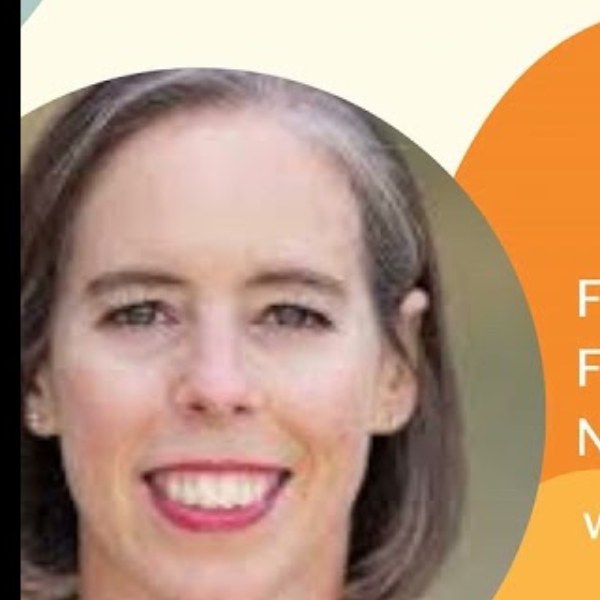
Christine Campbell Rapin is a business advisor, mentor and speaker, and the founder and CEO of CLEAR Acceleration Inc. She calls herself a corporate runaway: she worked in marketing, then sales, then operations, at companies from startups to some of the biggest on the planet, and holds two business degrees with 25 years in revenue-generating roles. She built her global consulting business one hour a day alongside her corporate job before leaving to run it full time; it is now in its fifth year. Christine says she has worked with 400 companies, from mom-and-pop shops and freelancers to large corporations. She is a bestselling author and hosts the podcast Amplify Your Marketing Message.
Want help putting this into practice?
Book a Business Logjam Session with Kathi
A private 75-minute online session to find the one thing holding your business back and leave with your next steps, using the same F.L.O.W. process Kathi uses with her own clients: Focus on your goals, Locate your logjams, Outline your solutions, Walk away knowing your next steps.
Prefer to start small? Download Kathi's free eBook 6 Steps to Organize Your Home Office.
Published · Updated
This episode page is for general information. Guests speak for themselves, and their opinions, statistics and examples are their own. Nothing here is legal, financial, medical or mental-health advice; talk to a qualified professional about your own situation. Some links go to the guest's own products or free offers; addSpace does not earn a commission from them unless stated.