


Episode 71
with Susan Friesen, brand strategist and founder of eVision Media · March 30, 2023 · 29 min
Brand strategist Susan Friesen, founder of eVision Media, says her first web clients came from women's networking groups she attended with no intention of selling.
Susan says visitors form an impression of a website in about five milliseconds, so the visual first impression has to show your brand personality and that you understand the visitor's challenge.
She says brand colors should be chosen strategically to reflect your brand personality and resonate with your ideal client, not picked by a webmaster based on what's current.
The best advice Susan received when she felt overwhelmed was to hire your weaknesses and focus on your strengths; her first hire was a student programmer.
Susan says visionaries who struggle to finish what they start need to delegate to a detail-oriented person who can break the vision into bite-sized pieces.
Published · Updated
What is this episode about?
Kathi Burns, CPO®, Business FLOW Strategist, talks with Susan Friesen, brand strategist and founder of eVision Media, about brand positioning and how it shows up in the way you network and the way your website looks. Susan got into the business by accident: she studied multimedia at Vancouver Film School, worked as webmaster for the Vancouver Sun and Province, and picked up her first clients at women's networking groups while finishing a business degree. You'll hear why people can sense neediness at a networking event, why your website has milliseconds to earn a visitor's trust, how to think about brand colors, why her first hire was a student programmer, the two tools she keeps open all day, and why visionaries need a detail person to finish what they start.
You don't need to know how, you just need to know what, and know who to delegate to.Susan Friesen
Jump to links and resources · Part of How do I get more clients? · All episodes · Every guest
What are the key takeaways?
- Susan landed her first clients at women's networking groups because she went to learn and help, not to sell, and three of those clients were still with her about 18 years later.
- Susan says people can sense neediness when someone walks into a room desperate for a sale, and it repels them.
- According to Susan, a website visitor forms an impression in about five milliseconds, and if you lose them then, they hit the back button and go to a competitor.
- Your headline, text, visuals and copy should show visitors right away that you understand them and their challenge, not only what you do.
- Susan says brand colors are strategic: banks use blue because it signals trust, but the right shade depends on your brand personality and your ideal client.
- When she felt overwhelmed, Susan followed the advice to hire your weaknesses and focus on your strengths, starting with a student programmer from the local college.
- Susan runs her business from Microsoft Outlook, connected to Calendly, and Evernote, and keeps a gratitude journal every night.
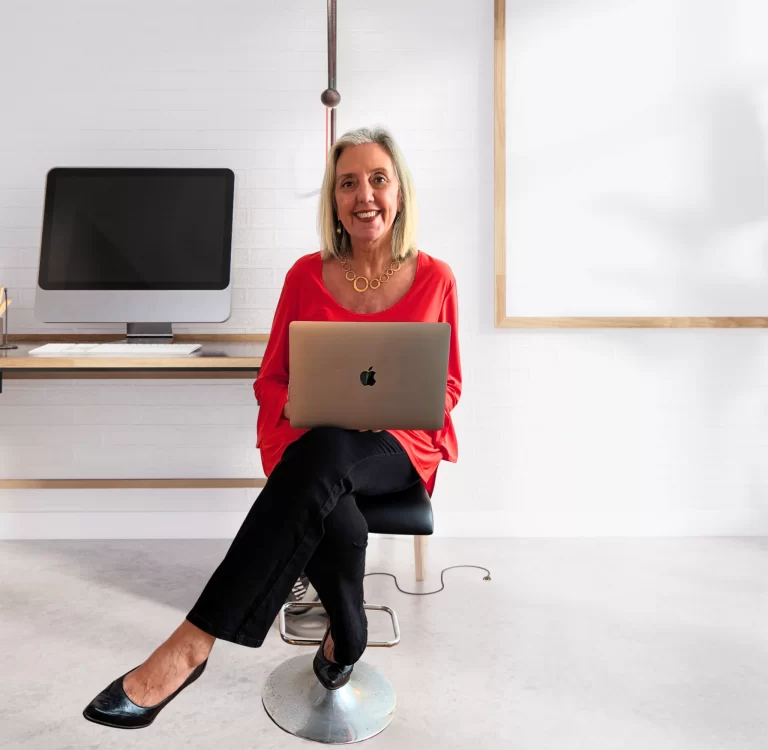
This episode is brought to you by the Business Logjam Session
A private 75-minute online session with Kathi Burns to find the one thing holding your business back and leave with your next steps. It is the same F.L.O.W. process Kathi uses with her own clients: Focus on your goals, Locate your logjams, Outline your solutions, Walk away knowing your next steps.
Find What's Holding Me BackInterested in sponsoring the show? Get in touch.How did Susan Friesen become a brand strategist?
Susan Friesen became a brand strategist by accident, after deciding the computer on her desk was the future. Before that she ran a cottage craft business, did faux finishing and worked at a telephone answering service. She studied multimedia at Vancouver Film School, became webmaster for the Vancouver Sun and Province, and went back to school for a business degree in computer information systems when that job ended.
How do you get clients from networking events?
Go to serve, not to sell. Susan attended women's networking groups while studying, with no plan to start a business, and women kept asking her to build their websites. Kathi says to walk in offering your expertise and asking how you can help. Susan says people sense neediness, and someone desperate for a sale repels them.
How does brand positioning affect your website's first impression?
Brand positioning decides whether your website earns a visitor's trust in the first instant. Susan says people judge a site in about five milliseconds, so the visuals must show your brand personality. The headline, text and copy should show visitors right away that you understand them and their challenge, or they hit the back button.
How do you choose brand colors?
Choose brand colors strategically, based on your brand personality and your ideal client, not on what a webmaster says is current. Susan says color theory is involved: banks usually use blue because blue signals trust. There are many shades of blue, and the right one depends on what your ideal client expects from you.
What should a small business owner delegate first?
Delegate the work in your areas of weakness first, so you can focus on your strengths. A couple of years into her business, Susan was a one-person show doing design, development and marketing, and technology was changing faster than she could keep up. Her first hire was a student programmer from the local college, which immediately relieved the stress. She says you don't need to know how, just what, and who to delegate it to. Kathi adds: job out what you hate doing, even if you can do it.
What tools does Susan Friesen use to stay organized?
Susan uses Microsoft Outlook and Evernote every day, all day. Outlook holds her email, tracks who she delegated each client request to, and manages her tasks and calendar, which is connected to Calendly so appointments update automatically. Evernote holds her notes, organized in categories so she can find anything at a moment's notice. She keeps each one open on its own monitor.
How do you stop feeling like an imposter in business?
Stop waiting until you know everything and have all your ducks in a row, because people pick up on that lack of confidence. Susan says that at 17 or 18 she had a really bad case of not believing in herself, and her advice to her younger self is to believe and trust in yourself. She also says she downplays her wins, and now keeps a gratitude journal every night as a small celebration.
Why do visionaries struggle to finish what they start?
Visionaries usually don't have a detail-oriented mindset, so their ideas rarely get far enough to pay off. Susan says many struggling entrepreneurs are visionaries who are always moving but beat themselves up and compare themselves to others. Her answer is that it's okay: delegate to a detail-oriented person who can break the vision into bite-sized pieces and keep it on track to the end.
Where does each part of the conversation start?
- 0:00 Meet Susan Friesen
- 0:17 Her backstory
- 0:32 Getting into the business by accident
- 0:45 Knowing the computer was the future
- 1:32 A cottage craft business
- 1:52 Vancouver Film School
- 2:24 In the right place at the right time
- 3:24 Her first client
- 3:37 Webmaster for the local newspaper
- 4:04 Back to school for a business degree
- 4:14 Women's networking groups
- 4:33 No dollar signs in her eyes
- 5:02 Clients for 18 years
- 5:38 Helping women entrepreneurs
- 6:36 Network to serve, not to sell
- 7:15 People sense neediness
- 7:44 What to look at on your website
- 8:09 Your online storefront
- 8:49 Five milliseconds to make an impression
- 10:04 Show visitors you get them
- 10:22 That gut reaction
- 11:08 Choosing brand colors
- 12:06 Color theory
- 12:18 Why banks use blue
- 13:08 Feeling overwhelmed
- 14:27 Hire your weaknesses
- 14:48 Her first hire
- 15:23 Know what, not how
- 15:34 Job out what you hate
- 15:51 Her favorite organizing tools
- 16:33 Microsoft Outlook
- 17:15 Evernote
- 18:05 Advice to her younger self
- 18:29 Believe in yourself
- 19:27 Stop feeling like an imposter
- 19:53 Her recent wins
- 20:12 Stop downplaying your wins
- 21:10 Business awards
- 22:44 Her gratitude journal
- 23:18 What she wants to add
- 24:18 Visionaries and detail people
- 25:55 Stop comparing yourself
- 26:11 Her free website guide
- 27:51 Wrap-up
What resources were mentioned?
These episodes continue the same thread as this one: Sue Kirchner, Yvonne McCoy, Louise McDonnell, Allan Ngo also answer the question "How do I get more clients?", and the rest are the most recent conversations on the show.


 Social MediaEpisode 144
How To Use Social Media More Strategically In 2026 To Find New Customers with Louise McDonnell

See every episode on the podcast archive or filter by topic on the How do I get more clients? hub.
How can I support the show?
- Subscribe on Apple Podcasts, Spotify or YouTube, or add the RSS feed to any app.
- Rate and review. A rating on Apple Podcasts helps new listeners find the show, and Kathi reads every review.
- Share the episode with one business owner who needs it; the share buttons are at the top of the page.
- Grab a free eBook: 6 Steps to Organize & Energize Your Home, 6 Steps to Organize Your Home Office or 6 Steps to Organize & Energize Your Life.
- Work with Kathi. The Business Logjam Session is a private 75-minute session to find what is holding your business back.
- Be a guest. Apply here if you have a story about clearing the obstacles in your business.
What did they say, word for word?
The transcript below is edited for readability: filler words and false starts are removed and speaker names are added. Nothing was added or summarized.
Read the full transcript +
Kathi: Hi everyone. I'm back with Susan Friesen, and we are going to talk about branding. We're going to talk about how to be more visible and have a more cohesive brand. And we're going to jump right into it and welcome Susan to the show.
Susan: Thanks for having me, Kathi. I'm so excited to be here today.
Kathi: Yeah, we're going to have some fun. So give me a little bit about your backstory. How did you become the branding expert?
Susan: Well, it was definitely not something that I set the intention on doing. I've been doing this for over 20 years, and really I got into this business accidentally. I had no intention of running my own business. But one thing I did know is that I got into this industry because I knew the future was that contraption that was sitting on my desk called a computer that I had no idea what to do with. Couldn't even send an email, but I knew that was the future. And so I set my sights on figuring out a career path using it.
Kathi: Wow, that's pretty amazing. I know in the beginning of my career, and I've been doing this about 19 years, I kept blowing up computers. I kept getting that bomb sign on my Mac, and it was trial and error, trial and error. So that's pretty good. So what did you do prior to launching your own company?
Susan: You mean what did I do before all of this? I've been an entrepreneur at heart for a long time, but it was never all that serious. I had a cottage craft business back in the 80s when the Christmas crafts and the country crafts were all the rage. I did some faux finishing. I worked at a telephone answering service. I was all over the map. But then once I figured out, okay, it's got to be in the computer, I went to Vancouver Film School to learn multimedia, and I haven't looked back since.
Kathi: Wow. Okay. So as you think back on your Vancouver Film School studies, what's a big takeaway that you came away with from learning about media?
Susan: Oh. It just solidified that I knew I was in the right place. You know that feeling when you hit upon something and you just know that you are in the right place at the right time. That's what happened to me. And I just dove in and learned everything I could. Soaked it up. And of course, we're talking over 20 years ago, so everything online was very new and exciting back then as well.
Kathi: And here we are on Zoom and on YouTube and on every single thing we can think of. That's fantastic. So tell me about when you launched your agency. You said it was by accident, which is ironic, but I find that people launch businesses whenever, like you said, you get that click and you're like, ah, that's what I love, that's what I can do. Talk to me about the first client that you landed for your company.
Susan: Oh my gosh, you're really asking me to tap into my brain waves here, my memory cells. So what happened was I was the webmaster for the Vancouver Film School. I got that job right out of the multimedia program. I'm sorry, the webmaster for the Vancouver Sun and Province. I mixed up those two words. That's our local newspaper here in BC, Canada. And then after about a year and a half, they just decided they didn't need a webmaster anymore. And so at that point I decided to go back to school and get my business degree in computer information systems. While I was studying that, I needed something to do with my time, so I started to go out to these women's networking groups, and I had no intention, like I said, of starting my business. I wanted to be a chief information officer at some big corporation. So it was cool that I had that mindset, because when I went to these networking events, I wasn't there with dollar signs in my eyes. I wasn't there seeking my next client. They just naturally came to me because they knew that I knew what I was doing. Everybody wanted to start their own business, and I had all kinds of women coming to me saying, "Hey, I hear you do websites. Can you build me one?" I'd go, "Sure." And they'd get a really great deal, because it wasn't a business. It was just a hobby at that point. And you know what? I would say there are about three clients who are still with me today, and we're talking 18 years later. They're still with me. I think they all have different businesses now, but one is a music teacher, another taught cooking classes, and the other one was a home stager. That was part of why I ended up running my own business: I discovered how much I absolutely loved helping women, especially women entrepreneurs, build their business, and be that helping hand, that lending hand, to get them on the right track.
Kathi: I think that's so fantastic. First off, I have to laugh, because the newspaper no longer needed a webmaster. Now I'm sure they have a staff of five webmasters doing their tech stuff. It's like, okay, now we're not going to need a webmaster. But the fact that you launched… I remember back when I launched, trying to get someone that was decent to design a website that didn't make you bankrupt was a big thing. You couldn't find any. I spent tens of thousands of dollars on website development way back in the day for things that didn't even really work. So you launched at the perfect time. And I think this is a good takeaway for the listeners out there: when you go into a networking event, don't walk in with dollar signs in your eyes. Walk in with, here's my expertise, how can I be of service? Or, here's my expertise, what do you need to know? How can I assist? Not like you're trying to land a client. And that's why you become the magnet. So I think that's fantastic.
Susan: Yeah, and I still preach that to this day. It's just so important, because we can viscerally feel it. I have evolved into being this brand strategist, right? And it's all about your brand positioning. And if you walk into a room with that neediness about you, people will sense it. It's that visceral feeling. They'll sense it, and you'll repel them. They'll walk away. They don't want to have to talk to somebody who's just desperate for a sale.
If you walk into a room with that neediness about you, people will sense it.
Kathi: Because there must be something wrong. Even though there might not be, we just have that instinct about us. For sure. Okay. So as a brand strategist, what do you think is the most important thing when you're looking at your website? What's the thing you should look for to see if you're going astray with your messaging or your branding? Where do you look to start?
Susan: That's actually a really loaded question, because brand positioning is a big, big topic, and it has everything to do with your business. And of course, yes, your website is like the storefront version of your business. Even if you have a brick-and-mortar store or not, people still expect to see an online presence. And so it's that first impression that is going to make or break whether or not you have gained the trust of the person coming to the site and whether or not they feel like they have landed in the right place. So we look at the visual component. Obviously the visual is the very first thing that people see, and they get an instant reaction. Some people say you have five seconds to create a positive impression, but it's actually five milliseconds. And so that instant response needs to be looked at: visually how it looks, and does it represent your brand positioning properly. I could talk for an hour about this.
Some people say you have five seconds to create a positive impression, but it's actually five milliseconds.
Kathi: I know I gave you such a wide open question, but you just keep going.
Susan: Okay. So I'll just focus on the visual part, because it is that instant impression. If you've lost them in that instant impression, then it's really, really hard to get them back. They've hit the back button and they've moved on to your competitor. You've lost them. So that visual first impression needs to depict your brand personality, and it needs to showcase immediately what you do. And I say that, but it's actually the opposite. It is about what you do, but it's more about how can you help the person who has come to the website. Is there an alignment there? Do they get that you get them and their challenge, or whatever it is that they're looking for? They're instantly looking to see if they've landed in the right place. And so the headline, the text, the visuals, how the copy is written, all of that needs to resonate with them to gain the trust that they need to feel before they will make any next step. So that's it in a nutshell. And that visceral response is very important too. I'm sure you and our listeners and our watchers today have also experienced that feeling. You don't know why, but you've gone to somebody's website, and there's just that sense, and then you don't even wait to find out any further. You don't scroll. Nothing. You just go. That's what I mean about that visceral feeling. They need to know immediately that this person can be trusted and that it's up to date and it doesn't look like a 1980s website and all that kind of stuff.
Kathi: Or like a 30-year-old headshot. Of course they don't know that anyhow, but you can kind of tell. And what about colors? How do you feel about colors? As an image consultant, I think colors are really important. And I find people getting taken down the road of a webmaster telling them what colors they should use because of what's current, as opposed to what colors they like. What are their colors? How do they vibe? How do you feel about that?
Susan: Oh, yeah. I'm so with you there. There is no way a webmaster should be telling you what colors you should be using unless they are very well-versed in branding and brand positioning, because color is very strategic, and it is all about resonating again with your ideal client and depicting your own brand personality. Your own brand essence has to come through in the colors that are chosen. And so there is color theory involved. For instance, if you're a bank, that's why we typically always see banks using some sort of a shade of blue, because blue resonates with the word trust. But there's a variety of different blues. I'm wearing a blue. Looks like you're wearing black today. But there are lots of different blues that you can use that will still depict your brand essence and accurately describe what kind of personality you have, and that will still resonate with your ideal client. But at the end of the day, it does all depend on who your ideal client is, what their expectations are of you. What are they looking for in you, and what kind of experience are they expecting to get from you? And color actually plays a role in all of that.
There is no way a webmaster should be telling you what colors you should be using unless they are very well-versed in branding and brand positioning.
Kathi: Yeah, I truly believe that. So you're jamming out, you've got all these clients, you landed clients you didn't even think you were going to land. Tell me about a time when you felt like you were a little bit overloaded and overwhelmed, and what did you do to get yourself back in alignment and moving down the road of having a happy Susan?
Susan: Well, what makes you think I've done that?
Kathi: Because you've got a smile on your face, and I know you're really good at what you do.
Susan: No, I'm just teasing. As every entrepreneur goes through, there are always these phases as we go through our business life cycle. The very first time that I started to feel overwhelmed, I was a one-person show. I did everything. I did the website design and the development and the marketing, because I'm a generalist. Even though my specialty is in brand positioning, I'm a generalist in everything to do with creating an online presence and marketing it. And over the years, I've learned a lot. But this was early on, probably a couple of years into it, and I was getting overwhelmed. And I was realizing at that point in time that, okay, it's time to make a shift. One of the best pieces of advice that I ever received was hire your weaknesses and focus on your strengths. And so I knew that because technology, especially back then, and still now, was moving at such a rapid pace, I could not keep up with that. The way websites were built back then is night and day to how they're built now.
Kathi: Yeah.
Susan: And so my first hire was a student programmer at the local college, and that immediately relieved me of that stress and overwhelm, because now I could just delegate all of that techy stuff over to him, and I didn't have to put that pressure on me to stay on top of it. I still needed to know what was going on, what was changing, what was needing to be done, but I no longer had to put that pressure on me to learn how to do it all. And I think that's a big lesson that any entrepreneur can learn from: you don't need to know how, you just need to know what, and know who to delegate to, who can take over that how for you.
You don't need to know how, you just need to know what, and know who to delegate to.
Kathi: That's really, really solid advice. I say that all the time, women. And also, job out what you hate doing, even if you can do it.
Susan: Why do something you hate? You didn't start your business because you wanted to do all this stuff that you hate doing.
Kathi: Exactly. Precisely. I love that. So what's your favorite organizing hack when you're working all along throughout the week? What do you love? Do you have a program that you like, or a practice that you do?
Susan: Well, part of my DNA is being strategic and organized and detail orientated. So I've built my life around strategy and keeping organized. I can't fathom not being organized. So that's an interesting question, because everything I do probably could be refined, but it is organized. I think there are two tools that I use every day, all day long. One of them is Microsoft Outlook, and it's not just for my email. As client requests come in, I keep it organized on who I delegated it to, so that I know exactly where we're at at any given moment. But it also helps me with my tasks and my calendar. My calendar is hooked up with my Calendly, so that appointments can be coming in and my calendar is automatically updated. There are just so many things about Outlook that I love, as opposed to using something like Gmail, which I can't fathom using for running a business. And the other tool that I use all the time is Evernote. Speaking of keeping track of everything that's going on, my Evernote is full of notes, and it's all nicely organized in categories, and it's easy for me to go and find what I need to know at a moment's notice. I sit here with three monitors in front of me. My Evernote is always open in this monitor. My Outlook is always open in this monitor. So I'm good to go.
Kathi: I love it. I knew you would have some strategies there. Outlook is good for sure. I do use Google Suite for everything, but I also love Evernote, and I love the fact that you can take Evernote everywhere with you. It can be on any device that you need it to be on. So that's a brilliant thing.

Kathi: What would you tell your younger self if you had to give her some advice right now? You're looking at your 17-year-old self, and you're going to say to yourself, what?
Susan: Oh, you know what? When I look back at who I was back when I was 17, 18 years old, I had a really bad case of not believing in myself. So definitely, if I could give myself that advice: believe and trust in yourself, and stop waiting for outside people and things and miracles to happen so that all of a sudden you're going to have that self-confidence that you need. I really, really lacked that self-confidence back then.
Kathi: Yeah. And it takes growing up to get that oftentimes, but it sounds like you really went on your way and found your path pretty quickly. So your intuitive nature knew what you should be doing anyhow, whether you believed it or not. And obviously when you got into the networking part of it, you had that inner thing, and people were like, oh, I like her. Maybe she knows what she's doing.
Susan: Yeah. Because that all builds into that trust, right? So even in today's world, my advice would be to stop thinking that you're an impostor, and that you don't know everything yet, and you haven't learned everything yet, and your ducks aren't all lined up in a row yet, because people will pick up that vibe, just like what you said. They will pick up on it: huh, there's something off about her. She doesn't quite give me the confidence that I need in order to get where I need to be. And so it's important.
Kathi: So tell me about a recent win, something that just really made your heart sing or your bells ring recently. And the second part is, how do you celebrate that?
Susan: Recent wins. I downplay my wins, and I'm…
Kathi: That's really bad. I'm asking this question to all my podcast guests because I realized that I didn't do it either. And so really, 2023 is all about let's celebrate. Let's figure out how to celebrate. Let's not underplay our greatness. Let's celebrate. Even the smallest little thing is a win. Let's learn how to acknowledge it and celebrate it, because then we get more.
Susan: Oh, yeah. I love that. And that's such a great thing. I think I'm going to make that a part of my year this year too, because I'm notorious for going, yeah, that was great, and then downplaying it. But there are a few things that I'm very proud of that are considered wins. A few years ago, we won the Abbotsford Chamber of Commerce best home-based business of the year. Abbotsford is where I lived. And we also, well, it wasn't a win, but we landed in the top five finalists for the best company in BC through the Small Business BC Awards, and we did that twice. It was quite an extensive process for both of those awards. It wasn't just voting. It was actually doing a presentation in front of a panel of judges. And so I'm very, very proud of that, and many times I forget to mention it.
Kathi: You have that little logo all over your website, right? And on your business cards: small business of the year. And this is what we do. We're like, okay, on to the next thing. When I published my book, it was like, oh, now I have to market. I didn't even stop to celebrate the first time, right? So I'd like you and everybody listening to think about, when you have wins, no matter how small or how big, how are you going to celebrate? What does that mean to you? What is a celebration to you? Let's think about that, because oftentimes it's, I don't know, how do I celebrate? I don't know.
Susan: Well, one thing that I do, and it's a habit that I have formed over the last year or so, and on and off before then, is to write in my gratitude journal every night. So that to me is a mini celebration of just writing down what I'm grateful for that day, whether it's big or small. And I think that makes a huge difference, because when we start focusing on all of the positive things that happened to us, the universe is just going to give us more of that.
Kathi: Especially right before we go to sleep. You wake up with what you go to sleep with. So gratitude journals at night are awesome. Love it. I knew we resonated. That's great. Well, is there anything that I should have asked you that we haven't talked about yet, that you really wanted to tell the audience?
Susan: Well, it's more and more prevalent in my mind, especially when we see on social media how many entrepreneurs, especially the females, are struggling. They're just not getting where they want to be, and they're struggling, and they want to keep blaming this, blaming that, or whatever. And part of that struggle is putting ourselves down and not having that confidence, and part of that is a little bit of self-degradation, of not being like her over there, not being like that person, and not having the success that person does. And when I take a look at who these people are who are really struggling, I realize that a lot of them are visionaries, and visionaries typically don't have that detail-orientated mindset, right? So they have lots of vision, lots of ideas, lots of things in the works. They're always going, they're always moving, but nothing ever gets to fruition enough for them to actually start reaping any of the benefits of their vision. And they start beating themselves up because they're not able to finish what they've started. And so I wanted to share that that's okay. That's who you are. I'm not a visionary, so I would love to have a little bit of that DNA, but it's not in your DNA. And this is where, when we were earlier talking about delegating, it's so important to start to realize that this is the time you have to delegate to the person who can be that detail-orientated person. Not like you, but you need to have the yang to your yin, or whatever, in order to be able to actually fulfill what it is that you do. And I find that's the kind of person I really attract a lot in my business: the ones who need that person to take their big vision and break it down into bite-sized pieces, give them the strategy that they need, keep them on track with that strategy, and fulfill it right to the very end. Otherwise it's an uphill battle if you're going to try and do that all by yourself.
They have lots of vision, lots of ideas, lots of things in the works. They're always going, they're always moving, but nothing ever gets to fruition.
Kathi: Yeah, I agree. And visionaries have a hard time with that. And something that you touched on before too is comparing yourself to others. That's just silly, because you are like no one else. So comparing yourself to others is just demoralizing and degrading, because it's making yourself less than. So I appreciate you saying that as well. So talk to me about, I know you probably have a free gift for the audience, something they can download that will help them come up with better branding, a better message, or just a better overall presence with their company. What is it that you'd like to offer?
Susan: Yeah, I've got a free report. Well, there are actually a couple of things. First of all, on my social media I offer a lot of tips and strategies and information and even motivation and all that kind of stuff. So if you go to my website, evisionmedia.ca, and just scroll down to the bottom, all of my social media accounts are there. Just go ahead and follow me there. But I also have a website guide. We were talking about that first impression of your website, right? And so I have a website guide to tell you what you need to know in order to make sure that your website is actually giving the right impression to the right people. It's called Six Critical Steps to Creating a Successful and Profitable Website. And if you just go to businesswebsiteguide.com, it's a free download, and go ahead and grab that.

Kathi: Nice. Nice. And I'll have the links below in the show notes. But I love that you have a website for the actual download. That's good marketing, girl. Well, I really appreciate your time, and I know that people have learned a lot. I wish you a fulfilling and fantastic 2023 filled with a lot of celebrations, as with everybody else that's listening out there. Let's go ahead and celebrate, girls. Let's do it.
Susan: Celebrate. Let's do it. Awesome. And thanks so much, Kathi. I really loved our conversation today.
Kathi: Absolutely. Thank you for your time.
Susan: Oh, you're welcome.
Where can I find the links and resources from this episode?
Connect with Susan
Organizations and companies
Inspired? Here Are Your Action Steps:
- Go to your next networking event to offer your expertise and help, not to find a sale.
- Look at your home page as a first-time visitor and note your gut reaction in the first second.
- Rewrite your headline so it shows visitors you understand them and their challenge, not only what you do.
- Check that your website and headshot look current.
- Choose brand colors based on your brand personality and your ideal client, not on what's trendy.
- List your weaknesses and hire or delegate the first one.
- Job out the tasks you hate doing, even if you can do them.
- Keep client requests, tasks and calendar in one tool so you know who is handling what.
- Write in a gratitude journal before bed and count small wins.
- If you're a visionary, find a detail-oriented person to break your ideas into bite-sized steps.
Frequently asked questions
What is an example of brand positioning?
+
In the episode, Susan Friesen points to banks: they typically use a shade of blue because blue signals trust. She says color, visuals and copy should all reflect your brand personality and resonate with your ideal client. Even within blue there are many shades, and the right choice depends on what your clients expect from you.
How did Susan land her first clients?
+
She never planned to run a business. While studying for her business degree, she went to women's networking groups with no intention of selling, and women kept asking her to build their websites. Three of those first clients were still with her about 18 years later.
What should you look at first on your website?
+
The visual first impression. Susan says visitors form an opinion in milliseconds, and if you lose them then, they hit the back button and go to a competitor. Your site needs to show your brand personality and show visitors right away that you understand them and their challenge.
What helped Susan when she felt overwhelmed?
+
A couple of years in, she was doing everything herself. The best advice she got was to hire your weaknesses and focus on your strengths, and her first hire was a student programmer from the local college. She says you don't need to know how, just what, and who to delegate it to.
Why do visionaries struggle to finish what they start?
+
Susan says visionaries have lots of ideas and are always moving, but nothing gets to the point where it pays off, and they start comparing themselves to others. That's simply who they are. The answer is to delegate to a detail-oriented person who can break the vision into bite-sized pieces and keep it on track.
Who is talking in this episode?

About the Host, Kathi Burns
Kathi Burns, CPO®, is a Business FLOW Strategist based in San Diego. For the last 20+ years, Kathi has helped clients create systems they can stick to. She is the author of How to Master Your Muck, Organizing With Tetris and Home Organization, The Smart Guide, and co-author of four more titles; all are in Kathi's shop. Kathi's business has been featured on Good Morning America, and her advice has been featured in Oprah Magazine, Martha Stewart Living, Better Homes and Gardens and Entrepreneur Magazine.
More about Kathi · Shop Kathi's books · Business Logjam Session · Apply to be a guest

About Susan Friesen
Susan Friesen is a brand strategist and the founder of eVision Media, a web development and digital marketing agency in British Columbia, and she has more than 20 years in the industry. She studied multimedia at Vancouver Film School, worked as webmaster for the Vancouver Sun and Province, and then went back to school for a business degree in computer information systems. Her first clients came from women's networking groups she attended while studying, and three of them were still with her about 18 years later. eVision Media won best home-based business of the year from the Abbotsford Chamber of Commerce and was twice a top-five finalist for best company in the Small Business BC Awards.
Want help putting this into practice?
Book a Business Logjam Session with Kathi
A private 75-minute online session to find the one thing holding your business back and leave with your next steps, using the same F.L.O.W. process Kathi uses with her own clients: Focus on your goals, Locate your logjams, Outline your solutions, Walk away knowing your next steps.
Prefer to start small? Download Kathi's free eBook 6 Steps to Organize Your Home Office.
Published · Updated
This episode page is for general information. Guests speak for themselves, and their opinions, statistics and examples are their own. Nothing here is legal, financial, medical or mental-health advice; talk to a qualified professional about your own situation. Some links go to the guest's own products or free offers; addSpace does not earn a commission from them unless stated.