


Episode 45
with Melissa Ternes, wealth and money coach, author and founder of Master Your Money Now · September 14, 2022 · 22 min
Melissa Ternes was managing a 50 million dollar budget to the penny at work when she found she had 75,000 dollars in what she calls "random things" debt.
She says cookie-cutter advice like "spend less and save more" fails for the same reason "eat less and exercise more" hasn't ended the diet industry.
Her money coaching looks at the patterns people grew up with, what the brain does in fight, flight or freeze, and the emotions around money before getting to the numbers.
She runs her week on theme days: Mondays on her business, Tuesday through Thursday with clients, and Fridays for meetings and networking.
Her free Profitable Calendar Checklist covers what to set up before you share an online booking calendar.
Published · Updated
What is this episode about?
Kathi Burns, CPO®, Business FLOW Strategist, talks with Melissa Ternes, founder of Master Your Money Now, about the money and calendar habits that block a business's profits. Melissa has an undergraduate degree in accounting and a master's in business, and she was managing a 50 million dollar budget to the penny when she realized she had 75,000 dollars in what she calls "random things" debt. That gap led her into money coaching, which she had done for 13 years when they spoke. You'll hear why she thinks cookie-cutter money advice fails, what she says happens in your brain when you make money decisions under stress, how theme days and color-coding run her week, why she skips the alarm clock, and what to set up before you share your calendar with the world. Her views on money are her own experience, not financial advice.
The calendar actually becomes part of your profitability instead of a liability.Melissa Ternes
Jump to links and resources · Part of How do I grow my business without burning out? · All episodes · Every guest
What are the key takeaways?
- Being good with money at work didn't carry over to Melissa's own finances until she gave her personal money some of the same time and attention.
- Melissa sees fight, flight or freeze as the reason people make money choices they can't explain: logic goes offline while the brain tries to keep them safe.
- Seeing a past choice as the brain keeping you safe takes the shame and guilt off it, which she says lets you make better choices.
- In her view, emotions such as a desire for relational security can lead to poor financial choices made to make someone else feel better.
- Getting control of her calendar gave Melissa more time for herself, her clients, her business, fun and other people.
- The gap she sees most in clients is not understanding, charging or living in their own value.
- A shared online calendar needs rules before it goes out; left unmanaged, she says, it becomes a liability rather than an asset.

This episode is brought to you by the Business Logjam Session
A private 75-minute online session with Kathi Burns to find the one thing holding your business back and leave with your next steps. It is the same F.L.O.W. process Kathi uses with her own clients: Focus on your goals, Locate your logjams, Outline your solutions, Walk away knowing your next steps.
Find What's Holding Me BackInterested in sponsoring the show? Get in touch.Why can't I manage my own money when I manage money at work?
In Melissa Ternes' experience, knowing the numbers wasn't the problem. She was managing a 50 million dollar budget to the penny at work when she found she had 75,000 dollars in what she calls "random things" debt: no mortgage, no car payment and no student loans. The cookie-cutter approaches she tried didn't reach the root of what was going on. She compares it to a hoarder: empty the house without fixing what drives the behavior, and you end up right back where you were.
How did Melissa Ternes start her money coaching business?
She started money coaching part-time after leaving her position for another business. When she spoke with Kathi she had been doing it for 13 years, full-time for the last five. Her aha moment was that she wasn't giving her own money even a sliver of the time she gave money at work, which she compares to the mechanic whose windshield wipers don't work. She says when you clean up your money, everything else starts to clean up.
How do theme days work for entrepreneurs?
Theme days put like tasks on the same day of the week. Melissa Ternes works on her business on Mondays, sees clients Tuesday through Thursday, and keeps Fridays for in-person meetings, networking and social time. She sets this up in Acuity with different appointment types, lengths and gaps, and says it freed up so much time.
Why do business owners undervalue themselves?
Melissa Ternes says many don't understand the value they bring just by being themselves. The best advice she has received is to understand that value, and it is the piece she sees missing most in clients: they don't understand their value, don't charge for it and don't live in it. Kathi adds that you should know your hourly rate before deciding whether a task is below your pay grade.
How do emotions and brain science affect money decisions?
Melissa Ternes says that in fight, flight or freeze the prefrontal cortex goes dark, so logic goes offline and you make money choices you can't explain later. Her coaching looks at that stress response, the patterns you grew up with and your emotions about money, then at the practical numbers coming in and going out.
Do you need a structured morning routine?
Not in Melissa Ternes' view: she wakes up without an alarm clock and starts her day in a meandering way. Depending on the day she wakes early or as late as nine, wanders around, writes or reads, and often listens to an Audible book over breakfast. She found that the less she forced herself into set steps, the more she did the things she wanted to do. Kathi doesn't use an alarm either; she sets an intention for when to wake.
How do you color-code your calendar?
Melissa Ternes color-codes everything the same way across Acuity, the place where all her calendars come together, and a stack of colored pens, so one glance shows the breakdown of her day. Her calendar is fully digital, but each week she lays out the week on paper in her book, The Aligned Money Life Activator, because she is very tactile and says writing by hand goes into your brain differently. Only the current week goes on paper, so changes don't create duplicates.
How do you make your calendar profitable?
Decide your calendar's rules before you share it with the world. Melissa Ternes' Profitable Calendar Checklist covers blocking out holidays, how far ahead people can book, whether they can book the same afternoon, and whether you're sharpest for clients in the morning or afternoon. Left unmanaged, she says, a calendar becomes a liability rather than an asset.
Where does each part of the conversation start?
- 0:00 Meet Melissa Ternes
- 0:22 75,000 dollars of random-things debt
- 2:04 Why cookie-cutter fixes fail
- 3:00 From part-time to full-time
- 4:00 Getting control of her calendar
- 5:14 Theme days for her week
- 8:01 Knowing your value
- 9:04 Brain science, emotions and money
- 13:03 Mornings without an alarm clock
- 15:45 Color-coding everything
- 17:55 Making your calendar profitable
- 21:16 Wrap-up
What resources were mentioned?
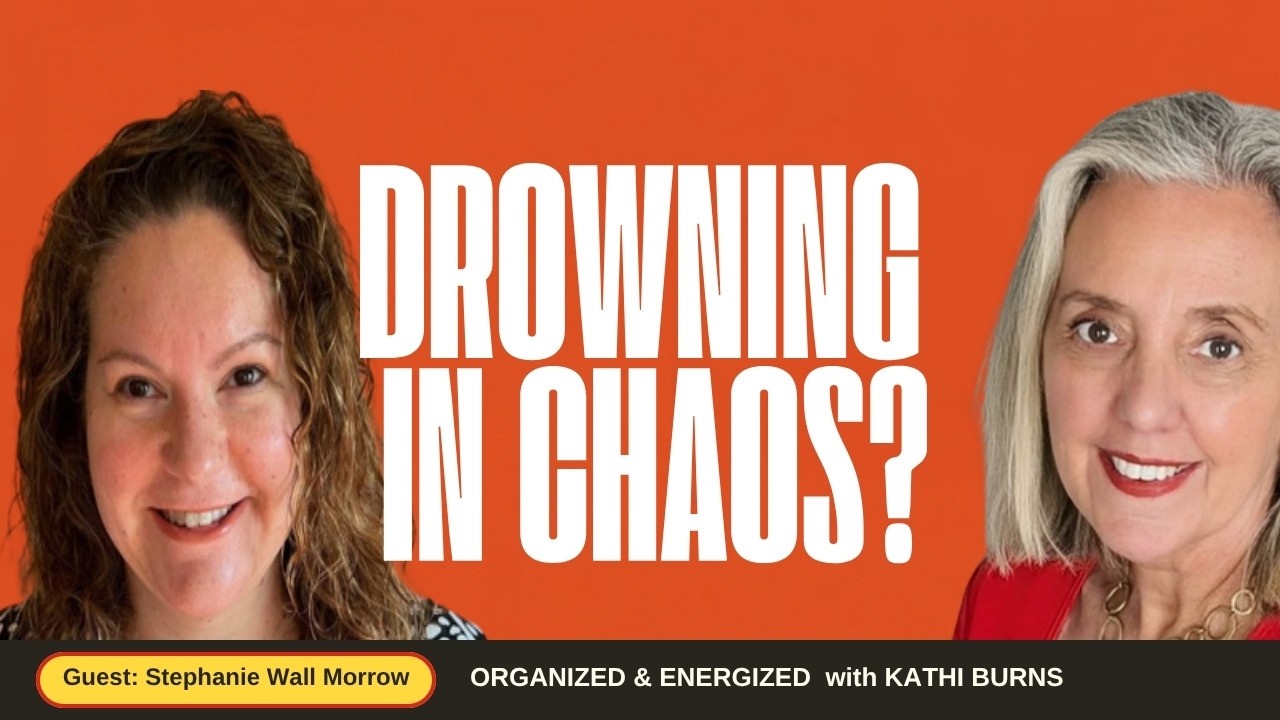
These episodes continue the same thread as this one: Lia Dunlap, Carly Church, Ginny Priem, Stephanie Wall Morrow also answer the question "How do I grow my business without burning out?", and the rest are the most recent conversations on the show.

 MotherhoodEpisode 147
How To Build a Village That Supports Your Business and Your Life with Carly Church

See every episode on the podcast archive or filter by topic on the How do I grow my business without burning out? hub.
How can I support the show?
- Subscribe on Apple Podcasts, Spotify or YouTube, or add the RSS feed to any app.
- Rate and review. A rating on Apple Podcasts helps new listeners find the show, and Kathi reads every review.
- Share the episode with one business owner who needs it; the share buttons are at the top of the page.
- Grab a free eBook: 6 Steps to Organize & Energize Your Home, 6 Steps to Organize Your Home Office or 6 Steps to Organize & Energize Your Life.
- Work with Kathi. The Business Logjam Session is a private 75-minute session to find what is holding your business back.
- Be a guest. Apply here if you have a story about clearing the obstacles in your business.
What did they say, word for word?
The transcript below is edited for readability: filler words and false starts are removed and speaker names are added. Nothing was added or summarized.
Read the full transcript +
Kathi: Hi everyone, I'm back, and this is Kathi, and we are here with Melissa. And yes, let's talk about organizing and money and how it all flows together. So welcome to the show.
Melissa: Thank you, Kathi. Thanks for having me on.
Kathi: Absolutely. So I know that you are a money coach, and we'll get into the flow of things. So tell me a little bit about your backstory. How did this all begin, and why are you here now?
Melissa: Right. Don't we all have our own mess that we start with, and then we move into business in that? I have an undergraduate in accounting and a master's in business. I was managing a $50 million budget at work to the penny. And one day I woke up and I had $75,000 in what I call random things debt. That's probably like the junk drawer of debt. It wasn't a mortgage, wasn't a car payment, and I had no student loans. And what I realized very quickly was, when I was trying to get out of the debt, that there were lots of cookie-cutter approaches, but none of them actually got down to the root of what was actually going on. So it's probably very similar for you in your world, when you're like, great, you have a hoarder. We can take all the stuff out of the house, but if we don't fix that piece that's starting and generating the hoarding behavior, we're going to be right back where we were. And that's how I started. It was like, okay, but wait, there's something else going on. I know how to do this. I do this professionally with an incredibly large number, and somehow I'm not able to do it personally. So that is how I started: just getting in the trenches with myself.
Kathi: That's quite interesting. I find that happens with a lot of clients. I'm going to turn off my video now because we're having some internet issues, so you won't see me. So what I was saying is that oftentimes we're brilliant at our job, our real job, so to speak, and then we get home and what we're able to do at work doesn't really translate into personal. So what did you find out about yourself? What was your big aha moment that helped you shift out of the mess?
Melissa: So I went and tried everything. I tried all these different ways, and what I realized is that it was a cycle. Until I really got in and addressed what was going on with just basic fight-flight, brain safety, what was going on with emotions, and then practically: am I spending the kind of time that I did at work, in some sliver, with my own personal stuff? And I was not. It's like the mechanic whose windshield wipers don't work.
Kathi: Yeah. Without shoes.
Melissa: Exactly. And so it was that bringing-it-home part: okay, how do I do this? What does this look like? And then how do I go out and share this with the world? Because I'm certainly not the only one that struggles with it.
Kathi: Absolutely. So did you quit your real job, and now you're doing this full-time, or what happened with the evolution?
Melissa: The evolution of it was I moved out of the position I was in and started working in another business, and then out of that I started doing this part-time. I've been doing it for 13 years now and absolutely love it. I started out part-time, moved full-time five years ago, and just love this work, because it's the place where, like you said earlier when you were reading the bio, when you clean up your money, everything else starts to clean up. And I'm sure you see the exact same thing. When you clean up the closet or the junk drawer, life gets easier.
When you clean up your money, everything else starts to clean up.
Kathi: Absolutely. And everything is a ripple effect. One thing will cause another thing to be better or worse. So it really depends. So if you were to do this over again, starting your career, was there anything that you would change?
Melissa: I think I would give myself more slack a whole lot faster. And then really start looking at, in my business, starting it over again, the big thing that I would get a handle on first. That was the hardest thing for me: my calendar. And once I got control of my calendar and my time, I started realizing that I could see so much. I had more time for myself. I had more time for my clients. I had more time for my business. I had more time for fun. I had more time for other people. And it was really getting clear on what that meant around my calendar, and how I organized it, that really shifted everything for me in terms of what I was enjoying in life, what I was able to do with clients. It was just the huge ripple effect of that.
Kathi: Yeah. Parceling out what you're doing when: what day, what time. So, okay, as an organizer, I have to ask: what calendaring system do you use?
Melissa: So I use Acuity as the scheduler.
Kathi: Okay.
Melissa: And in that, I have it all set up. There are different types of appointments. There are different time lengths. They have different spaces between them. They can be scheduled on different days. So Mondays are my days that I work with my business, on my business.
Kathi: Yes.
Melissa: And then Tuesday, Wednesday, Thursday, I work with clients. Friday is the day that I have meetings out in person, or different things like that, the more social day. So setting those up in that way means that Monday I'm doing the things that I need to do on my business. And then Tuesday, Wednesday, Thursday, I'm in my business, and then Friday I am out in some way, networking, socializing, those types of things. And that freed up so much time, because when you put like things together… Put all like things together in a bin and it works.
Kathi: Oh girl, you're talking my talk.
Melissa: I know. And what I realized was that when I got control of my calendar, I got control of my time, which also meant time is money, time is freedom, time is enjoyment. And so it really began to shift the rest of the things, because then I wasn't rushing to get from one to another, like, why on earth did I do this to myself? We all do that in business. Why did I do this to myself? I don't know.
When I got control of my calendar, I got control of my time, which also meant time is money, time is freedom, time is enjoyment.
Kathi: Yeah, exactly. And I always say, if you don't know what you should be doing, you don't know what you didn't do. So having some type of a strategy and overall idea of what you're doing with your week is so huge and so powerful. You can get so much more done if you just simply do that: plan in advance. Even if things don't come through, because everybody has the best-laid plans and they all fall away sometimes. But again, if you know what you should have been doing, you know what you didn't do, and then you can catch up and do that.
Melissa: I love giving a structure to it. And the structure is just a loose structure, and then the things get moved around, because that's life.
Kathi: Yeah, that's life. And a lot of entrepreneurs are nonconformist, and they don't want a blow-by-blow, minute-by-minute thing. We just want an overarching idea of what should we be doing right now. I know this because most of my clients are artistic creatives, and they struggle with the calendar thing. I absolutely love the idea that you use one day for out and make it a Friday. That's perfect, seeing all your outside appointments together. So you're on the ball, girl. So what's the best piece of advice that anybody's ever given you when it comes down to business or even personal life?
Melissa: Well, I think it is understanding the value that each of us brings to the world just by being ourselves. And by being ourselves, then we get to go and do the things that we want to do. And I think it's the value piece that I see most often in clients, where they are not understanding their value, not charging their value, not being in their value as themselves personally, and then adding the value that they bring from their work on top of that.

Kathi: I am in total agreement with that. You have to think about what is my hourly rate before you decide if you're going to do that specific type of task, or if that's something that is below your pay grade. And I find that even people who don't work, just as housewives, totally undervalue their time and what their time is really worth for themselves, which is why a lot of them are running around burned out. So, okay, you use a blend of science, behavior, emotions and understanding. So talk to me about the process when people work with you. What happens?
Melissa: So we look at it, because nothing is in and of itself individual. So when we look at things that are going on for us with money, we have all the patterns that we grew up with. We have all of the brain patterns, which is when we look at fight-flight-freeze. What's going on when we go into fight-flight-freeze? Our whole prefrontal cortex goes dark. So we have no executive function. We have no logic, which is how we get, we're like, why did I do that? I don't know why I made that choice. And what happens is all of our logic goes offline. So when we can regulate the autonomic nervous system, in that brain science side of things, then we can make better choices. So that's a big piece of this. And then we look at what are the emotions around money, and how are those influencing how we feel about things. Like if we really desire relational security, we may make bad financial choices based on trying to make someone else in our relational circle feel better. So we start looking at the emotions of it, and then we get really just into the practical: what are the numbers, what's coming in, what's going out? And I think that's the holistic approach. Whereas most times, when you come and step in to say, okay, I need to figure out my money, they're like, spend less and save more. Just spend less and save more, Kathi. It's fine. Just do that. And I say, well, we have a very equivalent to spend less and save more, and that's eat less and exercise more. And that obviously doesn't work, because we have a multibillion-dollar diet industry. And if that worked, then it would work. But it doesn't work. And so when we look at money, we need to look at it from a more comprehensive approach.
Kathi: Yeah, I'm in total agreement with that. Definitely. And I love the idea of, let's talk about your system: what state are you in when you're making these decisions is so very important. Are you tapping into your inner voice or your outer voice? Are you trying to please people? What's it all about?
Melissa: All of that, then, is how your brain is keeping you safe. And when we step back and say, okay, I made these choices, they're not the choices I would make again right now. But when we can see that when we were making that choice, we were in fight-flight, and our brain was simply trying to keep us safe, then we can take that layer of shame and guilt off of the choice. And when we can take the shame and the guilt off of the choice, or where we are right now, or what's happened, then we start from a much higher place of, okay, look, that was my brain trying to keep me safe. Now I know that. Let me figure out how to make better choices.
When we can take the shame and the guilt off of the choice, then we start from a much higher place.
Kathi: Absolutely.
Melissa: I mean, it's like, I'm sure when you're working with someone, helping them organize, and they have like six staplers, there can be a lot of guilt and shame that comes with that. And if you're like, okay, great, you just weren't organized. Now you're organized. You only need one of these six staplers. Then you allow them to make different choices after the fact, and you don't have to carry the guilt with it.
Kathi: No, there's no judgment. I mean, life happens, and we all flow into different types of situations in our life. And that's what this podcast is all about. We all have something that we've overcome, and it's just what it is. And the big question is, what do you do with it, and how do you transform beyond the muck that you get stuck in, so to speak?
Melissa: Yeah, I agree.
Kathi: So you're talking about schedule. So what do you do for your morning routine? What gets you up and going in the mornings and focused?
Melissa: So I love it. So my morning routine is waking up to not an alarm clock. That was one of the things that was like, okay, if I lived a life that was absolutely perfect, I would not wake up with an alarm clock, and I would just start my day in a very meandering kind of way, rather than like, get up, got to go, have to do all these things. And so my morning routine just starts by waking up when I wake up. And that may be early, that may be eight o'clock, that may be nine o'clock. And it's funny, because when I started waking up without an alarm clock, now if I have to set an alarm, I usually wake up like a minute or two before the alarm goes off. It's really a comical kind of thing. But in the mornings I get up, I wander around, do some writing sometimes, do some reading sometimes. I'm a big Audible person, so I may turn on an Audible book while I have breakfast. It is a very leisurely morning. So I am not super structured in, I get up and I do this and this and this. I am that entrepreneur that's like, you're not going to tell me what to do. You're not going to tell me that I have to do 12 things before I go do this. And it's funny, because it's when I realized that, the less I tried to force myself to do those things, and the more I just allowed whatever to happen to happen as I started my day, I did the things that I wanted to do, when I took the force piece out of it: you have to do this.
Kathi: Yes. Yes.
Melissa: I mean, it's like, they told me I couldn't, that's why I did. And the reverse of that is also true for me. They told me I had to, so I didn't.
Kathi: Yes. Exactly.
Melissa: And that freedom means everything.
Kathi: Absolutely. And I haven't used an alarm clock forever. I set my head, is what I say. And it's just like you: when you set the alarm clock, when I set my head, I always wake up five minutes before my head tells me it's the alarm. What's up with that? You don't really need an alarm clock. You can absolutely just set your intention when you go to sleep, and when you're going to wake up.
Melissa: Exactly.
Kathi: If I could wake up on the hour, it'd be great, but five till is always a little bit, why did I do that? But that's just the way my head works. Maybe I should start saying, okay, I'm going to get up at 8:05, and see if I actually wake up at 8. I might have to do that experiment.
Melissa: Try it out tomorrow morning.
Kathi: That's right. That's right. Okay, so do you have a favorite life hack that you use?
Melissa: I do. It is my calendar, and I color-code everything. So I have a whole stack of colored pens.
Kathi: Love it.
Melissa: Everything gets color-coded. So that would be the thing. It's color-coded in my Acuity calendar. It's color-coded where all the calendars come together. They are all color-coded. And that way I know, when I just glance at it, what each color means, and that gives me the breakdown of my day.
Kathi: I love it. And then you use paper somewhat as well, since you have the markers there.
Melissa: I do. I do. I wrote a book, The Aligned Money Life Activator. It's part calendar, it's part work through your money stuff, being attentive to the things that you want in a day. And so that's where the paper comes in for me. So my calendar is fully digital, and then each week I go in, and in the book, lay out what my week looks like, because I am such a paper person. The hardest thing for me was to go digital and do the Acuity calendar. And then it was like, okay, but I still need that paper piece, because I'm very tactile in that. And again, there's brain science behind that: what you write down physically on pen and paper just goes into your brain in a different way. So I do both in a modified way, so it only gets to the paper the week of.
Kathi: Right. And that way it's not confusing. You have all these extra miscellaneous duplications of things.
Melissa: Yeah. When an appointment changes and everything, it's just changed. And then during the week, it's like, okay, this is what I'm working on. This is what's important to me. These are the pieces that matter today.

Kathi: Got it. That's great. Okay, so speaking of things like that, do you have something that you're going to offer the guests here? I'm going to try to turn on my video. See if it will actually work. We'll see. Here I am. What are you going to offer the guests or the listener?
Melissa: I have a Profitable Calendar Checklist that gives you a layout of what to think about in using a calendar like Acuity, or laying out your calendar, so that you have a way to think through the things that most people are not thinking through when it's time to go from paper, or go from just individual there on your phone, to sharing your calendar out in the world. And it's just a super easy checklist to go down. It's things like, are you blocking out holidays on your calendar? Because as soon as you share your calendar with the world, that gives people the ability to put time slots in. And how far out do you want to do those? And can they schedule this afternoon? No, that's not a wise choice. Because when you start doing it, you don't know what you don't know.
Kathi: Yeah.
Melissa: And then it's like, oh, well, if I block this day as my day, and this day is a day out, and this day is… oh, well, this is much easier. It begins to lay out just how you walk through deciding those things. Are you better in the morning? Are you better in the afternoon? If you're sharpest first thing in the morning and that's when you want to meet with clients, great, then do all the other stuff in the afternoon, or vice versa. It's just a nice, easy checklist to walk through the steps of what do you need to think about when you're setting up that calendar to make it profitable for your business.
Kathi: Yeah, that's wonderful, because everybody should use an online calendaring program. I use Calendly, whatever it is. And you're right, if you don't really think about it, then, oh, someone pops in for 15 minutes in the middle of a big project that you're doing. Or, most importantly for me, I want to make sure that I can get to my Pilates when I'm supposed to get to my Pilates. So I've got to cut off appointments at a specific time, or then health just goes away. So I think the checklist is super valuable, and I would recommend everybody download it, even if you're using something like that, because I think it's going to kick something in your brain, maybe something that you might have forgotten about, what to do to protect yourself on your calendar. Because a calendar is a huge tool when used properly.
Melissa: Well, I mean, it's either a tool, or it's a way that you are abusing yourself, because you don't realize, oh, well, I blocked this here and this here, and so now I'm driving 30 minutes that way and I'm driving 45 minutes that way. It's one of those: once you figure out, okay, here's the great things to think about, then the calendar actually becomes part of your profitability instead of a liability.
Then the calendar actually becomes part of your profitability instead of a liability.
Kathi: That's a good quote right there. There you go.
Melissa: Let your calendar be profitable. Because, I mean, that's the thing: left unmanaged, it becomes a liability rather than an asset.
Kathi: Yes. Absolutely. As do most things.
Melissa: Yeah. Very, very true.
Kathi: Well, make sure to download this checklist. I think it's going to help you a lot. And I really appreciate your time, Melissa. You've been very generous, and I love some of the quotes. We'll put them down below. We'll also put a link to the website, to the download, so you can get to know Melissa a little bit more. So thank you so much. I appreciate it.
Melissa: Thank you. It's great to be here with you.
Kathi: Absolutely.
Where can I find the links and resources from this episode?
Connect with Melissa
Organizations and companies
Inspired? Here Are Your Action Steps:
- Notice when you're making a money choice in fight, flight or freeze, and wait until you're calm to decide.
- Treat past money choices as your brain trying to keep you safe, and let go of the shame and guilt.
- Look at the money patterns you grew up with and the emotions tied to your spending.
- Then get practical: write down what's coming in and what's going out.
- Give your weekdays themes: one day on your business, client days, and one day out for meetings and networking.
- Set up appointment types, lengths and gaps in your online scheduler so bookings land on the right days.
- Color-code all your calendars the same way so one glance shows your day.
- Copy only the current week onto paper, so changed appointments don't leave duplicates.
- Before sharing your booking link, block holidays, set how far ahead people can book, and stop same-afternoon bookings.
- Book clients in the part of the day when you're sharpest, and do the other work in the rest.
Frequently asked questions
How do I improve my money mindset?
+
Melissa Ternes' coaching starts with three layers: the money patterns you grew up with, what your brain does under stress, and the emotions you attach to money. She says seeing a past choice as your brain trying to keep you safe takes the shame and guilt off it, so you can make different choices. Only then does she move to the practical numbers of what comes in and goes out.
Why doesn't "spend less and save more" work?
+
Melissa compares it to "eat less and exercise more," which, she points out, hasn't ended a multibillion-dollar diet industry. In her view the advice skips the patterns you grew up with, what your brain does under stress and the emotions tied to money. She looks at those layers first so the practical numbers stick.
What happens in your brain when you make a bad money choice?
+
Melissa says that in fight, flight or freeze the part of your brain that handles logic and planning goes offline, so you make choices you can't explain later. Seeing that your brain was just trying to keep you safe takes the shame and guilt off past decisions. From there, she says, you can figure out how to make better ones.
What are some good daily routines for entrepreneurs?
+
Melissa Ternes doesn't follow a strict routine: she wakes without an alarm clock, wanders around, writes or reads some mornings, and listens to an Audible book over breakfast. Her structure comes from her week instead, with Mondays on her business, Tuesday through Thursday for clients and Fridays for meetings and networking. She found that the less she forced herself, the more she did what she wanted to do.
What is the best calendar for business owners?
+
Neither Melissa nor Kathi names a single best one. Melissa uses Acuity as her scheduler, with appointment types, lengths and gaps set for different days, plus a weekly paper layout in her own book. Kathi says everyone should use an online calendaring program and mentions Calendly.
How does Melissa Ternes keep her calendar organized?
+
She color-codes everything in her scheduling tool and calendars, so one glance shows her day. Each week she also writes out the week on paper, because writing by hand helps her remember. As she puts it, a calendar left unmanaged becomes a liability instead of an asset.
Who is talking in this episode?

About the Host, Kathi Burns
Kathi Burns, CPO®, is a Business FLOW Strategist based in San Diego. For the last 20+ years, Kathi has helped clients create systems they can stick to. She is the author of How to Master Your Muck, Organizing With Tetris and Home Organization, The Smart Guide, and co-author of four more titles; all are in Kathi's shop. Kathi's business has been featured on Good Morning America, and her advice has been featured in Oprah Magazine, Martha Stewart Living, Better Homes and Gardens and Entrepreneur Magazine.
More about Kathi · Shop Kathi's books · Business Logjam Session · Apply to be a guest

About Melissa Ternes
Melissa Ternes is a wealth and money coach, speaker, author and the founder and CEO of Master Your Money Now. She holds an undergraduate degree in accounting and a master's in business. She was managing a 50 million dollar budget to the penny at work when she found she had 75,000 dollars in debt. Her coaching blends brain science, the emotions around money and the practical numbers. When she spoke with Kathi she had coached on money for 13 years, the last five full-time. She is the author of The Aligned Money Life Activator, a daily action guide for mastering your money. Her website now lists her as Melissa Triplett (Ternes).
Want help putting this into practice?
Book a Business Logjam Session with Kathi
A private 75-minute online session to find the one thing holding your business back and leave with your next steps, using the same F.L.O.W. process Kathi uses with her own clients: Focus on your goals, Locate your logjams, Outline your solutions, Walk away knowing your next steps.
Prefer to start small? Download Kathi's free eBook 6 Steps to Organize Your Home Office.
Published · Updated
This episode page is for general information. Guests speak for themselves, and their opinions, statistics and examples are their own. Nothing here is legal, financial, medical or mental-health advice; talk to a qualified professional about your own situation. Some links go to the guest's own products or free offers; addSpace does not earn a commission from them unless stated.