

Episode 36
with Holly Chantal, messaging strategist and high ticket sales expert · July 13, 2022 · 21 min
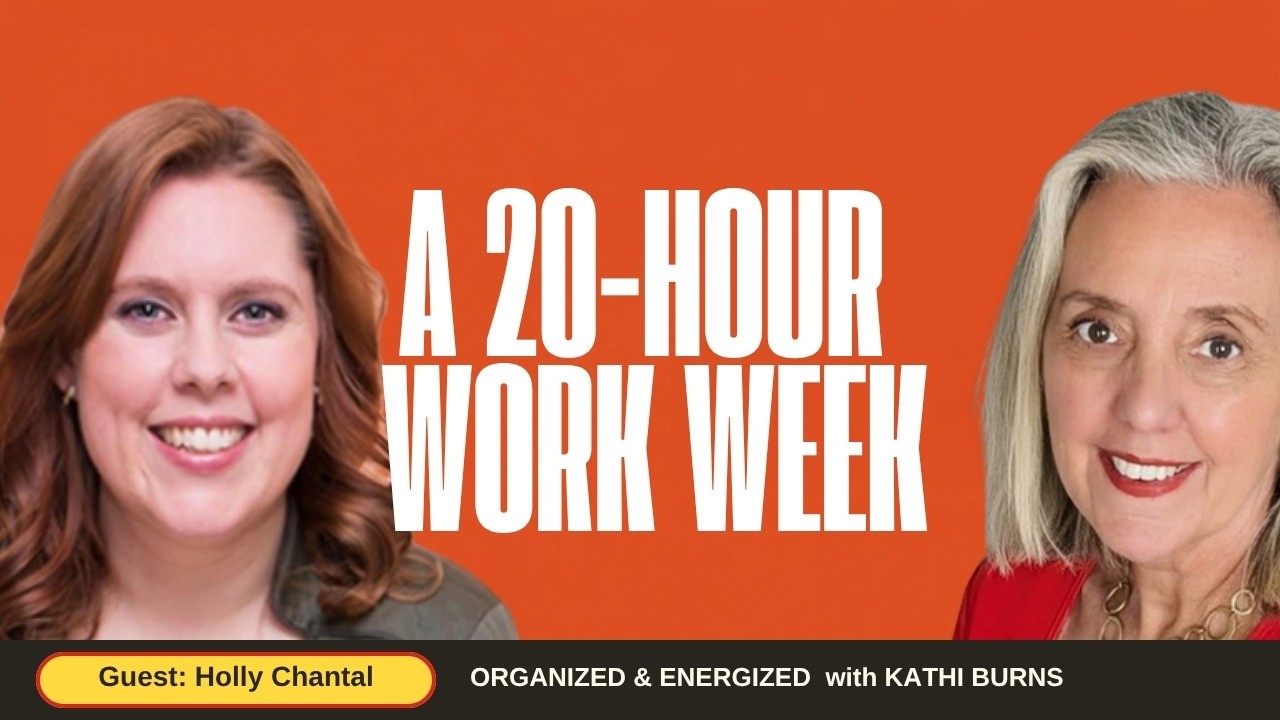
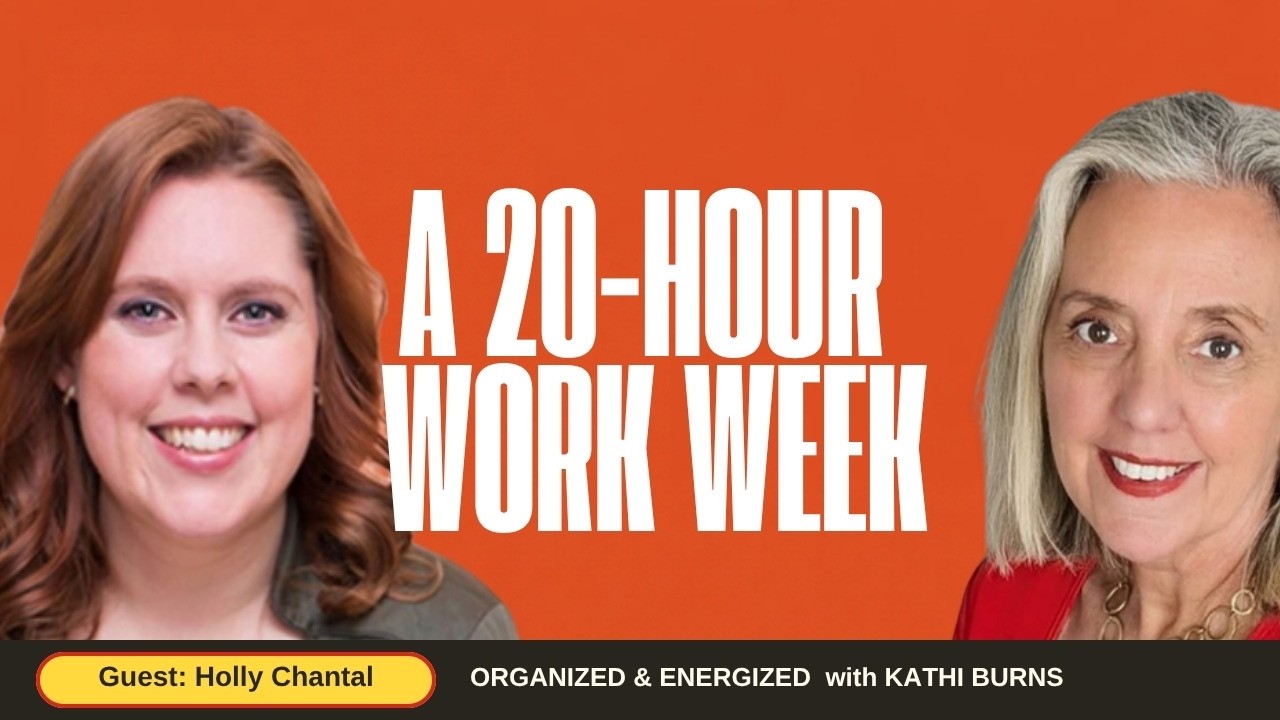
Holly Chantal started her business in 2009 at 24 and says she now works about 20 hours a week, fitting her work into roughly four hours a day.
She says knowing where you're headed, including how you want your business and your days to feel, is the most important piece for a new entrepreneur.
Holly says marketing that doesn't fit your communication style, pushes you too far out of your comfort zone or feels manipulative is usually less successful and builds a job you don't enjoy.
When she feels overwhelmed, Holly writes everything down as a list, then reprioritizes and checks off the quick tasks right away.
Her free Buyer's Arc PDF maps the decisions a client makes before hiring you so your marketing can guide them without scarcity or pressure.
Published · Updated
What is this episode about?
How do you avoid entrepreneur burnout before it starts? Holly Chantal, a messaging strategist who started her business in 2009 at 24, says it comes down to deciding early what you want your business and your life to feel like, then checking every decision against it. Kathi Burns, CPO®, Business FLOW Strategist, talks with Holly about how she began with website design, partnered with an artist for seven years and built systems that cut website timelines from up to 12 months to about three. You'll hear why marketing that doesn't fit how you communicate drains you, how Holly's brand compass works as a gut check, how she uses Trello and GoodNotes to run her business in about 20 hours a week, what she does when she feels overwhelmed, and how her Buyer's Arc guide helps clients decide without pressure.
You should enjoy every aspect of your business. If there's something that feels off, burning you out, draining your energy, there's usually a solution to make that not feel like that anymore.Holly Chantal
Jump to links and resources · Part of How do I grow my business without burning out? · All episodes · Every guest
What are the key takeaways?
- Holly began with website design in 2009 because clients could see a tangible outcome, and she partnered with an artist so she could focus on strategy.
- The decision-making systems she built cut website projects from six to 12 months down to about three months.
- Holly says a business built only around financial goals can end up successful on paper but draining, which is where people burn out and feel trapped.
- Her brand compass asks whether a decision fits your personality, the promise and mission you have for your clients, and your own philosophy and methods.
- Holly keeps her to-do list, JV partner network and follow-ups in Trello so she can switch off when she closes her computer.
- In GoodNotes on her iPad she keeps a scratch paper notebook, a notebook for each client, and her webinar slides as PDFs she can draw on while presenting.
- Her best advice received is eat dessert first, which she turns into focus on what you enjoy and the rest will follow.
This episode is brought to you by the Business Logjam Session
A private 75-minute online session with Kathi Burns to find the one thing holding your business back and leave with your next steps. It is the same F.L.O.W. process Kathi uses with her own clients: Focus on your goals, Locate your logjams, Outline your solutions, Walk away knowing your next steps.
Find What's Holding Me BackInterested in sponsoring the show? Get in touch.How did Holly Chantal start her messaging business?
Holly started in 2009 at 24 with website design, because clients got a tangible outcome and people didn't take a 24-year-old business coach seriously. She partnered with an artist who did the design while she did the strategy. The systems she built for making website decisions and writing the copy cut their timelines from six to 12 months down to three. The partnership lasted seven years, and when he retired from design she stayed with copywriting, messaging and website strategy.
How do you avoid entrepreneur burnout?
To avoid entrepreneur burnout, Holly says, decide early where you're headed and how you want your business to feel. Beyond financial goals, ask what you value in how you spend your time, what matters outside work and what working with clients should feel like. Without that, you can build a business that looks successful on paper but feels trapping.
Why does some marketing feel so draining?
Holly says marketing feels draining when the method isn't natural for your communication style, pushes you too far out of your comfort zone or feels manipulative. In her view, that kind of marketing usually won't be as successful as it could be, and you end up creating a job for yourself that isn't satisfying. When you know your communication style, your values and the lines you won't cross, she says you keep making choices that move you forward faster.
What is a brand compass?
A brand compass is the gut check Holly builds with emerging entrepreneurs before they act on a decision. It asks three things: does this fit my personality, does it fit the promise and mission I have for my clients, and does it follow my own philosophy and methods? If not, it's probably a distraction that makes things harder for you.
How do you use Trello to stay organized?
Holly uses Trello as her brain on the computer: her to-do list, her network of JV partners and everyone she needs to meet, reach out to or follow up with all live there. Because she fits her work into about four hours a day and forgets things that aren't written down, having it all in Trello lets her switch off when she closes her computer. Kathi uses separate Trello boards for her podcast, website and marketing and tags her team on tasks, and both use Google Docs, where Holly has learned to label documents so she can find them by search.
What should you do when you feel overwhelmed?
Make a list, Holly says. Overwhelm usually means she's trying to hold too many things in her head at once, like spinning plates, and she gets panicky when she starts forgetting things. Once everything is written down she can see it's doable, reprioritize, and check off the tasks that only take a few minutes right away.
How do you use GoodNotes on an iPad for business?
Holly uses GoodNotes on her iPad as digital paper for her business. She keeps a notebook called Scratch Paper for notes, lists and brain dumps, and a separate notebook for each client so all their material is in one place. For webinars she exports her slides as a PDF, puts them in GoodNotes and draws on them as she presents; when she shares her screen, viewers see only the slides, not the controls.
What is the Buyer's Arc?
The Buyer's Arc is Holly's free PDF marketing guide to the decision-making process a client goes through before hiring you. It shows the decision points they move through and how to align your marketing with each one. The aim is to guide people with the information they need at every turn, without scarcity or pressure tactics, so they can make an informed decision.
Where does each part of the conversation start?
- 0:00 Meet Holly Chantal
- 0:27 Starting out in 2009 with website design
- 2:19 Partner with people who complement you
- 4:10 Would she do anything differently?
- 5:41 Know where you're headed first
- 7:14 Marketing that fits how you communicate
- 8:58 The brand compass
- 10:14 Trello: a place to put your brain
- 13:26 What to do when you're overwhelmed
- 14:51 GoodNotes on the iPad
- 16:49 The best advice: eat dessert first
- 17:49 The Buyer's Arc
- 19:36 Wrap-up
What resources were mentioned?
- The Buyer's Arc (Holly's free PDF marketing guide, mentioned in the episode as BuyersArc.com)
- Trello
- Google Docs
- GoodNotes
- Evernote
These episodes continue the same thread as this one: Lia Dunlap, Carly Church, Ginny Priem, Stephanie Wall Morrow also answer the question "How do I grow my business without burning out?", and the rest are the most recent conversations on the show.

 MotherhoodEpisode 147
How To Build a Village That Supports Your Business and Your Life with Carly Church


See every episode on the podcast archive or filter by topic on the How do I grow my business without burning out? hub.
How can I support the show?
- Subscribe on Apple Podcasts, Spotify or YouTube, or add the RSS feed to any app.
- Rate and review. A rating on Apple Podcasts helps new listeners find the show, and Kathi reads every review.
- Share the episode with one business owner who needs it; the share buttons are at the top of the page.
- Grab a free eBook: 6 Steps to Organize & Energize Your Home, 6 Steps to Organize Your Home Office or 6 Steps to Organize & Energize Your Life.
- Work with Kathi. The Business Logjam Session is a private 75-minute session to find what is holding your business back.
- Be a guest. Apply here if you have a story about clearing the obstacles in your business.
What did they say, word for word?
The transcript below is edited for readability: filler words and false starts are removed and speaker names are added. Nothing was added or summarized.
Read the full transcript +
Kathi: Hi everyone, I am back and I am with Holly Chantal. She's a messaging expert and she's going to teach us how to reach out and really, really connect with our clients. So welcome, Holly. I'm so glad you're here.
Holly: I'm so glad I'm here. Thank you for having me.
Kathi: Absolutely. So talk to me about this journey that you've been on as an entrepreneur. Where did you come from and how did you land on this messaging? Because you're really, really good at it. So how did that all evolve?
Holly: Yeah, so I got my start back in 2009, and at the time I was struggling, like a lot of folks are, with who did I want to serve, what did I want to do. I wanted to start off business coaching, but I was 24. People really didn't take me seriously. I had zero experience; I can't really blame them. So I actually went into website design first, because it was something that was tangible. They got an outcome. I had a little bit of a track record with the previous business, where I built my own website and I was getting clients. I was the only one in the company that would get my clients through my own website. It was a direct sales, home party company. And I partnered up with an artist, because I'm not artistic. So he did the design and I did the strategy, and through that I began to develop systems for what to put on your website, how to structure the website and how to create that user experience, really just in the trenches with people as we're going through that development process. Because if any of you have been through a website development process, you know that it's much more intensive than you probably expected. My clients would come in and we would take six months, 12 months to complete a website, because there were so many decisions that needed to be made. So I started putting systems in place for making those decisions and writing the copy and doing all those things, and shortened our timelines from six to 12 months down to three months, which meant we could do more websites. Since then my partner and I split ways. He retired from design and is now doing something else, and I have stuck with the copywriting, messaging, website strategy side of things.
Kathi: That is so smart. First off, what I noticed is you delegated. You found someone to do what you couldn't do. A lot of entrepreneurs, I think, when we start, we think, okay, I have to design it too, I have to do that too. So for starters, you're a smart girl and started out perfectly, and everybody should remember that. If you start a business, even though you know what you want to do, you don't have to do it all right from the start. So that was brilliant.
Holly: Yeah. When you find those people that really complement what you're doing really well, talk to them about partnering, because that really happened organically. I knew his wife, who was also in the direct sales company that I was in, and she had asked me to do some work on her website. She came to me with this gorgeous design and I was like, I need to know who did this. She said, oh, it's my husband, but he doesn't develop websites, so can you build it for me? And I said, if he promises to work with me on other clients. It ended up being a really good, it ended up being a seven-year partnership.
Kathi: I love that. And it helped him expand and grow, and it helped you expand and grow. And boy, I remember my very first website, when it went out, like 2003. It was excruciating. There was so much involved, and I would love to have someone like you lead me down the road to creating the best website in the shortest amount of time, because there are so many decisions and so many left turns, right turns, and who knows. When you're first launching a business, you don't know what you're supposed to be saying.
Holly: Even when you're rebranding and you've been in business for a while, you'd be surprised how suddenly it feels like you don't know anything.
Kathi: Exactly. Even though you've been in business for a long time, if you're too close to the topic, you're way too close to the topic to even have objectivity about, what am I, is that message okay? I don't know. Yeah, I am with you on that. So if you were to do this again, and I think you did it so smartly, what's the first thing that you would do? Would you do it the same way, or would you go into it a different way, now that you're looking back from 2009?
Holly: You mean if I were to restart my business?
Kathi: Yeah.
Holly: So that's an interesting question. I'm not sure I would do anything differently, for that quintessential reason that I don't think I'd be where I am right now if I did. The way my business unfolded was very organic, and I'm someone that really follows my intuition. I have a plan of where I want to go, but I let it unfold as it does to get to where I want. So back then in 2009, if I were to write down what I wanted my life to look like at this point, I'm absolutely there. I have my kids, I have a dream house, I'm working 20 hours a week, I'm making the money that I want to make, and I don't think I'd want to change anything, just in case some of these things didn't pan out.
Kathi: I love that. So you were very smart from the very beginning, just being really strategic about it. So what would be your best piece of advice for others who want to go on this journey of becoming an entrepreneur? Perhaps they're there and they're just not quite there yet. What would you suggest that they do?
Holly: Yeah, so knowing where you're headed is probably the most important piece. Not just financial goals and what's on paper, but really qualitative things, like what do you value in how you're spending your time? What do you value outside of your business? Are there causes that you want to be contributing to? And really, what does your business feel like, and what do your clients feel like, working with them? Really just understanding on a fundamental level what it is you want to be doing. Because I feel like we go into business with a goal of starting a business, and what happens is we start settling on what's going to be the easiest path to meeting those goals, and you can very easily get taken off course and end up with a business that's successful on paper but doesn't necessarily feel awesome to be in. And that's where people end up burned out. That's where you end up realizing that you've built a job for yourself and you're very trapped. So if you can make decisions up front on what you want, how you want everything to be, it'll help you make decisions down the line that are completely in alignment with that.
You can very easily get taken off course and end up with a business that's successful on paper but doesn't necessarily feel awesome to be in.
Holly: A prime example is marketing. Marketing can be a double-edged sword for some folks. It's that necessary evil that you need to do in order to grow your business, but a lot of different methods don't feel great to do, and there's reasons for that. If it's not natural for your communication style, you're having to be pushed too far out of your comfort zone, or it straight up feels manipulative, you're moving away from what's natural for you, and, one, it's probably not going to be as successful as it could be, and two, you're creating a job for yourself that's not really that satisfying. On the other hand, if you know what your communication style is, if you know what you value and the lines you're not going to cross in your marketing, and what's a good step out of your comfort zone and what's a maybe-I-shouldn't-be-doing-this step out of my comfort zone, when you can identify those things, you'll continually make the right choices that will move you in the direction you're going to head much more quickly.
Kathi: That's fantastic. Being an architect of your destiny by knowing in advance where you want to go is what I'm hearing. And I think you're right. I think as entrepreneurs we have this message, this is what we want to do, but we don't take a step back to see how do we want to be doing it.
Holly: Part of it is you don't know what you don't know. You're put into these situations where you're making decisions and you don't have all the information. You don't know what it's going to look like, you don't know what it's going to feel like, so you're listening to experts and you're giving away a lot of your power by listening to what other people are telling you to do. And it isn't until you've actually experienced it that you realize, oh, in hindsight maybe that isn't how I would do it; I would do it this way. So when I'm working with emerging entrepreneurs, one of the things we do is we create a compass. We call it your brand compass, but really it is: Does this align with my personality? Does this align with the promise and that mission that I have for my clients and why I want to work with them in the first place? Is it following my unique philosophy and my methods? What it does is it helps you make decisions to make sure that you're not being led off into a distraction that is actually taking away from your goals. Or maybe it's going to reach your goals, but it doesn't really align with your personality and who you are, so you're making things a lot harder for yourself. Just having something like that, that little gut check as you're making decisions, can really, really help streamline your path to where you're going.
Kathi: Yeah, because there are so many different ways to do it, and there are so many experts who say this is the way, this is the way. I've been sidetracked so much in the past by going one way and then going another way, and this expert said this is the only way to go. I agree, having that compass I think is extraordinary, to really say, okay, this does feel organic to me, this does feel authentic. It's really good advice. So I know pre-show you were saying that you got very organized, and I'm very interested, of course. Anytime I hear that word it's like, what's your tool, Holly? What's your favorite organizing tactic or device that you use in your life right now that works for you?
Holly: So, Trello. It's where my brain is. Trello and Google Docs are my two go-to's at this point. It took me a long time to get on board with Google Docs. I don't really like how it's organized so much, but I've been using it quite a bit. Trello is kind of like sticky notes, but you can get them on all your devices and it syncs on every device. So I have my to-do list there. I have my network: I have a lot of JV partners, and my network's there, who I'm meeting with, who I need to reach out to, who I need to follow up with. Everything is there, and it makes such a big difference, because I have kids, I sleep very little, I cram a lot of work into four hours a day, and I forget things if they're not specifically written down. So, like I said, it's my brain on the computer, so that when I turn off my computer I can turn off my brain and focus on other things and know that I'm not going to miss something.
It's my brain on the computer, so that when I turn off my computer I can turn off my brain and focus on other things.
Kathi: Yeah, I love Trello, and I agree, it is the place to put everything. And I like the fact that you can do different boards for different segments of your business. I have a podcast board, I have a regular website board, I have my marketing board, so I have all the different things. And you're right, you can brain dump. And I love the fact that you can collaborate and tag your team within it, so I can write something and say, okay, this person, read this, here's the document and this other question, please post it. So yeah, Trello is brilliant. And I agree with you about Google Drive. I'm getting into it, and I'm learning now how to organize docs better, because you're right, at the beginning it was a little bit inorganic, just like when you first start on Gmail. It's a little bit weird. You're like, what is Gmail?
Holly: You're kind of relying on the search feature, which makes sense because it's Google, but I feel like I would rather just know how to find something in my folders. And I have to know, okay, what did I write in that document that would pull up just that document, so that I can search for it. So I've gotten very good at labeling things, but when you're sharing documents with different people, you don't always have control over what everything's labeled as.
Kathi: Exactly. But yeah, I love Trello too. Thanks for bringing that up. And for anybody who's out there checking it out, Trello is free to start out with, so everybody can have Trello and check it out and see if that works. There are so many different ways to be organized with your brain, like I said, because I agree with you, Holly, that it's a place to put my brain. Whatever one is going to resonate with you is going to be the one that works. There's no one perfect app, but Trello is a great place to start. So tell me about a time before you were uber organized and only working 20 hours a week. Tell me whenever you felt overwhelmed and you were stuck in busyness, or whenever it still happens, because I'm sure it still happens to you. What do you do to defrag and take a step back and get your bearings?
Holly: So I make lists. That's how I get un-overwhelmed. Because normally what's happening if I'm feeling overwhelmed is that I'm trying to hold too many things at once. It's like you're spinning a lot of plates. I get panicky when I start forgetting things, because it's like, what am I missing? It's that eerie feeling that there's something I'm supposed to be doing, there's something I'm supposed to be remembering, but I'm not. But if I sit down and list it all out, then I usually realize that, okay, all this is pretty doable. Now that I have a list, I can check them off, I can reprioritize them. Not everything is going to take me hours to do; some things will take a few minutes and I can check them off right now. For me, just having it all on paper in a visual way is invaluable, and it just helps get everything in order, so I can feel really good about what I'm moving forward with.
Kathi: That's what I was going to ask you: if you use pen and paper for your list, or if you use another app. Is it pen and paper for you?
Holly: So it depends. If I'm in my bedroom, then I use pen and paper, because I have notebooks everywhere. But in my business world, I have my iPad. So for those of you that are watching on video, I have an app called GoodNotes, and it works like, yeah, you can't really see it. It's paper; it looks like paper. In the GoodNotes app you can create notebooks. I have a notebook that's called Scratch Paper. That's where I take notes, that's where I put lists, just brain dumps, et cetera. And then I also keep a notebook for each of my clients, so that all the material and all the things we talk about are in one place. That's another really invaluable tool. And I use it when I'm doing webinars. I can mark up PDFs, so I actually create my slides, export them as a PDF, put them in GoodNotes, and then I can draw on them as I'm going, which is a really engaging way to present. So that's another recommendation if people are looking for really sweet software for their iPad.
Kathi: Yeah, that's sweet. I use Evernote extensively, but I don't know if there's actually the drawing capability in Evernote.
Holly: I think you can, but GoodNotes is actually created for presenting. What's cool about GoodNotes is when you are presenting, if I were to share my screen, you wouldn't see all the controls. You would only see the slides.
Kathi: Sweet.
Holly: And I feel like that's really nice. It just makes it look more professional when you're presenting.
Kathi: Absolutely. Yeah, that's amazing. Y'all check that out for sure. Good tips. We're learning all this juice today from this expert who is branding and marketing and messaging. What I really like about you, Holly, is that the message is loud and clear on what you do and who you are. Okay, one question. What's the best piece of advice that you've received that sticks in your brain from time to time?
Holly: When you asked that question, the first thing that came to mind was eat dessert first, and I don't know what that means. Eat dessert first. So let's pretend that's a business aspect. We'll say, focus on what you enjoy and the rest will follow. Yes, that's my profound advice for the day.
Kathi: We're going to put that in the show notes, because I think it actually follows your business model exactly. Figure out where you want to go and enjoy being there even before you're there.
Holly: Right. You should enjoy every aspect of your business. If there's something that feels off, burning you out, draining your energy, there's usually a solution to make that not feel like that anymore and actually become a very enjoyable aspect.
You should enjoy every aspect of your business.
Kathi: Yeah, I love it. Okay, good. So I know that you have a valuable free resource to offer to people, and we're going to put the link down below. So talk to us about what you're giving away, Holly.
Holly: Yeah, so I have a PDF called the Buyer's Arc, and it's a marketing guide. Let me give you the premise behind it. When we're making decisions, we go through a very distinct decision-making process, and when someone's looking to hire you for your services, they're going through the exact same process. So the Buyer's Arc is what I'm calling that process, and the PDF will show you what the different decision points are that they're making, and then how you align your marketing with those decision points, so that you can guide the person through their decision in a very empowering way. We're not using scarcity, we're not creating pressure or any marketing tactics, but we're really empowering them with the information they need at every turn, so that they can make an informed decision, and positioning your product or service in the best way possible for what their situation is.
We're not using scarcity, we're not creating pressure, but we're really empowering them with the information they need at every turn.
Kathi: Yeah, I love that. I was just checking it out pre-interview, and it's really a valuable resource. I think no matter where we are in business, you can use it, if you're an old seasoned professional or brand new starting out. It's going to make sense, and I think it's going to help you be authentic, which I think authenticity is really the magnet of all. You want to draw people that are attracted to you, not that you're wrangling them in and trying to hold them to you. You want those who want to be like magnets to you.
Holly: Right. And I just want to mention the URL is BuyersArc.com, just for those that aren't actually on the page. BuyersArc.com, and if you see it somewhere, you can download it.
Kathi: That's fantastic. Well, Holly, I really appreciate your time, and I always enjoy speaking with you, and I always learn something. So thank you so much for being on the show. Everybody, make sure to grab the Buyer's Arc. It will help you no matter where you are in your business, even if you haven't even started; it'll just help you get clarity. And thanks a lot, Holly, for being on the show.
Holly: Yeah, thank you for having me, and everyone have an awesome day.
Where can I find the links and resources from this episode?
Connect with Holly
Organizations and companies
Inspired? Here Are Your Action Steps:
- Write down what you want your business and your days to feel like, not just your financial goals.
- List what you value outside your business and any causes you want to contribute to.
- Look for work you don't need to do yourself and talk to someone whose skills complement yours about partnering.
- Drop any marketing method that doesn't fit your communication style or feels manipulative.
- Before acting on a decision, check it against your personality, your promise to clients and your own methods.
- Put your to-do list, partners and follow-ups in one place, such as Trello, so you can switch off at the end of the day.
- When you feel overwhelmed, write everything down, reprioritize and check off the quick tasks right away.
- Keep a separate notebook or file for each client so everything you discuss is in one place.
- Map the decisions a client makes before hiring you and match your marketing to each one.
Frequently asked questions
How does Holly Chantal run her business in 20 hours a week?
+
She says it comes from knowing where she wanted to go from the start. She fits her work into about four hours a day and keeps everything she needs to remember in Trello, so she can switch off when she closes her computer.
What is a brand compass?
+
It's the gut check Holly builds with emerging entrepreneurs. Before you act on a decision, ask whether it fits your personality, the promise and mission you have for your clients, and your own philosophy and methods. If not, it's probably a distraction.
Why does some marketing feel so draining?
+
Holly says that if a method doesn't fit your communication style, pushes you too far out of your comfort zone or feels manipulative, it usually won't work as well. You also end up building a job you don't enjoy.
What does Holly do when she feels overwhelmed?
+
She makes a list. Overwhelm usually means she's holding too many things in her head at once. Once it's written down, she can see it's doable, reprioritize, and check off the quick wins right away.
What tools does Holly use to stay organized?
+
Trello is her brain on the computer: her to-do list, her partner network and her follow-ups. She also uses Google Docs, and GoodNotes on her iPad, with a scratch paper notebook, a notebook for each client, and slides she can draw on while she presents.
Who is talking in this episode?

About the Host, Kathi Burns
Kathi Burns, CPO®, is a Business FLOW Strategist based in San Diego. For the last 20+ years, Kathi has helped clients create systems they can stick to. She is the author of How to Master Your Muck, Organizing With Tetris and Home Organization, The Smart Guide, and co-author of four more titles; all are in Kathi's shop. Kathi's business has been featured on Good Morning America, and her advice has been featured in Oprah Magazine, Martha Stewart Living, Better Homes and Gardens and Entrepreneur Magazine.
More about Kathi · Shop Kathi's books · Business Logjam Session · Apply to be a guest

About Holly Chantal
Holly Chantal is a messaging strategist who helps entrepreneurs with copywriting, messaging and website strategy; her website also describes her as a high ticket sales expert who has helped hundreds of clients over more than 15 years. She started her business in 2009 at 24, beginning with website design because clients could see a clear result. She partnered with an artist who did the design while she did the strategy, and the systems she built cut their website timelines from six to 12 months down to about three. That partnership lasted seven years. Holly runs her business in about 20 hours a week and created the Buyer's Arc, a guide to the decisions a client makes before hiring you.
Want help putting this into practice?
Book a Business Logjam Session with Kathi
A private 75-minute online session to find the one thing holding your business back and leave with your next steps, using the same F.L.O.W. process Kathi uses with her own clients: Focus on your goals, Locate your logjams, Outline your solutions, Walk away knowing your next steps.
Prefer to start small? Download Kathi's free eBook 6 Steps to Organize Your Home Office.
Published · Updated
This episode page is for general information. Guests speak for themselves, and their opinions, statistics and examples are their own. Nothing here is legal, financial, medical or mental-health advice; talk to a qualified professional about your own situation. Some links go to the guest's own products or free offers; addSpace does not earn a commission from them unless stated.