


Episode 18
with Lisa Griffith, productivity coach, Certified Professional Organizer® and speaker, founder of Griffith Productivity Solutions · March 4, 2022 · 31 min
Lisa Griffith taught music for 30 years before starting her professional organizing business in 2008, when she was just over 50.
Her new career came from one question a career counselor asked her: what would you do with a free afternoon and no obligations?
She kept teaching four days a week for the first year and a half so she could start the business without borrowing money.
Lisa calls hiring a business coach the best decision she ever made, because the coach showed her she could focus only on the work she loved.
When the pandemic wiped out her schedule in 2020, she got back on track by planning her days in writing with a paper planner.
Published · Updated
What is this episode about?
Lisa Griffith made her career change at 50. After 30 years as a school music teacher, church musician and performing arts director, she was burned out, and a friend who counsels midlife women on careers asked her what she would do with a free afternoon. Her answer, clean out a closet or reorganize a file drawer, led her to NAPO and to a professional organizing business she started in 2008, at the height of a recession. Kathi Burns, CPO®, Business FLOW Strategist, talks with Lisa about how she launched while still teaching, why she hires experts for the work she's not good at, what her business coach told her, why she stopped worrying about what people think, and how she rebuilt her own schedule when the pandemic stopped her in-person work.
The best decision I ever, ever, ever made, and I wish I'd done it right away, was to hire a business coach.Lisa Griffith
Jump to links and resources · Part of How do I grow my business without burning out? · All episodes · Every guest
What are the key takeaways?
- A single question about how she would spend a free afternoon showed Lisa that organizing was the work she wanted to do next.
- Lisa started her business debt-free by keeping her teaching job, researching, taking courses, joining her local NAPO chapter and practicing on friends.
- Organizing for clients is different from organizing yourself: Lisa says you have to put yourself in their shoes and do what works for them.
- She pays a team to maintain her website so she can spend that time writing instead of struggling with WordPress.
- Her first business coach told her it was her business and she could choose to work only on home and business offices, paper and digital files.
- Lisa's biggest lesson from running a business is to stop worrying so much about what other people think of you.
- After months of drifting during the pandemic, she followed her own advice, structured her days in writing and found that motivation follows action.
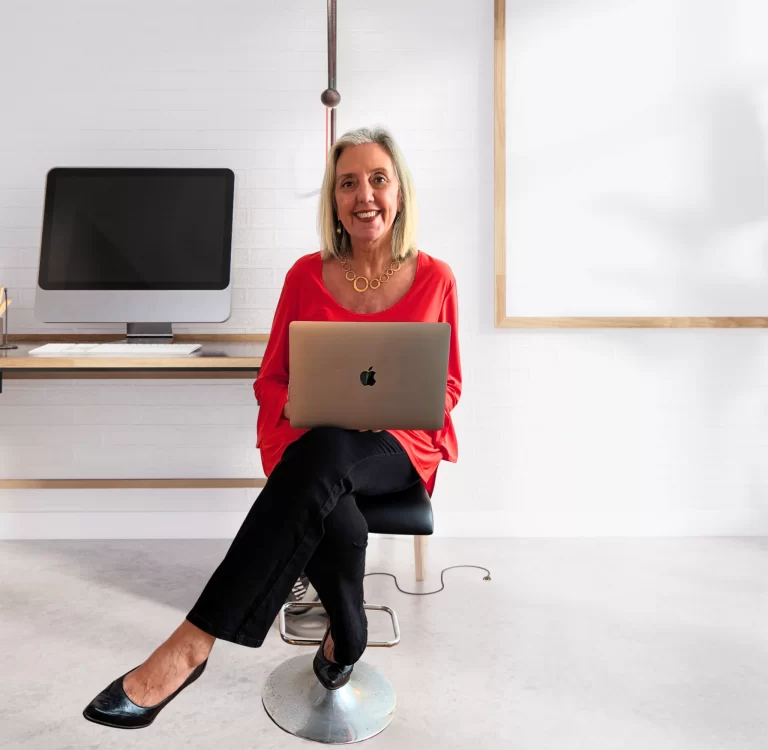
This episode is brought to you by the Business Logjam Session
A private 75-minute online session with Kathi Burns to find the one thing holding your business back and leave with your next steps. It is the same F.L.O.W. process Kathi uses with her own clients: Focus on your goals, Locate your logjams, Outline your solutions, Walk away knowing your next steps.
Find What's Holding Me BackInterested in sponsoring the show? Get in touch.How do you find your calling later in life?
Lisa Griffith found hers by answering one question: what would you do with a free afternoon and no obligations? Just over 50 and burned out on teaching music, she said she would clean out a closet or reorganize a file drawer. Her friend, a career counselor for midlife women, asked if she'd considered becoming a professional organizer.
How do you become a professional organizer?
Lisa started by learning about NAPO, the professional organizers' association, the same day she first heard the term. Through NAPO she took a lot of classes and became certified. She practiced on several kind friends who had often admired how organized her house and office were. She also learned that organizing for someone else means suspending your own expectations and doing what works for them.
How do you make a career change at 50 without going into debt?
Lisa kept her day job while she built the new business. She taught four days a week for the first year and a half and used her day off, evenings and weekends to research, take courses, talk to organizers and join her local New England chapter. She had business cards and a business name but no website for the first year. Kathi adds that shadowing someone already in the profession helps you decide whether to make the jump.
What should you do when you feel burned out as an entrepreneur?
Hire the experts instead of trying to do it all yourself. Lisa says you won't be as good as the expert at many things and you'll waste time spinning your wheels. She pays a company to maintain her website, so when she needs a change she sends an email and spends that hour and a half writing a blog or a chapter of her book instead.
Is hiring a business coach worth it?
Lisa calls hiring a business coach the best decision she ever made. A couple of years in, tired of dirty basements and garages, she was ready to quit. Her coach asked which clients she looked forward to: business offices, paper and digital files. The coach told her it was her business and she could choose just that.
How do you stop worrying about what people think of you?
Lisa's answer is to remember that most people are thinking about themselves, not you. A self-described people pleaser and, in Gretchen Rubin's terms, an obliger, she used to stew for weeks over something she'd said, then apologize, only to find the other person didn't remember it. Running a business means putting yourself out there, so she learned to let it go.
How do you get back on schedule when working from home?
Write your days down and follow the plan. When the pandemic wiped out Lisa's client schedule, she drifted for months until coaching a client on time management showed her she wasn't following her own advice. She sat down with a paper planner, calendar and to-do list and structured her days in writing. She says motivation follows action.
How do you recharge when you feel depleted?
Lisa goes outside, even for 15 minutes. She is not an outdoors person, but during the pandemic she bought her first down jacket, put on her boots and AirPods with a podcast, and walked in the New England cold. She says you don't need an hour-long workout; you just need to breathe a little more deeply and move your body. She also loved Pilates, which she started at about 55.
Where does each part of the conversation start?
- 0:00 Meet Lisa Griffith
- 0:49 From music teacher to organizer
- 1:53 The free afternoon question
- 3:08 Discovering professional organizing
- 4:22 Starting a business in a recession
- 5:24 Launching while still teaching
- 7:35 Shadow someone already doing it
- 9:14 Her best advice: hire the experts
- 10:45 Why she hired a business coach
- 12:23 Stop worrying what people think
- 14:41 When the pandemic wiped out her schedule
- 17:36 Following her own advice
- 20:49 Motivation follows action
- 21:05 How she recharges: get outside
- 23:38 Discovering Pilates
- 25:17 What she'd do with a free afternoon now
- 28:01 Her five tips for working from home
- 29:43 Wrap-up
What resources were mentioned?
- NAPO
- SCORE free business mentoring
- The Four Tendencies by Gretchen Rubin
- Lisa's five productivity tips for working from home (tip sheet)
- Lisa's free e-book: The Ultimate Guide to Organizing Your Workspace
These episodes continue the same thread as this one: Lia Dunlap, Carly Church, Ginny Priem, Stephanie Wall Morrow also answer the question "How do I grow my business without burning out?", and the rest are the most recent conversations on the show.

 MotherhoodEpisode 147
How To Build a Village That Supports Your Business and Your Life with Carly Church


See every episode on the podcast archive or filter by topic on the How do I grow my business without burning out? hub.
How can I support the show?
- Subscribe on Apple Podcasts, Spotify or YouTube, or add the RSS feed to any app.
- Rate and review. A rating on Apple Podcasts helps new listeners find the show, and Kathi reads every review.
- Share the episode with one business owner who needs it; the share buttons are at the top of the page.
- Grab a free eBook: 6 Steps to Organize & Energize Your Home, 6 Steps to Organize Your Home Office or 6 Steps to Organize & Energize Your Life.
- Work with Kathi. The Business Logjam Session is a private 75-minute session to find what is holding your business back.
- Be a guest. Apply here if you have a story about clearing the obstacles in your business.
What did they say, word for word?
The transcript below is edited for readability: filler words and false starts are removed and speaker names are added. Nothing was added or summarized.
Read the full transcript +
Kathi: Hi everyone, this is Kathi and I'm here with Lisa S. Griffith. Lisa is a productivity coach, Certified Professional Organizer and speaker who draws from her 30-year career as a teacher, director and administrator of performing arts, girl after my heart. In 2008, she pivoted, and we're going to talk about that during the podcast. As entrepreneurs, we all pivot in some way. But Lisa now helps individual clients improve their productivity with her methods, and we're going to learn a little bit more. Lisa, I really appreciate you being on the show today.
Lisa: Well, it's my pleasure, Kathi. Thank you for having me.
Kathi: Yeah, absolutely. So tell me, you started your business, what was it, in 2008?
Lisa: Yes, that's correct.
Kathi: Okay. And I love that you have an arts background, because I'm also an artistic, creative entrepreneur. So tell me how you got into professional organizing. How did that leap happen for you?
Lisa: Well, it was kind of a magic question that somebody asked me once. I'd been a music teacher for a very long time: a school music teacher, a church musician, a performing arts director. I was just on the other side of 50. My youngest child was looking to go away to college in the next year, and I was burned out. And I loved teaching. I loved it. I loved the music world, but I was tired of trying to make a living at it. I was really burned out. And I was discussing this with a friend of mine who does some career counseling for midlife women. That was kind of her niche. We chatted for several sessions back and forth. She put me through the whole occupational questionnaire training thing. And the final question that she asked me was kind of the light bulb moment. She said to me, "If you had a free afternoon and you had nothing else to do, you had no obligations, you had no place to be, nothing on your list, what would you do?" And I said, "Well, this sounds kind of nutty, but I would probably clean out a closet or reorganize a file drawer or reorganize my kitchen, a kitchen cabinet or something like that." Because I found, in an interim between a couple of jobs a few years back, I'd had a couple of months off, which I'd never had since I was 16, I think. And I went through my house top to bottom, from the attic to the basement, every drawer, every closet, and it was so rewarding. And I was the teacher that other teachers would come to and say, "Oh, God, your classroom is so organized." I was a middle school music teacher, upper and middle school, but with middle school, there's a lot of stuff. And I had to keep it organized. I had 150-some students, and I had to stay on top of things. "How do you do it?" And she looked at me and said, "Have you ever considered becoming a professional organizer?"
Kathi: Did you know what that was at the time?
Lisa: I said, "I don't even know what that is. What is that?" And she said, "Oh, you need to find out about NAPO." And that's when I went online and I Googled NAPO and professional organizing, and I said, "Oh my god, there's other people out there just like me, and they get paid to do what I love to do." So that was the turning point for me. And I was still teaching. I taught part-time and I worked on my business for the first year and a half. I was teaching four days a week. I had a day off. I had weekends. I had evenings. My kids were of course older, so I didn't have as much mom stuff to do. And that was kind of the beginning of me just looking at my life in a different way and saying, you know what, I have other skills that I can use. I don't have to necessarily be doing what I went to college for and got all those degrees in. I have other skills. And through NAPO especially, I took a lot of classes. I became certified. I practiced on several very kind friends. That was almost 14 years ago, when I think about it. I was starting my business in 2008, and I was going to quit my teaching job, and my husband looked at me and said, "You realize it's like the height of a recession? You're going to give up a steady paycheck and benefits and all that to start a business now?" And I said, "Well, if you're on board with me, let me try it." And he said, "Okay." And that was kind of the story. That's how I ended up doing what I'm doing, for the most part.
There's other people out there just like me, and they get paid to do what I love to do.
Kathi: That's really a great story. And aren't we blessed to have husbands who support us? When I came home and said, "Honey, I'm going to be a professional organizer and image consultant," he's like, "What?" And he goes, "Okay, okay, I'll support you on that." So thank goodness we have keepers in our life.
Lisa: Yeah. My biggest cheerleader.
Kathi: Yeah, I mean, we need it. It's important. So I want to go back. You said that you were working pretty much full-time, four days a week, and you were launching your business on the side. What were the steps that you took? Because I know there are going to be a lot of people listening to this podcast who are thinking about making the jump. What did you do to start launching before you were really ready to quit your real job?
Lisa: Well, I would emphasize this to anyone who's starting a new business like this. I didn't want to necessarily get an investor. I didn't want to borrow any money. I wanted to be able to go into this somewhat debt-free, so that's why I kept my teaching job. The first thing I did was a lot of research. I went online. I took a couple of courses. I talked to friends about it. I volunteered. I said, "Look, I'm thinking about doing this. You've often mentioned that you really like how my house or my office is organized. Would you like some help?" And nobody ever says no, right? Everybody says, oh, yeah. And I will say this: it's funny, when you go into organizing as a profession, it's very, very different than organizing yourself, because you really have to put yourself in somebody else's shoes, and you really have to suspend your expectations and do things that work for them. With yourself it's easy. You just say, "Well, I want to do it this way," and you do it. So my teaching skills were something that I could use a lot when I worked with my clients, but it was kind of a wake-up call: Lisa, not everybody looks at things the way you do. So it was a very eye-opening thing. I had to really practice being non-judgmental. I'm an opinionated person, and I had to learn to be a little more accepting of a different way to do things, which is part of a teaching career, too. But man, it makes you look at things a different way.
When you go into organizing as a profession, it's very, very different than organizing yourself, because you really have to put yourself in somebody else's shoes.
Kathi: Yeah. And I think for those who are ready to jump and maybe switch something and want to go part-time into their new profession, a good takeaway is to research and also to shadow. I shadowed some organizers just to see what they were doing and whether I thought it was going to be fun. So shadow somebody who's already doing whatever profession you want to get into, to figure out if you want to make the jump.
Lisa: I did a couple of those things, too. That's why joining my local New England chapter was so helpful for me, because it gave me a local cohort of people that I could say to, "Oh, you're looking for help? I'm cheap." But it was something I could fit in while I was still teaching. A lot of that research, a lot of talking to people, a lot of talking to organizers already in the profession. I think that made a big difference. I didn't put a website up right away. I had some business cards printed up. I decided on a business name, but that was really just the very beginning, for about the first year.
Kathi: Yeah, I agree. There's no reason to go into debt full tilt boogie when you start a business. I started mine on $49, a $49 pack of business cards and flyers. You don't have to go crazy as you dip your feet into your new profession, for sure.
Lisa: Exactly. And you don't have to have everything in place perfectly, right?
Kathi: Yeah. Well, there is no perfect anyhow, as we know from organizing clients and organizing our lives. One of my mantras for years, when I was writing my first book, was perfection is overrated and simply not worth it.
Lisa: Nothing's perfect.
Kathi: For sure. As an entrepreneur, what's the best piece of advice that you would give people who are looking to create more freedom but are really feeling bogged down with their career? Maybe they've already launched as an entrepreneur, and now they're just feeling burned out and fried. What advice would you give them?
Lisa: So I think the best advice is what I gave myself, and it took me a little while to get there: hire the expert. Okay? Hire an expert. Don't try to do it all yourself. First of all, you're not going to be as good as the expert in a lot of things. You're going to spin your wheels. You're going to waste a lot of time that you could be using working either in your business or doing things that you enjoy creatively. I had two really great things, and it took me a while to get there. I hired someone to not just create my website, but to maintain it. When I have to make changes, I don't have to spend an hour and a half trying to figure out what to do on WordPress, because number one, I'm not good at it, and number two, I hate it. So I have a company with a team, and when I send an email, I can say, "All right, I'm not going to spend an hour and a half on this. I'm going to pay you to do it instead, and I'm going to write a blog or write another chapter in this book I'm working on rather than spin my wheels." But the best decision I ever, ever, ever made, and I wish I'd done it right away, was to hire a business coach.
The best decision I ever, ever, ever made, and I wish I'd done it right away, was to hire a business coach.
Kathi: Ah, okay.
Lisa: I have had two fantastic business coaches over my career. I didn't work with the first one until I'd been in business a couple of years, and I was ready to throw in the towel. I'd had enough. I was tired of working in dirty basements and garages, and it just wasn't my thing. And she was fantastic. She said, "Well, what do you really love to do? When you get up in the morning and you look forward to your clients that day, what are the ones you're excited about?" And I said, "Oh, I love helping business people in their home office and in their business office. I'm a little weird. I don't mind sorting paper. I'm good at it. And dealing with email and digital files." And she said, "So why don't you just do that?" And it was like a light bulb went off, and I said, "Oh, I can just do that." And she said, "Yes, it is your business. You get to decide." No one had ever really said that to me before, and it was a real eye-opening moment for me. So I would say, if you have a little bit of money, don't spend it on marketing materials and stuff like that right away. Spend it on a good business coach, or go to SCORE and get a mentor through SCORE, which is free mentoring. Get some advice at first. I'd never started a business. I'd never worked for myself. I'd always worked for somebody else and gotten a paycheck. So there was a lot to learn.

Kathi: Yeah. That's great. What one lesson do you think that your business has taught you? I mean, besides, I love the fact we all need coaches, for sure. But if you had a big life lesson from jumping from your artistic career over to being an organizer, which is also a very artistic career, what would be the lesson that you've learned for yourself?
Lisa: So I had to think hard about that question. I think the biggest lesson I've learned, and I think it's a combination of running my business but also getting to a certain point in my life, is stop worrying so much about what everybody thinks about you. That's the biggest lesson I've learned. Stop worrying about what everybody's thinking about you. I've been a big people pleaser in the past. I am what Gretchen Rubin, who wrote The Four Tendencies, would call an obliger.
Kathi: Yeah. Okay.
Lisa: And I was always worried. Oh, I said the wrong thing, and I would stew over it for days. Or, well, I don't like the way I looked in that picture. I'll never wear that outfit again. I would stew over what I said and how I looked and what people were thinking. And I learned that unless I'd said something really egregious and hurtful, which I would never do on purpose, it didn't matter. I would go back to people later and apologize and say, "Oh, I said this. I'm so sorry." And they would look at me like, I don't even remember that. And I'd been stewing over it for weeks. So I think that's the best advice, because when you run your own business, you put yourself out there. I did this as a performer, but even more so as a business person, you put yourself out there. And you just have to stop worrying so much about what everybody's thinking about you, because they're probably not. They're thinking about themselves.
You just have to stop worrying so much about what everybody's thinking about you, because they're probably not. They're thinking about themselves.
Kathi: They're probably not thinking about you at all, and you're thinking about you all the time. It's like, oh, okay. That is really, really good, because you know what? You can't help what other people think about you anyhow. They're going to think about you from their lens, and their lens is always going to be different. So that's a really good lesson. Okay. So what is the biggest organizing obstacle that you've had to face in your business?
Lisa: Well, aside from having to kick it all off and start from scratch and not know nothing about running no business, right? Boy, did I take a lot of classes, a lot of free webinars out there. But I think the hardest thing I've ever been through was the pandemic. I'll be honest with you, and I know I'm not alone, and most people are going, "Oh, yeah, yeah, yeah." But I will tell you this. I rebranded my business. I spent a lot of time and not an insignificant amount of money in 2019 working on rebranding to really narrow my niche down to that productivity coaching, business organizing thing. I published a book. I had a publisher actually hire me to write a productivity planner that came out at the end of 2019. And I did this big, yay, this big launch January 1, 2020. And two months later, three months later, the world shut down. I was plugging away, and I was doing a lot of marketing, and as we all know, many of us were affected by this. Boom. It just died. Just died. Like I said to you before we talked, I had made the switch to do some virtual coaching over the years, but now I had to switch completely, and I had a lot of in-person clients who really didn't want to do it. They just said, "You know what, call me when this is over," kind of thing.
Kathi: Yeah.
Lisa: And I found myself floundering big time. I had always been a scheduled person. You plan your day, you go out the door, you go see this client, maybe you see another client, you have this speaking gig, everything. And I managed to run my business in very specific, prescribed times. Friday afternoon was for writing a blog, that kind of thing. It was very laid out, right? And when all of that disappeared, my structure disappeared. The first month or so, sure, I had a couple of organizing things to do around my house, a few projects here and there. Oh, sure, I'm going to write that other book I always thought I was going to do. I didn't do anything. I didn't do anything. I laid around feeling sorry for myself, watched an awful lot of TV, scrolled around on social media, and I was getting nowhere. And it took me several months to realize. I actually had one of the few clients I had that I was coaching virtually on time management and productivity coaching. And I finished my session with her, and I thought to myself, you big fat hypocrite. You are telling these people to do something that you are not doing. You are not doing what you're telling people to do. And it was another light bulb moment. My advice to people, if you're struggling with time and you're struggling with being overwhelmed, is to really be structured about how you plan your time, at least at the beginning. I wasn't doing that at all. I was just letting the days kind of flow by. One day would flow into the next, and I would go to bed and think, "So what did I do today?" Nothing. I cooked dinner for like the 18th day in a row. And if you know me, you know I hate to cook, so that wasn't really a big fun for me. So I made myself do what I tell people to do. I made myself follow my own advice. I sat down with a planner, which I love, and I literally wrote it down in pen. You can do this digitally, obviously, but I'm a paper person. I sat down with pen and paper and calendar and to-do list and made myself structure my days in writing. And then I made myself acknowledge that, yes, I'm an obliger, and I will show up when someone else is expecting me, but that's not what happens right now. I have to be self-motivated. So it was kind of a wake-up call about taking responsibility for my own time and practicing what I preached. I would say that having the bottom fall out was probably one of the best things that could have happened, because it made me wake up a little bit.
Kathi: Yeah. And coming from an environment where your schedule is all, well, first of all, you came from school and classes and bells, right? Then going into entrepreneurship, and then having clients. I've got to be there at 10. I've got to be there at 1. I've got a speaking gig. And then that all goes away. So we teach what we most need to learn. And as organizers, we all need time management. Everybody needs time management. We all need to know what we did at the end of the day.
Lisa: Well, it's funny. I was saying to my client, at the end of the day, just write one thing down and put it on a sticky note on your laptop to say, I did this today. And I had nothing to write down at the end of the day myself. And I thought, okay, Lisa, you've got to follow your own advice.
Kathi: Yeah. And then take it a step further and write on the sticky note, what am I going to do tomorrow when I wake up? That's always helpful as well.
Lisa: Exactly. I am going to make myself get out of bed and go outside, even if it's just to walk around the building for 10 minutes. It's that kind of little, small, do-one-thing kind of thing. I think motivation follows action, because if you wait to get motivated… I mean, if I waited to get motivated to go exercise, it would never happen. I just have to do it.
I think motivation follows action, because if you wait to get motivated, it would never happen.
Kathi: Yeah, exactly. Well, that leads me to another point: what you do whenever you feel overwhelmed or whenever you feel a lack of energy, because this is Organized and Energized, the podcast, right? So you're feeling depleted. What do you do to revive yourself?
Lisa: Okay. So, honestly, getting outside. Getting outside. And my husband would probably laugh and fall off the chair if he heard me say that, because I'm not an outdoors girl. We joke that our wedding vows said love, honor and never camp, because you can go sleep on the ground in a tent. I'll be at the Holiday Inn down the road kind of thing.
Kathi: Oh, you're a camper?
Lisa: Oh yeah. So, forget it. No tents. We're not dealing with tents. So I have found that when I'm really feeling down or stressed out or anxious, and I know we've all had a lot of anxiety the last couple years, if I'm in a situation where I can, I throw on… and I live in New England. It's cold, baby. It's cold. I bought my first down jacket in the middle of the pandemic, because I thought, you know what? I've got to go outside. I've got to go outside. And I throw my coat on, I throw my boots on, and I put on a podcast. I discovered podcasts during the pandemic. I know I'm like 10 years late from everybody else, but I discovered podcasts, and I strap on my AirPods, and even if it was just 15 minutes, it just made such a difference. So I think that's one of the biggest recommendations I can make to anybody. You don't have to go work out on the Peloton, an hour-long, sweat-induced thing. You just have to go out and breathe a little more deeply and move your body a little bit. That's kind of it for me, anyway.
Kathi: I think that's great advice. And getting out and just having the sun hit your face, and even the frigid cold air is going to wake you up and revitalize you anyhow.
Lisa: Oh yeah.
Kathi: I think during COVID we were all staying inside and hunkering down, and getting outside is fantastic advice.
Lisa: And I know it's basic and simple, but it really made a difference in my brain. It just made such a difference. Now, I have done some virtual workouts with some things, and it just doesn't have the same effect for me.
Kathi: Absolutely. There's nothing wrong with that. It just doesn't work for me. I can't wait till I can go do Pilates at an actual Pilates studio without wearing a mask, because I'm not going to do it while I have to wear a mask. I was really loving that for a while, man.
Lisa: I know. I did Pilates for a very long time, and it came from a job. I was hired to help organize a Pilates studio, the business end of things and the stock room. And they said, "Well, we can't really afford your top rate, but we'll give you free classes and this rate." And I hemmed and hawed, but I really liked them, so I said, all right, I'll do it. Two female owners, very, very lovely folks. And I started Pilates for the first time at like age 55, 56. And I loved it. It was harder than anything I had ever done in my life. I'm telling you, I was a lacrosse player in college, but Pilates was 10 times harder than any of that. I did it for years and years, and then we moved and then the pandemic hit, and so I've been dislocated from my studio. I haven't found the right place to go yet. But I love it. It's a great workout.
Kathi: It is. It's not for wimps. And I really miss it. And it's just not the same doing it at home without the reformer. I like the reformer.
Lisa: I love that reformer thing. Reformer. That sounds like the Spanish Inquisition.
Kathi: I know. It's a very strange word, isn't it? They're reforming our booties or something.
Lisa: Exactly.
Kathi: That's funny. Okay. So is there anything that I should have asked you, Lisa, that I did not? Anything we've missed here?
Lisa: So yes. There was a question that changed my life, which was, what would you do if you had a free afternoon and nothing else to do? And the question is, what would I do now, 14 years later, if I had a free afternoon and nothing to do? And let me tell you this, and this is, I think, a direct result of the pandemic, but also of getting to a certain point in my life. I would make a connection with someone I care about. I would pick up the phone or send a text and say, "Let's go meet for coffee": my family, my kids, my good friends, or even my sister, or a couple of really lovely friends who live far away. I pick up the phone and say, "Let's set up a Zoom call. Let's set up a FaceTime call. I haven't seen your face in three months. Let's talk." When I have free time now, when I don't have anything else going on, that's what I would do. I don't need to do the organizing thing anymore. It's all done.
Kathi: You are organized.
Lisa: Well, what else are we supposed to do? Right?
Kathi: Right. Yeah, exactly. It's like, okay, let's do the pantry. I did the spices. Did the big spice rack. There's always…
Lisa: There's always a little thing to do. But at this point, I want to be with people. I want to be with people, and I want to spend time with the people I care about. So that's what I would do.
Kathi: Yeah, I agree. And we all should connect. I want to go back around to the top of the hour, where you were talking about this, for people who are looking to jump. I think your business coach said, "What would you do if you had free time?" It goes back around to: what's your gift? Because I think our passion is often the gift that we can give back. So for those of you who are looking to switch careers, take that nugget that Lisa said from her coach. If you had a free afternoon, what would you do? That's going to give you something that you can get really enthused about, right? Because if you could do anything in the world, what would it be? And what I love about that is that, typically, that is also the gift that we can give back. I know I said that a couple times. I really want to emphasize it, because there are a lot of people who are jumping. There are a lot of women who are going to be jumping into a new career. Just think about what you love to do. Whatever you love to do is what you can give back to the world. So that's what I say about that.
Lisa: Yeah. Exactly.
Kathi: So speaking of gifts, do you… What were you going to say? Sorry.
Lisa: No, no. You were going to ask me if I had something to offer to folks, and I do. This comes from my own experiences of working from home, having to be stuck and work from home all the time. Now, some people did this all the time before the pandemic, so this won't be news to some folks, but for a lot of us, it was new, or a hybrid situation. So I put together a tip sheet, and it's really more than just a tip sheet. It's a couple of pages long: my five best tips for working productively from home. Five productivity tips for working from home. They were all things that came from my experience, what I found helped me. I did talk about it with some clients too, and asked what kinds of things worked for them. So there is kind of a mind meld in there of my experience and some of my clients' experiences about what they felt was most helpful for them to be productive when they're working from home. So that is there for anyone who wants it.

Kathi: Yeah. Just go down below, download your link and get the gift that Lisa has to offer. We all need that as we're working from home. Things that come from our own experience are a really great thing to give back. We have challenges even as professional organizers, just like everybody else does. Actually, any challenge that you have in your life, someone else is experiencing the same thing. So go ahead and grab that download. And I wish you much success with your business, from one organizer to another. I really, really appreciate you being on, and thank you so much, Lisa. It's been great.
Lisa: Thank you. It's been my pleasure.
Kathi: Thanks. Signing off for now. I'll see you guys at next week's podcast.
Where can I find the links and resources from this episode?
Connect with Lisa
Books and resources
Inspired? Here Are Your Action Steps:
- Ask yourself what you would do with a free afternoon and no obligations, and write down the answer.
- Keep your current income while you test a new business on your days off, evenings and weekends.
- Research the field, take courses and join the local chapter of its professional association.
- Shadow someone already doing the work before you make the jump.
- Offer to help friends for free so you can practice.
- Hire experts for the tasks you're not good at or hate, like maintaining your website.
- Spend early money on a business coach or a free SCORE mentor before marketing materials.
- Plan your days in writing, with a calendar and a to-do list.
- At the end of each day, write one thing you did on a sticky note, and what you'll do tomorrow.
- When you feel depleted, go outside for 15 minutes and move your body.
Frequently asked questions
Is it wise to change career at 50?
+
For Lisa Griffith it worked. She was just over 50 and burned out after 30 years of teaching music when she started her organizing business in 2008, during a recession. She reduced the risk by keeping her teaching job for the first year and a half and by having her husband's support.
How to start as a professional organizer?
+
Lisa looked up NAPO, took classes and became certified, did a lot of research and joined her local chapter. She practiced on friends who had admired her own organized home and office. She had business cards and a business name for the first year but didn't put up a website right away.
What qualifications do you need to be a professional organizer?
+
In the episode, Lisa describes taking a lot of classes through NAPO and becoming certified; she is now a Certified Professional Organizer®. She says her teaching skills helped too, but she had to learn to be non-judgmental and do what works for each client rather than what she would do herself.
What is Lisa Griffith's best advice for burned-out entrepreneurs?
+
Hire the experts. Lisa pays a team to maintain her website so she can write instead of wrestling with WordPress, and she says her best decision was hiring a business coach. If money is tight, she suggests a free mentor through SCORE before spending on marketing materials.
How did Lisa Griffith recover when the pandemic wiped out her schedule?
+
Her productivity planner launched on January 1, 2020, and within months her in-person work stopped and her structure disappeared. After coaching a client on time management, she realized she wasn't following her own advice. She sat down with a paper planner and structured her days in writing.
Who is talking in this episode?

About the Host, Kathi Burns
Kathi Burns, CPO®, is a Business FLOW Strategist based in San Diego. For the last 20+ years, Kathi has helped clients create systems they can stick to. She is the author of How to Master Your Muck, Organizing With Tetris and Home Organization, The Smart Guide, and co-author of four more titles; all are in Kathi's shop. Kathi's business has been featured on Good Morning America, and her advice has been featured in Oprah Magazine, Martha Stewart Living, Better Homes and Gardens and Entrepreneur Magazine.
More about Kathi · Shop Kathi's books · Business Logjam Session · Apply to be a guest
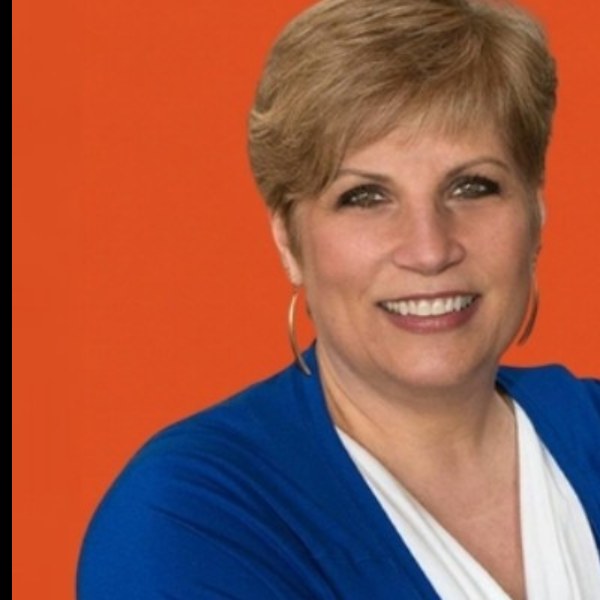
About Lisa Griffith
Lisa Griffith is a productivity coach, Certified Professional Organizer® and speaker based in Rhode Island who works with busy professionals across the USA. Before starting her business in 2008, she spent 30 years teaching, directing and running performing arts programs in schools, churches and community organizations. She launched while still teaching music four days a week, took classes through NAPO and became certified. With a business coach's help she narrowed her work to what she loves: home and business offices, paper, email and digital files. In 2019 she rebranded around productivity coaching, and a publisher hired her to write a productivity planner. She belongs to NAPO and NAPO New England.
Want help putting this into practice?
Book a Business Logjam Session with Kathi
A private 75-minute online session to find the one thing holding your business back and leave with your next steps, using the same F.L.O.W. process Kathi uses with her own clients: Focus on your goals, Locate your logjams, Outline your solutions, Walk away knowing your next steps.
Prefer to start small? Download Kathi's free eBook 6 Steps to Organize Your Home Office.
Published · Updated
This episode page is for general information. Guests speak for themselves, and their opinions, statistics and examples are their own. Nothing here is legal, financial, medical or mental-health advice; talk to a qualified professional about your own situation. Some links go to the guest's own products or free offers; addSpace does not earn a commission from them unless stated.