

Episode 103
with Sabrina Victoria, business strategist, speaker and founder of Her Nation · October 24, 2024 · 32 min
Sabrina Victoria founded Her Nation in 2021 as a community for women business owners, after losing her own community, family and friends at age 20.
Sabrina says you can't manage time, but you can manage your energy and your focus by saving hard, money-making work for your one or two daily peak-energy windows of three to four hours.
She replaced three to five daily one-on-one networking calls with the model of a weekly 90-minute group call where everyone networks together and the host follows up only with the people he wants to work with.
Sabrina calls procrastination a myth, because you are always putting something off to do something else, and her advice is to drop the guilt and choose what you focus on during your peak energy.
Published · Updated
What is this episode about?
Kathi Burns, CPO®, Business FLOW Strategist, talks with Sabrina Victoria, founder of Her Nation, about rising above adversity and building a business you can actually keep up with. Sabrina lost her entire community at 20, went through hard years as a single mom, and rebuilt through personal development. What she found missing was community, so in 2021 she launched Her Nation for women business owners, after 15 to 20 years in door-to-door and business-to-business sales. You'll hear why members say the biggest benefit is speed, why she tells people she's learning as she goes, the mantra she'd give her 18-year-old self, and why she says to manage energy not time: find your peak-energy windows and save the hard work for them. She also shares a one-call-a-week networking model and why she thinks procrastination is a myth you can stop feeling guilty about.
We actually can't manage our time, but what we can manage is our energy and our focus.Sabrina Victoria
Jump to links and resources · Part of How do I grow my business without burning out? · All episodes · Every guest
What are the key takeaways?
- Her Nation grew out of Sabrina Victoria's own need for community after she was cut off from her community, family and friends at 20.
- Her Nation Magazine covers health, wealth and leadership, the three areas Sabrina sees many women around 40 putting to the side.
- Members tell Sabrina the biggest benefit of the community is speed: questions get answered in minutes on Circle or live Zoom calls instead of waiting for module seven of a course.
- Sabrina tells her community she is building her business in real time and doesn't know everything, which she says keeps members from making excuses.
- Her mantra, and her advice to her 18-year-old self, is that everything's going to be okay, backed by a list of challenges you've already gotten through.
- Sabrina says to find your one or two peak-energy windows of three to four hours a day and do the hard, money-making work then, leaving laundry, snacks and calls to your mom for the lows.
- A weekly 90-minute group networking call, where everyone networks together and the host follows up only with good fits, wastes less time than daily one-on-one calls with strangers.

This episode is brought to you by the Business Logjam Session
A private 75-minute online session with Kathi Burns to find the one thing holding your business back and leave with your next steps. It is the same F.L.O.W. process Kathi uses with her own clients: Focus on your goals, Locate your logjams, Outline your solutions, Walk away knowing your next steps.
Find What's Holding Me BackInterested in sponsoring the show? Get in touch.What is Her Nation?
Her Nation is a community for women business owners who want system support, founded by Sabrina Victoria and launched in 2021 out of COVID. The front of the business is media: podcasts, panels, live events and a digital magazine. The back is education: masterminds, networking, sales workshops and business workshops on the foundation, framework, structure and systems a sustainable business needs.
How did Sabrina Victoria rise above adversity?
Sabrina rebuilt through personal development after losing her entire community at 20. She was raised as a Jehovah's Witness and was disfellowshipped after getting pregnant while unmarried, which cut her off from her immediate family and every friend she had known. The years that followed were dark ones as a single mom, including an abusive relationship. Learning about herself, codependency, money and taking care of herself showed her that what was missing was community, which became Her Nation.
Why does speed matter in a business community?
Sabrina says the biggest feedback from Her Nation members is speed: getting from A to B to C faster. Because the group is an open forum rather than a course, members ask questions on Circle or live on Zoom and get answers right away from women who have done it, instead of watching 17 YouTube videos. In business, she says, the goal is shortening the distance from first encounter to money in your bank account.
Should you admit you don't know what you're doing in business?
Sabrina says yes, and she calls it the strength of her business. She tells members she is building Her Nation in real time while helping them build theirs, which keeps them from making excuses. In door-to-door sales she played up being new for six months; now, three years in, she says, "Let's not know together." Kathi adds that acting like you know everything means you don't get the help you need.
What would you tell your 18-year-old self?
Sabrina would tell her 18-year-old self that everything's going to be okay. The mantra came from a podcast about listing all your wins and the challenges you've overcome, which showed her she was capable of doing hard things. When overwhelm hits, she says, look at that list as a reminder that you've got this, take a break and come up with a plan.
How do you manage energy not time?
To manage energy not time, Sabrina says, find your one or two daily peak-energy windows and do your hardest work in them. You can't move an hour around like a Tetris piece. Save money-making activities, dreaded phone calls and program building for those three to four hours, and leave laundry, snacks and errands for your lows.
How can you network without spending hours on one-on-one calls?
Host one weekly group networking call instead of daily one-on-ones. Sabrina joined a 90-minute call where seven people networked together, shared referrals and platforms, and the host followed up only with the three he wanted to work with. Nobody's time was wasted on no-shows, and Sabrina plans to replace her three to five daily stranger calls with her own version.
Is procrastination a myth?
Sabrina believes procrastination is a myth, because you are always putting something off to do something else. Even while recording a podcast, she and Kathi could be working out, eating or spending time with family. Her advice is to drop the guilt and shame, stop holding the identity of a procrastinator, and choose what you focus on during peak energy.
Where does each part of the conversation start?
- 0:00 Meet Sabrina Victoria
- 0:35 What Her Nation is
- 1:28 Losing her community at 20
- 3:32 Her Nation Magazine
- 5:35 Why speed matters in a community
- 8:41 Her biggest obstacle
- 9:19 From door-to-door newspaper sales
- 11:18 Be honest about what you don't know
- 13:52 Advice to her 18-year-old self
- 16:26 You can't manage time
- 17:21 Manage your energy and focus
- 20:05 Work in your peaks, rest in your lows
- 21:08 One networking call a week
- 24:19 Alignable and speed networking
- 27:21 Procrastination is a myth
- 30:06 Wrap-up
What resources were mentioned?
- Her Nation (join through Sabrina's website)
- Her Nation Magazine
- H Club (Her Nation's membership)
- Circle (the online community platform Her Nation uses)
- Alignable
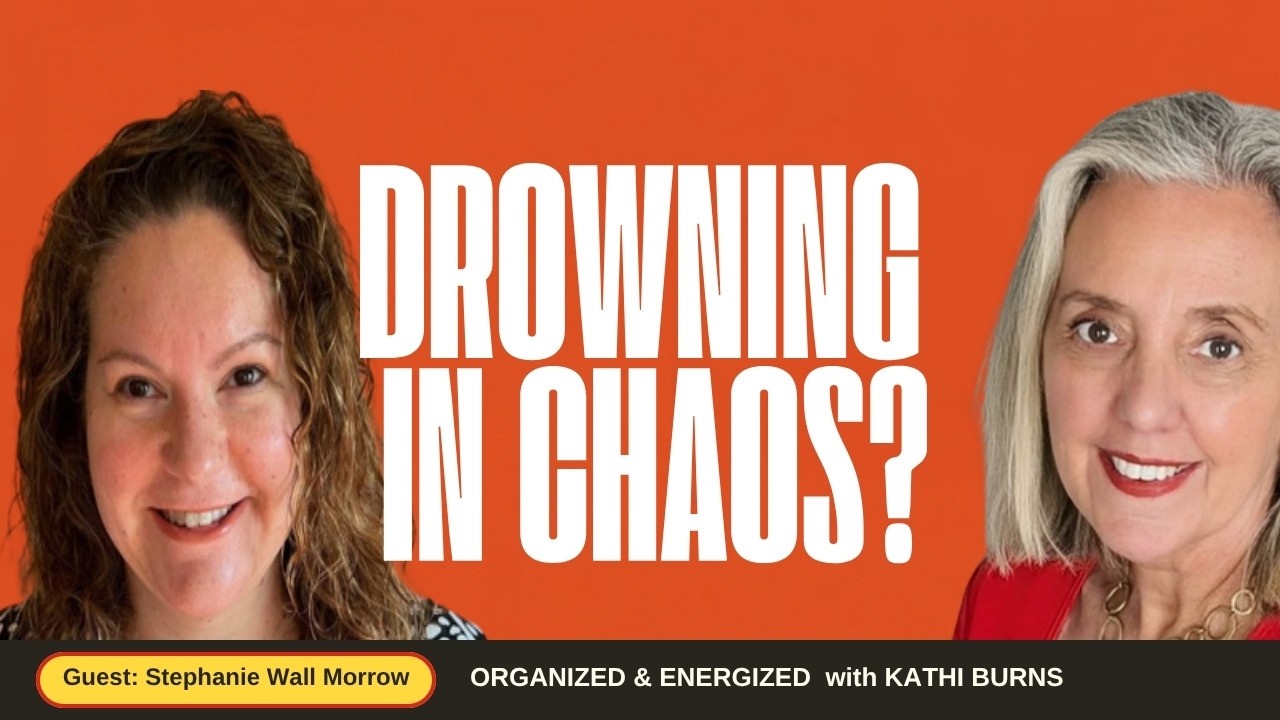
These episodes continue the same thread as this one: Lia Dunlap, Carly Church, Ginny Priem, Stephanie Wall Morrow also answer the question "How do I grow my business without burning out?", and the rest are the most recent conversations on the show.

 MotherhoodEpisode 147
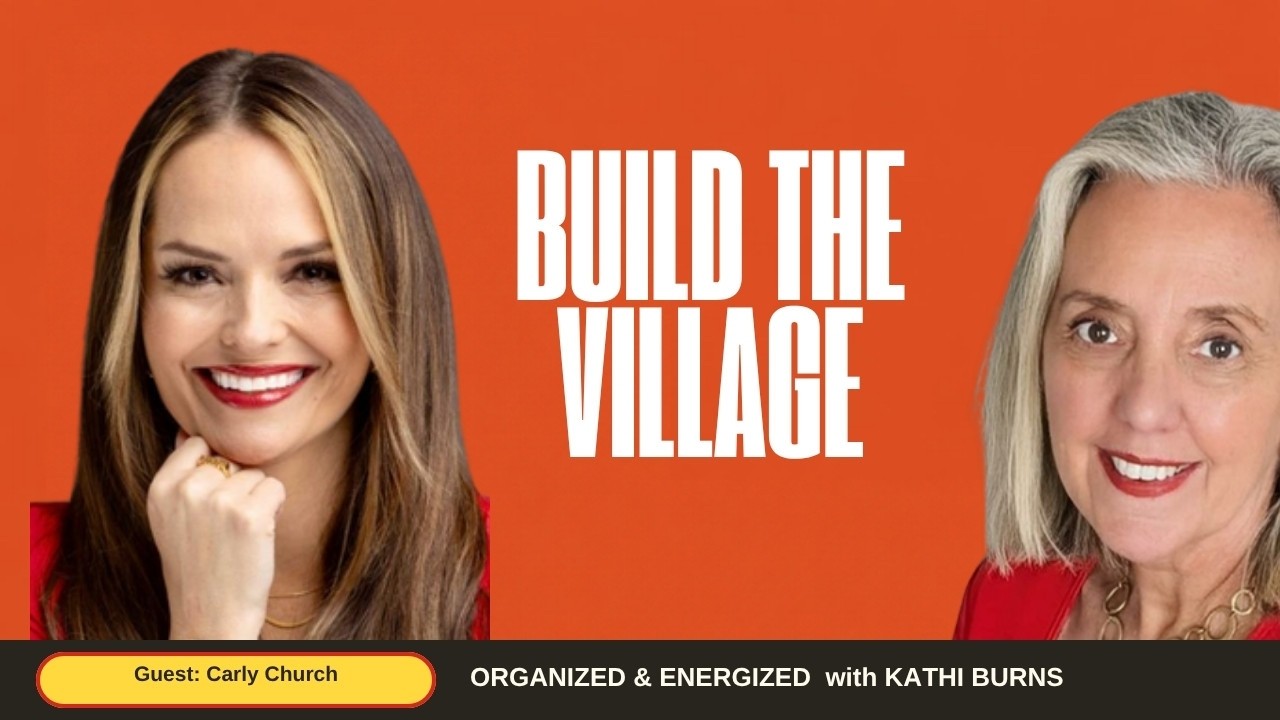
How To Build a Village That Supports Your Business and Your Life with Carly Church

See every episode on the podcast archive or filter by topic on the How do I grow my business without burning out? hub.
How can I support the show?
- Subscribe on Apple Podcasts, Spotify or YouTube, or add the RSS feed to any app.
- Rate and review. A rating on Apple Podcasts helps new listeners find the show, and Kathi reads every review.
- Share the episode with one business owner who needs it; the share buttons are at the top of the page.
- Grab a free eBook: 6 Steps to Organize & Energize Your Home, 6 Steps to Organize Your Home Office or 6 Steps to Organize & Energize Your Life.
- Work with Kathi. The Business Logjam Session is a private 75-minute session to find what is holding your business back.
- Be a guest. Apply here if you have a story about clearing the obstacles in your business.
What did they say, word for word?
The transcript below is edited for readability: filler words and false starts are removed and speaker names are added. Nothing was added or summarized.
Read the full transcript +
Kathi: Hi, everyone. This is Kathi. I'm back, and I'm with Sabrina Victoria of Her Nation, and we're here to talk about rising above the rubble: how to come up happy and thriving after you go through some stuff. So, hi Sabrina. How you doing?
Sabrina: Hello. I'm doing so good. Thanks for having me.
Kathi: Absolutely. I'm going to take off my glasses to talk to you. So tell me, Sabrina, you're at Her Nation. Tell me a little bit about Her Nation, because I'm very, very intrigued by what you're building there with your tribe.
Sabrina: Yeah, definitely. Her Nation is a community that actually came out of COVID. We're all about community, we're all about networking. It's basically for women business owners who are looking for some system support. So we have the front facing, which is the media. We do podcasts, panels, live events. We just launched our digital magazine this year. The back side of the business is the educational part. We do masterminds, networking, sales workshops, business workshops to really help women thrive and build a sustainable business: the foundation, the framework, the structure, the systems that are necessary.
Kathi: Love it. So what brought you to this? What's a little bit about your backstory?
Sabrina: Yes. So I was actually raised as a Jehovah's Witness, and I got pregnant at the age of 20, and I wasn't married.
Kathi: Ooh.
Sabrina: Yeah, so because I wasn't married, I was what's called disfellowshipped or disassociated, and I actually lost communication. I lost my entire community, my entire immediate family, and every friend I had ever known in my whole life.
Kathi: Wow.
Sabrina: Yeah. So because of that situation, the life that I led was very dark, dingy: single mom, unworthiness, sinner, ended up in an abusive relationship. It's a whole long story. But on the back end of that, falling into personal development, learning about myself, learning about codependency, empathy, learning about money, learning how to take care of myself, finally becoming an adult, I guess you could say. And really realizing that this thing that I had lost so long ago was missing, and that was community. Being people that you can lean on, having people that you can network with, talk to, ask questions to. There's so much that we don't know that we don't know.
There's so much that we don't know that we don't know.
Kathi: Yeah.
Sabrina: And when we can get around individuals who've lived life, who've done things, that's when we can really start educating ourselves and really start pulling ourselves from dark places.
Kathi: That's amazing. So it came out of your own need for community, and we all need community. And actually that's why I have my podcast: to let other women entrepreneurs know that you're not alone out there. There's a whole lot of us that are rallying for you to be more successful in your business, and there's so many resources. And that's specifically why I wanted to bring you on, Sabrina, to just let people know that there's yet another community called Her Nation. I'm very impressed by what you're doing. Talk to me about the magazine. You've just launched the magazine. I'm very excited about that. I'll be a contributing writer for that.
Sabrina: Thank you. Yeah, so Her Nation Magazine concentrates on three categories: health, wealth, and leadership. The reason I picked those three is because I feel as if there's a large amount of women who, right when they hit around 40, look around and their health is not where they want it to be, and/or their wealth is not where they want it to be, and/or their leadership, their voice, their power isn't where they want it to be. And a lot of times we're so entrenched in working on our family, working on communication, working on relationships, that ourselves, our voices, our health, our own bank accounts get pushed to the side. We'll take care of that later. So really honing in on those three things. I think they're the three things that are the most powerful things in our life, and the areas in which a lot of us are lacking. So bringing in women like yourself who are experts in certain areas of that, putting it all together in one spot in this digital magazine called Her Nation, so that women can come in and start to educate themselves on these things that they're not necessarily paying attention to right now. So really collecting a lineup of brilliant women who specialize in these three areas to create some really awesome learning material for the women out there.
Kathi: Yeah, it's really needed. I was just reading an article yesterday, I think it was in Forbes, that 66% of women are living paycheck to paycheck. And that's very sad. And we're all underpaid anyway, unless we're entrepreneurs, and then hopefully we're overpaid, or paid what we deserve, because we are entrepreneurs. But the majority of women that are in just regular jobs, they're underpaid or they're underserved. So I love what you're doing with the magazine, and actually with the community as well. So tell me a little bit about a story of one of your members and what's happened with them as they've been involved with your membership tribe.
Sabrina: Ooh, great question. Great question. You know what? I'm going to say this is the majority of the women I have heard this from. The awesome thing about the group is it's not a course. It's not a program. So we're not systematically learning things that maybe we don't need to know. I know a lot of times I've taken courses before and there's one certain area that I really want to know about, but I have to wait till I get to module seven to learn the thing that I'm really here for. But then I get sidetracked before module seven, because I'm over it by module four, and then I never learn the thing I'm supposed to be learning. So the really awesome thing about our community is it's open forum. There's a lot of talking. There's a lot of communication. Mastermind. It's talking, speaking to each other. So any questions, any insight, any feedback that you need is taken care of immediately. Whether it's in our online forum that we have, we use Circle, there's a platform called Circle where we're all talking and chatting and asking questions all day, 24/7, just businesswomen. Or in our actual Zoom calls where we are speaking out loud. We can just ask questions out loud right there on the spot and get a handful of women who have done it, been there, have advice, and can just answer your question immediately, versus having to go through this whole rigmarole watching 17 YouTube videos to get the answer to our question. So really the feedback is just the speed. The speed at which they are able to go from A to B, B to C, C to D, because of just the fast interaction. They're not having to sit here and mull over this whole thing and wait, and all of the sugar coating and the roundabout. It's just next, next, next, next, and it's really creating some really awesome speed for them. That's really been the biggest feedback.
Kathi: Speed, I like that. Speed of implementation.
Sabrina: Yeah, absolutely. The whole thing is just, when it comes to business, it's the speed at which you're going from first encounter to money in your bank account. That's all we're trying to do, in actuality. So all these little hurdles that we're having in our world, like I don't know how to link my calendar, I don't know how to link this, it's creating distance between meeting people and money. So when we can start to close all those gaps faster, the meeting and the actual taking of the cash to keep your business afloat, it's shorter and shorter, and that's what we're really trying to do.
Kathi: I love that. What's the biggest obstacle that you've overcome since launching your business yourself?
Sabrina: Everything. I'm fully transparent that I have no idea what I'm doing while I'm doing it, ever. I'm totally new to the online business. Her Nation is only three years old. We launched in 2021. I've been in door-to-door and business-to-business sales my whole life. So 15, 17, whatever it is, 20 years of literally door-to-door sales, straight commission.
Kathi: And what did you used to sell?
Sabrina: It's the industry I was in. I started out with newspapers. In Chicago I worked with one of the largest newspapers in the country, the Chicago Tribune.
Kathi: Mm-hmm.
Sabrina: And yeah, I just kind of grew from there. I worked for a few papers in Chicago, a few papers in Ohio, a few papers in Pennsylvania, and a few papers down here in Florida. And I was at one point running four offices in six different states with a dozen newspapers, all running sales reps. Doing it all, training myself, and then also training an entire team on how to do it. So that's where I came from. I came from tangible ones where we're holding things. We have forms to fill out. We're at the door. We're meeting. We're greeting. We're touching. We're holding. We're hugging. Versus going into this 2D world. It's totally new to me. All the tech is totally new to me. We were still filling out forms back then.
Kathi: Yeah.
Sabrina: And so I did do other products since then, but that was the main one that really got me started. But anyways, COVID is what really threw me into this. I was working with sales offices previously, and I had no clue what I was doing. And I always say that that is the strength of my business: while I'm telling these women that we're helping you build businesses, I am literally building my business at the same time. So they're actually, in real time, getting to see me build it out while they're in it. And the cool thing, which is also really good feedback, is it's really keeping them on par, because there's no conversation around excuses. Because they see my progress and they're looking at themselves and they're like, "Oh, we can't be procrastinating, because look at the steps that she's taken since we joined. We need to be right there along with her. She has no excuses. She doesn't know what she's doing either."
Kathi: I love that. In my last podcast, we were talking about authenticity, and just being who you are makes you relatable, makes you trustable, makes you grow a tribe, which is exactly what you've done. So for anyone listening out there, the big key here, I think, is just be yourself and be transparent, and don't try to be something that you're not, or try to act like you know something that you don't. Because I think what happens, and you probably know this as well, Sabrina, is you act like you know it, then you don't get the help that you need.
Sabrina: Yeah.
Kathi: And then they're like, "Oh, she already knows that stuff."
Sabrina: Exactly. Yeah, and then you don't feel comfortable asking, either. No one's telling you and you don't feel comfortable asking. So yeah, 100%. The cool thing about opening and running a business is there's different areas. When I was first starting in sales, I didn't know what I was doing either. So you have to learn as you go, but as you're going, you go from amateur to knowing a little bit to knowing it, then you become an expert, then you become whatever the next word is. But that's the same with this. So the cool thing about it is there's perks every single time. When I was just learning door-to-door, the perk was I could literally go to the door and be like, "I have no idea what I'm doing. This is my first day." And I could play into that for six months. "Today is my first day. I just started. I don't know what I'm doing. Sorry." You could play into that. Then as you learn more, there's other perks. So as you become an expert, there's perks along the way. So I'm just playing into that same thing. Right now, I'm in my beginning stages. I'm three years old. So I'm playing into, "I don't know what I'm doing. Do you know what you're doing? Let's do it together. Let's not know together. Let's just figure it out together." But as my expertise grows, my community will grow with me, and so will my language around my business. That's when you can start raising your prices. That's when your value can start going up. All the things. But you have to be patient with the process and how that looks.
Let's not know together. Let's just figure it out together.
Kathi: Yeah, absolutely. You're birthing a business, and I love the fact that you say, "I'm a three-year-old." It's brilliant. And it's so true. I think a lot of people, when they start their businesses, need to feel like they know everything so that they can make the money. And I do believe that, just like you said, it's kind of the inverse. If you really show people "I'm learning as I go," you're more authentic, and therefore more believable, and therefore more monetizable, I think. People will trust you. So, 20 years old, you're out of everything. If you had to tell your 18-year-old self anything, what advice would you give her? This is before the big thing happened.
Sabrina: Ooh, 18. Okay, what would I tell my 18-year-old self? Can it just be a sentence?
Kathi: Absolutely.
Sabrina: Okay. So the mantra that I've actually been carrying with me for a while, which I think is totally relatable, is something that I've been saying to myself since I was 26 years old. It came to me because I was listening to a podcast of some sort, and they were talking about writing a list of all of your wins, all of the things that you've done, all the things you've accomplished, all the challenges that you've overcome. And I really came to this realization that I'm capable of doing hard things. And so my mantra became, it's simple: everything's going to be okay. Because we get all up in our head, we get all full of anxiety, we get all of this overwhelm. It's like the new word right now for all female entrepreneurs: "I'm so overwhelmed. I don't know what to do." I say, "Grow up. You need a list of all the challenges that you've gone through as a reminder that you got this."
I really came to this realization that I'm capable of doing hard things.
Kathi: Mm-hmm.
Sabrina: And everything's going to be okay. Just take a break. Come up with a plan. So I think that would be it. I think it would be a reminder at 18, before all the crap hit the fan. Everything's going to be okay. It's all going to work out.
Kathi: Yep. I love that. I think it's so very true. And it's a good reminder, because I think whenever we're starting to freak out, we're future pacing anyhow. We're worried about what could happen as opposed to what's actually happening in our life right now. I mean, I fall into that, and then you fall into fear, because you're trying to guess the bad thing that's going to come around the corner. And it really takes being present and knowing that right now everything is okay, and everything will be okay. Everything always works out for itself. So thank you for that. That's a really good reminder for everyone listening, and for me.
Sabrina: Yeah, it's true. It's a truthism.
Kathi: So what else should we talk about? What's on your mind? Anything you want to chit-chat about?

Sabrina: Ooh, what's on my mind? Well, because you're all about organization, I wanted to talk a little bit about time management.
Kathi: Ooh, yeah, let's, real quickly.
Sabrina: Yes. It's always a subject, especially in the world of entrepreneurship: how do we manage our time? So I talk a lot about how the process of managing time really isn't a thing. Like, you and I have been talking for 26 minutes now, and that messed me up, because the timer isn't congruent with what we're actually doing here. So anyone who's looking at the clock has it at 26. You've been listening to us for maybe 15. We were chit-chatting beforehand.
Kathi: We were chatting before the podcast.
Sabrina: Anyways, you can't manage time. We can't take this minute and put it over here, and we can't move this hour and put it over here. Logically, we can't Tetris it. So we actually can't manage our time, but what we can manage is our energy and our focus.
We actually can't manage our time, but what we can manage is our energy and our focus.
Kathi: Mm-hmm.
Sabrina: That's what I really talk about: when is your peak energy? Where are the peaks of energy through the day? Some people are like, "I'm a total morning person." Some people are like, "I'm a total night owl." So when is your peak energy, and then what are you choosing to focus on during those peaks of energy? And that is how you ultimately manage your time. So often I talk to morning risers, morning people. They're like, "I'm a morning person." But if you ask them what they do in their morning, they meditate, they eat their breakfast, they might call their mom, maybe do a little laundry, maybe go to the gym. All very productive stuff, but nothing for an entrepreneur that's actually making them money, nothing that's actually having them use their brain. Then noon rolls around and they're hungry, they eat something. Then that afternoon lull comes in. It's 3:00 and they're like, "I haven't done anything to make myself any money, and now I'm tired." We're taking a nap, we're picking up kids from school, we're maybe trying to sit down at the computer, but our brain isn't working, because we're doing everything backwards.
Kathi: Mm-hmm.
Sabrina: So I always say, "Listen, don't worry about managing your time. Figure out when your peak energy is." Usually people have one or two big peak energies. You have to know where it is.
Kathi: Yep.
Sabrina: And then concentrate. Have a list of hard activities: the money-making activities, the phone calls you don't want to make, the programs that you're supposed to be creating but you don't have the brain power to do. All those hard things need to be getting done during those three-to-four-hour peak energies. And, we're talking about speed, the amount of speed at which you will work during those times, if you set it, is astronomical. You can get done in four hours what it would normally take you to do in 10 hours when you're working during those peaks.
Kathi: Very, very smart girl. I love that. And you can't make more time. The only thing you can do is be more effective with the time that you have, because once it's gone, it's gone, right?
Sabrina: Exactly.
Kathi: So yeah, I think that's fantastic advice. I talk all the time about what's your biological rhythm. When are you up? When are you down? When are you sleepy? So on and so forth. And you're right, it's exponentially faster. You get stuff done exponentially faster when your brain's on fire.
Sabrina: Yeah. And people ask me all the time, "I don't know how you do what you do. How are you always getting so much done?" It's like, "Girl, I know my energy peaks." So I don't mess with when I'm in a low. I have lows. I don't do anything during my lows. I'm doing laundry, I'll eat, I play on TikTok, I grab a snack, I call my mom. We're in a low. I'm not trying to force myself to work. I make sure that I'm working during my peaks, and that's why it's so quick.
Kathi: Yeah, I love that. So I have now decided, and for the past decade or so, I love my little 20-minute afternoon nap. That's what I really need, and I'm embracing it. It's like, "I don't care. I'm in nap time." My sister makes fun of me all the time: "You're taking a nap." I'm like, "Yeah, I'm taking a nap." A 20-minute professional napper. It puts me right back on.
Sabrina: I love that.
Kathi: We have to learn what works for us and when our energy is there. So that's brilliant advice, Sabrina. You're my kind of girl. Love that.
Sabrina: Yes.
Kathi: So let's see. Do you have any favorite hacks that you use to get organized that you've learned in the infancy of your business, things that really help you besides the time thing? Any tech or any scheduling or anything like that that has been working for you?
Sabrina: You know what? I have not started to do this, but I'm going to talk about this. Today, a couple hours ago, I went on a call with a man and seven other people. This guy stopped doing networking calls. So one of the things that I've always bragged about, for the three or whatever years I've been doing this, is I talk to three to five strangers every single day. So every day my calendar is booked with three to five random stranger calls. You were a random stranger call. In order to continue networking, building my business, building rapport, doing all the things, making sales. And it's very time consuming. People don't always show up. You just had one of those. It's not always a productive phone call. So this guy is like, "I'm not doing those anymore. I do one call a week. Whoever books, books." And it's a 90-minute call, and everyone networks together. So you're not just meeting one person, you're meeting all the people, including him, online. And then if there is a rapport between you and him, then he asks for a podcast, for a second call, for whatever it is, right there in front of everybody. So there were seven of us on the call, and three of us: me, he asked to do a podcast; another girl, he asked to do a podcast; and a guy, he asked to do a follow-up call. All those other people weren't anybody that he was interested in working with. However, they all got something from it, because we were all networking together. So I gave a couple referrals out. I shared a couple platforms. Other people did. So we all got something out of it. It wasn't a huge waste of time for any of us. And then he didn't waste… how much time is seven people? That would have been like two hours, plus all the time to go through, wait, some show, done. Who knows how many people didn't even show? So there might have been three other people that were supposed to show that he would have been sitting here waiting for, and they never even showed.
Kathi: So he's the organizer of it. He organizes his own little…
Sabrina: Yes. Yeah. I was blown away. So right before I got on the call with you, I was talking to one of my girlfriends in my community, and I said, "Listen, this guy's running this call. I'm changing everything up in my business." She's like, "Tell me." I told her all about it. Both of us are going to start.
Kathi: Love it.
Sabrina: So yeah, going forward, we're going to just start and just see how it works. But absolute brilliance. And when you were talking about speed, when we're talking about organization, when we're talking about being more… what would be a word for that?
Kathi: Just implementable. Something you can implement like that.
Sabrina: Yeah, yeah.
Kathi: I love that. Are you familiar with Alignable? Do you ever go into that community?
Sabrina: I get emails from them. I'm signed up. I was signed up like freaking 10 years ago, I remember.
Kathi: Exactly. And the same thing too. I've been hitting and missing and just kind of grooving in it, and I found a very similar thing where you join the different groups in Alignable, ones that you resonate with, like women business owners, female entrepreneurs. I'm in one that's the working parents, business owners who are parents. And it's a similar thing where you can go on and meet a whole bunch of people, speed networking, speed dating so to speak, and then Alignable will send you the connections that you actually connected with, and you can decide whether you want to follow through or not. So it's a similar thing, but I love that idea. Anytime that you can use your time with more people, I think it's better, because then you can see who you do resonate with and who you don't.
Sabrina: Absolutely.
Kathi: Yeah, I love that. That's great advice. Great tip. If you're listening, you can go out and create your own little mastermind. Does he call it a mastermind?
Sabrina: He calls it the game plan. So he actually opens up with rules. He's like, "These are the rules to the game."
Kathi: I love it.
Sabrina: Yeah. It was really cool. But this is what I'm talking about as far as joining a community. H Club might not be your community, but it might be somebody else's community. These are the things. When you're in and amongst having conversations like this, you learn things, and then your entire business could pivot. Somebody here listening to this podcast right now could implement something like this that changes their entire business because of something that I said. When we're in these masterminds, this is what's going on. Little things like this are just dropped and you're like, "If I implement that, oh my gosh, it'd be a total game changer." And these are the things that are helping these women work faster in their world, with their business. It's changing everything because of the resources, because of the leverage, because of the educational pieces that they're getting.
Kathi: Yeah, thank you for that. That's exactly why I do this podcast.
Sabrina: There you go.
Kathi: Yeah. Let's do some implementation. It's always like, "Take what you want, leave the rest behind." And there's no one way to do anything. So if you resonate, you resonate. If you want to join Her Nation, go to Sabrina's website, and we'll put the link below as well. That is sabrinavictoria.com, and you can check out what she's up to and what she's all about. And she's a groovy girl. Is there anything that I should have asked you, or that we should have talked about, during this little short foray?
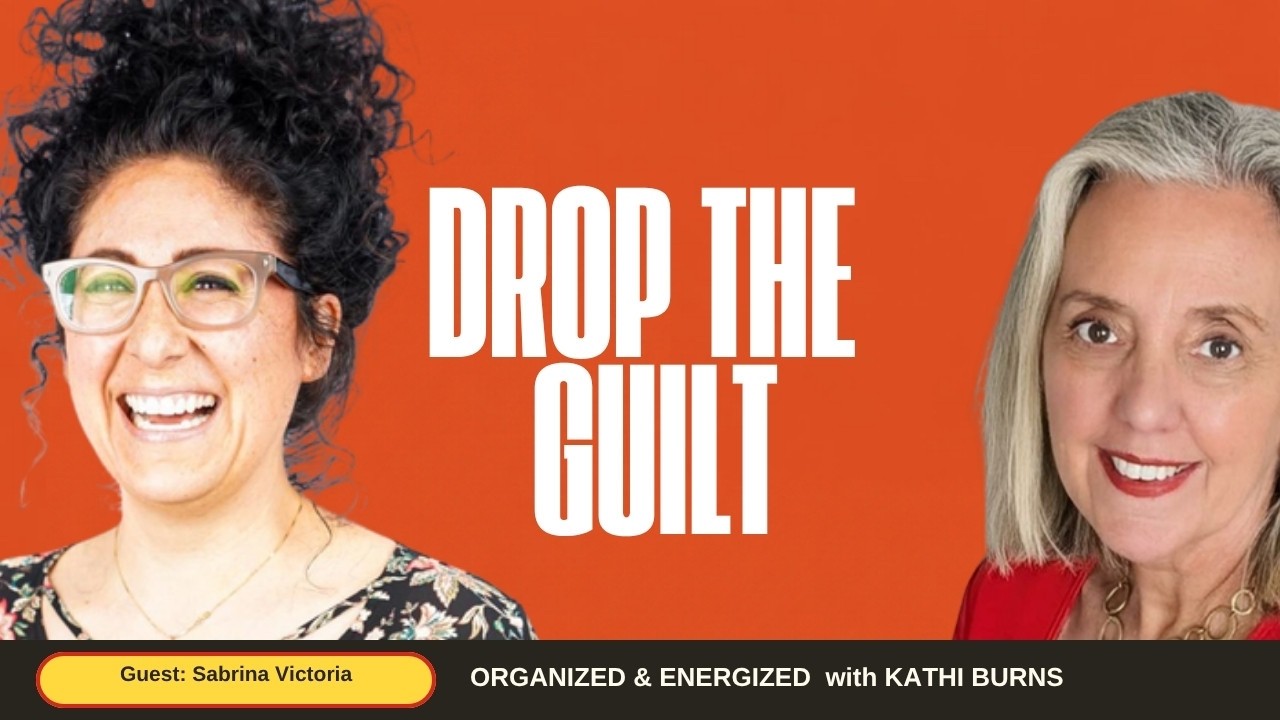
Sabrina: Okay, I will close with this. I believe that procrastination is a myth. This is why I think that. This is my viewpoint. I believe that procrastination is everywhere, all the time, always, and there's nothing you can do about it anyway, so why even hold the guilt or the shame around it? Like right now, Kathi and I are sitting here, we're being super productive. We're making content, we're teaching each other things, we're creating long content, short content, we're learning things about each other, we're building rapport, we're networking right now in real time, teaching people, being productive. However, we're also procrastinating at the same time. We could also be working on another part of business, we could also be working out, we could also be spending time with family, we could also be eating, we could also be getting our hair done. There's a thousand other things that we could be doing. So procrastination is just the lack of doing something. People always put this heaviness on it, like, "I'm procrastinating in doing hard things." We're procrastinating doing all things except for the one thing we're doing. That's really all it is. So instead of this heaviness of "I'm such a procrastinator, shame on me," and holding this identity of being a procrastinator, just sit in the realization that we're all procrastinating all the time, no matter what we're doing. And that's okay. And then just be more mindful of what we were talking about earlier with your peak energy times and your focus. So what are you choosing to focus on during your peak energy? And are those things that are creating goodness for you, for your health, for your wealth, for your family, whatever it is? That's where priorities come into play. So my advice is drop the guilt and the shame around procrastination. It's there. We got it. We're good. We're all procrastinators. Over it. Next.
So procrastination is just the lack of doing something.
Kathi: Yeah, drop the guilt. That's huge, huge. Many, many, many of my clients are in guilt all the time. So I'm going to use that one. See, you just taught me that.
Sabrina: Thank you.
Kathi: We all procrastinated in setting something aside to do something else. And I think with the procrastination guilt, "Oh, I should not have set that aside. I should have been doing that," we're second-guessing what we thought we should be doing, and then we go into guilt. So yeah, I love that. That's a great quote. That's going to be in the podcast notes, of course. Well, thank you for being on the show. I really appreciate your insight. I love playing with you, and it's always fun to get together, and we will do it again sooner. We'll do it again. And I'll love being part of your tribe.
Sabrina: Beautiful. Thank you so much, Kathi.
Kathi: Okay, Sabrina, have a fabulous day. And until next week, guys, we'll see you then.
Sabrina: Yes.
Where can I find the links and resources from this episode?
Connect with Sabrina
Organizations and companies
Inspired? Here Are Your Action Steps:
- Track your energy for a few days and note your one or two peak windows.
- Write a list of your hard activities: money-making work, calls you don't want to make, programs you need to build.
- Block your peak-energy hours for that list and protect them.
- Move laundry, snacks, social media and personal calls into your low-energy times.
- Write a list of every challenge you've already gotten through and keep it where you'll see it.
- Ask for help when you don't know something instead of acting like you do.
- Try replacing daily one-on-one networking calls with one weekly group call.
- Join a community where you can ask questions and get answers fast.
- Drop the guilt about procrastinating and choose what you focus on next.
Frequently asked questions
How to deal with lack of time management?
+
Sabrina Victoria says to stop trying to manage time, because you can't move an hour around. Instead, manage your energy and focus: find your one or two peak-energy windows each day, usually three to four hours, and do your hard, money-making work then. Lower-energy tasks like laundry, snacks and calls go in the lows.
How to stop being a procrastinator?
+
Sabrina's view is that procrastination is a myth, because everyone is always putting something off to do something else. She suggests dropping the guilt and shame and the identity of being a procrastinator. Then be mindful of what you choose to focus on during your peak-energy times.
What is Her Nation?
+
Her Nation is a community for women business owners that grew out of Sabrina Victoria's own need for support. Members talk all day in an online forum on Circle and on live Zoom calls, so questions get answered in minutes instead of waiting for module seven of a course. Sabrina says the biggest thing members report is speed.
What's the one-call-a-week networking idea?
+
Sabrina used to book three to five calls with strangers every day. Then she joined a weekly 90-minute group call where everyone networked together and the host followed up only with the people he wanted to work with. Nobody's time was wasted, and she plans to run her own version.
What would Sabrina Victoria tell her 18-year-old self?
+
Everything's going to be okay. She suggests writing a list of every challenge you've already gotten through, as proof that you're capable of doing hard things.
Who is talking in this episode?

About the Host, Kathi Burns
Kathi Burns, CPO®, is a Business FLOW Strategist based in San Diego. For the last 20+ years, Kathi has helped clients create systems they can stick to. She is the author of How to Master Your Muck, Organizing With Tetris and Home Organization, The Smart Guide, and co-author of four more titles; all are in Kathi's shop. Kathi's business has been featured on Good Morning America, and her advice has been featured in Oprah Magazine, Martha Stewart Living, Better Homes and Gardens and Entrepreneur Magazine.
More about Kathi · Shop Kathi's books · Business Logjam Session · Apply to be a guest

About Sabrina Victoria
Sabrina Victoria is a business strategist, speaker and the founder of Her Nation, a community for women business owners that she launched in 2021 out of COVID. Her Nation runs podcasts, panels, live events and Her Nation Magazine, a digital magazine on health, wealth and leadership, plus masterminds and workshops. Sabrina lost her entire community at 20 and went through hard years as a single mom before personal development helped her rebuild. Before Her Nation she spent 15 to 20 years in door-to-door and business-to-business sales on straight commission, starting with newspapers in Chicago, including the Chicago Tribune, and at one point running four offices across six states. She also hosts Her Talk Show.
Want help putting this into practice?
Book a Business Logjam Session with Kathi
A private 75-minute online session to find the one thing holding your business back and leave with your next steps, using the same F.L.O.W. process Kathi uses with her own clients: Focus on your goals, Locate your logjams, Outline your solutions, Walk away knowing your next steps.
Prefer to start small? Download Kathi's free eBook 6 Steps to Organize Your Home Office.
Published · Updated
This episode page is for general information. Guests speak for themselves, and their opinions, statistics and examples are their own. Nothing here is legal, financial, medical or mental-health advice; talk to a qualified professional about your own situation. Some links go to the guest's own products or free offers; addSpace does not earn a commission from them unless stated.