

Episode 105
with Lynn Whitbeck, sales consultant and founder and CEO of Strategic Sales Queen (formerly Petite2Queen) · August 7, 2026 · 32 min
Sales consultant Lynn Whitbeck says entrepreneurs stumble in sales when they make it about themselves, treat asking for the sale as pestering, and have no follow-up system.
Lynn uses a 13-step follow-up cadence and adjusts its timing by industry: faster in real estate, slower in business-to-business sales.
She says each follow-up should deliver something of value and mix methods, such as a phone call, a voice message, an email with a link and, for some businesses, a one-page fax.
Lynn suggests every business owner write five questions a client must answer "heck yes" to, including whether they truly want to help their own clients and whether relationships matter to them.
Her team runs on one color-coded master schedule in a Google Sheet, with shared folders that mirror the file structure on her own hard drive.
Published · Updated
What is this episode about?
Kathi Burns, CPO®, Business FLOW Strategist, talks with sales consultant Lynn Whitbeck, founder of Strategic Sales Queen, formerly Petite2Queen, about how to make sales easier by thinking like your client. Lynn has been selling since she was a Girl Scout, when she and a shy friend moved their cookie table to the grocery store and became the youngest girls in their state to earn the cookie sales badge. You'll hear the three stumbling blocks that hold entrepreneurs back, how to build a sales follow-up system around a 13-step cadence, why a voice message or a one-page fax still gets noticed, the five "heck yes" questions Lynn uses to choose clients, how she helped a client recover after he lost 80% of his business during COVID, and the single Google Sheet that keeps her team on schedule.
If you're denying someone that because you're not asking them for the sale or you're not following up, you are doing them a disservice.Lynn Whitbeck
Jump to links and resources · Part of How do I get more clients? · All episodes · Every guest
What are the key takeaways?
- Lynn's first tip is to love your product or service and the organization behind it, because that makes selling far easier.
- Sales gets easier when you reframe your perspective into your client's thinking, since the client is the one who decides to buy.
- Not asking for the sale or not following up denies people the value you deliver, which Lynn calls doing them a disservice.
- Lynn's 13-step follow-up cadence is timed to the industry, leads with value at every step, and mixes phone calls, voice messages, emails, packages and faxes.
- Most people who don't reply are simply busy, so a missing response is not a reason to stop following up.
- Lynn's three non-negotiables in sales are client thinking, follow-up and worthy intent, meaning a genuine desire to help and serve.
- A written plan, even on scratch paper, shows you where you are and what you forgot; Lynn says sales hardly ever happen by accident.

This episode is brought to you by the Business Logjam Session
A private 75-minute online session with Kathi Burns to find the one thing holding your business back and leave with your next steps. It is the same F.L.O.W. process Kathi uses with her own clients: Focus on your goals, Locate your logjams, Outline your solutions, Walk away knowing your next steps.
Find What's Holding Me BackInterested in sponsoring the show? Get in touch.Why do you need to love what you sell?
If you don't love your product or service and the organization behind it, Lynn Whitbeck says it will be really hard to sell it and feel good about it. Loving what you sell is what lets you come to clients with real excitement. Lynn learned this as a Girl Scout, when her dad asked where people buy cookies and she moved her table to the grocery store. She and her friend became the only two girls in their troop to earn the cookie badge.
What holds entrepreneurs back in sales?
Lynn names three stumbling blocks: entrepreneurs make sales about themselves, they feel asking is pestering, and they don't follow up. The client decides to buy, so think the way your client thinks. If you don't ask, you don't get, and skipping the ask or the follow-up denies people the value you deliver.
How do you build a sales follow-up system?
Build a sales follow-up system bit by bit, focusing every step on value and on why it matters to your client. Lynn ran her 13-step cadence live, week by week, then repeated it with each new prospect. Because so few people decide instantly, she says a planned follow-up becomes your competitive edge.
What does follow-up cadence mean?
Follow-up cadence is the timing of your follow-up. Lynn adjusts it by industry: rapid fire in real estate, slower in business-to-business sales. Respecting the cadence keeps people from feeling hunted or pestered. Each step should deliver something of value, so even busy prospects remember you helped them.
What are the best ways to follow up with a prospect?
Mix your methods, and start with the one people forget: pick up the phone. Lynn sends voice messages instead of typed direct messages because they feel like a human reached out, then follows with an email that links to something of value. For businesses she also sends packages or a single-page fax, which lands right on the desk because nobody gets faxes anymore. She keeps emails informational and entertaining, what her friend Tom calls infotainment.
How do you choose which clients to work with?
Write five questions a client has to answer "heck yes" to, and don't work with anyone who can't. Two of Lynn's are that the client truly wants to help and serve their own clients, and that relationships matter to them. She says a poor fit turns the 80/20 rule against you, so you spend 80% of your time on 20% of your clients.
How should a small business change its sales strategy when things change?
Keep your ear to the ground and adjust your sales strategy as the world changes; you don't have to be on the bleeding edge. During COVID, one of Lynn's clients lost 80% of his business in a single month. Together they built a new virtual service he hadn't offered before; he stabilized that year, was back where he had been by the first quarter of the next, and still offers it. Lynn made her own change too, moving from private clients only to a 13-week group program that is now rolling.
How do you keep a small business team organized with Google Sheets?
Keep one master schedule in a Google Sheet that everyone updates. On Lynn's team, Amanda handles the website, Rachel social media and Christina video and graphics; each fills in their slot and the row turns from red to green when it's ready. Their shared Google Drive folders follow the same structure as Lynn's own hard drive, and files are backed up to separate cloud storage. Her rule: don't overcomplicate it.
Where does each part of the conversation start?
- 0:00 Meet Lynn Whitbeck
- 0:23 Where the Petite2Queen name came from
- 1:36 The Girl Scout cookie badge
- 3:30 Love what you sell
- 4:10 Her first sales job
- 6:19 Treat the gatekeeper well
- 7:13 Three sales stumbling blocks
- 8:43 Build a follow-up system
- 9:53 Her 13-step cadence
- 12:06 Pick up the phone
- 13:27 The one-page fax
- 14:51 Infotainment
- 15:25 Her ideal client
- 16:32 Five heck yeses
- 17:32 When a client lost 80% of his business
- 19:13 Moving to a group program
- 20:23 Client thinking, follow-up and worthy intent
- 21:35 How she celebrates wins
- 24:10 One master schedule in Google Sheets
- 26:34 Advice to her 18-year-old self
- 27:46 Her sales strategy checklist
- 28:44 Have a plan
- 29:44 Wrap-up
What resources were mentioned?
- Lynn's free sales strategy checklist (four pages; download link to be added in the show notes)
- Google Sheets
- Google Drive
These episodes continue the same thread as this one: Sue Kirchner, Yvonne McCoy, Louise McDonnell, Allan Ngo also answer the question "How do I get more clients?", and the rest are the most recent conversations on the show.


 Social MediaEpisode 144
How To Use Social Media More Strategically In 2026 To Find New Customers with Louise McDonnell

See every episode on the podcast archive or filter by topic on the How do I get more clients? hub.
How can I support the show?
- Subscribe on Apple Podcasts, Spotify or YouTube, or add the RSS feed to any app.
- Rate and review. A rating on Apple Podcasts helps new listeners find the show, and Kathi reads every review.
- Share the episode with one business owner who needs it; the share buttons are at the top of the page.
- Grab a free eBook: 6 Steps to Organize & Energize Your Home, 6 Steps to Organize Your Home Office or 6 Steps to Organize & Energize Your Life.
- Work with Kathi. The Business Logjam Session is a private 75-minute session to find what is holding your business back.
- Be a guest. Apply here if you have a story about clearing the obstacles in your business.
What did they say, word for word?
The transcript below is edited for readability: filler words and false starts are removed and speaker names are added. Nothing was added or summarized.
Read the full transcript +
Kathi: Hi everyone. As promised, I'm back with Lynn, and we're going to talk about how to make more sales, better sales, easier sales, because Lynn is the sales queen. So, thanks for coming on, Lynn.
Lynn: Oh, Kathi, I'm so excited to be here and spend time with you. This is going to be wonderful.
Kathi: Absolutely. So, the Petite2Queen. I like that. I just have to ask you how you came up with that.
Lynn: Well, you can look at it a couple of different ways, but the real story is we were sitting around at the beginning of the company at a dinner, and I looked across at my team, because we were trying to come up with a name that would encapsulate women and diversity. I mean, I don't care if you've got purple hair and tats. It's about being a good person. And I just looked across, and they're size two to size six, and I went, petite to queen. And honestly, I checked right then on my iPhone, and sure enough, the URL was available, and I bought it at the dinner table.
Kathi: Love it. Love it. I love going on to GoDaddy and saying, can I buy that domain? And for those of you, you'll know because you'll see it in the show notes, but it's petite, number two, queen.
Lynn: Yeah. Although I do own multiple versions of it.
Kathi: Of course, don't we all? We always have to do that. So, talk to me about the beginnings of your career. I know you're a master at client interactions and getting sales. But how did that all transpire? What's your background?
Lynn: Well, I've been selling since I was a Girl Scout. In fact, that transitional year from being a Brownie to becoming a Girl Scout was the first year I could sell cookies. And that year, there was this very special cookie badge. I coveted that badge, and I wanted that badge. So I got my friend Judy, who is very shy and introverted. I got our cookies, and that first day I hit our neighborhood, pulling my little red wagon loaded with cookies door to door. At the end of that day I went, wow, this is going to be really hard to get this cookie badge, because you had to sell a truckload, literally a truckload of cookies, to get that badge. I talked to my parents, and my dad asked me a very simple question: where do people buy their cookies? And I went, at the grocery store. So the next day, there we were at the grocery store. Now, remember I told you my friend Judy was really shy and introverted. When we were doing the door to door, she stayed at the sidewalk with the wagon. I was the one running back and forth. So now I was like the Walmart greeter. I was pulling them into the table. Judy took their money and handed them their cookies. And at the end of cookie season, we were the only two girls in our troop to win that cookie badge, and we were the youngest two girls in our state to win that cookie badge.
Kathi: That's an amazing story. That's so cool. Now all the Girl Scouts are always at the grocery stores.
Lynn: Well, it makes a lot more sense than them going door to door. But it really embodies what's joyful about sales. When you love your product or service, and you love the organization, it makes selling a whole lot easier. So my first tip, I have to tell you, is if you do not love your product or service, if you don't love the organization, it's going to be really hard for you to sell that product and to feel great about it and to come to your clients with that joyful, exuberant excitement.
When you love your product or service, and you love the organization, it makes selling a whole lot easier.
Kathi: I agree wholeheartedly. You have to be behind it all the way and feel like it's the next best thing. Otherwise, why would you be selling it?
Lynn: Absolutely.
Kathi: Okay. So we jump from Girl Scout massive cookie seller to what? What do you do next?
Lynn: Well, really we could just move on to after graduate school. I literally did start in sales by talking to the owner of the business. There were two partners, and I talked them into letting me go into outside sales, and I started on April Fool's Day. But that first year I outsold the junior partner, and the next year I outsold the senior partner. So sales just came really naturally to me, because my core value is to help and to serve, and sales is how you do that, because we provide products and solutions and services that help our clients. And it's an amazing way to really make a difference in their business. Now, I'm not saying it's world peace, but it really does. You're giving someone a gift of taking care of a problem or a challenge, or helping them move to the other side of something that was really blocking them and that they truly desire to resolve. So it really is a gift that you're able to then give to your clients.
Kathi: Yeah. Help and to serve. And if you're helping them and you're serving them, then obviously they're going to be drawn to you, because that's what everybody wants. They want to be helped, and they want to be served. There's been a weird thing about serving in my mind for the past few years. Do we serve people? I mean, we do, but do we want to be servants? I guess that's the thing.
Lynn: Well, I don't look at it that way. It's absolutely a mutually beneficial and an equal peer-to-peer relationship. It doesn't matter if you're selling to the president of the company or you're working with the person they've assigned you to help implement something. Even in my corporate sales career, I was great to the receptionists. They are the gatekeepers, and I would see so many people being absolutely rude to them. Now, first of all, they're another human being, so there's no excuse for that. And second, because I had a great relationship with the gatekeeper, when I came in it was, oh, well, just go on up, trot on upstairs. That was when I was physically going into the businesses I was working with. So I want everyone to really think about how they're approaching that, because every single person deserves to be treated with compassion, dignity and respect. And that's really a part of my core sales philosophy: that worthy intent. This is your genuine desire to help and serve others, to sell with intent and to create massive impact.
Every single person deserves to be treated with compassion, dignity and respect.
Kathi: Yeah, I like that. What do you think is one of the main stumbling blocks that entrepreneurs have when they're working on selling their product? Because a lot of the people that are listening have created this business, and they want to sell their product. What have you seen in your years of experience that holds them back? What's the big sticky point?
Lynn: Well, there are a couple of things. First off, they have to get out of their own way. It's not about them. It's your client who decides to purchase. They're the ones who decide to make this commitment. So it's about them, and you've got to reframe your perspective into your client's thinking. So that's first. Second, I want them to rethink their mindset. Many people are uncomfortable with sales. They feel like they're asking or they're pestering. Well, I'm here to tell you, if you don't ask, you don't get. So you've got to ask. But I want them to rethink what impact they're delivering, whether it's a product or service. That is the value that you're delivering, and it's important. So if you're denying someone that because you're not asking them for the sale or you're not following up, you are doing them a disservice. So there's some mindset work for some people. That's stumbling block number two. And stumbling block number three is they're not following up. They don't have a system. I mean, you're all about organizing things and having this well-thought-out system. Well, let me tell you, you need the same thing in your follow-up, because a very small percentage of people are ready to make an instant decision. It's one thing if you're buying a box of cookies, but it's completely different when you're investing in your business or in yourself, or you're buying a specific product or service. And in some cases, there are other people that need to be involved in the decision-making process.
If you're denying someone that because you're not asking them for the sale or you're not following up, you are doing them a disservice.
Lynn: So I want people to start thinking about how they are going to follow up, and there are a couple of core principles on that. Just as when you're going to start organizing, it's not like all of a sudden you're going to wave a magic wand and it's all going to be gone. No, it's bit by bit. You eat a meal one bite at a time. So it's the same with building your follow-up strategy. But as you build it out, and you're building it on the fly, you're building something that's focused on value, that's focused on why it matters to your client. I have a 13-step cadence now. I've done it live, week by week, and now you can rinse and repeat. You can start with the next person: one person is at week two, and the next one is starting at week one. So having a system and having a well-thought-out plan that is directly connected to what matters to your client, that is going to be your competitive edge. Because, ironically, 80% of the sales are made by 20% of the people, because those 80% have been abandoned by all your competitors.
Kathi: Yeah. The old 80/20 rule. It's everywhere. It works in everything. It's just really interesting to me how the Pareto principle, no matter what you're talking about, is true. So you said you have a 13-step cadence? Is that what you said? Oh, I love that word.
Lynn: Lucky 13.
Kathi: Uh-huh. So, cadence strategy. Yeah, that's an interesting word. Why did you come up with that?
Lynn: Well, because the cadence is the timing. Depending on your product or service or your industry, you may need to adjust your cadence. In real estate, your cadence could be very rapid fire, whereas in the B2B world, you're most likely going to slow that down. So you plan that cadence. And the way you can avoid people feeling that they're being hunted, stalked, pestered, is to be respectful of the cadence. The second thing is that you're leading with and delivering value. Because then even if they're too busy, it's registering in their mind, top of mind, that you delivered something of value, even though they can't do anything with it because they're busy. Most times when people don't reply, it's because they're busy. Okay, people, they're busy. So when you do those two things… And then the last one is to change up the methods and what you're doing. Some people forget the most simple element. Pick up the darn phone and make a phone call. A human voice. If you are going to send them a direct message, if you can do it on the app and send it as a voice message, that is like a human touch, like a human being actually reached out to me. And you've planned what you're going to say. I call it either a dynamic duo or a triumphant triangle. There are a couple of different formulas that I use, but if you start with a phone call or a direct message, then you send an email with the information, with a link to the value. So there are a number of things that you can put together and assemble, as I said, on the fly, but with your client sharply in focus: what are their challenges, their pain points, what are their objections, so that you can be answering them as you're building your relationship block by block. You're building your credibility. You're building the trust. They're getting to know and like you.
Most times when people don't reply, it's because they're busy.
Kathi: Yeah. Well, that leads me to the question I was going to ask. Do you say phone calls? Do you say emails? And yours is, you mix it up. So you have a phone call, then an email, and then possibly a text or that kind of thing.
Lynn: Oh, yeah. I even include sending packages. Say you're selling into a business: most likely that business has a fax machine. So this is an out-of-the-box idea, people, tune in, because nobody gets faxes anymore. That's going to show up, slam, right on their desk. In fact, they may go running through the hall yelling, look, I got a fax. Literally one page. I have a whole formula for that. It depends, of course, on your clientele and where they hang out, but there are a lot of different ways that you can connect with people, and people are going to be receptive to different things at different times. So that's why you mix it up, because it keeps it fresh, it keeps it interesting, it keeps them engaged. Whether they're responding or not, they are hearing and seeing you.
Kathi: Yeah. And I think that a lot of solopreneurs and entrepreneurs get their feelings hurt because they're not being responded to, and they're thinking it's all about them. Oh, they must not like me. They're not realizing that that person has like 50 other phone calls waiting in the wings, or a thousand emails, as some of my clients have, and they can't just wade through all the information that's being sent to them.
Lynn: Oh, yeah. We're being bombarded every day. So really, deliver that value and find a way to make what you're doing informational and entertaining. My friend Tom calls it infotainment. And it truly does make a difference. Recently I had the president of a company forward one of my emails to a sales and marketing director, saying contact Lynn, and she replied back because she thought it was so funny. I was comparing a rumpled coat and The Great Mouse Detective with being a detective in sales, because you have to be a detective in sales. The rumpled coat, by the way, is Columbo.
Kathi: Ah, infotainment. I love that. So talk to me about one of your clients, before and after. What happens? Who is your ideal client that you love working with? And tell me a story.
Lynn: Well, I work with small businesses or micro businesses. It could be a solopreneur, but they might often have a VA or a couple, or they have a few partners, something like that. Or it's a small business where the founder is still doing all the sales, and they're at that cusp of needing to make a change because they've got too much business. They need some help with the sales. But to be honest, my number one thing about my ideal client is that they have worthy intent, that they truly desire to help and serve their clients. And the second thing is that the relationship matters to them. In my case, I want to build lifelong relationships, but they want to build a relationship with their clients. I say everyone should have five heck yeses: if your client can't answer heck yes to them, you are not going to work with them. Those are two of mine. And the reason for that is that it's a two-way street. You don't want to work with somebody who is not going to be a good fit, because that 80/20 rule is now working in your disfavor.
Kathi: Mm-hmm.
Lynn: You're spending 80% of your time on 20% of your clients. So it's really important to know that. And the biggest thing that people have after working with me is that they have a consistent, repeatable, scalable process. What happens is that they graduate, per se. They go on and do their things, and then they come back and rehire me when they're ready for that next stage, or when things change. I had a lot of people come back to me during COVID. I had one client who lost 80% of his business in literally one month. So it was: what were we going to do to save his company? And we did. We came up with a solution, and he stabilized that year, and by Q1 of the following year he got back to where he was. We built out a whole new virtual product, a service that he didn't have before, which he still has now. It's part of his big offering. But the thing is that things change all the time. It doesn't take a pandemic. There are other things that happen. Two years ago, most of us hadn't really heard about AI, and now it's everywhere. So I want everybody to remember that it's a constantly changing and evolving world. You don't have to stay on the bleeding edge, but you need to keep your ear to the ground and stay on top of those things, because you're going to need to make adjustments and refinements in your sales strategy.
Kathi: Yeah, absolutely. Tell me about a time when you had to adjust your sales, and what happened. We all have the ups and downs in our business. We all have things that are like the Hail Marys, or we rise up. What's happened with you in the time that you've been in this industry?
Lynn: Well, I'm a sales consultant, so previously I've done a lot of private client work, and what happens is I can only work with so many clients at a time. So one of the things was learning how to do a group program. The first time, it was a set program. It ran for 13 weeks, and I love the lucky 13. Now it's a rolling program, so it allows me to help more people, and I can see that ripple of them being able to sell their wonderful products and services and help more people. So it's a transition. Everyone has different transitions in their business.
Kathi: Yeah. What does that look like? It's funny, that's when people generally hire me, when they're in transition of some sort. They're trying to reinvent and rethink a way to do things.
Lynn: And it's perfect for you as well. That's why I think we're synchronistic.
Kathi: So you started it as just a group program, a set time, and then you're like, wait a minute, this isn't really quite working. Let's make it rolling, so anybody can enter into it at any time, but they get on the same tracks.
Lynn: Right, right. Because my three die-on-the-hills are in everything: client thinking, follow-up and worthy intent. So if you start in the closing month, everybody needs help closing anyway. There are a few modules that are not live, that are recorded, but everything else is all live. So of course, if you miss something, you can watch the recording. But everything I do is designed to really have that human-to-human interaction, because it sticks better. People can ask questions in the moment. They can get things sorted out. They can hear what somebody else is struggling with, and a light bulb goes off: oh my gosh, this is how I could do that for myself. So I'm really adamant about having live human-to-human interaction.
Kathi: Well, and that's sales. There's not a lot of sales that happens where people just click the button, unless it's a SaaS solution.
Lynn: Sure. Exactly.
Kathi: So when you have a big win or a success, how do you celebrate that?
Lynn: Oh, it depends. A month ago, I was at a speaking event, and I actually got sick the night before, and all of that day I was just dragging. Then when it was my turn to go onto the stage, it was like someone had flipped a switch. Ta-da. So I did my talk. At the end of the evening, the audience picked their favorite speakers. They brought up number three, they brought up the second runner-up, and I just thought, okay, it's not going to be me. There were some other really good speakers. And all of a sudden, it was me. I was the best speaker of that evening. So for that, I did share it with my audience. There were photos taken, and it's also a story I can tell. When you build a relationship with people, they want to celebrate your wins, too. But it's not all about me; that's sort of unusual. It's celebrating with my online family, but it's also with my team and my personal family. In fact, my little microphone trophy is right behind me right now. I put it right back there. So celebrating your wins, everyone needs to do that. And they can be a little win for the day. I've gone through a big move, and I'm going to tell you, I looked at the garage and went, I don't even know where to start. But when you work on just one area, and it takes a little while, all of a sudden you come in a few days later and it's like, wow, that area is clean. That's organized. It's ready to go. You feel great, you definitely have a dance party, and now you're ready for the next thing. And it's the same thing in sales. When you think through the sales process, the experience that you want people to have: you create a lead magnet. Well, what happens then? For goodness' sake, just don't let them drop off the face of the earth. They've got to be welcomed. You've got to start feeding them infotaining content. Make the connection deeper, brick by brick. So you have to have a plan, and then you implement that plan step by step.
Kathi: Yeah. I love it. Of course we're talking about that, which leads me into my question. What's your favorite organizing hack or program, or what's your favorite jam when it comes to getting organized for your business?
Lynn: Well, for my business, our team uses Google Drive. We also have a separate cloud storage, so that everything's backed up multiple times. I'm into redundancy. But one of the things that we do is decide what makes sense as to where it's put, and the file hierarchy actually mimics what's on my personal hard drive. So there's no question as to where it goes. But when there's a question about where something should be stored, we'll actually talk about it, or we'll look at it. Do we even need things here? What should we change? I try to make it as intuitive and as simple as possible, and then everyone uses the same process. So we have a master schedule for everything that's going on, and we've used the red light, green light, so people can tell at a glance. Different people touch it. Amanda touches it for the website. Rachel touches it for social. Christina touches it for video and graphics. They can tell, and they fill in their little slot, and they turn the color, and it's automatic. They just change it to ready, or ready for website, and the whole thing turns green.
Kathi: And is that Google Drive?
Lynn: It is on Google Drive. We use a Google Sheet, so I manage everything that way. Now, you can use all kinds of elaborate stuff, and that's cool, but I am not some giant Fortune 500 company. I never will be. A Google Sheet works great for me. That's another one: just don't overcomplicate it. There's no reason to overcomplicate things when it's not necessary.
A Google Sheet works great for me. Just don't overcomplicate it.
Kathi: Yeah, I'm with you on that. I like color coding your Google Sheets. That's good. And having the same hierarchy. I tell my people that all the time: let's use the same system for your papers and your digital. Let's just use the same system for everything for your team. That way it makes sense, and if anybody doesn't know, someone's going to know.
Lynn: Yeah. And you can always find something.
Kathi: Yeah. Okay, Lynn. So if you could turn back time and tell your 18-year-old self, who's already won the Girl Scout truckload badge, what would you tell her?
Lynn: You know what, there are certain things that I would love to change, but on the other hand, I think it's the journey that you go down. And would I actually change anything? No. I think I would just say, you've got this, girl. Go out there. It's about a life well lived. Maybe I'd tell myself to buy Apple stock. I don't know.
Kathi: Well, there you go.
Lynn: Yeah. And just make sure that you are in the frame of mind of helping and serving, and believing in what you're selling.
Kathi: Yeah. That's good. I love it. Okay, so I know you probably have a valuable free resource for people. And people, if you're out there and you're struggling with sales, you really need to consider this. So what is it, Lynn, that you're going to offer the audience here?
Lynn: I have a sales strategy checklist. This really will walk you through the sales process, and you can see if you've got a step missing, because sometimes why things aren't working is because there's a gap. It's real simple, four pages, and it's going to help you out quite a bit.
Kathi: Perfect. I love it. Anything that has to do with strategy, that's it. We'll put the download link in the show notes so that you can go ahead and download it and connect with Lynn. And I'm sure that she's available to answer any questions for you as well. So just check her out and connect, because we're all about connections here. That's the situation. That's the story. Let's connect. Let's become compadres in business, helping each other grow our businesses. That's what it's all about. Okay. So is there anything that we should have talked about? Any question that I didn't ask you, as we wrap, that you would like to talk about?
Lynn: Well, I do want to say that it's so important that you have a plan. When you don't have a plan, to a certain extent you're running around with your head cut off, or you're running with scissors. You don't want to do that. It's just not a good look, and things happen. So having a plan, even if it's on scratch paper, is going to help you so tremendously to know where you're at and to capture things like, oh, I forgot this, because you see it. I know that's singing to the choir here, but for those of you out there, this isn't a seat-of-your-pants thing. Sales hardly ever happen accidentally.
Having a plan, even if it's on scratch paper, is going to help you so tremendously.
Kathi: Yeah, I'm with you on that. Or your business and how it grows and scales. Love it. Well, thank you. This has been really, really awesome. I appreciate you. I appreciate the work that you do in the world. And I mostly appreciate your integrity and the fact that you have the litmus for what type of clients you want to work for and with. Because that's what it's all about: women helping women who are in sync, who have the same ethics and standards. So I do appreciate you a lot for that, Lynn.
Lynn: Oh, thank you, Kathi. It's been such a pleasure. And right back at you. You are so amazing at what you do, and I'm truly honored to be on your show. Thank you.
Kathi: Thank you. Well, until next week, guys, we're signing off, and I will see you on the next podcast.
Where can I find the links and resources from this episode?
Connect with Lynn
Organizations and companies
Inspired? Here Are Your Action Steps:
- Make sure you love the product or service you sell and the organization behind it.
- Rewrite your sales conversations around what your client wants and decides, not around you.
- Ask for the sale; remind yourself that not asking denies people the value you deliver.
- Map out a follow-up cadence with a set number of steps and timing that fits your industry.
- Give every follow-up step something of value, like a link, a tip or a useful resource.
- Mix your methods: call, send a voice message instead of a typed one, then email a link to the value.
- Write five questions a client must answer "heck yes" to before you take them on.
- Keep one shared master schedule, such as a color-coded Google Sheet, that your whole team updates.
- Set up shared folders with the same structure as your own files so nobody has to guess where things go.
- Write your sales plan down, even on scratch paper, and work it step by step.
Frequently asked questions
What does cadence mean in sales?
+
In sales, cadence is the timing of your follow-up. Lynn Whitbeck uses a 13-step cadence and adjusts the pace to the industry, faster in real estate and slower in business-to-business sales. Being respectful of the cadence is how you avoid people feeling hunted or pestered.
What is a good sales follow-up message?
+
A good follow-up message delivers something of value instead of just checking in. Lynn often starts with a phone call or a voice message, then sends an email with a link to something useful, built around the client's challenges, pain points and objections. She also makes messages informational and entertaining, which her friend Tom calls infotainment.
What holds entrepreneurs back in sales?
+
Lynn names three stumbling blocks. They make it about themselves instead of the client, they feel like asking for the sale is pestering, and they don't have a follow-up system. Since very few people are ready to decide the first time, not following up leaves the sale to someone else.
How do you choose which clients to take on?
+
Lynn suggests writing five questions a client has to answer "heck yes" to. Two of hers are that the client truly wants to help and serve their own customers, and that relationships matter to them. A poor fit means you end up spending 80% of your time on 20% of your clients.
How does Lynn Whitbeck keep her business organized?
+
Her team keeps one master schedule in a Google Sheet. Each person updates their slot, and the row turns from red to green when it's ready. Her shared Google Drive folders follow the same structure as her own hard drive, so nobody has to guess where a file goes.
Who is talking in this episode?

About the Host, Kathi Burns
Kathi Burns, CPO®, is a Business FLOW Strategist based in San Diego. For the last 20+ years, Kathi has helped clients create systems they can stick to. She is the author of How to Master Your Muck, Organizing With Tetris and Home Organization, The Smart Guide, and co-author of four more titles; all are in Kathi's shop. Kathi's business has been featured on Good Morning America, and her advice has been featured in Oprah Magazine, Martha Stewart Living, Better Homes and Gardens and Entrepreneur Magazine.
More about Kathi · Shop Kathi's books · Business Logjam Session · Apply to be a guest
About Lynn Whitbeck
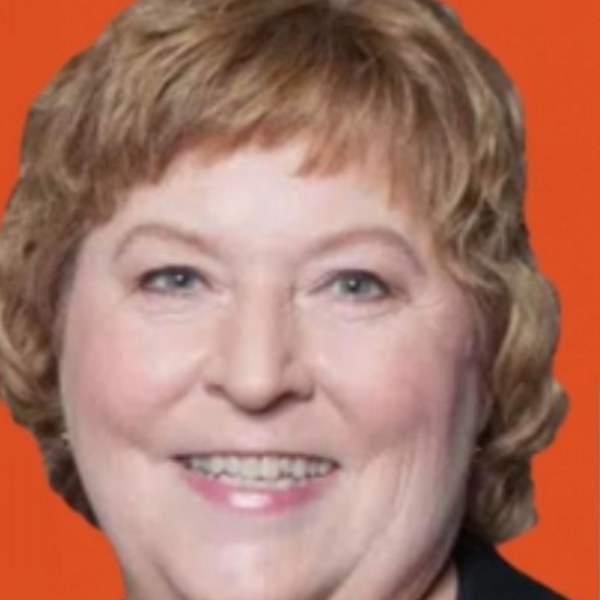
Lynn Whitbeck is the founder and CEO of Strategic Sales Queen, formerly Petite2Queen, a sales strategy consulting and training company for business owners, entrepreneurs, solopreneurs and startups. She has been selling since she was a Girl Scout, when she and a friend became the youngest two girls in their state to earn the cookie sales badge. After graduate school she talked her way into an outside sales job and outsold both partners of the business in her first two years, and she later served as a corporate VP of global sales. Lynn now works with small businesses through private consulting and a rolling group program, helping them build a sales process they can repeat and scale.
Want help putting this into practice?
Book a Business Logjam Session with Kathi
A private 75-minute online session to find the one thing holding your business back and leave with your next steps, using the same F.L.O.W. process Kathi uses with her own clients: Focus on your goals, Locate your logjams, Outline your solutions, Walk away knowing your next steps.
Prefer to start small? Download Kathi's free eBook 6 Steps to Organize Your Home Office.
Published · Updated
This episode page is for general information. Guests speak for themselves, and their opinions, statistics and examples are their own. Nothing here is legal, financial, medical or mental-health advice; talk to a qualified professional about your own situation. Some links go to the guest's own products or free offers; addSpace does not earn a commission from them unless stated.