

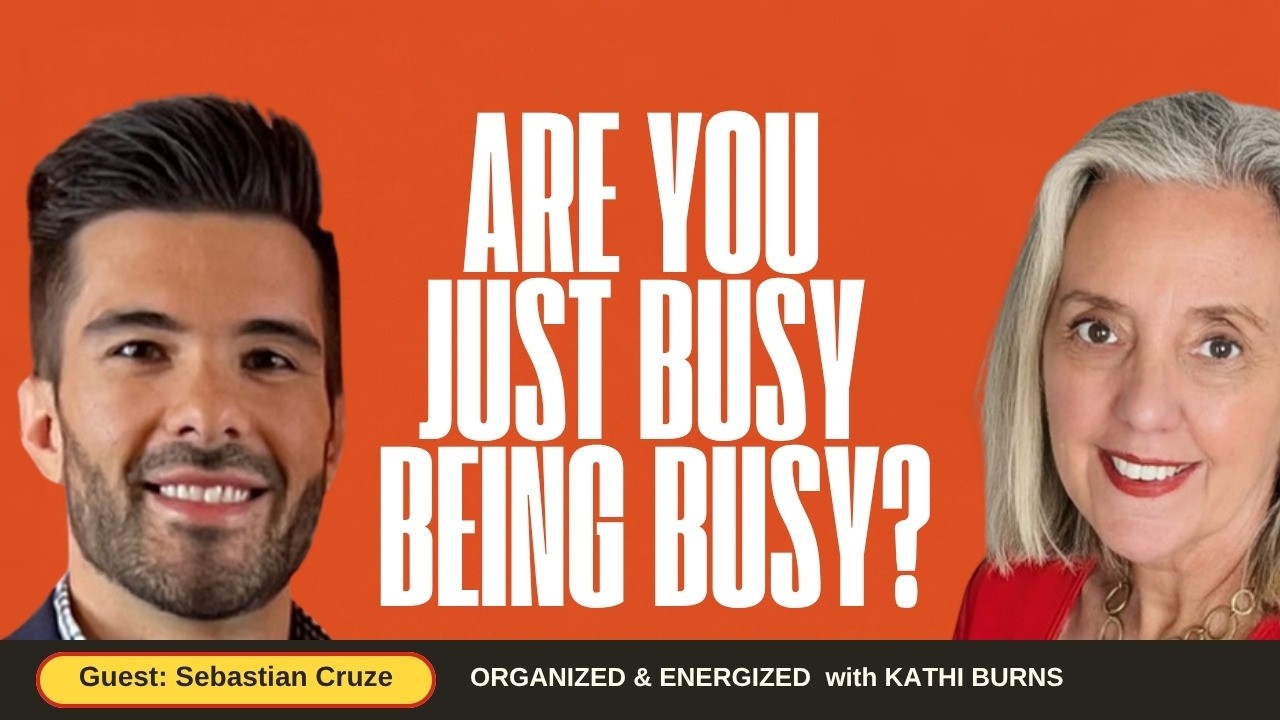
Episode 27
with Sebastian Cruze, founder of True Freedom, helping purpose-driven entrepreneurs free up their time · May 3, 2022 · 21 min
Sebastian Cruze went from 100-hour work weeks at his web design agency to running an SEO company in one hour a week.
He says the subconscious is the biggest lever for freeing up time, because without clearing subconscious blocks a cleared schedule just fills back up.
Sebastian separates your zone of genius, the thing you love doing and deliver the most value at, from your zone of excellence, which you are good at and paid for but is not where you are best.
He asks one weekly question from Gary Keller's book The One Thing: what's the one thing you can do this week that will make everything else easier, or even unnecessary?
Published · Updated
What is this episode about?
Want to work fewer hours without your calendar filling straight back up? Kathi Burns, CPO®, Business FLOW Strategist, talks with Sebastian Cruze, founder of True Freedom. Sebastian started a web design agency at 20 and grew it to 25 full-time team members, working 100-hour weeks, until the company imploded. While rebuilding, he began working with the subconscious mind, and his next company, an SEO business, now takes him one hour a week. You'll hear why he starts with getting clear on your north star, how your zone of genius differs from your zone of excellence, why he calls the subconscious the biggest lever for freeing up time, why productivity can just speed you down the wrong highway, and why he says you only get about two hours of real problem-solving focus a day.
Without clearing those subconscious blocks, people will clear their schedule, but then it will just fill back up.Sebastian Cruze
Jump to links and resources · Part of How do I grow my business without burning out? · All episodes · Every guest
What are the key takeaways?
- Sebastian worked 100-hour weeks at his first company and now runs his SEO company in one hour a week, a shift he credits to aligning his subconscious.
- His first step to more freedom is getting clear on the direction you're going in; he says you don't need to know your purpose exactly, because it will keep evolving.
- He advises building your business around your zone of genius, not your zone of excellence, the work you're good at and paid for but not best at.
- Sebastian says imprints such as a parent saying you're lazy unless you work every hour can make a cleared schedule fill back up, or keep an owner involved after hiring a team.
- He uses simple tools, Asana and Google Calendar, and separates productivity, which optimizes your day, from efficiency, which asks whether you're headed the right way.
- Quoting investor Naval Ravikant, he says we get about two hours of problem-solving focus a day, so ask what the most valuable use of those two hours would be.
- He describes scheduling "no time", a block in the week with nothing in it, so the best ideas can surface.
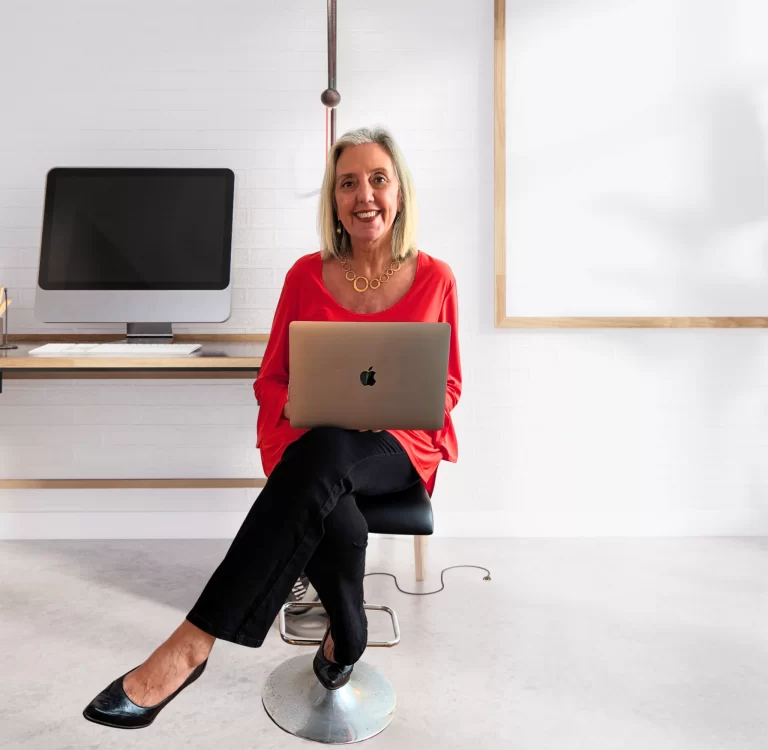
This episode is brought to you by the Business Logjam Session
A private 75-minute online session with Kathi Burns to find the one thing holding your business back and leave with your next steps. It is the same F.L.O.W. process Kathi uses with her own clients: Focus on your goals, Locate your logjams, Outline your solutions, Walk away knowing your next steps.
Find What's Holding Me BackInterested in sponsoring the show? Get in touch.How do you go from working 100 hours a week to one hour a week?
Sebastian Cruze says he got there by aligning his subconscious, not by working harder. At his web design agency, working harder and putting in more time was all he knew. After the agency imploded, he started releasing blocks from his subconscious, and that work led to his SEO company, which now takes him one hour a week.
How do I find my purpose as an entrepreneur?
Start by getting clear on why you're here and what everything is moving towards; Sebastian calls that your north star. He believes we all have natural talents to fulfill a purpose, and those gifts don't come through when we're not focused on it. You don't need to know your purpose to a T, because it will evolve and clarify. Once the direction is clear, he finds people start making different decisions.
What is the difference between zone of genius and zone of excellence?
Your zone of genius is the thing you love doing and deliver the most value at; your zone of excellence is work you're good at and paid for, but not where you're best. Sebastian calls building on your zone of excellence a trap. Kathi adds that being an expert at something doesn't make it your genius zone.
How can a business owner work fewer hours?
Sebastian says the biggest lever is the subconscious. He first worked with clients using conscious tools such as the Soul Contract, Wealth Dynamics and Human Design, and says things went to a different level when a mentor suggested subconscious tools. A parental imprint like "work every hour of the day or you're lazy" can make a cleared schedule fill back up, or keep an owner running a team they hired, so he works on clearing those blocks to work fewer hours for good.
How do you tap into your subconscious mind?
Sebastian's answer is to experience a subconscious clearing rather than just read about it, because he says talking about the subconscious doesn't matter until you feel it. His favorite tool was developed by an Irish doctor. For listeners he offered a free video at truefreedom.ai: you bring something that feels heavy or that you want clarity on, do the process, and he says you'll come out feeling lighter and clearer.
Is being productive the same as being efficient?
No. Sebastian says productivity optimizes your day, but if you're headed the wrong way you're just speeding down the wrong highway. For efficiency he asks Gary Keller's question from The One Thing: what's the one thing you can do this week that will make everything else easier, or even unnecessary? Kathi asks a similar question: are you busy being busy, or getting down to business? Sebastian keeps his own tools simple, with Asana and Google Calendar.
How many hours a day can you really focus?
About two hours of real problem-solving focus a day, not eight, according to investor Naval Ravikant, whom Sebastian quotes. So ask what the most valuable thing is that you could do in those two hours: your million-dollar-per-hour activity instead of a $20-per-hour one. Sebastian finds that as people protect that peak time, their schedule opens up.
What is "no time" and why schedule it?
"No time" is a block in your week with nothing scheduled. Sebastian says Steve Jobs and Albert Einstein used it so the best ideas could bubble up from the subconscious mind. Kathi ties it to her own work: space in your mind, your life, your schedule and your environment is what allows something new to come forth.
Where does each part of the conversation start?
- 0:00 Meet Sebastian Cruze
- 0:29 Scaling a web design agency at 20
- 1:43 When the first company imploded
- 3:45 From 100-hour weeks to one hour a week
- 4:44 Starting True Freedom
- 5:12 His first client: from 50 hours to 10
- 6:25 Letting go of looking a certain way
- 7:33 Step one: get clear on your north star
- 8:27 Zone of genius vs zone of excellence
- 10:18 The subconscious is the biggest lever
- 11:31 How to tap into your subconscious
- 14:16 Productivity vs efficiency
- 15:58 The one thing that makes everything else easier
- 16:41 You only get two hours of real focus a day
- 18:14 Schedule "no time" and make space
- 19:59 Wrap-up
What resources were mentioned?
- True Freedom (Sebastian's company; he offered listeners a free subconscious clearing video here)
- The One Thing by Gary Keller
- The Soul Contract personality profile
- Wealth Dynamics
- Human Design
- Asana
- Google Calendar
These episodes continue the same thread as this one: Lia Dunlap, Carly Church, Ginny Priem, Stephanie Wall Morrow also answer the question "How do I grow my business without burning out?", and the rest are the most recent conversations on the show.

 MotherhoodEpisode 147
How To Build a Village That Supports Your Business and Your Life with Carly Church


See every episode on the podcast archive or filter by topic on the How do I grow my business without burning out? hub.
How can I support the show?
- Subscribe on Apple Podcasts, Spotify or YouTube, or add the RSS feed to any app.
- Rate and review. A rating on Apple Podcasts helps new listeners find the show, and Kathi reads every review.
- Share the episode with one business owner who needs it; the share buttons are at the top of the page.
- Grab a free eBook: 6 Steps to Organize & Energize Your Home, 6 Steps to Organize Your Home Office or 6 Steps to Organize & Energize Your Life.
- Work with Kathi. The Business Logjam Session is a private 75-minute session to find what is holding your business back.
- Be a guest. Apply here if you have a story about clearing the obstacles in your business.
What did they say, word for word?
The transcript below is edited for readability: filler words and false starts are removed and speaker names are added. Nothing was added or summarized.
Read the full transcript +
Kathi: Hi, everyone. I'm back, and I am with Sebastian Cruze. Sebastian helps purpose-driven entrepreneurs free up their time so they can create a bigger impact on their lives and on their clients' lives. So welcome, Sebastian. I'm so happy to have you on the show, and we will talk about purpose and drive and all that good stuff.
Sebastian: Awesome. Thanks, Kathi, for having me here. I'm excited to chat.
Kathi: Absolutely. So before you started getting into helping entrepreneurs find their purpose and have their drive and their mojo back, what did you do before that?
Sebastian: At that time in my life, all I cared about was the money. It was looking good, making money, all these different things. I started with a web design agency when I was 20 years old, and we started scaling really quickly. We grew and grew. We 11x'ed our revenue in nine months, and our team grew to 25 full-time team members. That was when I was introduced to a certain mentor, a spiritual type of mentor, and he started talking about purpose. What are you truly here to do in this lifetime? Who's your true self? He shared something with me called the Soul Contract. It's like a personality profile. It really connected with me. I was like, wow, this is incredible resonance. Nothing that I had ever looked at before had connected with me so deeply. I remember after the call, though, I was like, wow, that's all amazing. I'll focus on that when I'm retired and rich.
Sebastian: So I went and kept doing my same old patterns. And lo and behold, as the company got bigger, the things in my Soul Contract started showing more and more: the resistance patterns, the negative beliefs, the negative habits. The company ended up imploding, for a number of different reasons. In that moment, everything that I had held dear was taken away from me. The money, the status, all these different things. I moved back in with my mom at the time, which to a boy with an ego was just like a dagger in the chest. That was my lowest moment. I had to let go of all the team members. I went into debt. That's where I actually found myself in the fetal position, just wanting to end it all. I was like, man, I'm trying to do a good thing here, and I just want to be done. In that moment, I realized that something inside of me would never let me take that final step, which was even more depressing, because I was stuck.
Sebastian: Then some moments passed by, and that's when I felt the energy of my purpose rise up within me. I didn't know what it was. I didn't know where to go. But I just knew that my life here was meant to serve people in a big way, and to leave something behind that would help people when I was gone from this planet. That's what started my journey: to follow that feeling of purpose.
Kathi: Wow. That's so funny. So you met the mentor, and then how much time lapsed before you were ready to make the shift into something else?
Sebastian: That's a good question. I think it was about six to nine months would be my guess. Six to 12 months.
Kathi: It's so funny how you get that knock. You get the knock in your soul, and you're like, nah. And then it's like, oh, okay, I guess I am supposed to be changing and doing something different. So after you decided that you were going to start a new company, what did you call your company, and what was the mission?
Sebastian: Well, the interesting thing is, after that moment I started following that feeling. I looked in my life: where do I feel this feeling? And that was in the spiritual training. So I started going through his work, working basically with the subconscious, releasing blocks from the subconscious so you can have more freedom, more prosperity, flow. That led me to starting my second company, which is an SEO company, search engine optimization. When I was in the web design agency, I was working 100-hour work weeks. That's all I knew how to do: work harder, put more time in. Through this shift of really aligning my subconscious, my freedom on the other side of that was getting my SEO company to one hour a week. So that 100 hours to one hour a week shift happened. That was the second phase.
Kathi: Wow, one hour a week. That's pretty amazing. So after that, then you shifted into…
Sebastian: So then the third chapter is starting my company, True Freedom. I've had self-made passive income now for nearly 10 years, and that's given me the space to really look at what I truly love doing and what I truly care about. All this came together to focus on helping people with freedom, freeing up their time so they can do what they love: spend time with the people you want to spend time with, give to the place you want to give, and do the work that really lights you up. That's really what I'm passionate about helping people do.
Kathi: That's fantastic. So talk to me about your first client. What type of person was your first client, and how did it feel when you landed them?
Sebastian: Let's see. Well, it started happening with close friends and close colleagues that I was just sharing my own process with, the freedom method. What happened is people started having their time freed up. I had a good friend of mine who had a 50-hour-a-week agency, and through the conversations we had, we freed him up down to 10 hours. In that process, he actually doubled his income, and then he had time to write his book. So I guess that was the first client. It just happened, without even really looking or trying.
Kathi: Right, right. And that's what happens, too. I think the right people walk into your life that are ready. Once you start resonating with your message, you start resonating with your purpose, then the people show up to say, hey, I need that, or I can support that.
Sebastian: Absolutely. And that's been a big journey for me, because I've realized the more authentic I am with who I truly am, the more those right connections come. It's been kind of a difficult journey for me, because I had a lot of layers of wanting to look a certain way or be perceived a certain way, and letting those go more and more so the realness could come through, the authenticity.
Kathi: Yeah. We all build up a lot of facades, especially as entrepreneurs. We're like, this is who I'm supposed to be, this is who I'm supposed to serve. We even had to talk about serving on another podcast. Are we serving someone? Are we really helping, or enabling? We're not really giving ourselves; we're giving them to themselves, I think. So, okay. You've been doing this for a while, and I'm sure at some point you felt a little bit overwhelmed and just ready to make a change. Like you were back when you were on the money train. What would be your best piece of advice to create more freedom for people who are in this situation?
Sebastian: First thing is, get clear on why you're here. Why are you here on this planet? What is everything moving towards? Because that's the north star. I truly believe that we all have natural talents to fulfill that purpose, that calling, that mission. If we're not focused on that, then those gifts, those special talents, don't come through us. So number one is, let's get clear on what direction you're going in. You don't need to know your purpose to a T. It'll always evolve and clarify. But at least let's get clear on the true direction. From that, I find that people start making different decisions, because we're really looking at what you're here to do. That would be the first piece.
Sebastian: The second piece: I really believe in a person's zone of genius. What is the thing that you love doing that you deliver the most value at? Really honing in on that, because that's where you can get paid the most, too, and you love doing it. So let's build the business around that zone, not your zone of excellence, which is a trap that people fall into, myself included. Because if we're good at it, we can get paid for it, and people want us to do it. But it's not really our zone of genius, where we can be best. So focusing on that would be the second step. And I'll pause it there.
Let's build the business around that zone, not your zone of excellence.
Kathi: I love it. I totally appreciate that, because I felt like for years I was on the money train. We had the ad agency and the printing agency and the PR agency. It was the money track. It was excellence, but not the soul path. I kept saying, what do I want to do when I grow up? It takes a while sometimes to figure out what your soul path is. And I totally agree, Sebastian, that you have your genius zone, and you are an expert at something, but because you're an expert doesn't mean that that's your genius zone. It could just be something else. Because you can be really good at something, but it's not really your jam.
Sebastian: Just like you with your past agencies. You're really good at it, but at the same time it's not quite right.
Kathi: So tell me about the best piece of advice that anybody's ever given you as an entrepreneur.
Sebastian: Oh, let's see. Best piece of advice. So many different angles.
Kathi: Yeah, there are. It's wide open.
Sebastian: Well, I would say on the freedom track, the biggest lever point is the subconscious. That's what I found. According to Dr. Bruce Lipton, the subconscious mind is a hundred million times more powerful than the conscious mind. When I was working with the freedom clients, we first started just using the conscious mind, using very powerful personality profile tools like the Soul Contract, Wealth Dynamics and Human Design, and we focused on the conscious mind strategies. Things went to a totally different level when a mentor recommended that I start using the subconscious tools. Everything just became easy. Because a person might know what to do, but maybe their parental imprint was their mom and dad telling them, hey, you've got to work every hour of the day, and if you don't, then you're lazy. Imprints like that will happen. I find that without clearing those subconscious blocks, people will clear their schedule, but then it will just fill back up. They'll hire the team, but then they will still be involved in running it. So that would be my biggest piece: working with the subconscious, because then it just becomes a lot easier.
Without clearing those subconscious blocks, people will clear their schedule, but then it will just fill back up.
Kathi: That's great advice. How do you recommend that people tap into the subconscious? For someone who's listening saying, that all sounds good, Sebastian, but how do I listen to my subconscious mind? How do I tap into that?
Sebastian: That's a great question, because there's a ton of stuff online. You search subconscious on YouTube, you get a ton of stuff. My favorite tool was developed by an Irish doctor. That tool is what I use. What I'm in the process of doing is putting together a free webinar where people can just experience it, and do it multiple times if they want. Because I know for myself, I can talk about the subconscious all day, but it doesn't matter until you feel it. I really believe in feeling the difference. So I can send you a link here at truefreedom.ai. For your wonderful audience here, I can put together a free video where you can experience the subconscious clearing. You'll go in with something that feels heavy, something like a burden, something you want clarity on. Do the process, and then you'll feel lighter, literally in your body. You'll feel the weight lifted, and you'll get clarity. And that'll all be for free.
Kathi: What a great gift. And the link will be below, gang, so feel free to just click on the link below the podcast. If you're listening, Sebastian said it, and you can rewind and hear that again. That's a really good gift, because it reminds me a lot of what Louise Hay did. I think that universal truth is always told multiple times by multiple people in different ways, and so it's who you're going to resonate with. Obviously you resonated with the Irish doctor. But it's great, because it's universal truth, and that's what it's all about. And our universal truth is our soul. So there you go.
Sebastian: Absolutely, absolutely. I think it was Messages from the Body. That's a tool that I use. I totally agree with what you said.
Kathi: I think that's great. So, physically, I am a professional organizer. What tool do you use to keep your business organized at this point, whether it's contacts or time or mail? Do you have anything that you really, really like that you're jamming out on right now, tech-wise?
Sebastian: I like to keep it simple. Asana is what I personally use, and Google Calendar. Just the basics. Something that I find, and this is probably going to be a little polarizing, is that a lot of people in the productivity space are really into tools and systems and apps, the technology pieces, and I think that's great. The one thing that I really draw a line with is the difference between productivity and efficiency. What I notice is a lot of productivity is optimizing, optimizing, optimizing, getting the most out of your day, which is great. But the question I ask is, are you even going in the right direction? If the productivity car is speeding down the highway, but it's going the wrong way, it's still speeding down the wrong way.
If the productivity car is speeding down the highway, but it's going the wrong way, it's still speeding down the wrong way.
Kathi: Yeah. Are you busy just being busy? Are you stuck in busyness? That's what I ask all the time. Or are you getting down to business? And I agree. It's like a shiny object: oh, here's another app, here's another thing we can do. As you said, following your north star, if it is going in the direction of your north star, that's all great and gravy. And if not, maybe you're just being busy to be busy. And I'm a culprit of that. I love being busy. I thrive on new stuff, the new shiny gadget.
Sebastian: Absolutely. And on the other side of the coin, efficiency, I really ask the question: what's the one thing? This comes from Gary Keller and his book The One Thing. What's the one thing you can do this week that will make everything else way easier, or even unnecessary? That one thing each week.
What's the one thing you can do this week that will make everything else way easier, or even unnecessary?
Kathi: Yes. And I'm going to put that in the show notes. That will be our quote from you, because that's a really good question for all of us to consider as we move into the week. That's fantastic. Yay. Okay, so is there anything that I should have asked you that I didn't ask you, or something that you wanted to cover during this conversation that I perhaps missed?
Sebastian: One thing that comes to mind is a quote from a very prolific Silicon Valley investor, very successful. His name is Naval Ravikant. Roughly, his quote says that we don't have eight hours a day of problem-solving mental focus. He says we only have two hours a day. So the question to ponder as the audience, as you're listening to this podcast, is: what's the most value you could deliver in those two hours a day? What would be your million-dollar-per-hour activity instead of a $20-per-hour activity? That really goes down the road of efficiency: how can we maximize that peak time each day? And I find that as a person does that, they need less and less of the things they thought they did, so more of their schedule opens up.
Kathi: That's great advice, too. I know that through the pandemic we've all kind of had that shift as well, but keeping that at the foremost of our mind is great. I was looking at your website, and you have a lot about the 80 and the 20. I'm a firm believer in the Pareto principle. And the fact that you only have two hours of productivity a day, I really think is probably right, because we're not all on the whole entire time. There are certain times when we're on and certain times when we're not, and I always knew that probably we're more off than we are on, which is why a lot of us just work, work, work.
Sebastian: Absolutely. On that note, too, on not always being on, there's a concept called no time that Steve Jobs did, and Albert Einstein did, where they scheduled time in the week where nothing's going on. The idea was that that was the time when the best ideas could bubble up to the surface from the subconscious mind.
Kathi: Yeah. They added space to their brain so that they could actually percolate and have stuff come up. Space in your mind, space in your life, space in your schedule, space in your environment. It all comes down to allowing something to come forth. And if you're all crowded in, no matter whether it's your mind, your body or your physical space, it doesn't come out. So I appreciate you saying that. I believe in that.

Sebastian: And that's why I thought it was so cool with your method, because I see that every day: as you clear out things in the physical, how that's a link to the emotional baggage, the subconscious baggage. So I love the work that you're doing with people, because freeing up space, freeing up time, all the good stuff.
Kathi: That's what it's about. Because guess what? If we have all that free time and that free space, we can do what we really want to do and not what we feel like we have to do. I'll tell you what, it's not about making the buck. It's about making yourself thrive, making yourself happy. If we're happy, and if we have space and time, we give the best that we have to everybody around us. Well, thank you so much, Sebastian. I really appreciate you being here and giving us your words of wisdom. I love what you do as well, so we'll just be fellow groupies to each other. Thank you so much.
Sebastian: Absolutely. Thank you for having me here. It's been an absolute blast. Take care.
Kathi: You got it. Thank you.
Where can I find the links and resources from this episode?
Connect with Sebastian
Organizations and companies
Books and resources
Inspired? Here Are Your Action Steps:
- Write down the direction your work is moving towards, even if your purpose isn't fully clear yet.
- List what you love doing and where you deliver the most value; that's your zone of genius.
- Mark the work you're good at and paid for but not best at, and stop building your business around it.
- Notice beliefs like "if I don't work every hour, I'm lazy" that keep refilling your schedule.
- Each week, ask what one thing would make everything else easier or unnecessary, and do it first.
- Before adding another app, check that your work is headed towards your north star.
- Pick your two hours of peak focus each day and spend them on your most valuable activity.
- Block "no time" in your calendar each week with nothing scheduled.
Frequently asked questions
What does zone of genius mean?
+
In the episode, Sebastian Cruze describes your zone of genius as the thing you love doing and deliver the most value at. He says that is also where you can get paid the most, so he suggests building your business around it.
How to identify your zone of genius?
+
Sebastian's test is to ask what you love doing and where you deliver the most value. Be careful with work you're good at and get paid for: he calls that your zone of excellence, and says it's a trap because people want you to do it even though it's not where you're best. Kathi adds that being an expert at something doesn't make it your genius zone.
How many hours should a business owner work?
+
The episode doesn't give one number. Sebastian runs his SEO company in one hour a week, after working 100-hour weeks at his first business. He quotes investor Naval Ravikant that we only get about two hours of problem-solving focus a day, so he suggests putting those hours on your most valuable activity.
Is being productive the same as being efficient?
+
No. Sebastian says productivity optimizes your day, but if you're going the wrong way you're just speeding down the wrong highway. Efficiency, for him, starts with asking whether you're even headed in the right direction.
What is the "one thing" question?
+
It comes from Gary Keller's book The One Thing: what's the one thing you can do this week that will make everything else easier, or even unnecessary? Sebastian asks it each week.
Who is talking in this episode?

About the Host, Kathi Burns
Kathi Burns, CPO®, is a Business FLOW Strategist based in San Diego. For the last 20+ years, Kathi has helped clients create systems they can stick to. She is the author of How to Master Your Muck, Organizing With Tetris and Home Organization, The Smart Guide, and co-author of four more titles; all are in Kathi's shop. Kathi's business has been featured on Good Morning America, and her advice has been featured in Oprah Magazine, Martha Stewart Living, Better Homes and Gardens and Entrepreneur Magazine.
More about Kathi · Shop Kathi's books · Business Logjam Session · Apply to be a guest

About Sebastian Cruze
Sebastian Cruze is the founder of True Freedom, where he helps purpose-driven entrepreneurs free up their time so they can do the work they love. He started a web design agency at 20 and grew it to 25 full-time team members while working 100-hour weeks, until the company imploded. While rebuilding, he began working with the subconscious mind and releasing subconscious blocks, and his next company, an SEO business, came to take him one hour a week. He says he has had self-made passive income for nearly 10 years. His work draws on personality profile tools such as the Soul Contract, Wealth Dynamics and Human Design, along with subconscious clearing.
Want help putting this into practice?
Book a Business Logjam Session with Kathi
A private 75-minute online session to find the one thing holding your business back and leave with your next steps, using the same F.L.O.W. process Kathi uses with her own clients: Focus on your goals, Locate your logjams, Outline your solutions, Walk away knowing your next steps.
Prefer to start small? Download Kathi's free eBook 6 Steps to Organize & Energize Your Life.
Published · Updated
This episode page is for general information. Guests speak for themselves, and their opinions, statistics and examples are their own. Nothing here is legal, financial, medical or mental-health advice; talk to a qualified professional about your own situation. Some links go to the guest's own products or free offers; addSpace does not earn a commission from them unless stated.