


Episode 102
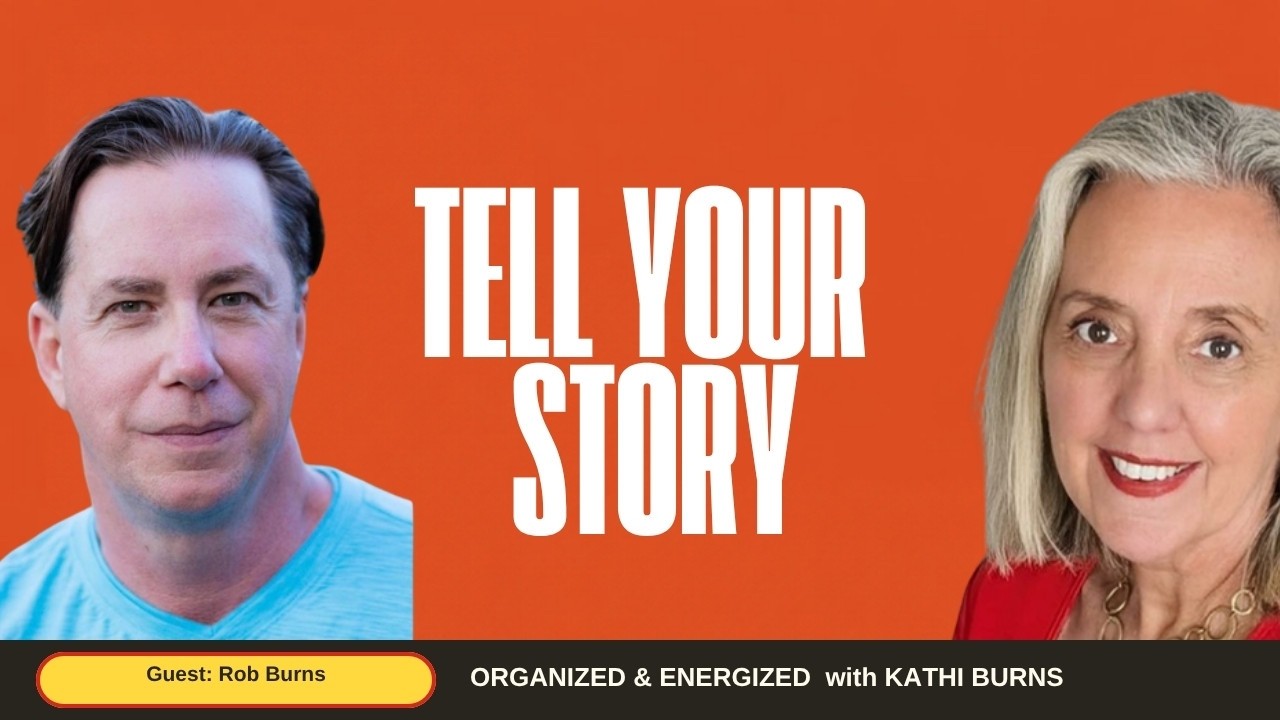
with Rob Burns, documentary filmmaker and storyteller at Treehouse Studios · October 4, 2024 · 37 min
Documentary filmmaker Rob Burns says stories work in marketing because people buy from people they know, like and trust.
His gala film for the San Diego chapter of Humble Design, a nonprofit that furnishes homes for people leaving homelessness, raised a six-figure sum at its premiere.
Rob says a founder story isn't really about the founder; it works when viewers see a piece of themselves in it.
He builds founder stories on Joseph Campbell's hero story arc and refuses to make anything up.
Rob plans SOPs and entire films in WorkFlowy, using tags to see every task and who is responsible for it.
Published · Updated
What is this episode about?
Brand storytelling works because people buy from people they know, like and trust, says documentary filmmaker Rob Burns. Rob spent more than 25 years in marketing and copywriting before moving to the creative side, and through Treehouse Studios he now makes documentaries for nonprofits and conscious companies, along with brand and founder stories. In this conversation with Kathi Burns, CPO®, Business FLOW Strategist (his wife of more than 30 years), Rob explains how his gala film for Humble Design connected donors with families coming out of homelessness and raised a six-figure sum at its premiere. He shares why a founder story should be about the viewer, how Joseph Campbell's hero story arc gives a story its shape, why you shouldn't chase a crowd whose values you don't share, and how he uses WorkFlowy to organize an entire film.
It's not really about the subject of the story. It's about the person that's watching the story.Rob Burns
Jump to links and resources · Part of How do I get more clients? · All episodes · Every guest
What are the key takeaways?
- Rob Burns says almost everything is a story, and storytelling was how people communicated long before anyone called it marketing.
- Nonprofits use a gala video once or a couple of times a year for fundraising; Rob says a well-made one connects the viewer, the nonprofit and its cause.
- Rob says that without furniture about 90 percent of newly housed people in San Diego end up back on the street, while only about 5 percent of Humble Design's families go back to being homeless.
- His Humble Design film raised a good six-figure sum at its premiere, and two or three later events that showed it raised similar amounts.
- Rob says founder stories that are all about how great the founder is bore people; stories that show real struggles and failures connect.
- He says people spot a fake story in a second, and building a business around a group whose values you don't share is a recipe for failure.
- Rob's advice to his 18-year-old self: don't be afraid to fail, because that's the fastest path forward.

This episode is brought to you by the Business Logjam Session
A private 75-minute online session with Kathi Burns to find the one thing holding your business back and leave with your next steps. It is the same F.L.O.W. process Kathi uses with her own clients: Focus on your goals, Locate your logjams, Outline your solutions, Walk away knowing your next steps.
Find What's Holding Me BackInterested in sponsoring the show? Get in touch.Why is storytelling important in marketing?
Storytelling matters in marketing because people buy from people they know, like and trust, and a story lets them get to know you. Rob Burns works from the premise that almost everything is a story. He says storytelling is how humans have always shared what mattered, from a lion encounter to cave drawings.
What is a gala video for a nonprofit?
A gala video is a film a nonprofit shows at its fundraising events, usually once or a couple of times a year, to tell its story. Rob says it's the piece where people can know, like, trust and understand what the nonprofit is about. Done right, it connects the person watching, the nonprofit and its cause. His best-known example is the film he made for the San Diego chapter of Humble Design.
How does Humble Design help families coming out of homelessness?
Humble Design furnishes and decorates the empty homes families move into after homelessness, so a house becomes a home. Rob learned that newly housed people often arrive with just a bag of belongings, and he says about 90 percent of them end up going back. With a stocked kitchen, beds and desks, only about 5 percent of Humble Design's families return to homelessness, and one mother's children went on to architecture and physics.
What makes a founder story video work?
A founder story works when it's about the person watching, not the founder. Rob says a story that's all me, me, me bores people, but when viewers see a piece of themselves in the founder, it's far more effective. The goal is an emotional connection, so viewers relate and, at best, feel part of that tribe.
How do you use the hero story arc in a business story?
Rob follows the hero story arc Joseph Campbell described: a regular person gets a mission, has some success, gets sideswiped by failure, wins an inner battle and comes out the other side. People relate to it because very few people aren't struggling. His rule is to stay 100 percent honest and never make up a story that isn't there. He shoots founder stories of 5 to 15 minutes like a movie.
What are some examples of good brand storytelling?
Kathi points to Southwest Airlines, whose founder's story explains the heart in its brand and made her a loyal customer. Rob adds The Kindness Diaries, a Netflix series in which Leon Logothetis traveled accepting only food, fuel, lodging or help, never money. Leon later ran a Kindness Diaries web series sponsored by Southwest, which Rob calls a win-win of stories, empathy and a huge brand.
Should you change your story to fit in with a certain crowd?
No. Rob Burns says people spot a fake story in a second, and building a business around a group that isn't really you is a recipe for failure. He sees people who don't drink your Kool-Aid as just as valuable as those who do. With billions online, plenty will resonate with the real you.
How do you organize a big project in WorkFlowy?
Rob maps whole projects in WorkFlowy as nested lists of tasks and subtasks that expand and collapse. He has used it for SOPs and for an entire film. In a film, he tags each person's name next to their tasks, then clicks the name to see everything that person is responsible for. Kathi, who prefers the visual cards in Trello, says it is also useful for assignment management.
Where does each part of the conversation start?
- 0:00 Meet Rob Burns
- 0:52 From copywriting to documentaries
- 1:46 Everything is a story
- 3:55 The Humble Design gala film
- 7:33 Making a house a home
- 12:47 Why the story won him over
- 13:54 What makes a founder story work
- 16:54 The hero's journey
- 20:21 Southwest's founder story
- 21:43 The Kindness Diaries
- 26:35 Be yourself and let the wrong fit go
- 28:59 How Rob celebrates
- 29:42 Round filing and WorkFlowy
- 32:54 Don't be afraid to fail
- 34:47 Wrap-up
What resources were mentioned?
- Treehouse Studios
- Home, Rob's gala film for Humble Design
- Humble Design
- The Kindness Diaries with Leon Logothetis (Netflix)
- Joseph Campbell's hero story arc
- WorkFlowy
- Trello
These episodes continue the same thread as this one: Sue Kirchner, Yvonne McCoy, Louise McDonnell, Allan Ngo also answer the question "How do I get more clients?", and the rest are the most recent conversations on the show.


 Social MediaEpisode 144
How To Use Social Media More Strategically In 2026 To Find New Customers with Louise McDonnell

See every episode on the podcast archive or filter by topic on the How do I get more clients? hub.
How can I support the show?
- Subscribe on Apple Podcasts, Spotify or YouTube, or add the RSS feed to any app.
- Rate and review. A rating on Apple Podcasts helps new listeners find the show, and Kathi reads every review.
- Share the episode with one business owner who needs it; the share buttons are at the top of the page.
- Grab a free eBook: 6 Steps to Organize & Energize Your Home, 6 Steps to Organize Your Home Office or 6 Steps to Organize & Energize Your Life.
- Work with Kathi. The Business Logjam Session is a private 75-minute session to find what is holding your business back.
- Be a guest. Apply here if you have a story about clearing the obstacles in your business.
What did they say, word for word?
The transcript below is edited for readability: filler words and false starts are removed and speaker names are added. Nothing was added or summarized.
Read the full transcript +
Kathi: Hi everyone, this is Kathi and I'm back, and I am here with someone I've known for quite a little bit of time. His name is Robert Burns, and he is a storyteller from way back. I wanted to have him on the podcast because he knows a lot about telling stories, spinning yarns and creating engagement with your audience. And as entrepreneurs, we all want to do that. So welcome, Rob, to the show.
Rob: Hey, thanks for having me on. Yeah, we also know each other a little bit more. We've been married for what, 30-something years?
Kathi: Yeah, 30-something years. After doing a hundred podcasts, I figured I might as well have my honey on. I'm in a long training program for storytelling, and I thought that you were the perfect person to interview to talk about storytelling and spinning a yarn. So talk to me a little bit about your background, Rob, and why you're doing what you're doing now.
Rob: Yeah, it's been an evolution. I've been on the marketing side doing copywriting and marketing, marketing copywriting and things like that, for probably what, 25-plus years? Something like that. And really for me, I wanted to evolve and focus more on the creative side, as opposed to just the strict technical marketing aspect. So it's been a gradual movement going that direction. And storytelling was always… I've always been under the premise that everything is a story. If it's just one picture, that whole adage, a picture is worth a thousand words and all that good stuff. So if you look at it under that lens, then almost everything you do is a story, and then you can really start framing your work that way.
Rob: A great reason, from the marketing standpoint, that stories are so great is it really lets you know who that person is. People buy from you when they know, like and trust you. And from our earliest days, storytelling was really how we communicated things and let people know about different things. Like, hey, we were foraging over in that valley and then all of a sudden a lion showed up. And then there was a whole story about the lion encounter, things like that. So that's really why I gravitated towards storytelling.
Kathi: Yeah, it's like the hieroglyphics in the cave, right? It's like, okay, beast.
Rob: Right. Beast, ooh, captured, ooh. Yeah, who captured who, or some story of a great hunt, things like that. Because those were the things that were important in those days. So they were really the first marketing pieces, I guess, if you really want to look at it that way.
People buy from you when they know, like and trust you.
Kathi: Absolutely. I remember back then it was word of mouth or pictorial. And then I remember when I was in advertising a long time ago that the advertorial that had the story about the owner was way more effective than just the ad, because people want to know who that person is that they're going to do business with. And they remember stories. Now we flash forward a couple decades, and now we're in video. And I know video is your game now. So talk to me about a story of one of your clients that you did a documentary for. What happened with the storytelling of that?
Rob: Yeah. So I do primarily documentaries now, and I still do some marketing work and brand stories or founder stories, things like that. But primarily it's documentaries. When I work with nonprofits, they have something called a gala video, and it's usually once or a couple times a year for their fundraising, and it's telling their story. It's really the perfect piece where people can know, like, trust and understand what that nonprofit's about. And if you do the film right, it makes a connection between the person watching the film, the nonprofit and whatever that cause is for the nonprofit. In this case, I think you're probably talking about the Humble Design one.
Kathi: Yeah, the Humble Design.
Rob: Awesome. So that one was great, and it was really interesting, because when it first came across, when we first started talking about it, I was semi not interested in it. What Humble Design was, they were a group of interior designers, and they had this big warehouse full of furniture. And when people that were unhoused got reintroduced to housing, they would go in and furnish these new places. And I learned so much about that whole world. Most of the time when I work with nonprofits, I'm learning as much as I'm creating a film.
Rob: So some of the things I learned: we did this for their San Diego chapter, and I think at the time there were about 9,800 people in San Diego that were homeless. And about two to five percent of the homeless people you see on the street, those are typically the stereotypical homeless people, where they have a tent on a sidewalk or they're sleeping on a sidewalk and that kind of thing. But that's only two to five percent of the homeless people. And those are usually people that were probably suffering from PTSD or addiction or have mental struggles, things like that. That's really where they're at. They're not even at a place where they could try to find housing. The majority of homeless people are people who were just one paycheck away, and something happened, and now they're living in their car or they're couch surfing, or they had abuse issues they were trying to get away from. That's the majority of those people. And the other thing I learned is in San Diego it's about 11 years before you can get housing.
Kathi: Wow.
Rob: And what really sold me on Humble Design was the fact that the attrition rate for somebody that finally does get reintroduced to housing is about 90 percent, because they would go and get a place and it was just a box, and there was nothing in it. And they're like, well, this isn't any different than when I was homeless, and there were no options. With Humble, they would make a house a home. And some really big things came out of it. One of the things was, now moms have a kitchen that's stocked where they can cook real food. So instead of buying food from a food desert, which is the least expensive but probably the worst health-wise for you, now they can actually cook real meals. And kids have beds to sleep in and desks to study on.
Rob: And part of the story: one of the people that were actually in the Humble story was incarcerated for 15 years, and then got out, and she had two kids and they were living on the street. They got put into housing, and she was one of the very first people that Humble had helped, quite a while ago. And now one of her kids is an architect, and the other kid, I think, is going to school for physics. None of that could have happened if they were just living in a car or just didn't have the resources. Those kids got a good night's sleep. And not only that, but they decorated it so it fit in with whoever the person was. There was another person who was from Hawaii, so they decorated the whole place in a Hawaiian theme. They actually have real furniture manufacturers and people that donate, so it's really nice. So it's really a home. And the attrition rate for people that go through Humble Design is only 5 percent. Only 5 percent of people wind up going back to being homeless.
Rob: So it really did make a huge difference, and that whole thing was a giant learning process for me, which I love. How the storytelling aspect went was really connecting the mission of what Humble does and why it was important, and then showing these people, how it changed their lives and how it actually really did good. And so for me that was just the best of everything kind of deal.
Kathi: Yeah, and what I found the most astounding as you worked through that whole project was not realizing that when the homeless get housed, they basically just have a bag of stuff. That's all they have. And they get into this apartment that's empty, unless they're a Humble client. Then they just have a box and, like you say, a bag of clothes, maybe some old ratty clothes. So Humble will come in and actually design it. Now I know after the video that you produced, called Home by the way, and we'll put the link down below if you guys want to watch it. It's an amazing movie about the homeless and about Humble. After they released that gala video, I know that they got a lot of revenue during a few galas in a row, just by someone telling their story, heartfelt. People were crying. I remember that. A lot of people were crying, not realizing what it's all about to be homeless. And they raised quite a bit of money just from that one video.
Rob: Yeah. I don't know if you want to give numbers, but the first time it was a good six-figure sum just from the premiere. And then they did two or three more events where they showed the video to use it as a tool, and they were in that range too. So it's really cool. Humble's a perfect example of why a story can be so effective. Because when I was first talking to them, I was honestly just pretty disinterested. I was thinking, how is this going to save the world or fix climate change or solve people's problems? It's just decorators. And I personally couldn't get past it until I really started doing a deep dive with them on what it was about and how it does effect change, and then I was just completely sold. And I think that is the power of the story. The story made that connection, and it connected with me, where I was just like, this is super important. It showed why it was important and how it helped, all of those things that we want to know. It made this heartfelt connection between the viewer and Humble Design and the people that were in the film.
That is the power of the story. The story made that connection, and it connected with me.

Kathi: Yeah, and I think on the plus side, they got more clients, they got more sponsors, they got more volunteers. They're probably getting more grants because they're more face forward. What are they in, four different cities in the US?
Rob: Yeah. They're in what? Eight.
Kathi: Eight cities in the US is Humble Design. So they're expanding. So that is the power of storytelling. Now, as entrepreneurs, I think it's so very important that we tell our own story. I work a lot on my background, why I do what I do. People love to hear why we're doing what we're doing. And you're doing these founder stories. Can you talk about those just a little bit? Because I think everyone needs a founder story, and video obviously is the way to go.
Rob: Yeah, exactly. And really the trick is, it's not really about the subject of the story. It's about the person that's watching the story. Because if you do a story and it's just about me, me, me, and why I'm so great and how successful I am and how I can make you successful, that kind of thing, people are just bored. But if they can see a little piece of themselves in that person that is the subject of the story, then it's just infinitely more effective. And that's really the goal. With the founder stories, there's a lot of people that are, say, speakers or authors or experts, where their personality is connected to the brand, and sometimes it's just the story of a brand. And really the goal is you make that connection, and depending on what it's about, you try to make an emotional connection. So that person at bare minimum relates to the founder and the founder story, and best case scenario sees themselves as part of it, as part of that tribe, and can really make that connection.
It's not really about the subject of the story. It's about the person that's watching the story.
Kathi: Yeah, I think it comes down to vulnerability, saying who you really are, and these are my faults, and people are like, yeah, I feel like that too. And that's very important.
Rob: Exactly. How many times have you seen an ad or a story and it's some guru selling something, and it's just about how awesome they are and how they're living their best life? A lot of times that will just create anxiety for me. They frame themselves at that pinnacle, unachievable to most people, and then they'll just throw in, and you can do it too, kind of thing. And everybody says, no. But if you talk about somebody that has become very successful and they start out the story living in their car…
Rob: And my rule is you just have to be 100 percent integrous as far as how I'm telling the story. I'm not going to make up a story for somebody, and I'm not going to try to find something that's not there, because it doesn't do anybody a favor. It doesn't do the person that's making the video any favors, and it just won't work. But everybody has a story, and everybody has that hero, Joseph Campbell's hero's journey, where they started out as just a regular person, and they had this mission or this goal, and then this thing happened to them and it put them on this journey. And maybe they had a little bit of success, and then all of a sudden failure just sideswiped them. And then they figured out whatever the dilemma was in the great battle, maybe some mental internal battle that they had, and then it was success. And people can relate to that, because there's very few people that just aren't struggling. If you can relate to those people and then show that there is a path, and it's a real path, and that they can understand it, then that's going to really make a huge difference. That's where the secret sauce is.
Kathi: Yeah, I love that, and you're a master storyteller. I think that's why on Instagram and all that, you have people walking around showing people their life. That's also a resonation. Unless you're douchey, right? But walking around saying I am doing this and doing that… having an actual founder story produced is a notch up, because it's elevated to the whole hero's journey, as opposed to just being little snippets of someone's life, so to speak.
Rob: Yeah, like a 5- to 15-minute video, but you shoot it like a movie, and it's a real story, so it has this cinematic emotional effect on people. And that really is what works, and it sets it aside. I think the social media stuff where people are less than perfect is actually more effective than people with the perfect bodies or driving a Lambo, because I think there's so much of that that it just creates anxiety in people. There's a lot of stuff coming out about that on social media, where people are like, all these people are just living their best life, and they're just sitting there, look at me, kind of thing. But being a real person and being relatable is much more powerful. And even in the films, a founder story or a brand story where it's a speaker, an author or a person that's part of their brand, where they show their vulnerabilities and they show their failures and they show how they overcame those, that's what people want to see. Because they want to know that it's a real person they're buying from, not just some person mimicking copy that they think will sell.
Kathi: And that's so funny, because that's the whole reason I do this podcast: to let people know that they're not alone, that we all do the ups and downs, we all do the zigzags. Life's never perfect, right? But we rise above, and how do we overcome challenges? That's the whole idea behind Organized and Energized! The Podcast, quite honestly. As you're speaking, Rob, I just keep thinking of Southwest. It just keeps blowing in my mind. As you know, I've always really loved Southwest. They've always taken good care of me. And I remember watching the movie about the founder of Southwest, and it was his hero's journey, who he is. He would talk to everybody. They showed all of his flaws and blemishes, and they had to really reel him in, because he would never be on time for meetings, because he was always chit-chatting with people on the way and they'd have to wrangle him in. And then the whole airline was built on love, because the guy was love personified. And that made me even more loyal to Southwest. They have the heart, and I didn't know about the founder. I didn't know why there was a heart in Southwest. Now I know the whole story, and now I'm probably the most loyal person ever for Southwest. I would always fly them if I had an option. It just drove it in even closer to my heart, knowing why he's there and who this guy is.
Rob: Right. Well, Southwest is a perfect example. If you remember, during COVID we started watching that whole series, The Kindness Diaries, with Leon Logothetis. And it was perfect timing, because it was during lockdown, and you watch the news for five seconds and you're like, oh man, the world is burning down and everybody hates each other, and it's just all this polarity. It was depressing. And this whole series was on Netflix. Leon was pretty wealthy. I think he made his money as an investment banker or something in England, and then he just gave it up. And he started doing this series, and each season he would show up in one part of the world. One part, I think, he drove all the way from Argentina to Los Angeles. And he had a VW bug, an old '60s VW bug, and it was named Kindness One. It's kind of a long story, but there's a good point to it.
Rob: So the rule was he couldn't accept any money. The only thing he could accept from people was food, fuel, lodging or assistance, but no money. And so he would just travel, and he would just run up to these people and say, hey, could I stay at your house, that kind of a deal. And the people that he did stay with would just have these amazing stories. There was this one guy, I can't remember in which part of Central America, who lived in a box. And he's like, hey, I don't have anything, but you can share this box, it's not safe to be out around here, you can just sleep here with me, and here's half of my food. And then at the end, Leon would actually help these people out. I think he bought the guy a house or something afterwards, and they knew nothing about him. So that was the story.
Rob: So, long story short, to connect Southwest: Leon actually did a Kindness Diaries initiative with Southwest. Southwest had this whole web series where Southwest was the sponsor, but he would do his Kindness Diaries thing. And I think that's a perfect example, because sometimes people try to do virtue signaling or this or that, but it was this perfect connection of this guy that actually did these things and Southwest, who thought that was kind of cool. So that's a great win-win connection, where they're connecting stories and empathy and a huge brand.
Kathi: I didn't even realize that. That's interesting. That went way past me. But yeah, I think that's the thing, empathy, right? People can't empathize unless they can relate, and people can't relate unless you show who you really are. And being vulnerable is where it's really at. In any kind of sales, anybody that you speak with that's a potential client or a potential partner, if you're just who you are and you're real, they're either going to resonate or they aren't. And more than likely, they will resonate, because they will be able to empathize and say, oh yeah, I feel that way too sometimes.
Rob: Yeah, I think that's spot on, and really for two reasons. One is, as I mentioned, don't try to act fake compassionate or try to create this story or virtue signal, because people will spot that in just one second. And then it's worse than if you were just a hey, buy my stuff kind of person. So the message has to be real and the story has to be real. And I promise you, everybody has a message and a story that'll connect.
The message has to be real and the story has to be real.
Rob: And the other thing is, if you do manage to pull it off and you create this whole scenario because you're trying to fit in with a certain group of people that's really not you, that's just a huge recipe for failure too. Because I think the people that don't drink your Kool-Aid are just as valuable as the people that do. Those are the people where you'll get started in something and then it just doesn't work out, it just doesn't resonate, and you put so much time and energy in. And people think I'm crazy all the time, because I'll just be kind of like, mhm. And you're like, well, this is just this huge opportunity. We had that talk earlier, where somebody was trying to connect me with this other huge group, and I was just like, I just know, man, if I get involved with that, I know me, and it's not going to work. My value system didn't fit in with that value system, and I'm not judging that value system. I'm just saying for me, it didn't resonate, and it's going to show. I'm the worst person in the world to have a fakey face, because you're going to tell exactly what's on my mind.
Rob: So I think, be you. And you have to think, when the internet came out, there were a couple billion fewer people on Earth. There are so many people now that are on the internet that no matter who you are, there's going to be more than enough people that are going to fit into that tribe. So don't try to be something you're not. Just be you, and you're going to be infinitely more successful, you're going to tell better stories, and you're also going to filter out those people that are not resonant with your message.
Don't try to be something you're not. Just be you, and you're going to be infinitely more successful.
Kathi: Yeah, and it goes back to a few podcasts back, when we were talking about avatars. I spent so many thousands of dollars trying to figure out who my avatar is, and really who my avatar is, is me. People that resonate with me are going to be the people that are my clients. And if you're out there listening, your avatar is you. Someone who is interested in what you're interested in, someone who thinks like you think, because you're going to resonate, you're going to empathize with each other, you're going to be able to grow together. And if you try to fit into this other crowd, the clique so to speak, it probably isn't going to work in the long haul. It might work quickly for a little bit, but it will fade away. So I think that's great. So this is my question of the year for this podcast: when you have a success, Rob, how do you celebrate success?
Rob: Usually with my beautiful wife.
Kathi: That was a setup.
Rob: No. Well, that's actually pretty true. For us it'll be maybe we'll go on an adventure, or go sit under some trees or cactuses, things like that, and really just spend time being grateful for whatever that success was for.
Kathi: Yeah, I think so. Spending time, for sure. Okay, so we have to talk about organizing a little bit. You're super organized. What's your favorite organizing hack or system that you use?
Rob: I'm a big fan of round filing.
Kathi: The circular can system?
Rob: Yes, the circular can system. I try with as much diligence as I can to not let things stick to me as far as stuff. I'm kind of an anti-stuffist. As you know, before we were married, I think I had a futon mattress and a set of chef's knives and my clothes, and I was happy as a clam. So for me, I don't need to accumulate a lot of things. Just maybe an awesome wife.
Kathi: That's helpful for me. I am the collector, of course. He married me and he got the stuff. That's the story. Lots of bargains.
Rob: Yeah. Bargains everywhere.
Kathi: That's funny. But I know that you like WorkFlowy and I like Trello. So it's tools. Talk to me about WorkFlowy. For those of you out there, I love Trello because it's visual, it's like little Post-it notes, and that keeps me organized. But WorkFlowy, some people out there might really resonate with this. So let's talk about WorkFlowy just for a sec.
Rob: Yeah, WorkFlowy is really interesting, because most people don't like it, because when you first look at it, it's so simple. But that's really the beauty of it. In WorkFlowy you can create these tasks and these lists and subtasks and sublists, and they all drop down. I've literally mapped out super massive, complicated projects or systems. I do a lot of SOPs using WorkFlowy. An entire film I use WorkFlowy for. And what's great is you can look at just certain sections, and you can expand and collapse, and you can do things like tag. So in the film, there's all these people that are doing all these different things, and you can hashtag a name or at-symbol a name and put it next to that task. And then you can just click on that name, and it shows all the things inside of WorkFlowy that are related to that person or that task. So it looks really simple, but probably the most complicated, integral things that I've done, I've used WorkFlowy for. And it's like five bucks a month or something. It's ridiculous.
Kathi: Yeah, you use it really brilliantly, and you can put a lot of stuff in there. So check out WorkFlowy if you're looking for task management, or actually for assignment management, who's doing what and when. And if you get overwhelmed by looking at gigantic lists, you can break it down and only look at one thing.
Rob: Yeah, project management.
Kathi: So if you could turn back time, Rob, and tell your 18-year-old self something, what advice would you give him?
Rob: I would say don't be afraid to fail, because that's the fastest path forward.
Kathi: Good stuff. Okay, so I know you probably have a valuable free resource that you could offer people. Is there anything that you would want to offer? Do you have a link? I know we're going to drop the Home video in there, so that you can watch a little mini gala documentary. You'll become very educated about the homeless, not just here in San Diego but all over the world, and who they are and why they're there. A lot of very surprising things that you don't really understand about them. But if you have anything else that you want to provide, we'll go ahead and drop the link below. I see you thinking.
Rob: Yeah. I'm so busy doing projects these days, I don't have any kind of email capture or anything like that. But anybody that might be interested in films, or if they want to see how I structure things, because most of the things I do are pretty short. So you can see a five-minute story. We did the Grandma Sparky one, and that was five or eight minutes. You could go to treehousestudios.studio, and if you look at the artwork section, you can check it out. And if you're interested in maybe having a brand story or something like that, just go there and reach out.
Kathi: Perfect. Treehouse Studios dot studio, and it's plural. Got it. Well, guess what? We're at the end, and I can't believe it's taken me this long to interview you. I feel a little bit weird, because you are my husband and my honey, but I know that there's a lot that can be learned from storytelling, and I hope you folks have enjoyed this episode. Think about a story for yourself. What is the story that you tell? Are you vulnerable? Are people able to empathize with you, or are you just being the bright, shiny, perfect person? That's not what you want to be, right? So thanks for coming on the show, Rob.
Rob: Thanks for having me on the show.
Kathi: And until next week, we'll see you then. Take care.
Where can I find the links and resources from this episode?
Connect with Rob
Organizations and companies
Inspired? Here Are Your Action Steps:
- Write down your own founder story: why you started and what you struggled with along the way.
- Check that your story is about what the viewer will recognize in themselves, not how great you are.
- Map your story onto the hero story arc: the mission, the setback, the inner battle and the way through.
- Include real failures and how you overcame them; don't invent anything.
- Show your work through the people it helped, the way the Humble Design film did.
- Say no to groups or opportunities whose values don't match yours.
- Clear out stuff you don't need with some round filing.
- Try a nested-list tool like WorkFlowy for big projects, tagging each person next to their tasks.
Frequently asked questions
Why does storytelling work so well in marketing?
+
People buy from people they know, like and trust, and a story lets them get to know you. Rob Burns points out that storytelling is the oldest way humans have communicated, long before anyone called it marketing.
What are some examples of good brand storytelling?
+
In the episode, Rob Burns describes his gala film for Humble Design, which told the nonprofit's story through the families it helped and raised a six-figure sum at its premiere. Kathi Burns names the film about Southwest Airlines' founder, which explained the heart in its brand. Rob adds the Kindness Diaries web series that Leon Logothetis made with Southwest.
Can you provide an example of a founder's story?
+
Kathi Burns describes a film about the founder of Southwest Airlines that showed his flaws, including being late to meetings because he stopped to chat with everyone, and how the airline was built on love. Knowing that story made her even more loyal to Southwest. Rob Burns says the strongest founder stories show real struggles, such as a successful person who started out living in their car.
What makes a founder story work?
+
It isn't really about the founder. Rob says a story that's all about how great you are bores people, but one where viewers see a piece of themselves connects. That usually means showing real struggles and failures, following the classic hero story arc, and never making anything up.
Why shouldn't you try to fit in with a crowd that isn't yours?
+
Rob says people spot a fake story in a second. If you build a business around a group whose values you don't share, it won't last. With billions of people online, there are more than enough who will resonate with the real you.
How does Rob stay organized?
+
He keeps very little stuff and uses WorkFlowy to map out everything from standard procedures to an entire film. Its nested lists and tags let him see every task and who's responsible for it.
Who is talking in this episode?

About the Host, Kathi Burns
Kathi Burns, CPO®, is a Business FLOW Strategist based in San Diego. For the last 20+ years, Kathi has helped clients create systems they can stick to. She is the author of How to Master Your Muck, Organizing With Tetris and Home Organization, The Smart Guide, and co-author of four more titles; all are in Kathi's shop. Kathi's business has been featured on Good Morning America, and her advice has been featured in Oprah Magazine, Martha Stewart Living, Better Homes and Gardens and Entrepreneur Magazine.
More about Kathi · Shop Kathi's books · Business Logjam Session · Apply to be a guest
About Rob Burns
Rob Burns is a storyteller and documentary filmmaker who makes films through Treehouse Studios, which tells stories for nonprofits and conscious companies. He spent more than 25 years on the marketing side, doing copywriting and marketing, before moving toward the creative side. Today his work is mainly documentaries, including the gala videos nonprofits use for fundraising, along with brand stories and founder stories. One of his films, made for the San Diego chapter of Humble Design, raised a six-figure sum at its premiere. Rob works from the premise that almost everything is a story and that people buy from people they know, like and trust. He has been married to Kathi Burns for more than 30 years.
Want help putting this into practice?
Book a Business Logjam Session with Kathi
A private 75-minute online session to find the one thing holding your business back and leave with your next steps, using the same F.L.O.W. process Kathi uses with her own clients: Focus on your goals, Locate your logjams, Outline your solutions, Walk away knowing your next steps.
Prefer to start small? Download Kathi's free eBook 6 Steps to Organize Your Home Office.
Published · Updated
This episode page is for general information. Guests speak for themselves, and their opinions, statistics and examples are their own. Nothing here is legal, financial, medical or mental-health advice; talk to a qualified professional about your own situation. Some links go to the guest's own products or free offers; addSpace does not earn a commission from them unless stated.