

Episode 63
with Monica-Lynn Daniely, executive consultant, certified Abundant Life Coach and founder of several businesses · January 25, 2023 · 26 min
Executive consultant and certified Abundant Life Coach Monica-Lynn Daniely built her career from a cosmetology course she took at 16 into salons, schools and roles at L'Oréal and Pfizer.
Her five building blocks to scale a small business are your why, your numbers, your who, your operating systems and who you are as a leader.
She says even owners making $100,000 or half a million dollars a year often never budget, and that knowing your numbers is still a requirement.
Monica-Lynn says it is about winning three or four people at a time rather than a broad stroke, and that sometimes you scale down to scale up.
She offers a free ebook, Five Ways to Boss Up, as a toolkit for thinking through these steps.
Published · Updated
What is this episode about?
Kathi Burns, CPO®, Business FLOW Strategist, talks with executive consultant and certified Abundant Life Coach Monica-Lynn Daniely about what it takes to scale a small business when you are still a business of one. Monica-Lynn started doing hair at 16, turned down a full ride to Spelman to finish her cosmetology course, and paid her own way through college. She went on to open salons and schools, work in L'Oréal's professional division and at Pfizer, and earn a master's degree in business. You'll hear the five building blocks she starts every solopreneur with: your why, your numbers, your who, your operating systems and your leadership. She also shares how a client rebuilt her business after hard times, why nothing you have learned goes to waste, how Trello unscrambled her brain during a move between three businesses, and the advice she would give her 18-year-old self.
Sometimes it's okay to scale down to scale up.Monica-Lynn Daniely
Jump to links and resources · Part of How do I grow my business without burning out? · All episodes · Every guest
What are the key takeaways?
- Monica-Lynn Daniely asks every solopreneur who wants to grow their why first, and says the question has to be asked again at each stage of the business.
- She says you have to be in integrity with what you sell; she cannot sell anything she isn't passionate about.
- Once you know your why, get your budget together: she says people making $100,000 or half a million a year often never budget, and without one it feels like being back at your first job.
- Get intimately acquainted with your who, your product and your audience; she says it's about getting three or four people, not a broad stroke, and sometimes you scale down to scale up.
- Write standard operating procedures for each area of the business so that someone else could repeat the process.
- Even a business of one has a leader, and Monica-Lynn says how your clients and family experience you affects how well you can scale.
- She uses Trello to organize everything while moving between three businesses, and Kathi uses it for project management.
This episode is brought to you by the Business Logjam Session
A private 75-minute online session with Kathi Burns to find the one thing holding your business back and leave with your next steps. It is the same F.L.O.W. process Kathi uses with her own clients: Focus on your goals, Locate your logjams, Outline your solutions, Walk away knowing your next steps.
Find What's Holding Me BackInterested in sponsoring the show? Get in touch.How did Monica-Lynn Daniely start her career?
Monica-Lynn Daniely started her career doing hair after taking a cosmetology course at 16, soon after her family moved from Cleveland to Chicago. She fell in love with the work and with the connection it gave her to classmates of all races. She turned down a full ride to Spelman to finish the course, then made more money than her parents and paid her own way through college. Listening to thousands of women in her chair taught her how to read people and gave her confidence.
What do you need to know to lead a business?
Monica-Lynn says that to lead, you have to understand who you're leading, the organization you're moving forward, its people and its parts, and your why. She opened her first salon at a very early age and quickly found out you don't know what you don't know; the salon looked good, but she knew it wasn't enough. She went back to school, worked for L'Oréal's professional division, trade show companies and magazines, then opened another salon that grew to a couple million dollars and opened schools in other cities.
How do you scale a small business as a solopreneur?
To scale a small business as a solopreneur, Monica-Lynn Daniely starts with your why, then your numbers, your who, your operating systems and your leadership. She asks the why first, at every stage, because she believes you have to know why you're doing what you're doing before you can scale. It keeps you driving when things get hard.
Why should a small business owner have a budget?
A budget is your GPS: Monica-Lynn says that without one you can't see where you're going. Many owners just want to have fun and make money, so once you have some success, slow down and get your budget together. She says even people making $100,000 or half a million a year often never budget, and it's still a requirement.
Should you market to a broad audience or a small one?
Start small. Monica-Lynn says it's not about the broad stroke but about the itty-bitty one, two, three: can I get three people, can I get four people, because that's what brings the numbers. She tells owners to get intimately acquainted with their product and their audience, and that sometimes it's okay to scale down to scale up.
Why do systems and leadership matter for a business of one?
Systems and leadership matter because they decide whether your business can grow beyond what you do by hand. Monica-Lynn asks whether someone could repeat each process from your standard operating procedures. Even as a solopreneur you are a leader, and how your clients and family experience you as you move through your business affects how you scale.
What should you do when a job or business ends?
Go back to what you already know. Monica-Lynn shares that when work she loved inside a company ended, she had no idea what was next, so she relied on her existing skills, even though she had told herself she wouldn't open another salon. Her message is that nothing goes to waste: the smallest thing you do very well may be what somebody needs. Kathi adds that successful entrepreneurs bring all their skill sets to the table when they reinvent themselves, and asks what you could do standing on your head asleep.
How does Trello help you get organized?
Trello helps by letting you put everything on cards and move them around until it makes sense. Monica-Lynn didn't think she would like it, but while moving between three businesses and CRM systems, it took her brain scramble and reorganized it. Kathi, who uses Trello for project management, says that as a visual creative she likes moving the cards to unscramble her thinking into something linear.
Where does each part of the conversation start?
- 0:00 Meet Monica-Lynn Daniely
- 0:40 How it all started
- 1:18 A cosmetology course at 16
- 1:44 Turning down a full ride
- 3:44 Opening her first salon
- 4:08 You don't know what you don't know
- 4:56 From L'Oréal to Pfizer
- 6:27 Not everyone is meant to be an entrepreneur
- 7:42 A girlfriend away
- 8:00 Communications and marketing
- 9:36 Where a solopreneur should start
- 9:52 Know your why
- 11:26 Know your numbers
- 12:24 Know your who
- 13:02 Your operating systems
- 13:24 Who are you as a leader
- 14:11 A client who rebuilt her life
- 17:14 Go for the dream nobody's done
- 18:21 Nothing goes to waste
- 19:46 What you could do standing on your head
- 20:14 Her favorite organizing tool: Trello
- 21:36 Advice to her younger self
- 23:04 Her free ebook
- 23:43 Wrap-up
What resources were mentioned?
- Monica-Lynn's free ebook: Five Ways to Boss Up
- Trello
- Kathi's financial organizing masterclass
These episodes continue the same thread as this one: Lia Dunlap, Carly Church, Ginny Priem, Stephanie Wall Morrow also answer the question "How do I grow my business without burning out?", and the rest are the most recent conversations on the show.

 MotherhoodEpisode 147
How To Build a Village That Supports Your Business and Your Life with Carly Church

See every episode on the podcast archive or filter by topic on the How do I grow my business without burning out? hub.
How can I support the show?
- Subscribe on Apple Podcasts, Spotify or YouTube, or add the RSS feed to any app.
- Rate and review. A rating on Apple Podcasts helps new listeners find the show, and Kathi reads every review.
- Share the episode with one business owner who needs it; the share buttons are at the top of the page.
- Grab a free eBook: 6 Steps to Organize & Energize Your Home, 6 Steps to Organize Your Home Office or 6 Steps to Organize & Energize Your Life.
- Work with Kathi. The Business Logjam Session is a private 75-minute session to find what is holding your business back.
- Be a guest. Apply here if you have a story about clearing the obstacles in your business.
What did they say, word for word?
The transcript below is edited for readability: filler words and false starts are removed and speaker names are added. Nothing was added or summarized.
Read the full transcript +
Kathi: Hi everyone. Today I am with Monica-Lynn. She is a chief influencer officer, but also she helps people scale their businesses, and that's what we're going to talk about today. So, welcome, Monica. Thanks for being on the show.
Monica: Thank you for having me, Kathi. I'm honored to be here.
Kathi: I know you are a multifaceted girl. You have so much going on in your life. Can you talk to me about your steps to getting to where you are? How did it all start, and where are you now with your business, helping people transform and energize their business?
Monica: I would say it started early for me. I ended up thrusting into a vocation that was a part of my passion, and it actually saved my life, if I could say that. My mom transitioned from Cleveland, Ohio to Chicago, Illinois. She worked at United Airlines when I was 16, and I was going into 12th grade. Actually, no, let me back up. I was going into 11th grade, but I actually graduated a year early, so that all meshes now. But anyway, she had the insight to put me into a cosmetology course early on. Once she put me into that cosmetology course, I fell in love with the process of doing hair, as well as the connectivity that I had with my classmates of all races, because one thing that connected us was that hair was something common. And so I took that vocation, and I was able to elevate from there. I paid my way through college. I had a full ride to Spelman University. I didn't take that, because I wanted to go ahead and fulfill my own actualization. The cosmetology course, I had started it. I needed to finish it, and I wanted to be able to make money for myself. And even if it wasn't about the money, I wanted to complete something that I could feel proud of, because I started it.
Kathi: Yeah. So, complete it.
Monica: I completed the course and actually was able to go ahead and start working in that field. Never could have imagined that I would be able to make money with it, because it was something I loved. I thought it'd be something I do a little bit, see how it worked. I'm going to go to college. But I actually became really good at it, and I started making more money than my mother and father. So I was able to pay my way through college. I was hiding my money, actually, because I didn't want them to know. I didn't want them to be embarrassed. But I was able to cure myself as a very fearful young teenager. Growing up at that time, I was the only Black student in a lot of situations. I was the only one in a lot of places, and being a female and trying to navigate, and my mom was super busy. We didn't have cell phones, all that good stuff, as you know. So I was able to use that as a confidence builder, and I was able to build my life through learning a lot about people, because I had to listen. I had to listen, because I was doing their hair to make them feel good, look good, and work through their emotions and calm them down and bring them up. So I learned a lot because I loved hair so much. I think God used it to help me process women. And I say that because I talked to thousands and thousands and thousands of women. I've heard their stories. I felt their heart, and I had to come into a place of integrity with myself throughout this.
Monica: I had opened up a salon. Fast forward, I was able to work in the entertainment industry. I was able to do a lot of things with that career path. But after I graduated from college, I was into the empowerment space and was able to literally take that and stand upon it and build a business at a very early age. I quickly found out, though, you don't know what you don't know. In my attempt to lead, I learned that in order to lead, you have to, one, understand who you're leading. Number two, you have to understand the organization in which you are trying to move forward, and you have to understand the people, the components. You have to know your why. There are so many elements to business that I did not know that I did not know, because when I started out, sometimes they say ignorance can be just magical, because you don't know what you don't know, you just do it. My salon looked good, but I knew internally at the time that it was not enough.
You don't know what you don't know.
Monica: So, fast forward, I was able to go back to school. I worked for a lot of large companies. I worked for L'Oréal's professional division. I was able to work for trade show companies and magazines. I was the first African American to start and transition a lot of things in that space. And then I opened up another salon and grew it to a couple million dollars. Schools, I have the hard-knock lessons in that space too, because I opened up schools in other cities and tried to transfer accreditations, and then was very successful in that space, through that industry. As well, I was able to take that same skill set and transform into other industries, like Pfizer Pharmaceutical. I was able to work with that company and the people, and transfer some of the skills that I learned in the beauty industry onto that industry to excel high. So you can take your skills and transform across the board. That's what I did, because I always still loved business.
Monica: And business was my passion, to want to really transform the people in my neighborhood, the people who I saw that looked like me that did not have the access to the resources that I was afforded. I wanted to unlock and let them understand that there's an ecosystem that creates business, and that wherever you get on it, you just keep moving through it, wherever you want to actualize. Because everybody's not meant to be an employee, everybody's not meant to be an entrepreneur, everybody's not meant to own a business, everybody's not meant to grow a company. But what you are meant to do, if you start moving along that path, it will show up for you. And then you get to step out on that stage for whatever length of time, and then when you're ready to pull the curtains, come back, transform into something else, you can do that as well. So there are limitless opportunities in business and creativity. I love helping individuals take their utmost authentic self and understand that they have authority in whatever space they're in, especially women, to make decisions, to transform from who they are now into who they want to be. And they can do it in business. It's okay to be a good businesswoman and a wife and a mother and all of that good stuff. I'm a poster child for all of those things. I get excited about that subject, because I know that when women really hone into their true divine power and they allow themselves to be all of themselves and share, we are like a girlfriend away from our next best whatever. But we have to bring our best girlfriend to the party. We can't bring the mean girlfriend. We've got to bring the girlfriend that is loving, that's willing to share.
Kathi: Yeah, that's a really, really good story. Just curious, were you a business major? Is that what you studied in college?
Monica: Actually, no. My major in college was originally communications. My goal, I wanted to be the next newscaster, but I ended up adding marketing into that. And when I went into the marketing field, it opened my creativity, and it allowed me to not only understand the communication side, but how it connected the dots, because marketing and communication are cousins. So it expanded. I have a master's degree in business, and that's where the business side kicked in.
Kathi: There you go. That's funny. I was a communications major as well. And then one of my clients here in San Diego had a marketing division and a communications division, and they didn't communicate with each other. So they combined them to be Marcom, and that's when I stepped in to try to help that, because it is a totally different thing. But it sounds like you have such a great background and so many tool kits, and I love the fact that it started with listening to your clients. You're a captive audience when they're in your chair, and they're a captive audience in your chair. So there's a lot of communication that happens with that. So right now, as far as helping your clients untangle and scale, what's the piece of advice? If you have a solopreneur woman who's looking to scale, where would you start pinpointing them to look, to start expanding their reach and start scaling?
Monica: Well, number one, I would ask them their why. And I know that's a question that sounds so repetitive, but we have to always ask it at different stages of our business. The reason that's important is because before you can scale, you have to truly, I believe, be in your authentic space of knowing why you're doing what you're doing. You don't have to necessarily be passionate about a cause. If it's about money, some people are doing this because they're literally not interested in anything else, but this is a vehicle that is going to provide me income for my family, blah, blah, blah, or whatever that thing is that they want. Know your why. Some people cannot even touch things that they don't find passion about. Personally, I can't sell anything that I don't find passion about. So I have to figure out the passion.
Before you can scale, you have to truly, I believe, be in your authentic space of knowing why you're doing what you're doing.
Monica: Whatever you do, you have to be in integrity with what you're doing. So know your why, and I would recommend that you come into agreement with that. You can't be on one side and not on the other. So that's the first thing. After that, once you know your why, it gives you your reason to keep on driving. And then you get your budget together. You have to know your numbers. Sometimes it's hard to look at that, because you just want to have fun. I don't want to do that. I just want to make my money, all of that. That's fine, but you don't have a GPS on where you're going. You may start off like that, because some people can't do that initially. But once you start off and you start getting a little success, get a picture and then slow down. When you can slow down, give yourself grace to slow down to get your budget together, so that you can see exactly where you are. And I'm not talking about people who are just making a little bit of money. Some people make a lot of money, but they never budget it. So I'm talking to you that's making $100,000 right now. I'm talking to you who are making half a million. It's still a requirement. I make a lot of money, but at the same time, when I don't budget, I can tell it means nothing. It's as if I'm back at my first job. So that's important.
Monica: And then from there, understanding your who: your product and your audience. Getting so intimately acquainted with that. I'm an advertising agency, so I understand sometimes people want a broad stroke, but it's not about the broad stroke. It's about the itty-bitty one, two, three. Can I get three people? Can I get four people? Because that's what's going to bring those numbers. So it's not about the big stroke. Really understand that sometimes it's okay to scale down to scale up, because you have to bring it in to go more expansive, deeper. The deeper, the bigger the tree.
Sometimes it's okay to scale down to scale up.
Monica: From there, your operating systems. What are your standard operating procedures in each area of that business? Can a monkey come back and do it, as we say? Because monkeys just repeat whatever people do. So it's monkey see, monkey do kind of a thing. And then, who are you as a leader? Even if you're a solopreneur, yes, it's just you. You're your business, but your clients are all around you. Your clients, your family members, how are they feeling as you're moving around inside of your, quote-unquote, business? The people that engage you, how do they experience you? All of that matters around scaling. And there's more, but those are the basic building blocks that I truly believe in.
Kathi: Yeah, I think that's so important, to look at numbers. And a lot of people, you're right, don't want to look at numbers. In fact, I have a financial organizing masterclass that's about that, because they don't want to even go there. Even if they could be totally successful, sometimes it's just not the comfort zone. So tell me about the success of one of your clients that you did help scale. Do you have a quick little story about someone that's right in your brain?
Monica: Sure. I have a couple, but I'll use the difficult ones. You have clients, or you're working with people, that you are hoping you're helping, or they're challenging, and you're just loving them to get them to where they need to go, and at the same time you're not certain they're doing the work. They're showing up to a certain extent, because you can't work with people who are not, but you just don't know how it's going to end up. This one, she had been in the industry for years, so she was not a new client. She actually had built a successful business, but she had gone through some life challenges, some very, very hard life challenges, that caused her to have to reset. And then she reset her business up to a certain degree. We were able to engage, and I was able to help her put her tools together and get her confidence. Those hurdles would come, and I knew they needed lifting in ways that were not just traditional lifting. But because of the commitment to her growth, she had it for herself, as well as I was committed to her.
Monica: And today she's actualized above and beyond her own dreams, because she wasn't initially going for a shopping center. She was going for a transitional home for women to be able to actualize through this space, and she was able to do that. But in addition to that, she opened up her business, a salon, and an event center inside of it. She's able to bring the people from her transitional home into this space and provide them with beauty and healing. So she literally transformed her life. She got her credit together. She did the banking that she needed to do. She did the work. And I'm super proud of her today, because she's doing her thing. She was able to get her family restored, and she's still moving forward. So it's amazing.
Kathi: That's an amazing story. So it's a salon that turned into also a retreat center, a healing space. Wow, what an exceptional story. And see, this is what I love about America. If we think that we want to do it, we can do it. It can be any kind of a business that we want, even if it's never existed before. That's what I think is wonderful about life, especially with coaches like you that can help guide them through: here's step one, here's step two, here's step three. So if you're listening out there, if there's a dream that you have that no one's ever done, who cares? Just go for it. Figure out why you want to do it, which I totally agree with you about, Monica-Lynn. The why is so huge. Once you know why, I agree that the ecosystems will flow together to help raise you up. As women, we love to help each other, and there's always help right next door to where we're trying to go, once you set your intention and you have your why. I love that. That's a good story, Monica.

Monica: I wanted to just insert something, because of something you said. I'm going to be transparent. There was a time, before I opened up one of my businesses, that I was coming through a transition from a company I had worked inside of. I really didn't know what to do. I really didn't have a clue of what was next, because I loved that work, and when that work ended, it was very hard. But what I did rely on was that I could go back to what I did know. So I just want to encourage somebody who may be like, what am I going to do? I don't know what to do. I didn't want to open up another salon. At least I had told myself that after my first one, but you just never know. Nothing goes wasted, is what I wanted to say, because it may be the smallest thing that you think is no big deal to you, but you do it very well. And don't minimize that, because that may be something that you think is nothing, but it's something that somebody needs, and with the right infrastructure, you could use that. So I just felt the need to share that, because I didn't want to sound like I just had it all together all the time.
Nothing goes wasted, because it may be the smallest thing that you think is no big deal to you, but you do it very well.
Kathi: Well, none of us do. But I do think that the most successful entrepreneurs will bring all of their skill sets to the table when they reinvent themselves. And that's the beauty of it. I am in such agreement with you that even the smallest thing counts. I always say, what can you do standing on your head asleep? And that, in my opinion, is a God gift. It's something that was given to you as a skill that you don't even have to do anything with. That's something you're definitely going to bring to the table. Even if you don't necessarily get great joy from it, it's going to back up and support the thing that does bring you great joy. I totally believe that, and it's a very, very good point. Okay, so you're a systems girl, you're a numbers girl. I have to ask you, as a pro organizer, what's your favorite organizing system, program, routine? What do you feel really supports you systems-wise? What's your favorite app?
Monica: Well, right now I'm transitioning from three different businesses. So if you can imagine, whenever you move in a CRM system, it's insane. The thing that I did not think I would like originally, I'm loving right now, which is Trello, because it's helping me organize everything that I need to organize to put myself in position to get myself back in order. So it's a good in-between, and I think it's going to be a long-lasting software. It has definitely taken my brain scramble, for lack of a better way of putting it, and reorganized it. So I appreciate that. Trello is fantastic.
Kathi: Yeah, Trello is fantastic. And I love the way, for me being a visual, artistic creative, that I can just move the cards all around. And like you say, you can unscramble your brain. If you just put stuff on the cards, you can unscramble it so that it does make linear sense. I use Trello for my project management, and it's incredible. I'll probably write an article about that to supplement this, because I think it's a really good tool. So if you had to turn back time, Monica-Lynn, and you had to tell your 18-year-old self, who had just moved to Chicago and had graduated from high school and was entering college, what would you tell her? What little piece of advice would you give that girl?
Monica: I would tell her to trust herself. I would tell her that she's absolutely on the right track. I would tell her to continue to keep her heart pure, and do not allow negative people to infiltrate any part of your mind. It's a total waste of your time. Spend your time wisely, but enjoy your life, and enjoy every single moment and minute of it. Be freehearted, and be self-sufficient. Give all you can give, but give from your abundance only. And take care of yourself first. As you take care of yourself, you can love everybody, and everybody will be okay. So that's what I would tell her. It's always going to be okay.
Give all you can give, but give from your abundance only.
Kathi: Yep. That's really good advice for all of us, even right now. Self-care, and don't give what you can't give, but give what you can give easily and gratefully, so that you can take care of yourself at the same time. That's a really good piece of advice. So I know that for the listeners, you have a free, valuable resource that you'd like them to download. What is it that you're going to offer the audience here?
Monica: Well, I have a Five Ways to Boss Up ebook that I would like to offer them free. It's a toolkit that will help you think through some of the things that we just discussed, and you can use it however you choose to use it in that space. It's five different ways to boss up, is what it's called. So it's motivation, it's inspiration, it's information that can provide you some resources to continue on the journey of evolving in entrepreneurship and becoming all that you want to be.

Kathi: I love that. Well, thank you so much for being on the show. I hope this internet wasn't too sketchy for you listeners out there, so my apologies in advance. But I loved chatting with you, Monica, and let's keep in touch. Everybody, make sure to download her resource. And at the same time, if you want to organize your amazing life, download my free report as well, on the side, and we will see you all next week. And thanks again, Monica. I appreciate it.
Monica: And thank you, Kathi. Thank you for having me, and have a wonderful day, everyone.
Kathi: Thank you.
Where can I find the links and resources from this episode?
Connect with Monica-Lynn
Organizations and companies
Inspired? Here Are Your Action Steps:
- Write down why you're doing what you're doing, and ask the question again at each new stage of your business.
- Check that you're in integrity with what you sell before you try to grow it.
- Once you have some success, slow down and put together a budget so you can see exactly where you are.
- Define your product and your audience closely enough to win your next three or four clients.
- Write standard operating procedures for each area of your business so someone else could repeat them.
- Ask how your clients and your family experience you as you move through your business.
- List the skills you could use standing on your head asleep, and look for who needs them.
- Put your projects on cards in a tool like Trello to unscramble your thinking.
- Take care of yourself first, and give only from your abundance.
Frequently asked questions
What does "find your why" mean?
+
In the episode, Monica-Lynn Daniely describes your why as knowing why you're doing what you're doing. It doesn't have to be a cause; for some people the business is simply the vehicle that provides income for their family. She says you have to ask it again at every stage of your business, and that once you know it, it gives you the reason to keep driving.
How did doing hair shape Monica-Lynn's career?
+
She took a cosmetology course at 16 and fell in love with the work and the connection it gave her to classmates of every background. She turned down a full ride to Spelman to finish what she'd started, then made more than her parents and paid her own way through college. Listening to thousands of women in her chair taught her how to read people.
Where should a solopreneur start when they want to scale?
+
Start with your why, and ask it again at every stage of the business. Monica-Lynn says you have to be in integrity with what you sell, and she can't sell anything she isn't passionate about. Once you know your why, it keeps you driving when things get hard.
What comes after the why?
+
Know your numbers. Monica-Lynn says even people making $100,000 or half a million a year often never budget, and without one it's like being back at your first job. Then get intimately acquainted with your who, your product and audience, because it's about winning three or four people, not broad strokes.
Why do systems and leadership matter for a business of one?
+
She asks whether someone could repeat each process from your standard operating procedures. And even as a solopreneur you're a leader: your clients and your family experience you as you move through your business, and that affects how well you can grow.
What would Monica-Lynn tell her 18-year-old self?
+
Trust yourself, you're on the right track. Keep your heart pure and don't let negative people into your mind. Enjoy every moment, give from your abundance only, and take care of yourself first, because it's always going to be okay.
Who is talking in this episode?

About the Host, Kathi Burns
Kathi Burns, CPO®, is a Business FLOW Strategist based in San Diego. For the last 20+ years, Kathi has helped clients create systems they can stick to. She is the author of How to Master Your Muck, Organizing With Tetris and Home Organization, The Smart Guide, and co-author of four more titles; all are in Kathi's shop. Kathi's business has been featured on Good Morning America, and her advice has been featured in Oprah Magazine, Martha Stewart Living, Better Homes and Gardens and Entrepreneur Magazine.
More about Kathi · Shop Kathi's books · Business Logjam Session · Apply to be a guest
About Monica-Lynn Daniely
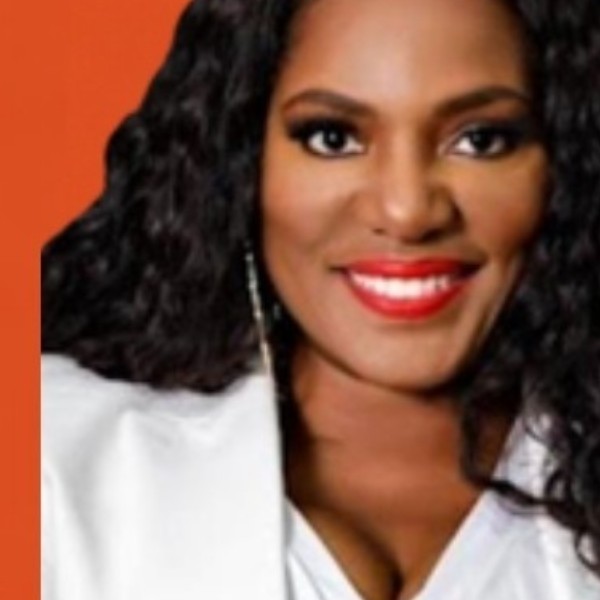
Monica-Lynn Daniely is an executive consultant, certified Abundant Life Coach and founder of several businesses. She took a cosmetology course at 16 after her family moved from Cleveland to Chicago, turned down a full ride to Spelman to finish it, and paid her own way through college doing hair. She went on to open salons and schools, work in L'Oréal's professional division and for trade show companies and magazines, and carry those skills into pharmaceuticals at Pfizer. She studied communications and marketing and holds a master's degree in business. Today she helps business owners, especially women, scale by starting with their why, their numbers, their audience, their systems and their leadership.
Want help putting this into practice?
Book a Business Logjam Session with Kathi
A private 75-minute online session to find the one thing holding your business back and leave with your next steps, using the same F.L.O.W. process Kathi uses with her own clients: Focus on your goals, Locate your logjams, Outline your solutions, Walk away knowing your next steps.
Prefer to start small? Download Kathi's free eBook 6 Steps to Organize Your Home Office.
Published · Updated
This episode page is for general information. Guests speak for themselves, and their opinions, statistics and examples are their own. Nothing here is legal, financial, medical or mental-health advice; talk to a qualified professional about your own situation. Some links go to the guest's own products or free offers; addSpace does not earn a commission from them unless stated.