


Episode 33
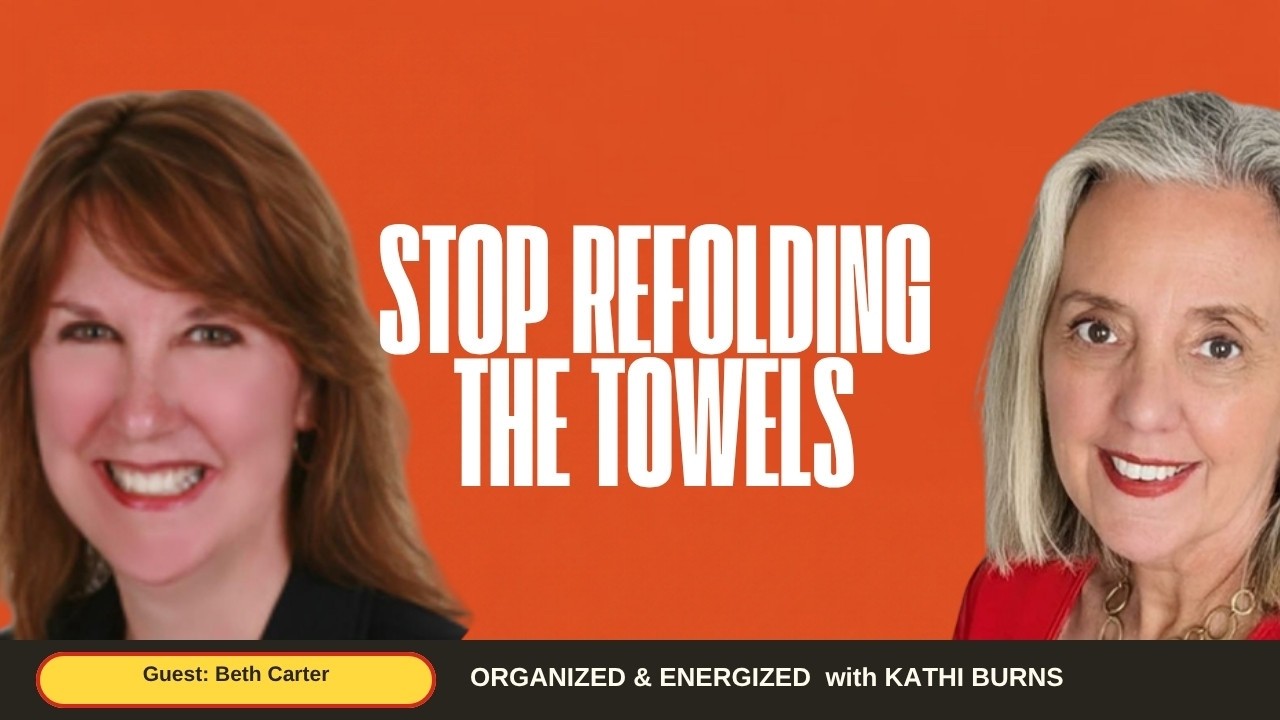
with Beth Carter, executive, business and career coach, corporate trainer and founder of Beth Carter Enterprises · June 22, 2022 · 33 min
Beth Carter was laid off twice in 1991, turned freelance work into her own executive search practice, and has run her own businesses for more than 30 years.
She recommends the DISC behavioral assessment to new entrepreneurs, including solopreneurs, because success comes down to self-awareness.
When a business keeps hitting roadblocks, Beth says to get input from outside your circle of influence, meaning a coach or business advisor rather than family or close friends.
Beth's delegation test is your hourly value: if you bill 200 dollars an hour and do work you could hire out at 25 dollars an hour, you lose 175 dollars for every hour you do it yourself.
The best advice Beth ever received was to act once something is not right for you anymore.
Published · Updated
What is this episode about?
How to delegate is the practical thread running through Kathi Burns's conversation with Beth Carter, an executive, business and career coach, corporate trainer and founder of Beth Carter Enterprises. Beth was laid off twice in 1991, built an executive search practice from freelance work, and later added coaching, corporate training, university teaching and the executive directorship of the Rhode Island Business Competition. You'll hear why she recommends the DISC assessment to every new entrepreneur, why advice should come from outside your circle of influence, how to work out what an hour of your time is worth, and what refolding towels says about control. Beth also explains how she gets unstuck from busyness, the difference between bragging and self-promotion, how she defines an ideal client, and the best advice she ever got: when something isn't right for you anymore, do something about it.
A lot of them say, oh, I can't afford to use someone. And I'm like, you can't afford not to use them.Beth Carter
Jump to links and resources · Part of How do I grow my business without burning out? · All episodes · Every guest
What are the key takeaways?
- Beth says many business owners are great at their craft but have never learned business basics, which is why so many businesses fail.
- She recommends the DISC assessment because it shows how you behave at home and at work; a big gap between the two means you are carrying stress from wearing a mask at work.
- Advice for a stuck business should come from outside your circle of influence, such as a coach, business advisor or seasoned entrepreneur, not family or best friends.
- To decide what to delegate, compare your billing rate with what it costs to hire the work out; at 200 dollars an hour versus 25, every hour you keep costs you 175 dollars.
- Beth's towel question shows how control costs time: five minutes of refolding twice a week adds up to 520 minutes a year.
- She protects her time by blocking personal time, saying no to work she does not enjoy, and hiring a team of specialists such as a bookkeeper, accountant and IT help.
- Beth defines an ideal client as one who pays, pays on time, refers you and is someone you enjoy working with.

This episode is brought to you by the Business Logjam Session
A private 75-minute online session with Kathi Burns to find the one thing holding your business back and leave with your next steps. It is the same F.L.O.W. process Kathi uses with her own clients: Focus on your goals, Locate your logjams, Outline your solutions, Walk away knowing your next steps.
Find What's Holding Me BackInterested in sponsoring the show? Get in touch.How did Beth Carter become a business coach?
Beth Carter came to coaching through executive search. After an internship at KPMG, she was laid off twice in 1991, and freelance work for a former boss grew into her own search practice, with corporate clients such as Macy's and Wells Fargo. Just before the Great Recession she got bored making 100 to 150 calls per search, earned her coaching certification and built a coaching and corporate training practice alongside it.
Which assessment should a new entrepreneur take?
Beth Carter recommends the DISC behavioral assessment, even for solopreneurs, because success comes down to self-awareness. DISC shows one graph of how you behave at home and another of how you behave at work. If the two are very different, she says you are carrying stress from wearing a mask at work.
What should you do when your business keeps hitting roadblocks?
Talk to someone outside your circle of influence, which Beth Carter says means not your family and not your best friends. A coach, business advisor or seasoned entrepreneur can see what you miss when you have tunnel vision. Then step back and ask what you have learned, what you can apply today, and what you can apply in the future.
How to delegate when you think you can't afford help?
Work out what an hour of your time is worth and compare it with the cost of hiring the task out. Beth's example: if you bill 200 dollars an hour and do 25-dollar-an-hour work, you lose 175 dollars every hour. Her office manager handles email marketing so Beth can speak and network. You can't afford not to use someone.
Why do entrepreneurs struggle to let go of tasks?
Beth says delegation is a control issue as much as a clarity issue. In her trainings, people list everything they do and sort it on the Eisenhower chart; anything in the two bottom quadrants should go to someone else. Then she asks who refolds the towels at home: five minutes twice a week is 520 minutes a year. Her point is that your name may be on the door, but you won't be good at everything, and delegating also develops your staff.
How do you get unstuck when you're too busy?
Beth sets boundaries and says no to work she doesn't enjoy. She once noticed nobody returned her calls on Wednesday afternoons, so she took a midday Zumba class then, and today she will still take a few hours off on a nice Friday afternoon. She also hires a team for what she doesn't want to do, such as a bookkeeper, an accountant and IT help.
What is the difference between bragging and self-promotion?
Bragging is a claim like 'I am the greatest coach'; self-promotion is stating facts, like how many clients you have served and what you did for them. Beth teaches this in her workshop on the good and bad four-letter words for success, where the worst word starting with B is brag. She says women in particular struggle to promote themselves, even though their name is tied to their business, and that a first impression takes about six seconds.
What is the best business advice Beth Carter ever received?
Once you know something is not right for you anymore, do something about it. Beth acted on it when she got bored with executive search, went to coaching school and later began teaching. She says if you no longer enjoy a product or business, sell it, shut it down or give it away, because it will show. She also defines the ideal client: one who pays, pays on time, refers you and is enjoyable to work with.
Where does each part of the conversation start?
- 0:00 Meet Beth Carter
- 0:24 From executive search to coaching
- 1:45 Laid off twice in one year
- 4:28 Her favorite part of the work
- 5:57 The assessment every entrepreneur should take
- 7:49 Her first coaching client
- 10:33 When you keep hitting roadblocks
- 12:36 Organizing in a tiny office
- 15:06 What your time is really worth
- 17:28 The towel question
- 18:57 Getting unstuck from busyness
- 21:55 First impressions in six seconds
- 22:51 Bragging versus self-promotion
- 24:28 When it's not right anymore
- 26:27 Defining your ideal client
- 27:22 Where to find Beth's blog
- 29:46 Why she's called unconventional
- 32:06 Wrap-up
What resources were mentioned?
- DISC behavioral assessment
- Eisenhower chart (urgent/important quadrants)
- Beth Carter's weekly blog, including series on team building, leadership and women in leadership
- Rhode Island Business Competition
- Constant Contact
- Zoom
These episodes continue the same thread as this one: Lia Dunlap, Carly Church, Ginny Priem, Stephanie Wall Morrow also answer the question "How do I grow my business without burning out?", and the rest are the most recent conversations on the show.

 MotherhoodEpisode 147
How To Build a Village That Supports Your Business and Your Life with Carly Church


See every episode on the podcast archive or filter by topic on the How do I grow my business without burning out? hub.
How can I support the show?
- Subscribe on Apple Podcasts, Spotify or YouTube, or add the RSS feed to any app.
- Rate and review. A rating on Apple Podcasts helps new listeners find the show, and Kathi reads every review.
- Share the episode with one business owner who needs it; the share buttons are at the top of the page.
- Grab a free eBook: 6 Steps to Organize & Energize Your Home, 6 Steps to Organize Your Home Office or 6 Steps to Organize & Energize Your Life.
- Work with Kathi. The Business Logjam Session is a private 75-minute session to find what is holding your business back.
- Be a guest. Apply here if you have a story about clearing the obstacles in your business.
What did they say, word for word?
The transcript below is edited for readability: filler words and false starts are removed and speaker names are added. Nothing was added or summarized.
Read the full transcript +
Kathi: Hi everyone. I'm back, and today I'm speaking with Beth Carter. I'm very excited because she is a coach for business owners just like yourself, or if you're aspiring to be a business owner. We're here to give you some tips so that you can move forward with more confidence, more ease, and that's what it's all about. So welcome to the show, Beth.
Beth: Thanks so much for having me. I'm really looking forward to today.
Kathi: Absolutely. So I know you're a girl of many trades, and you also teach at a college and you do a lot of other stuff. But tell me, what's your backstory? How did you become a business coach as such?
Beth: Well, I think we have to go back to my internship. I was an intern at KPMG, which is one of the big four public accounting firms. I was in their public relations department, and my mentor actually was the head of PR at the time. So when I graduated from college, the unfortunate problem was the firm was moving, so they froze all the positions. So I went to a small marketing sales promotion agency. Then he called me up. He said, there's no jobs in PR, but there's a great job in executive search. Having no idea what the heck I was getting into, I said, okay, fine, I'll look at this. And I got the job and started in Manhattan, because I am a native New Yorker. I grew up right outside of Manhattan and was there for a while, and then transferred to Stamford, Connecticut, which I really enjoyed. Unfortunately, there was a management buyout of the practice, and I went to a search firm for a year. And then in 1991, I'll be honest, I got laid off, because everybody else and their brother got laid off in '91. It was a bad economic year, especially for recruiters. And then I joined Ernst & Young, another big four public accounting firm, in their executive search group, and six months later they shut the practice down.
Kathi: Oh.
Beth: I was laid off twice in '91. So a former boss from the search firm said, hey, do you want to do some freelance work for me? And I said, sure. And then a colleague referred me, and it grew from there. So I built a pretty sizable executive search practice, and we work on a per-hour model. So search firms would subcontract out to us. Then I had my own corporate clients, like Macy's, Blinds To Go, Wells Fargo and a few others. Then what happened was, I've been doing this since 1991, and just before the Great Recession, I decided I needed to broaden myself. I was getting bored smiling and dialing above my garage, making 100 to 150 calls on a search. And I still like search. I still do some of it. But the reality was I wanted to expand. So I went back, got my coaching certification and started building my coaching practice. I'm an executive, business and career coach. I do mostly career coaching only because of my search background, but obviously I do executive coaching because I recruit mostly executives. And then of course I've been a small business owner now for 30-some years. So I do all three. And then I also do what you could call group coaching, but it really is corporate training. So I do corporate trainings for banks and healthcare. Aetna's been a client of mine. Benjamin Moore has been a client of mine. And sometimes I do coaching as well as training, so I might go in and do training and then individually coach others. And then from a business coaching perspective, because I know that's the key area we're focusing on today, people are very passionate about what they do, but most of them unfortunately have not taken business 101, as I call it. So they're great at their craft, but beyond that, they can't manage the business. And that's why there's such a high rate of business failures. The other thing that I do, I do have more: I am the executive director of the Rhode Island Business Competition, which is a part-time job. It's for a small nonprofit, and we award cash and prizes to a winner and two finalists. So I work with entrepreneurs as well, and support entrepreneurs through programming, our competition, et cetera. So I'm stamped on the forehead: entrepreneur.
Kathi: Right. That's exciting. And I know that it happens with me, too. You go in to talk at a corporate environment, and you end up one-on-one coaching with the people that need it, and that's always exciting. So that's multifaceted. What's your favorite part of what you do right now? What do you like best?
Beth: It's so hard to say, because I love creating content for my trainings. And as you mentioned, I actually teach at two universities, Bryant University and Roger Williams. So creating the content, I really, really love it. I love getting in front of the students. I feel that when I'm in front of students, I learn how they think, and then that helps me in my corporate trainings, and then vice versa. But then I also like the one-on-one coaching, because some people feel intimidated, and they don't necessarily want to speak out in front of others in a bigger setting. So having that one-on-one, especially for introverts. Also, I don't know if you're familiar with this, but I'm a DISC expert, which is a behavioral assessment. So the S's and C's, which are the real introverts, definitely benefit more from coaching. And the other thing that I don't like is when people go into a training, they're all gung-ho, and it could be months of training, and then they take it all and they shove it on a shelf. So the idea of having that accountability through coaching, I think, is very valuable.
Kathi: Yeah, accountability is definitely where it's at. I know that you've probably gotten really deep over the years in all the different types of assessments that you can do, being from an HR background. Is there a particular assessment that you would recommend for a wannabe entrepreneur that's going to come out and create something, that would help them find their way into business? Is there a specific assessment that you would suggest that they take?
Beth: Yeah, I still go back to the DISC assessment, because even if you don't plan on managing people, if you plan on being what we call a solopreneur, you still have to be very self-aware. The best leaders, pick up any leadership book, pick up any book on any successful entrepreneur, it comes down to self-awareness. So if you don't understand your behaviors, your emotions, all of that, and then you're not able to pick up on others' social cues, then you're not going to have a good relationship. So customer to customer, even me, corporate trainer to trainee, coach to coachee, whatever relationship you have, personal too, you've got to be more aware. And we don't realize this. So the DISC assessment to me is valuable because you can see it in color. And I like the one where there's a graph of you at home, and then the one of you at work. I like that because you are slightly different at home than you are at work.
Kathi: Yes.
Beth: And if it's very different, then you're actually carrying a lot of stress, because what you're doing is you're putting a mask on while you're at work. So I think an entrepreneur should really… The problem with entrepreneurs, at least when they're initially starting or thinking of starting, is: I don't want to spend a lot of money, but I want to make a lot of money. And there are a lot of different things that you do need to spend money on. And for what little DISC costs, I think it's very valuable to have a better understanding of who you are, and then be more sensitive to how others are.
It comes down to self-awareness.
Kathi: Yeah, absolutely. I agree with that totally. I think it's a strong, powerful tool. So you had the agency on your own, and you had that for several years, and then you landed your first coaching type of client. Talk to me about that client and how it felt when you started out.
Beth: Well, actually, I still have the search firm, by the way. Just throwing that out there. And it's global, which is nice. I think the first big client I got… let me backtrack. I thought my executive search clients would automatically become coaching clients. I learned very quickly that because my work is global, a lot of companies want coaches that are right there. So you could do one-on-one, but they don't necessarily want to pay for travel and all of that. Now, obviously with Zoom, things get much easier, but you're going back, I started going to coaching school in '08, so back then that wasn't a possibility. So someone I had built a relationship with through where I teach, I'm also an alum, had referred me. He was a financial adviser, and he referred me to one of his clients' daughters. And I don't normally coach the 20-some-year-olds, and this is before I started teaching, too. We worked together for four or five months, I would say. And Mom was a helicopter parent. So she had her hair in front of her face. She was very insecure, kind of like this. And she goes, I must be a loser. Mom got me a life coach.
Kathi: Oh boy.
Beth: First of all, I hate being called a life coach, because I'm not. But it was to get her into the family business, and that was the key piece. So three months in, she went back to school. She actually did an online program. She felt intimidated by being with younger people, and she wasn't that old. She was only about 24, 25, but everybody else was like 18, 19, 20. And long story short, she is in the family business. She's done very well. And it really opened my eyes to when you have someone so supportive, without necessarily telling you what to do, which is what a coach really is, that you can do anything, but you need to have that cheerleader next to you. I always describe coaching as if you're in a car. You are in the driver's seat. You are navigating. And of course, you want to get from point A to point B, meaning the goal. I'm in the passenger side. I can't take the wheel away from you. Well, I could, but it'd be very dangerous. So if you want to go off and stop at Starbucks, or you hit a roadblock or whatever, my role is to encourage you to get back on the right path and then reach your goal.
Kathi: And let's say that an entrepreneur feels like they're on the right path, but they keep having roadblocks and roadblocks, and they're just in overwhelm, and they don't know if they're doing the right thing. What would be the piece of advice that you would give them?
Beth: I think talking to someone else, to be honest with you, because, again, it's me too. When I first started my business, I was kind of like this, and the goal was to make money. That was the goal, and I think for most entrepreneurs, that's what the goal is. You want to make money. You look at some of these people, anyone, Bill Gates, Elon Musk, all those, they were entrepreneurs. That's what they were. Even going back to Henry Ford, he was an entrepreneur. So the thing is, I think we get very tunnel vision and really need to talk to a few others. And that is not your family members. That is not your closest BFFs. This is outside of what I refer to as your circle of influence. This is either going to a coach, going to a business advisor, things along those lines. I think it's critical to get different input and then take a step back and say, okay, what have I learned? What can I apply today? And more importantly, what can I apply in the future? And that's the other issue. Everybody wants everything done instantaneously.
Kathi: Yeah. No, I think that's really sound advice. And I agree that family members are not necessarily the best place to get advice, because half the time the family doesn't even understand what we're doing.
Beth: That's true, too.
Kathi: They don't even know what we do for a living, even though they might live and breathe us talking about it all the time. So it's not a good place to get advice. But if you talk to somebody who's in business, even a competitor is a good thing. A coach is another good thing. Anybody who's a seasoned veteran of being an entrepreneur, so to speak, would be a great sounding board, because they can see what we cannot always, because we're stuck in our thoughts, and like you said, we're in that tunnel vision kind of thing. Okay. So I have to ask you this, because I'm a professional organizer. I'd like to know if you have any hacks that you use yourself personally to keep yourself organized. Any secret skill set you've developed, or anything you've tapped into?
Beth: Well, I've got to go back to living in Connecticut. I just passed my nine-year mark in Rhode Island. So in Connecticut, I had a beautiful office over my garage. My ex-husband was self-employed, so we were both entrepreneurs. He had the downstairs, I had the upstairs. I had plenty of space. Here in Rhode Island, I have almost the size of a closet. It might be a little bit bigger. It's an actual office, but it's very, very tiny. And so I have files in the basement and this and that and everything. So I think one of the things that I've learned is to try to reuse information, especially with my trainings and things along those lines, so that you don't have multiple files. And I do like paper. I admit that I'm more of a paper person. But where I struggle, which I know is probably your next question, and I will answer the hack question in a second, is digital files. I just had a USB flash drive…
Kathi: Uh-huh.
Beth: Yeah, and thankfully most of it was someplace else. Most of it. But I think the thing in terms of organization is realizing where you are not strong. And I'm pretty organized. I have several friends who are professional organizers, and I've actually spoken at NAPO regional conferences, so I do have a lot of friends in that realm. But I think for me, less is more. So I'm trying to reduce down and work that way. But the other thing, again, is knowing your strengths. So I have an office manager. She's much better on things where she'll get into the weeds. I am more of a high-level person. I don't like to get into the weeds. She actually lives in Connecticut. I got her right as I was moving, because the person I had wanted to do something else and recommended her, and she's been with me nine years. And she's great because I'll throw 20 ideas at her, and then she'll rein me in and say, okay, what do you want to do this week, or what do you want to do today? My office manager is really, really great at that, because she knows that I'll go off on 20 tangents, too. So she, again, reins me in. So again, you have to do a cost-benefit analysis. Meaning, you have to figure out: if you hire someone to do something at, let's say, $25 an hour, and you bill at $200 an hour, everything that you do that she could do, or somebody else could do, you're losing, in my eyes, $175 an hour.
Kathi: Correct.
Beth: Entrepreneurs, again, have got to get their head around that, because a lot of them say, oh, I can't afford to use someone. And I'm like, you can't afford not to use them. So I'm relatively tech-savvy, but she's a thousand times better than I am. So for me to send out Constant Contact email blasts and all that kind of stuff is not the best use of my time. The best use of my time is to get in front of people, either through speaking, presentations, networking events, all of that. And with her being in Connecticut, obviously she's not doing that part. So we're kind of a yin and yang kind of thing.
A lot of them say, oh, I can't afford to use someone. And I'm like, you can't afford not to use them.
Kathi: Yeah, that's really exceptional advice, too: make sure you delegate. And I'm always asking my clients, well, what's your hourly value? And some people don't charge by the hour, and they don't even know what that means. So as entrepreneurs, we all need to know what our value is on an hourly rate, and then figure out if we're doing something that's below our rate. I agree with you. If you're $200 an hour and you're doing $25-an-hour admin stuff, you're definitely shorting yourself $175 an hour. And once you start thinking along that line, I think it's great advice, because then you start learning how to delegate and thinking about what you should be delegating. Which is an important thing, because half the time people don't know what they're doing that they need to delegate anyhow. So again, that's a clarity thing, right?
Beth: It's also a control thing. I just did a training this morning, and I ask this question all the time. I get them to do a mini brain dump and put down everything, and this was just work-related. So four minutes, write down everything you do, then they prioritize and all of that. And then if you know the Eisenhower chart, the bottom square where it's not important, not urgent, I said, if there's anything in that quadrant, or even the whole bottom, the two bottom quadrants, you should really be delegating to someone else. And then I say, look, I'm going to stop this training right now. I have a very important question to ask you. And they're all looking at me like, what could she ask? And I say, how many of you refold the towels in your house? And some people were looking at me like, why is she asking this question? It's such a stupid question. Others are like, me? And I said, so it takes you about five minutes to refold the towels. Twice a week is 10 minutes, times 52 weeks. You're losing 520 minutes a year that you could be doing something else. And I ask them, of course, why they refold them. Oh, it fits better in the closet. I like the way it looks. I just don't like the way they do it. All these things. And I talk to entrepreneurs about this, too: you've got to let certain things go. And the control factor. It's my product. It's my service. My name's on the door. All this stuff. You've got to let it go. You're not going to be good at everything. And I think that's the hardest lesson for entrepreneurs to get: that you do need to delegate and push down some of the things, and I'm not just talking administrative stuff. My office manager does some marketing for me. She does some other stuff. I have a blog series, and I even had her write a couple of blogs. I do edit them, and it's not her favorite thing to do, but it was a good learning lesson for her. So you want to grow your staff and develop your staff, too.
You've got to let certain things go. You're not going to be good at everything.
Kathi: Yeah, absolutely. Perfection is overrated, and no one's going to do it exactly how you would do it, and it really doesn't even matter. In the big scheme of things, it really doesn't matter. So I'm in total agreement with that. Tell me about any time that you felt stuck in your busyness. You were just busy, busy, busy, not getting stuff done. And what was your cure-all, besides delegating out? I know we already talked about that. Was there anything else that you did to make yourself feel less stuck and less busy, so that you were actually focusing more on what you should be focusing on?
Beth: So working on the business, not in the business, is what you really mean.
Kathi: Yes.
Beth: So I hate to say this, but with age comes wisdom. And I think it's very true. Over half my life I've been an entrepreneur, and I work very long hours. Years ago it just got to a point of ridiculousness how much I was working. And even coming off vacation this past week, I'm working a long day today, which is fine. But then I have to say to myself, no, it's nice out. It's a Friday afternoon. I'm going to disappear for a few hours. Or when I lived in Connecticut, at noontime there was a Zumba class. My staff knew that I was out, but nobody else did. And I did an analysis of the week. From a recruiting standpoint, no one called me back on Wednesday afternoons. I don't know why, but no one did. If I called people, I'd get them, but they never called me. So for me to disappear for an hour and 15 minutes, no one knew. And of course, this was before Zoom, so no one could see me either. So I'm learning better to set boundaries and say no to things, because even from a professor standpoint, I get asked, be on this committee, do this. I'm only an adjunct, but I'm an alum, too, so people think I can do all these things. And I do a lot, as we've already rattled off earlier. So I'm starting to get better at what's really important, and also what I enjoy doing. If I don't enjoy doing it, I might do it once, but then I'll respectfully say no, because I just think that I'm not going to put my all into it. And entrepreneurs, we don't like doing certain things. Maybe finance is not our thing, or whatever. So then what you have to do is hire, as I refer to it, your cadre of people: bookkeeper, accountant, IT, whatever. And so that's what I do, because I don't want to fiddle with my computer. I let somebody else handle that.
Kathi: Yeah. So delegate it out and take time for yourself, is what I'm hearing. And taking time for yourself, I think, is super, super important. And you're right, with Zoom now, it's less easy to not be there, right?
Beth: But it's okay. Look good. You've got to have the face.
Kathi: Got to look good. Oh my God. As women, it's just really hard, isn't it? All the guys just get on their little podcast and they cruise right along. They have no hair and makeup, and we can't do that. Sadly. I guess we could, but who knows?
Beth: I heard a woman, a Wall Street executive, speak once, and she said she went out one night. They were traveling with two other gentlemen, and they were out all night, and then she had to get up early in the morning. She goes, they roll out of bed, they look good. This takes 45 minutes. And I always think about that, because that's the other thing: the persona. When we are meeting a new potential client or customer or vendor or alliance partner, all those people, it takes six seconds to make a first impression. And unfortunately, we bring a lot of bias to the table. And unfortunately women, I think, feel like they have to do more, which to some extent maybe we do, because you want to build that relationship. And that's why I go back to the DISC assessment, too. If you can pick up on social cues that are working or not working, then that helps. I have a great workshop called the Good and Bad Four-Letter Words in Your Dictionary for Success. And the first question I ask is, what's the worst four-letter word that begins with B? And it's not the one you're thinking of. Excuse me, because it's five letters, and no one gets it. And the answer is brag. Especially people my age grew up with that: you don't brag. So I try to get people to understand that you're not bragging, you're self-promoting. If I walk out on the street and say, I am the greatest trainer and coach, you need to hire me, that's bragging. If I go out and say, I have had a hundred clients and I've done this, this and this, that's fact. So fact is a good four-letter word. But women have a really tough time self-promoting.
You're not bragging, you're self-promoting.
Kathi: Yeah.
Beth: And you're part of the business. I don't care if it's a product or service, your name is still tied to it.
Kathi: Absolutely. And I think as an image consultant, it is a three-to-six-second thing. And what happens with women is we have so many more choices for how we will present ourselves. And that's good and that's bad. That's a dicey slope. Men: are you going to wear a suit and tie? Are you just going to wear a suit, or are you going to just wear a casual shirt? They don't have a lot of options. For us, the sky's the limit. We could do pants, shirts, dress, sweater, casual, whatever. And then we have the shoes issue. But we have a lot more options, so it makes it a lot more difficult to create the impression that we want to create from those first three to six seconds. Okay. So how about the best piece of advice that anyone's ever offered to you?
Beth: That's a good question. I think the best piece of advice is: once you know that it's not right for you anymore, do something about it. So in my case, I was getting burnt out with search. Actually, I was getting bored. I wasn't burnt out, I was just bored. A hundred phone calls saying the same thing over and over again gets a little old. So I went back to coaching school and doing all of that. And then I got a phone call one day from a person I had met through my university, and she said, hey, do you want to teach a team building class? And so I started teaching four years ago. So I'm always challenging myself. I get bored pretty easily. But I always go back to: why are you doing this? So if it doesn't make sense anymore, especially if it's a product, if you just don't like manufacturing anymore, or you're tired of the rigmarole, sell it or shut it down or give it away, whatever it may be. Because I think that if you're not totally into it, it's going to show. And for me, on the search side, I do have one search right now. I've only been doing one search a year for the last three years, partly because of COVID, and I'm fine with that. One search is fine, a couple of searches I'll do. And again, it depends on what the search is. If it's global, I do a lot of work in the nonprofit space. I'm fascinated by that. I love talking to those people around the world and getting their perspective on things. But if I'm doing 100 phone calls to locals, it's a boring search, whatever, I don't want to do it. So I think that you have to stay passionate, and it's hard to stay in it sometimes. You might get a string of bad clients, or you don't get paid, which is always an issue. So, if you don't mind me digressing for a second, I think the important thing, too, is defining what is the ideal client. And the ideal client is not only do they pay you, they pay you on time, but they refer you and you enjoy working with them. Because you can work with a really nice person, they pay you, but they kind of take advantage of you. So you have to be careful with that. But if they're referring you and supporting you, it's a two-way street. You give great service to them, and they in turn support you. So I think that's an important message, too, to entrepreneurs.
Once you know that it's not right for you anymore, do something about it.
Kathi: Yeah. Know who you like. Know the clients that you want to work with. Work with the ones that bring you joy, because there are so many clients out there. There's not a deficit of clients, let me tell you that, for any of you who are entrepreneurs. There's never a deficit of people who need your skill set. But the more you know who you like to work with, the more enjoyable your job will be in the long run.
Beth: Absolutely.
Kathi: Yeah, good advice. Okay, so do you have something free for the listeners that we can download or listen to? What do you have as a valuable free resource that you could offer the listeners?
Beth: Well, to be honest with you, I gave this some thought, because I don't really have a lot of stuff in that respect. So my blogs are on my website, and we do have a blog every week, and I think they're valuable. I get a lot of feedback that they're helpful. I have a series on team building. I have a series on leadership. I actually have a six-blog series on women in leadership, which has been very interesting, some of the feedback I've gotten on that. One of the things I mentioned in that blog series is the idea that you go to a conference, and because I'm one person, I get stuck sitting with a whole corporate table. And they're all very nice, and they all introduce themselves, but then all of a sudden they're talking about the latest nail polish and the gossip and all of that. And some people have pushed back on me on that one. They're like, what's the problem with going to a conference and making it a girls' day? And I'm like, well, because it's not a girls' day. I'm there, I'm putting out money, I want to meet people. So there's my blog series. And if someone wants to email me and wants to have a 10-minute session, I'm more than happy to do that as well.
Kathi: Okay, great. What we'll do is we'll put the link down below for the blog and for your email. Reach out if there's anything, if you have a burning question or something that Beth can help you with. That's very gracious of you. I appreciate that.
Beth: Absolutely. Well, you know what? Again, it comes full circle, meaning that if you help others, they'll help you in the long run. And I think that we do need to band together, because people get very competitive. Because of the pandemic mostly, I think people are a bit burnt out. I don't think they're necessarily all thinking clearly. So we need to support each other. In the end, as you said, there's tons of clients out there, so there should be no super competitiveness here. And I like dealing with different coaches, different people, because again, I also learn, and then I can use that learning in my trainings or my coaching. So it helps me as well.
Kathi: Yeah, absolutely. Is there anything that I should have asked you that we didn't cover that's on your mind?
Beth: I think one of your questions you asked is, why would someone want to do business with me?
Kathi: Why would someone want to do business with you?
Beth: Thank you. The first semester I taught was team building, as I said, and they were seniors, and ironically my son went to the same school, so a lot of them knew my son. And I asked them to use three words to describe me, and I had them text me. A lot of them said I was creative and whatever, but the word that came out, which another coach also called me, was unconventional. And I think that's very true. I've brought crayons into the classroom. I don't like to lecture. Same with coaching. I've brought crayons into coaching sessions. I've had them do other types of things, because that makes it memorable. If you have the same old, same old coaching or training, even search… I try to get outside of the box and try to bring in some kind of level of creativity, because a lot of people also don't think they're creative. And we lose creativity as we get older. But we're creative in different ways. I have a good friend. She'll tell you flat out she's not creative. She doesn't scrapbook and knit and all that stuff like I do, but the way she thinks through numbers is scary. She thinks through things I would never think of. She'll also take stuff out of the refrigerator and make an amazing meal. You'll never get it a second time, but it's an amazing meal. So I try to draw that creativity out of others. I do unconventional things to get that for them, and also to boost their confidence and make it more memorable, so that those notes and everything don't end up on the shelf.
Kathi: Yeah, never to be looked at again. Right. And they'll walk away feeling that they are more creative, because I agree, there are a lot of people that feel that they aren't. But I think we all have that spark of creativity within us. Some of us express it every day. Some of us hide it, because we don't think we have it. But we really have it. Just like going into your fridge and making a beautiful meal out of whatever. That's total creativity. So kudos to her and kudos to you. I'm sure you've pointed that out to her a bunch in the past.
Beth: Yes, I have.
Kathi: Yeah, of course. That's what friends are for. Okay. Well, I really appreciate your time and your energy, and I'm just so thankful that you've been on the show. So thank you for your time.
Beth: Oh, I really appreciate it. It's always fun doing podcasts, so thank you for having me on.

Kathi: Absolutely. This is fun. Everybody, make sure to check her out. Send her an email or go to the website and read the blogs on the specific topics you want to ask about. She's written about them just for you. So go ahead and check it out. Meanwhile, I'll see you next week.
Where can I find the links and resources from this episode?
Connect with Beth
Organizations and companies
Inspired? Here Are Your Action Steps:
- Take the DISC assessment and compare how you behave at home with how you behave at work.
- When you keep hitting roadblocks, ask a coach, business advisor or seasoned entrepreneur for input instead of family or friends.
- After getting advice, write down what you can apply today and what you can apply in the future.
- Work out your hourly value and list the tasks you do that someone else could do for less.
- Do a four-minute brain dump of everything you do, sort it on the Eisenhower chart, and delegate the two bottom quadrants.
- Notice where you redo other people's work, like refolding towels, and let it go.
- Block personal time in your week and say no to commitments you don't enjoy.
- Hire specialists, such as a bookkeeper, accountant or IT help, for work that isn't your strength.
- Rewrite your self-promotion as facts: how many clients you've served and what you did for them.
- Define your ideal client as one who pays, pays on time, refers you and is enjoyable to work with.
Frequently asked questions
How to decide which tasks to delegate?
+
Beth Carter has people write down everything they do and sort it on the Eisenhower chart; anything in the two bottom quadrants, the not-urgent tasks, should be delegated. She also compares your hourly value with the cost of hiring the work out. If you bill 200 dollars an hour and the task costs 25 dollars an hour to hire out, keeping it costs you 175 dollars an hour.
How can I learn to delegate effectively?
+
Beth says to start by admitting that it's a control issue: you won't be good at everything, even when your name is on the door. Let go of perfection, hand off more than administrative work, and use delegation to develop your staff. She has her office manager handle email marketing and even write some blog posts, which Beth edits.
Which assessment does Beth recommend for new entrepreneurs?
+
The DISC assessment. Even a solopreneur needs self-awareness, and DISC shows how you behave at home and at work. If the two are very different, Beth says you're probably carrying a lot of stress from wearing a mask at work.
What should you do when your business keeps hitting roadblocks?
+
Talk to someone outside your circle of influence, which means not your family and not your best friends. A coach, a business advisor or a seasoned entrepreneur can see what you can't when you're stuck in tunnel vision. Then step back and ask what you can apply today and what you can apply in the future.
What's the difference between bragging and self-promotion?
+
Saying you're the greatest coach is bragging. Saying you've worked with 100 clients and done specific things is a fact, and facts are fine. Beth says women in particular struggle to promote themselves, even though their name is tied to their business.
Who is talking in this episode?

About the Host, Kathi Burns
Kathi Burns, CPO®, is a Business FLOW Strategist based in San Diego. For the last 20+ years, Kathi has helped clients create systems they can stick to. She is the author of How to Master Your Muck, Organizing With Tetris and Home Organization, The Smart Guide, and co-author of four more titles; all are in Kathi's shop. Kathi's business has been featured on Good Morning America, and her advice has been featured in Oprah Magazine, Martha Stewart Living, Better Homes and Gardens and Entrepreneur Magazine.
More about Kathi · Shop Kathi's books · Business Logjam Session · Apply to be a guest

About Beth Carter
Beth Carter is the president and founder of Beth Carter Enterprises and a Certified Professional Coach who works as an executive, business and career coach and corporate trainer; Aetna and Benjamin Moore have been clients. A native New Yorker, she started in executive search and was laid off twice in 1991. Freelance work turned into Carter Consultants Ltd., the international executive search firm she founded that year, with clients such as Macy's and Wells Fargo. Beth teaches at Bryant University and Roger Williams University, is executive director of the Rhode Island Business Competition, a nonprofit that awards cash and prizes to entrepreneurs, and is a DISC behavioral assessment expert.
Want help putting this into practice?
Book a Business Logjam Session with Kathi
A private 75-minute online session to find the one thing holding your business back and leave with your next steps, using the same F.L.O.W. process Kathi uses with her own clients: Focus on your goals, Locate your logjams, Outline your solutions, Walk away knowing your next steps.
Prefer to start small? Download Kathi's free eBook 6 Steps to Organize Your Home Office.
Published · Updated
This episode page is for general information. Guests speak for themselves, and their opinions, statistics and examples are their own. Nothing here is legal, financial, medical or mental-health advice; talk to a qualified professional about your own situation. Some links go to the guest's own products or free offers; addSpace does not earn a commission from them unless stated.