


Episode 7
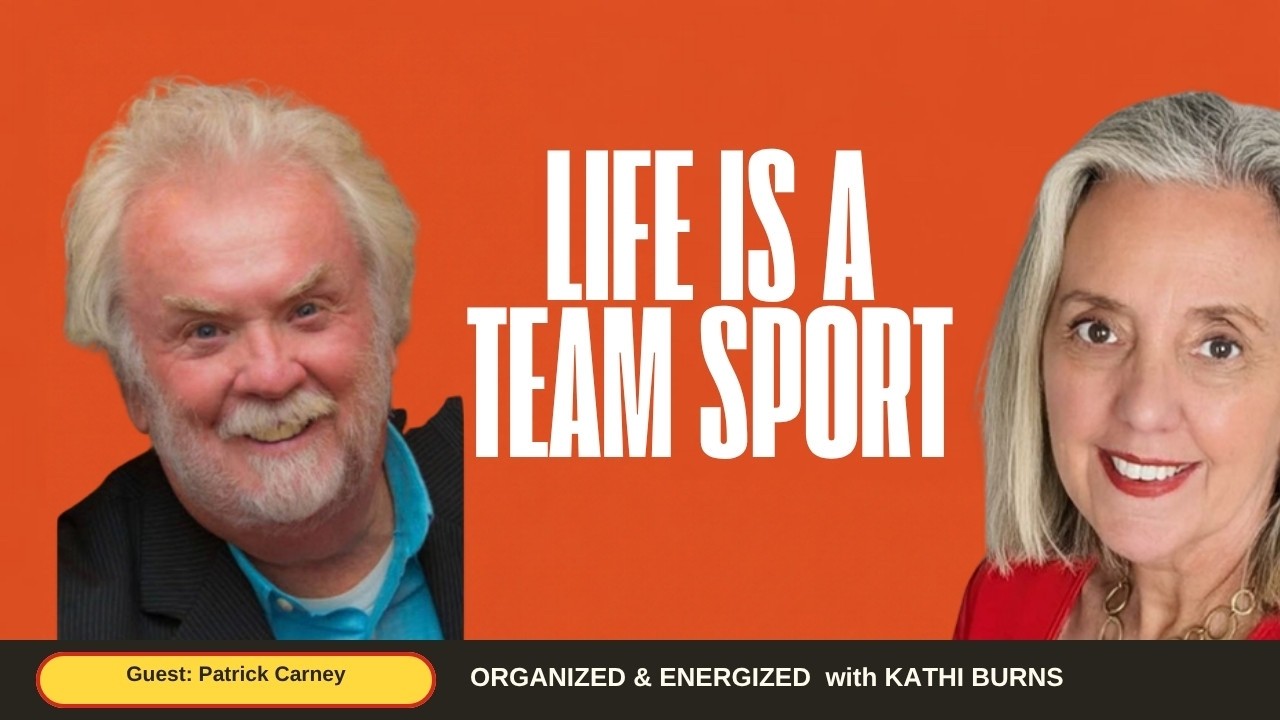
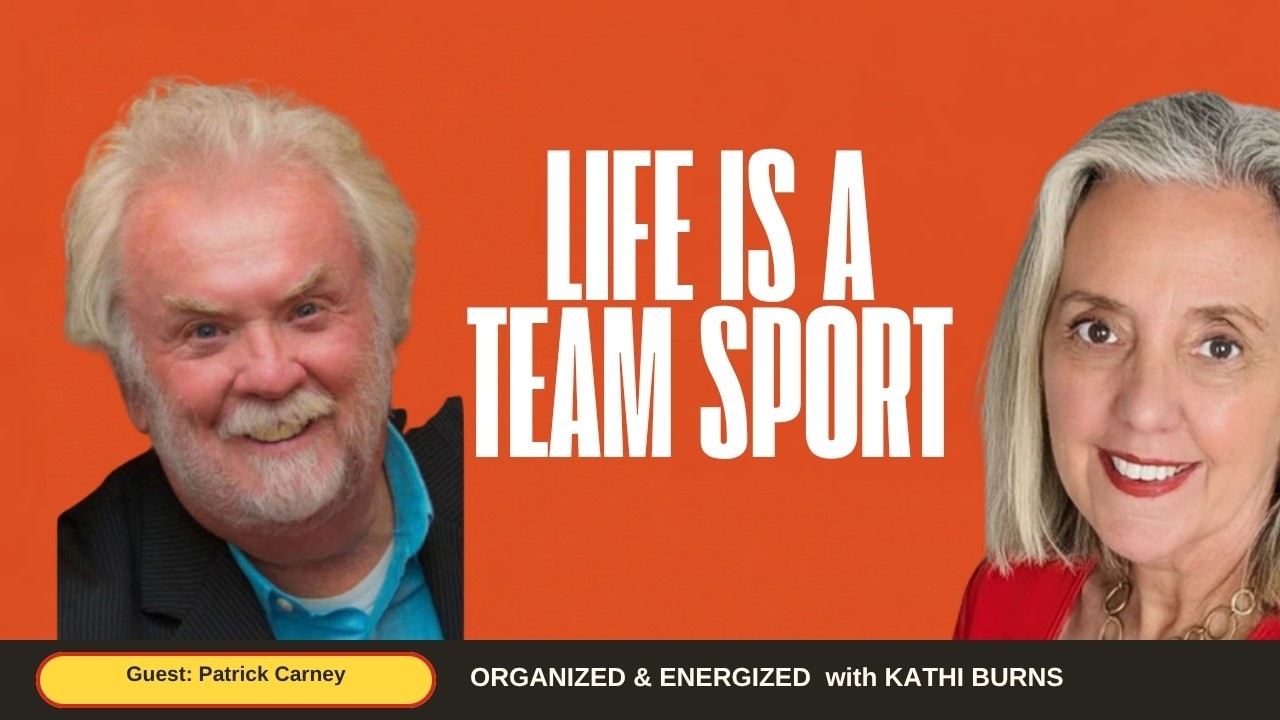
with Patrick Carney, rock and roll artist known as The Artiste, and longtime mastermind facilitator · December 15, 2021 · 20 min
Rock and roll artist Patrick Carney built his first relationships by sketching strangers on the New York subway and handing them the drawing with his phone number.
His advice to new artists and musicians is to document everything and find mentors who are doing what they want to do.
Patrick teaches children to draw an object with their eyes closed after studying each part of it, then to draw it again with their eyes open.
He has run a weekly mastermind on Tuesday mornings for 41 years and recommends that entrepreneurs join one because life is a team sport.
Patrick says every business should write its "rules of the game" before hiring anyone, or someone else will write them.
Published · Updated
What is this episode about?
Kathi Burns, CPO®, Business FLOW Strategist, talks with Patrick Carney, the New York-born rock and roll artist known as The Artiste, about drawing out the inner artist that has always been inside you. Patrick has drawn since he can remember and spent decades painting rock's most celebrated musicians. He explains how sketching strangers on the subway built his first relationships, why new artists should document everything and find mentors, and the lesson his teacher Chuck Close gave him about keeping an empty chair beside you. You'll hear how he teaches kids to draw with their eyes closed, why he insists everyone can draw, what 41 years of running a Tuesday mastermind have taught him, the question he asks himself every morning, and why every business needs written rules of the game before the first hire.
What I'm saying is you have the ability to draw.Patrick Carney
Jump to links and resources · Part of How do I grow my business without burning out? · All episodes · Every guest
What are the key takeaways?
- Patrick Carney sketched strangers on the subway and gave them the drawing with his phone number, and he says every one of them called him.
- He tells new artists and musicians to document everything and to find mentors, because in his experience the bigger people are, the more accessible they are.
- Of the 174 top speakers Patrick has invited to his Tuesday mastermind, 172 have shown up.
- His teacher Chuck Close taught him to keep an empty chair next to him so a mentor, friend or another artist could sit and talk.
- In Patrick's lessons, children study each part of a flower for a few minutes, draw it with their eyes closed, and then draw it with their eyes open.
- Patrick counts the mentors, parents and teachers behind each of his 12 mastermind members, so he says two to three thousand people are in the room each week.
- Before hiring anyone, Patrick says, write the rules of the game for your business: your mission, vision, integrity and even expected working hours.

This episode is brought to you by the Business Logjam Session
A private 75-minute online session with Kathi Burns to find the one thing holding your business back and leave with your next steps. It is the same F.L.O.W. process Kathi uses with her own clients: Focus on your goals, Locate your logjams, Outline your solutions, Walk away knowing your next steps.
Find What's Holding Me BackInterested in sponsoring the show? Get in touch.How did Patrick Carney use drawing to build relationships?
He sketched strangers on the subway and handed them the drawing before they got off the train. Each sketch said "Call me" with his phone number, and Patrick says 100% of the people called him. He still draws as a give back today, sketching his three grandchildren and his friends' grandchildren and sending the drawings to them.
What advice does Patrick Carney give new artists and musicians?
Document everything, then find mentors who are doing what you want to do. Patrick says the bigger people are, the more accessible they tend to be: of the 174 top speakers he has invited to his Tuesday mastermind over 41 years, 172 showed up. From his teacher Chuck Close at the School of Visual Arts he learned to always keep an empty chair next to you, so a mentor, a friend or another artist can sit down and talk.
How do you tap into your inner artist?
Patrick Carney taps into the inner artist by having people take in an object slowly, then draw it with their eyes closed. With a flower, they spend two or three minutes on the stem, then the leaves, then the petals, until they understand it. Only after the eyes-closed drawing do they draw it again with their eyes open.
Can anyone learn to draw?
Patrick Carney says yes: everyone has the ability to draw. He has heard thousands of people say they cannot draw a stick figure, and he tells them they are wrong. He says the ability is fully there until about age seven, then society, parents, friends and schools get in the way, but it is still in there to tap into.
Why should entrepreneurs join a mastermind group?
Entrepreneurs should join a mastermind because life is a team sport and they often end up working alone, wearing all 15 hats. Patrick's mastermind has 12 members, but he counts every mentor, parent and teacher behind them, so two to three thousand people are in the room. He says no week has passed without a nugget he could use.
How do you start your own mastermind group?
Start by reading Napoleon Hill's book Think and Grow Rich. Patrick adds that you can find everything you need about running a mastermind on the internet. Kathi's advice for anyone who can't find a group that fits, even someone out in Idaho alone, is to make your own.
What are the rules of the game in a business?
The rules of the game are a written statement of what you believe, what you understand and how your business should run, set before you hire anyone. Patrick says they can cover integrity, your mission and vision statements, or the hours people are expected to work. If you don't write them, someone else will. A friend who hired her first CEO without rules called him in tears; they wrote the rules together, and five years later that CEO is doing well.
What qualities should you look for in employees?
Patrick looks for vision, a win-win attitude, out-of-the-box thinking, entrepreneurial spirit, integrity, purposeful action, inspired creativity and coachability. By purposeful action he means seeing something that needs doing and doing it without being told. He asks entrepreneurs who are doing well why they don't pay for college for coachable employees and create a win-win.
Where does each part of the conversation start?
- 0:00 Meet Patrick Carney
- 1:01 Born with a pencil in his hand
- 1:40 Sketching strangers on the subway
- 2:18 Drawing as a give-back
- 2:51 Advice for new artists
- 3:04 Document everything
- 3:13 Find mentors
- 3:40 His Tuesday mastermind
- 4:23 Learning from Chuck Close
- 4:36 Keep an empty chair next to you
- 5:03 Teaching kids to draw
- 6:47 Drawing with your eyes closed
- 7:27 Everyone can draw
- 9:14 Life is a team sport
- 9:39 Why join a mastermind
- 9:55 One and one is three
- 11:48 How to start your own mastermind
- 12:54 His daily question
- 14:01 Books he wishes he'd read sooner
- 14:49 Write the rules of the game
- 15:48 A CEO hired without rules
- 16:19 What counts as a rule
- 18:00 Purposeful action
- 18:35 Invest in your employees
- 19:24 Wrap-up
What resources were mentioned?
- Patrick Carney on Twitter
- Think and Grow Rich by Napoleon Hill
- How to Win Friends and Influence People by Dale Carnegie
- The Seven Habits of Highly Effective People by Stephen Covey
- Dare to Lead by Brené Brown
- What Now?, the radio program started by Scott Duffy
- School of Visual Arts, New York City
These episodes continue the same thread as this one: Lia Dunlap, Carly Church, Ginny Priem, Stephanie Wall Morrow also answer the question "How do I grow my business without burning out?", and the rest are the most recent conversations on the show.

 MotherhoodEpisode 147
How To Build a Village That Supports Your Business and Your Life with Carly Church


See every episode on the podcast archive or filter by topic on the How do I grow my business without burning out? hub.
How can I support the show?
- Subscribe on Apple Podcasts, Spotify or YouTube, or add the RSS feed to any app.
- Rate and review. A rating on Apple Podcasts helps new listeners find the show, and Kathi reads every review.
- Share the episode with one business owner who needs it; the share buttons are at the top of the page.
- Grab a free eBook: 6 Steps to Organize & Energize Your Home, 6 Steps to Organize Your Home Office or 6 Steps to Organize & Energize Your Life.
- Work with Kathi. The Business Logjam Session is a private 75-minute session to find what is holding your business back.
- Be a guest. Apply here if you have a story about clearing the obstacles in your business.
What did they say, word for word?
The transcript below is edited for readability: filler words and false starts are removed and speaker names are added. Nothing was added or summarized.
Read the full transcript +
Kathi: Hi everyone, this is Kathi and I am back today. I'm so excited because I'm speaking with Patrick Carney. Born and raised in New York City, Patrick started hanging out in New York's West Village in '64, and he dedicated his time to drawing and painting the world of rock and roll music, where he soon became an influential documentarian artist of rock's most celebrated musicians. He traveled throughout the US attending rock concerts, painting whatever he felt inspired to do, capturing the passion and creativity, and caught this stuff in real time forever. Known as The Artiste, he loved sharing stories at his art shows of these chance meetings, and went on to form strong relationships with so many famous musicians. I'm so excited to have Patrick on because I really want to talk about passion and art and how you can turn what you love to do into a living. So Patrick, thank you so much for joining me and giving me your time on this show today.
Patrick: Thanks, Kathi. I appreciate being here.
Kathi: Yeah, absolutely. Okay, so you were in New York City, you were hanging out. When did you start drawing? Did you start drawing when you were a toddler or what?
Patrick: Yeah, so I cannot remember not drawing. My mother always said to everybody that I came out of the womb with a pencil in my hand.
My mother always said to everybody that I came out of the womb with a pencil in my hand.
Kathi: I absolutely love that. And growing up in New York, you were able to be around a lot of really stunning caricatures, or characters, that you could sketch.
Patrick: Yeah. Well, what I would do, which was really one of the great starts to having the ability for relationships, was when I was on the subway or on the train, I would actually pick somebody out to draw and hand it to them before they got off the train. And it just said on there, "Call me," with my phone number. And 100% of the people called me.
Kathi: Wow. Well, you're so good. I've never had a sketch of myself that's just good. So, of course, they're going to call you. Wow. So you would meet some crazy people on the subway. And what a gift. So basically, you have a gift and you're giving it back every day as you're on the subway.
Patrick: Yeah. And I still do that today. I have three grandchildren now, and I capture them, and now I capture my friends, who are going through the same thing, their grandchildren, and just send it to them, because there's Dave Corbin, Dave Corbin the illuminator, and Tim Flannery, second base for the Padres. We're all going through this at the exact same time. So I like capturing that kind of thing, and it's my give back.
Kathi: That's amazing. So if you had any tips for fledgling artists or musicians that really want to do this for a living, what would you tell someone who is starting on that path?
Patrick: Well, the first thing I would tell them, which I wish someone had told me, is to document everything. That's the first thing. Document, document, document. And then find mentors, find individuals that are doing what you would like to do. And what I have learned over the years is that the bigger they are, the more access we have to them. As you know, and you spoke there, I have a mastermind every Tuesday morning. I've been running it for 41 years, and I have invited 174 of the top speakers in the world there, and 172 have shown up. Now think about that. And it happens because you have your ask in gear. So if you're an artist and you need to learn something, or you're not sure about the business part of art, you find a mentor, sit down with them. I went to the School of Visual Arts in New York City, an art school, and one of my great teachers was a painter named Chuck Close. He was just starting out, and now his paintings sell for hundreds of thousands of dollars. And one of the first things I learned from him was always have an empty chair next to you, so a mentor, a friend or another artist could sit, and you could interact and build what your knowledge needed to be.
Always have an empty chair next to you, so a mentor, a friend or another artist could sit.
Kathi: Wow, that's astounding. And wow, so everybody is six degrees away from you anyhow in the world. So I think that's amazing advice. Now, I know that you are mentoring kids. So tell me a little bit about your kiddo program and what you've been doing here to help the next generation become artists.
Patrick: Well, when the pandemic hit and we started to hang out and not go anywhere, I moved my mastermind to Zoom for the first time in all these years. And a friend of mine, Scott Duffy, started a radio program that I was helping him with, called What Now? And during one of our conversations, he said to me, "I would love to have my two daughters have art lessons with you." And I was thinking, "Wow, that could be something I do. That could be a great gift back." And so I created two different lessons that worked out really, really well for these kids. One was how to take the object and understand what the object really is, what it feels like, what it tastes like, what it smells like. So let's pretend a flower. Okay? So we'd spend two or three minutes just on the stem, and move to the leaves, and then move to the petals. And when they had it, when they felt the passion of that flower, when they really understood what that flower was all about and they had it in their soul, put it down, so I could see them put it down. And I would have them draw that flower with their eyes closed. And you can't believe what they would create. It was amazing. So when we had them paint it with their eyes open, it was so easy, because the passion flowed out right from their heart, down their arm, into their hand, to the brush or pencil. It was amazing.
The passion flowed out right from their heart, down their arm, into their hand, to the brush or pencil.
Kathi: That's incredible. So they start drawing it with their eyes closed, and then they open their eyes.
Patrick: Yeah. Keep their eyes closed for the whole thing, the first one, and then the second one they do it regular. Because how many people have told me in my lifetime, "I cannot draw a stick figure"? I mean, it's got to be thousands. And I say you're wrong, because we have it all. The neuroscientists tell us we have it all until we're approximately seven, and then society and parents and friends and all of the schools get in the way. So it's still in there. So let's just tap into it. Now, I'm not saying you're going to be Picasso or whatever, Michelangelo. What I'm saying is you have the ability to draw.
Kathi: That's incredible. And I love the idea of being very visceral, being very 3D with the image of the flower. And I think it's a very similar thing when entrepreneurs are starting their business: what's it going to feel like? What's it going to sound like? What's it going to taste like? How is it going to work in my life? Seeing it as a 3D entity that their passion is going to flow into. And then I think they can definitely branch out and create a much more successful business by doing that. And I think it's a similar thing with what you're doing with the kiddos. Boy, I think you should do that as YouTube classes, Patrick. You got another thing to do.
Patrick: Yeah. Well, you're talking about entrepreneurs, and how entrepreneurs typically end up alone. We're doing everything. We're wearing all 15 hats and all those kinds of things. And what I learned really early, I was very lucky to learn this early, is that life is a team sport, and that we must surround ourselves with key people who motivate us, inspire us and push us, which is exactly why I facilitate that mastermind every Tuesday morning. I would highly recommend that entrepreneurs find and join a mastermind. A mastermind group is generally a small group of like-minded people who meet regularly to support each other's growth. One and one is three. One and one is 30. One and one is 300. One and one is 3,000. What do I mean by that? In my mastermind, there's 12 members. However, each meeting, there's not just 12 members there. There's every influencer, every mentor, every parent, every sibling, every uncle, every aunt, every professor, every teacher, all in that room. So typically we have two to three thousand people in that room every time we meet and go through the hot seat. So think about that as an entrepreneur. If you're sitting home in your office and you're blocked from inspiration, or your passion is kind of subduing, and you got to meet each week with those 12 entrepreneurs and the two or three thousand influencers, what would that do for your business? That's why I have a mastermind. I mean, there is not one week in all these years that I haven't received a nugget that I could use. That's fantastic, and that's what it's all about.
Life is a team sport, and we must surround ourselves with key people who motivate us, inspire us and push us.
Kathi: Yeah, that's such good advice. And man, I could just dissect this whole podcast. I have quote after quote after quote that I'd like to use from you. I don't know where I'm going to begin. Anyhow, wow. Yeah, I agree. And if you're feeling like you're not energized and you're feeling burned out with your business, I agree. I totally agree. The best thing to do is to find like-minded individuals. Join yourself a mastermind. And if they don't have a mastermind that you want, make your own, right?
Patrick: Absolutely.
Kathi: What would you say is your best tip for someone who wanted to start a mastermind on their own, if they can't, maybe they're out in Idaho all alone and can't find anybody?
Patrick: Read Napoleon Hill's book, Think and Grow Rich, number one. And obviously, you can find anything you need on the internet on how to run a mastermind. I mean, it's all there. Or they can call me.
Kathi: I love it. Yeah. And you are an amazing resource. You've been my helper and my friend for many, many years, Patrick, and I appreciate it. So look, you guys are not going to believe it. You need to go to Patrick's Twitter, and we'll have the link down below so that you can see all of his amazing art. It's just off the charts insane. So good. I really appreciate that. So if there's anything that I should ask you that I've not asked you about your life or your business, what have I missed? There's so many nuggets already. I don't even know where to start. But what would you say would be something that I should have asked you that I didn't?
Patrick: Well, you know what, it's funny. I ask myself a question every single morning. Every morning I ask myself, what is the first or next step? That question creates for me heart-stopping excitement. When I was a young artist just starting out, no one told me about what I would be going through. People said I was going to starve. I must have heard that, I don't know, 10,000 times. No one said to me, "Hey, go read Think and Grow Rich by Napoleon Hill," or How to Win Friends and Influence People by Dale Carnegie, or The Seven Habits of Highly Effective People by Stephen Covey, or Dare to Lead by Brené Brown. So for the last 30 years, I've hung around with these people. I get to hang around with them like you do, and I painted their portraits. So nobody back then took the time to do these things for beginners. I wish somebody had. So I applaud you for doing this and having this conversation, because it's important that we ask what is the first or next step, because that's what we need to do, and prioritize. I mean, I hate rules and regulations, okay? I just hate them. However, I have come to realize that they work. So when you start out as an entrepreneur, before you do anything, before you hire anyone, before you get a mentor or any of those kinds of things, create what I call the rules of the game. If you don't have the rules of the game set, who's going to write them? Okay, the employees, or the people we interact with. So it's important for us to know where we're going. Now, we can adapt those rules over time. However, start out with a set of rules. I had a friend of mine, and you probably know this individual. I'm not going to name them. However, probably five years ago, they called me and said, "Oh my God, I expanded my business and I hired my very first CEO." And I'm like, "Oh, great." "Not so great." She tells, and the tears start to flow. And I go, "What do you mean?" And she goes, "Well, she's doing this and she's doing that." And I said, "Well, I just have one question. Did you write the rules of the game?" And she said, "No." I said, "Well, it's a little late to write the rules now. However, I will come and facilitate with you, and we'll create the rules." So five years later, the CEO is doing phenomenal, because now they're on the same page.
If you don't have the rules of the game set, who's going to write them?
Kathi: Ah, so it's writing the rules of your game, your business.
Patrick: Yes. What you believe, what you understand and how the business should run.
Kathi: Right. So take, for instance, what would be a rule, just for those out there? Something visceral.
Patrick: It could be around integrity. It could be your mission statement, it could be your vision statement, it could be anything that deals with the hours that we work, that you're expected to be here. It could be all of them. I mean, whatever you could dream up could be a rule of the game.
Kathi: Yeah. I find that too. It kind of goes back to the mission statement. It's the ethics. One of my rules is creating sustainable skill sets for my clients, not just doing it for them, creating sustainable skills. It's part of our code of ethics as a board certified organizer anyhow, but for me it fits very, very nicely in my package of my business. So yeah, but I don't think people really think about that, and I think that's an amazing insight, Patrick. That's huge. So create the rules for your business, gang, especially before you hire people.
Patrick: Yeah, because, as I said, they'll write the rules. I mean, if I don't write the rules, somebody else could write the rules. So that's number one. And then, when we started the mastermind, we desired rules of the game. We also desired vision and synergy and win-win attitude and out-of-the-box thinking, entrepreneurial spirit. Being in integrity, we just talked about being in integrity. Oh, purposeful action: even on your own, when you're not being directed by me, and you see action that needs to be taken, take it. Inspired creativity and coachable employees. Employees that desire to spend time with a mentor to get somewhere or take a course, because I say to some of the entrepreneurs that are doing decent, why not pay for college for these employees and create this win-win? I mean, think about the people in our lives, that we're in gratitude because they're in our lives, what they've done for us. And they're all givers. Everybody that we hang around with are givers. And that's how we have to surround ourselves.
Kathi: Yeah. The more you give, the more you get. And you get these unexpected things from relationships, which are huge gifts that you didn't even know that you needed until you had them, and they're like, "Oh, how did I do that without that the whole time?" So wow. Well, I so appreciate your time, Patrick. I'm always inspired and in awe with you every time we talk. You're really, really inspiring to me, and I appreciate your time being on this show, and I know that everyone out there is going to get a bunch of takeaways from this podcast. So thank you so much.
Patrick: Thank you. I appreciate it.
Kathi: I appreciate it, Patrick. Take care.
Patrick: Take care.
Where can I find the links and resources from this episode?
Connect with Patrick
Organizations and companies
Books and resources
- Think and Grow Rich by Napoleon Hill
- How to Win Friends and Influence People by Dale Carnegie
- The Seven Habits of Highly Effective People by Stephen Covey
- Dare to Lead by Brené Brown
- How to Master Your Muck by Kathi Burns
- Organizing With Tetris by Kathi Burns
- Home Organization, The Smart Guide by Kathi Burns
- Simple Family Organizing by Kathi Burns
- All of Kathi's books in her shop
Inspired? Here Are Your Action Steps:
- Document your work from the start.
- Find mentors who are doing what you want to do, and ask them to sit down with you.
- Invite the biggest names you admire; Patrick finds they are often the most accessible.
- Keep an empty chair next to you so a mentor, friend or another artist can sit and talk.
- Pick an object, spend a few minutes on each part of it, draw it with your eyes closed, then draw it again with your eyes open.
- Join a mastermind, or start your own if you can't find one that fits.
- Read Think and Grow Rich by Napoleon Hill before you start a mastermind.
- Ask yourself every morning: what is the first or next step?
- Write the rules of the game for your business before you hire anyone.
- Look for coachable employees and support their learning with mentors, courses or college.
Frequently asked questions
How do you tap into your inner artist?
+
Patrick Carney's method is to take in an object slowly, using every sense, before drawing it. With a flower, his students spend two or three minutes on the stem, then the leaves, then the petals. They draw it first with their eyes closed and then with their eyes open, and he says the passion then flows out onto the page.
Is it possible to learn drawing as an adult?
+
Patrick says yes. He tells the thousands of people who have told him they can't draw a stick figure that they are wrong: we all have the ability until about age seven, and then society, parents, friends and schools get in the way. He says the ability is still in there to tap into, even if you won't become Picasso.
How did Patrick's art help him build relationships?
+
On the New York subway he would pick someone to draw and hand them the sketch before they got off, with "call me" and his number on it. He says every one of them called. He still draws as a give back, sketching his three grandchildren and his friends' grandchildren.
What advice does Patrick have for new artists and musicians?
+
Document everything, then find mentors who are doing what you want to do. Patrick has found that the bigger people are, the more accessible they tend to be. From his teacher Chuck Close he learned to always keep an empty chair next to you, so a mentor or another artist can sit and talk.
Why does Patrick recommend a mastermind?
+
Because life is a team sport, and entrepreneurs often end up working alone. His mastermind has 12 members, but he says every mentor, parent and teacher behind them is in the room too, so it's really two to three thousand people. To start your own, he suggests reading Napoleon Hill's Think and Grow Rich.
What are the "rules of the game"?
+
They are a written statement of how your business runs, made before you hire anyone: your mission, vision, integrity, even the hours people are expected to work. If you don't write the rules, Patrick says, someone else will. A friend who hired her first CEO without rules wrote them with him afterward, and five years later that CEO is doing very well.
Who is talking in this episode?

About the Host, Kathi Burns
Kathi Burns, CPO®, is a Business FLOW Strategist based in San Diego. For the last 20+ years, Kathi has helped clients create systems they can stick to. She is the author of How to Master Your Muck, Organizing With Tetris and Home Organization, The Smart Guide, and co-author of four more titles; all are in Kathi's shop. Kathi's business has been featured on Good Morning America, and her advice has been featured in Oprah Magazine, Martha Stewart Living, Better Homes and Gardens and Entrepreneur Magazine.
More about Kathi · Shop Kathi's books · Business Logjam Session · Apply to be a guest

About Patrick Carney
Patrick Carney was born and raised in New York City and started hanging out in the West Village around 1964, drawing and painting the world of rock and roll. He became a documentary artist of some of rock's most celebrated musicians, travelling the United States to concerts and painting whatever inspired him. Known as The Artiste, he shares the stories behind those chance meetings at his art shows. Patrick studied at the School of Visual Arts in New York, where painter Chuck Close was one of his teachers. He has run a weekly mastermind on Tuesday mornings for 41 years, and during the pandemic he created drawing lessons for children.
Want help putting this into practice?
Book a Business Logjam Session with Kathi
A private 75-minute online session to find the one thing holding your business back and leave with your next steps, using the same F.L.O.W. process Kathi uses with her own clients: Focus on your goals, Locate your logjams, Outline your solutions, Walk away knowing your next steps.
Prefer to start small? Download Kathi's free eBook 6 Steps to Organize Your Home Office.
Published · Updated
This episode page is for general information. Guests speak for themselves, and their opinions, statistics and examples are their own. Nothing here is legal, financial, medical or mental-health advice; talk to a qualified professional about your own situation. Some links go to the guest's own products or free offers; addSpace does not earn a commission from them unless stated.