

Episode 59
with Rodney Flowers, author, keynote speaker, resilience trainer and founder of Inspirational Endeavors, LLC · December 28, 2022 · 37 min
Rodney Flowers was 15 when a tackle in the first game of his sophomore football season left him with a spinal cord injury and unable to move from the neck down.
About a year later, he began asking himself a series of "what if" questions that ended with walking again, and that goal became his reason to get up and work every day.
Rodney spent 18 years in a wheelchair before he walked again, and he still uses canes.
When he wants to give up, he asks himself how the way he is feeling and acting is serving him and where he wants to go.
His morning routine starts at 4 a.m. with juice, a two-hour workout and quiet time to meditate and visualize his day.
Published · Updated
What is this episode about?
Kathi Burns talks with Rodney Flowers about how to build resilience after adversity. Rodney grew up on a farm in North Carolina with his heart set on football, and at 15 a tackle in his first game of the season left him with a spinal cord injury and unable to move from the neck down. He spent 18 years in a wheelchair while he worked toward walking again, and today he walks with canes, writes books, and works as a keynote speaker, resilience trainer and coach. You'll hear how a string of "what if" questions gave him a reason to get up every day, why he came to see the injury as something that happened for him, what role his younger sister played, the question he asks himself when he wants to quit, and the 4 a.m. routine he uses to fill himself up before he gives to anyone else.
I didn't need the situation to change. I had to change, and then when I changed, everything changed.Rodney Flowers
Jump to links and resources · Part of How do I grow my business without burning out? · All episodes · Every guest
What are the key takeaways?
- Rodney says the most important moment after his injury was deciding the accident was a gift and becoming grateful for it.
- He found his reason to keep going by asking a chain of "what if" questions, from putting real effort into therapy up to walking again.
- Rodney says he didn't need the situation to change; he had to change, and when he changed, everything changed.
- He believes every challenge carries the seed of a creative opportunity, which can be bigger than the destination you had in mind.
- His younger sister kept expecting him to be her big brother, which Rodney says left him no time for a pity party.
- Rodney separates the outer world he can't control from the inner world he can, and says the game changes from the inside out.
- He fills himself up each morning first, borrowing Lisa Nichols' idea of giving from your overflow.

This episode is brought to you by the Business Logjam Session
A private 75-minute online session with Kathi Burns to find the one thing holding your business back and leave with your next steps. It is the same F.L.O.W. process Kathi uses with her own clients: Focus on your goals, Locate your logjams, Outline your solutions, Walk away knowing your next steps.
Find What's Holding Me BackInterested in sponsoring the show? Get in touch.What happened to Rodney Flowers?
Rodney Flowers was 15 when he made a tackle in the first game of his sophomore football season and couldn't get back up; a spinal cord injury left him unable to move from the neck down. Doctors told him he would be paralyzed for life. He spent 18 years in a wheelchair and now walks with canes.
How can you see adversity as a gift?
Rodney sees adversity as a gift by changing his perspective: the challenge isn't happening to you, it's happening for you. He says the most important moment after his injury was realizing the accident was a gift and becoming grateful for it. He didn't need the situation to change; he had to change. Today he says he has gained a whole lot more than he lost, and that he wouldn't be the person he is or have touched the lives he has without it.
How do you build resilience after adversity?
Rodney built resilience after adversity by asking himself one "what if" question after another until he found a goal bigger than his pain. What if he really put in the effort his therapists asked for? What if he could feed or dress himself? The last question was walking again, and that became his reason to get up every day.
How do you find the opportunity in a challenge?
Step back and look for the creative opportunity, because Rodney says every challenge comes with the seed of opportunity. People are often distracted by the difficulty, the pain or the change, and stay fixated on where they wanted to go. If you let go of that destination and grow with the adversity, he says, the opportunity is often bigger and more impactful than what you had in mind, or it gets you there faster. Kathi adds that being curious and asking what you're supposed to learn helps too.
What should you ask yourself when you want to give up?
Ask yourself how the way you're feeling and acting right now is serving you and where you want to go. Rodney says every day wasn't a peachy day, even after he decided to walk again. If the answer was that it wasn't serving him, he knew he couldn't stay there long, and he looked for the creative opportunity instead.
How did Rodney Flowers' sister help him keep going?
His younger sister kept expecting him to be her big brother. Rodney writes about her in his book Get Up and says she was more of a role model for him than the other way around. Her expectation meant he had no get-out-of-jail-free card and no way out of his responsibilities, and no time for a pity party. He says she played a big part in his recovery and still does in who he is today.
Why is it important to be okay with uncertainty?
Rodney says being okay with uncertainty lets you stay in the process, and the process of growth is the most valuable thing in life, not the destination. You won't know when the money or the clients will come. He says you'll never reach a place without some adversity, uncertainty or fear, because that's what growing feels like, and he sees challenge as being as natural as the air we breathe. The question he poses is: who are you being in your challenge? He separates the outer world he can't control from the inner world he can.
What is Rodney Flowers' morning routine?
Rodney wakes at 4 a.m., drinks his juice around 4:30 and is in the gym by 5 for a couple of hours. Then he spends 30 to 45 minutes in the sauna or meditating, listening to something positive and visualizing what he wants to accomplish and how he wants his day to go, before he showers, eats and starts work. He has kept the routine for more than a decade and credits it with his calm. Borrowing from Lisa Nichols, he fills his cup until it overflows onto the saucer and gives from that overflow.
Where does each part of the conversation start?
- 0:00 Meet Rodney Flowers
- 0:32 Growing up with football
- 1:21 The game that changed everything
- 3:17 Seeing the injury as a gift
- 5:31 It took 18 years
- 7:04 The what-if questions
- 9:59 Walking again after 18 years
- 12:13 Grateful for the hard things
- 13:55 We grow for others too
- 15:47 Find the creative opportunity
- 17:28 How is this serving you?
- 19:01 His sister's expectations
- 21:44 Be okay with uncertainty
- 25:18 Who are you being?
- 26:08 The inner world and the outer world
- 29:14 His 4 a.m. routine
- 31:31 Give from your overflow
- 33:48 Wrap-up
What resources were mentioned?
- Get Up! I Can't. I Will. I Did…Here's How! by Rodney Flowers
- The Game Changer Mentality Podcast
- How to Master Your Muck by Kathi Burns
- Lisa Nichols' idea of giving from your overflow
- The Evolutionary Business Council
These episodes continue the same thread as this one: Lia Dunlap, Carly Church, Ginny Priem, Stephanie Wall Morrow also answer the question "How do I grow my business without burning out?", and the rest are the most recent conversations on the show.

 MotherhoodEpisode 147
How To Build a Village That Supports Your Business and Your Life with Carly Church

See every episode on the podcast archive or filter by topic on the How do I grow my business without burning out? hub.
How can I support the show?
- Subscribe on Apple Podcasts, Spotify or YouTube, or add the RSS feed to any app.
- Rate and review. A rating on Apple Podcasts helps new listeners find the show, and Kathi reads every review.
- Share the episode with one business owner who needs it; the share buttons are at the top of the page.
- Grab a free eBook: 6 Steps to Organize & Energize Your Home, 6 Steps to Organize Your Home Office or 6 Steps to Organize & Energize Your Life.
- Work with Kathi. The Business Logjam Session is a private 75-minute session to find what is holding your business back.
- Be a guest. Apply here if you have a story about clearing the obstacles in your business.
What did they say, word for word?
The transcript below is edited for readability: filler words and false starts are removed and speaker names are added. Nothing was added or summarized.
Read the full transcript +
Kathi: Hi everyone, I'm back, and as I told you, I am with Rodney Flowers today, and I'm excited to get into it and get talking about how to get motivated and energized with this gentleman. So hi, Rodney. Thanks for being on the show.
Rodney: Kathi, hello. Thank you for having me on the show. Glad to be here.
Kathi: Yeah, absolutely. We're going to talk about changing the game and being a game changer and all that good golly stuff. But let's hear some background, okay? I know you've got this fantastic journey that you've been on. Tell me a little bit about what your folks did when you grew up, and then what happened to you in your youth?
Rodney: Well, my parents were working-class individuals. My dad worked at a grocery store. My mom was an ophthalmologist. And we were just middle-class, working, fun-loving people. We loved the game of football, at least I did. And because I did, everyone else in the house did, because it was the center of my attention. It was something that I developed a love for, and I had their following and their support, and it was a thing I wanted to pursue. I was in high school, just to keep the story short, doing what I love to do, and it was the first game of my sophomore year. It was our first game of the season. I went out. We were having a great game. I was having a great game. And around the beginning of the third quarter, we kicked the ball off to start the second half, and I ran down the field to make a tackle, and I hit a guy as hard as I could. I went down, he went down, and I couldn't get back up. And come to find out, I had a spinal cord injury. I couldn't move anything from the neck down. Doctors said I was going to be paralyzed for the rest of my life. And if you can imagine, gosh, it's been such a long time now, and I'm so over it. But it was a very devastating moment in my life, to be honest with you, and it was life-changing, it was game-changing, and all the things. And it put me in a place where I had to make some decisions, and I didn't have many options, to be honest with you. You know how when your back is up against the wall, you either got to fight or you would die, essentially. And that's what it really felt like for me, because here I was, a 15-year-old kid, very active and loving life and having my whole life ahead of me, and then all of a sudden, in one game, one moment, I'm on the field motionless, can't move, and doctors are saying that there's nothing that they can do. And so that's where this journey started. That's where this whole game-changer mentality started, because essentially I gave up. Didn't want to live, thought about suicide several times. And through a series of events that we can talk about throughout this show, I made some critical decisions about what I wanted to do with my life. And I think the most pivotal moment is when I realized that my accident was a gift, and I became grateful for it.
Kathi: Mm.
Rodney: And I really want to talk about that, because I know there's a lot of people that are dealing with maybe not things that are as traumatizing as that, but we're dealing with challenges. We all deal with challenges. And I think even though I went through a spinal cord injury, we all have that thing in our lives that can either make us or break us. And I think it's those things that we have to change our perspective about. We can talk about that, because changing that perspective, becoming grateful for the accident and seeing the opportunity in that, and seeing where it can take me. Seeing how this challenge, this thing, wasn't happening to me. It was actually something happening for me, but I had to change. I didn't need the situation to change. I had to change, and then when I changed, everything changed. And so we can get into that as well, but that's essentially the backstory. The long story is, I was in a wheelchair for 18 years. I turned my life around. I was able to walk again after 18 years, wrote a book about it, wrote three books, and I am a game changer, and I teach people how to change the game in their life and in their business. And that's why I'm here.
I didn't need the situation to change. I had to change, and then when I changed, everything changed.
Kathi: I think that's a fantastic backstory, and the fact that you said I'm so over it, because you are. And then it's gratitude. I love the fact that you're weaving in gratitude for that, because if you're grateful for everything that happens to you, then it can become a blessing, even though it's a crazy thing like that. What I was thinking when you were speaking was, people that are up against obstacles can become paralyzed, and you literally became paralyzed. But you've got a lot of people that are facing that big obstacle, they become paralyzed, and then they're unable to move forward or even able to see anything. So when you pivoted over to gratitude… So you were in the wheelchair for 18 years. Where was the shift? What happened at that point? Let's talk about part two.
Rodney: That's a great question. That's a really, really great question, and the reason why it's a great question is because it was 18 years after I made the decision.
Kathi: Ah.
Rodney: It wasn't instant gratification. It wasn't instant, "Oh my God, I made a decision, and the next day I'm able to walk again." No, no, no. This has been a journey.
Kathi: Yeah.
Rodney: And so just to back up a little bit. I came to that decision by one day lying in my bed hurting. If you can imagine, it's about a year later. I'm still in this place where I want to give up. I don't want to live, and I don't like life.
Kathi: Yeah.
Rodney: I'm not loving life at all. I'm actually hating life right now, for a number of things, because my body, I can't move. And it's not just the accident. There's a lot of things that come with paralysis. When your body can't move, you've got to take all types of medication. People have to do all types of things to you multiple times a day, throughout the night. I mean, everything. Your sleep, your eating, there's certain things you can't eat. I mean, they have to help you with every single thing. It was just the most devastating thing to live through. You almost just want to die just to get all of that over. And so one day, I'm lying in bed, out of many days, crying, feeling like I'm suffering, feeling like there is no reason to really live. And I began to ask myself a series of questions. And those questions were, "Hey, Rodney, why are you hurting?" And I wasn't in pain. And so it was kind of humorous, because I was really being comical with myself, because I'm like, "You're crying. You're sitting here crying. You cry every night. You cried yesterday. You cried today. You cried the day before, and you're probably going to cry tomorrow. Like, what's up?" And it was like, "Well, I wasn't crying because I was in pain." And it was funny, because I couldn't feel anything anyway, you know what I mean? So I couldn't feel pain.
Kathi: I was wondering that. I was literally wondering that.
Rodney: Right. But I was in pain, because I was in emotional pain. My spirit was broken.
Kathi: Yeah.
Rodney: And so it's like, okay, so we've got to change this misery. What can we do to change it? What if you try? What if you do what the therapist wanted you to do? What if you really put forth an effort, would that change anything? And to be honest with myself, the answer was yes, it would change some things. And then I kept going. I said, okay, well, if that changed and you reached some level of success, what if you were able to feed yourself or dress yourself, or maybe you had some level of independence with some activities of daily living, would that make you feel better? And the answer was yes. And so I kept going. I kept asking these what-if questions. What if? What if? And I got all the way up to, what if you were able to overcome this by some means and start walking again? What would that do to you or for you? And that was it. Because that became bigger than anything. It became bigger than football, became bigger than anything that I wanted to accomplish in life. And I wanted to accomplish that, because I was like, if I do that, then I went from this guy that was crying every day, life is this horrible, to the guy that overcame, and how is that going to affect other people, and all the things? And I was like, wow, so this is an opportunity here. This is what I have. And so if I wake up every day and I try that, and even if I miss, if I don't hit the target, I'm going to be so much further than where I am right now that it probably won't even matter, right? And I'll have something, right? And it won't be where I am right now. And even if I did miss, at least I know I tried everything that I could, and I can live with myself without crying every day, right? And so that became the reason why I woke up every day. It became the reason why I worked hard. It became the reason why I did everything. I started to study. I started to learn. How can I make this happen? And I committed to it every single day. So fast forward 18 years later, that's when I experienced it.
Kathi: Thank you.
Rodney: Thank you. It was very progressive. However, slow. Okay? It wasn't something that happened immediately. I mean, you're talking 18 years.
Kathi: Yeah.
Rodney: Before actually being able to walk without a wheelchair. And I still use canes, so it wasn't like I was able to run. But that was miraculous. And the life that I live now as a result of that decision is game-changing, right? It's amazing. And so I'm grateful, because I'm here. I wouldn't be on this podcast had I not made that decision. I wouldn't have touched the lives that I've touched had I not made that decision. I wouldn't be the person I am had I not made that decision. So in my mind, something happened for me that allowed me to be who I am today, to touch the people, to experience what I experienced, to gain knowledge. Everything is a gain. And one may think, well, you lost so much. Okay, there's some validity to that. I can't run. I don't do the things that I used to do. But I've gained a whole lot more than I've lost.
Kathi: Mhm.
Rodney: A whole lot more. And now, I don't know where that life before, without the accident, would have taken me. But I'm happy with this, and I'm grateful for where I am right now. And I really believe that it saved me. And I think when we look at the challenges that we face in life, that's how we've got to think about it. Sometimes we think things are happening to us or it's preventing us, but I believe that the universe, God, is a lot more clever and smart than we are, and I think it understands where we need to be, where it wants us to be, and what it has for us. And sometimes we're not smart enough to take those directions on our own. And sometimes we need those challenges, those little mountains in life, to cause us to turn directions, or those huge trees in our paths that cause us to change directions. And we have to be grateful for them, because those are the things that cause us to grow, cause us to look at things from a different perspective, right? And so let's be grateful for those things that show up, because those are the things that allow us to build that mental, emotional and spiritual muscle. Because without those, we're not people that just naturally go and exercise those types of things. We're creatures of habit. If it stays the same and it's working, we'll just keep doing it every single day.
I've gained a whole lot more than I've lost.
Kathi: Absolutely. And it's so ironic. Every time I film these podcasts, the whole month seems to have a recurring theme. And for those of you who've been listening for the past few weeks, we have the recurring theme of resilience. We have the recurring theme of obstacles helping us to expand, and expansion is what life's all about. And life is a game, and we should not take it so seriously. So it's the universe saying it again and again to me and to the audience. What you're saying, it's been said so many times in this past month. It's awesome. So that's what it's about, and I think that God doesn't give us any more than we can take. And I do believe that is an expansion mechanism. Every obstacle is a gift that we've been given. And some are huge gifts, like yours. Some are smaller gifts. But I think anybody out there listening has to know that if you're up against something, look at it with gratitude and grace and say, "What am I to learn from this?" And you're the walking, talking spirit of that, Rodney, so I just love this story.
Rodney: Well, thank you. And I believe, in addition to all of that, that we go through things not only for ourselves. We go through things for those around us. We all have something to contribute. But the thing that we have to contribute has to be cultivated. It has to grow. It has to be developed. And a lot of times, the things that we don't want to do are the things that we need to do to allow our contribution to come forward in a major way, in an impactful way. And growth and being resilient, they're great words, but they're very uncomfortable things. They're nice things to say, but when you're in the thick of it and you're actually growing, we don't run to growth a lot of times. We run away from our growth. We run away from challenge. We don't like adversity. We want it to go away. And it takes a different mindset to welcome it, to say, "Bring it on." But that's the game-changing mentality, right? Because when you're willing to run to the challenge, when you're willing to run to the adversity, what you're really saying is, I'm ready to grow. What you're saying is, I'm ready to get to the next level. I'm ready to not run away from this challenge, but actually overcome it. And that requires not the thing to change, but me to change.
Kathi: I think it's a curiosity factor, too. It's like, "What am I supposed to be learning here?" Being curious about it and being the observer. I think taking a step back and looking at what you're up against will help you as well. Just being in expectation of, what am I supposed to be learning here? There's got to be something. And I agree, sometimes it's just not that easy to peg what the lesson is.
Rodney: Yeah. Well, I feel we have to look for the creative opportunity. That's the thing you want to look for. Every challenge comes with it the seed of opportunity.
Kathi: Yeah.
Rodney: However, we have to be able to see it, and sometimes we're distracted by the difficulty or the pain or the change or the distraction. Like, I wanted to go there, and that's what my heart and my head was set on. But this challenge is causing you to look in a different direction, in the direction that you weren't even thinking about. But perhaps if we take that step back, like you said, and then look for the creative opportunity. Because within that change and that adversity, it could be that you can get to a place that's bigger, better and greater than where you wanted to go, but you're so fixated on where you want to go. So we have to disassociate from that thing and then look at the thing that's possible, right? If we change and if we grow with the adversity that we have. And a lot of times what we find is that the opportunity is way bigger and more impactful and more effective than the destination that we had in mind in the first place, right? Or we can get there faster. Or it's not a place that we needed to be in the first place. God has something else for you. And so we just have to be willing to flow with that. We have to be willing to grow with that. And another thing is a question that I would ask myself, because every day wasn't a peachy day. There were times where things were really, really hard, even after making the decision that this is what I wanted to do.
Every challenge comes with it the seed of opportunity.
Kathi: I'm sure.
Rodney: I still had moments that I wanted to give up.
Kathi: Right.
Rodney: But I would always ask myself, how is this way that I'm feeling, how is this way that I'm acting, serving me? How is it serving me?
Kathi: Mhm.
Rodney: And where I want to go, and what I want to do, and the decision that I made. How is that serving the greater good? How is it serving the end game? And that was a way for me to just level set, reset, and maintain that resilience, and just recover, because you're going to have those moments. But when I asked myself, how is that serving me? If it wasn't aligned with where I wanted to go, it's like, okay, we just can't stay here long, right? This perspective that we have is not serving us. This thought about this is not serving us. It isn't. It sucks that we're here, but what's the creative opportunity?
Kathi: Mhm.
Rodney: What is there to do that's going to serve us, that's going to allow us to move forward?
Kathi: Yeah. And any kind of expansion brings pain, and I think that's a great question for us to always ask ourselves: however we're reacting, how is it serving us? Is it serving me by doing this? And expansion is painful, always. Oftentimes we go into it kicking and screaming, but I am in complete agreement with you, Rodney, that anything that we're overcoming, it's a God gift. It's like, okay, now I get it. Now I see that plateau that I would have never even seen. It wasn't even in my vision or my perspective. So I totally agree with you on that. Actually, I have to ask you another question. How many siblings do you have?
Rodney: I have one. I have a younger sister.
Kathi: Okay, okay. So you were a role model for your sis. What a blessing that is.
Rodney: Well, I think she was more of a role model for me. In my book, I talk about her. In my book Get Up, my sister played a pivotal role in maintaining this decision that I made. One thing about my sister that I really, really appreciate, and there's so many things I appreciate about her: after I got hurt and I came home and life was continuing on, the one thing that was consistent with her is that she still expected me to be her big brother.
Kathi: She expected you to be what?
Rodney: To be her big brother.
Kathi: Ah.
Rodney: Yeah. I mean, it didn't matter. It was no, you couldn't get out of being my big brother. You've got to figure that out, right? You still have to be the big brother.
Kathi: Wow.
Rodney: And that for me was motivating and inspiring. I didn't have a get-out-of-jail-free card. It wasn't that I could use this as a crutch, or use this as a way out from what my responsibilities were in life. And so I talk about that in my book, because to see her maintaining that expectation caused me to say, "Hey, bro, every day you've got something. You don't have time to be sitting around here having a pity party. Life goes on, and so you've got to keep going. You've got to get up." As I talk about in the book, you've got to get up, and you've got to get up every single day. Every single day.
You've got to get up, and you've got to get up every single day.
Kathi: What a gift, huh? She's like, "You're not getting out of this. I only got one brother, man, and you're going to be the big brother." That's it.
Rodney: That's it. Yeah.
Kathi: Fantastic. Love her. Love her already. That's great. So let's see, what should we talk about next? What do you have to say to people? What have I not asked you that we really want to touch on? And we want to talk about your company and your book as well. So bring it on.
Rodney: Well, I would just say, more of what we talked about earlier: the game changer here is not allowing circumstances and situations to dictate who you are.
Kathi: Yeah.
Rodney: We are who we are. That's just what it is. And then being okay with uncertainty. Being okay with not knowing when it's going to end, or when the healing is going to come, when the money is going to come, when the clients are going to come. Being willing to stay in it, because I truly believe that it's the process that's the most valuable thing in life. It's not the destination. It's not the goal. The goal, the destination, that's just the means. That's just the end game. But it's going through that process of growth, and staying in it. I'm in it right now, right? I keep myself in a state of growth and development. It never ends. It's never going to stop. You're never going to get to a place where you're not feeling some level of adversity, uncertainty, fear, all the things. Because when you are dealing with those things, what's happening is you're growing. And when you stop that, to me, if you're not growing, you're not really living. That's the definition of life for me: to be growing, to be dealing with some type of challenge, to be trying to get better, get to the next level, be more impactful, be more expressive, be more of a contributor, express more of myself. It takes challenge. It takes adversity. It takes growth to do those things. And I feel challenge is no different than the air that we breathe. It's a natural, necessary part of life. And when we can view it that way, when we have that perspective about it, when it shows up, it's like, okay. We don't get upset about air. We don't get upset about water, because that's just what it is. It's just there. So why do we get upset about challenges? Because if we can have that mentality around the challenge, we welcome it, and then we know it's there for our good, not for our detriment. It's for the good. And it relieves so much stress when you can view it in that light. It's like, oh, okay. It's like anything else. Riding a bike, driving a car: at one point you weren't able to do it, and then you went through the process of learning how to do it. Now, I know that's a very simplified version of some of the challenges that we're facing out here. However, the principles remain the same.

Kathi: Yeah. And they say that we're supposed to walk anyhow. It's like an accidental step of falling forward and catching ourselves. So we all overcame that at some point, most of us. And you overcame it twice, so good job. But I agree. If we're not facing challenges, if we're not expanding, we might as well just take a nap and get on with it. I think that's why a lot of us are entrepreneurs. We love that challenge. We love that expansion. Never stop learning. Never stop trying to overcome. And goodness knows that's what businesses are for. It's to keep us on our feet and keep us on our game and keep us from just being passive.
Rodney: Absolutely. I love the title of your book, How to Master Your Muck. And I really believe that's what we're talking about here, right? Either the muck is going to master you, or you're going to master it. The one thing that we all have in common, black, white, rich, poor, doesn't matter what your nationality is, we're all going to face challenges. But the difference is how we manage that. How do we master that? How do we handle the challenges that come? That's the key. And so when it comes to those things and you're dealing with a challenge, the question is, who are you being in your challenge?
Kathi: Mhm.
Rodney: Who are you being in your challenge? It has nothing to do with the challenge. Everything to do with you.
Kathi: Right. And it's about being versus doing as well. Looking at the being part of you is so much more important than the doing part of you when you're up against something. And I love the fact that, how is this serving me? Or how is the way that I'm behaving serving those around me? I think that's a really good thing to keep in mind, for sure. What's the best piece of advice that you ever received that's on the top of your mind as you've been living life?
Rodney: Well, I would say I've learned that there are two worlds for me. There's the outer world, and there's the inner world. I can't control what goes on in that outer world.
Kathi: Mhm.
Rodney: Some things in the economy, the challenges, COVID, things like that. I can't control that. But what I can control is myself.
Kathi: Yeah.
Rodney: You've heard the saying, what is it? Life is 10% what happens to you and 90% how you respond to it.
Kathi: Yeah.
Rodney: That's a very true statement, because things are going to happen in life. It's who you're going to be when those things happen.
Kathi: Absolutely. I'm doing an expanded consciousness course, and I heard about the four kingdoms. Kingdom one is, everything happens to me. I have no control, and everything happens to me. That's kingdom one, and that's a place where we don't really want to all be living. So we've got to get out of kingdom one and go into kingdom two, where I can control, I can manifest. I can get, just something as silly as, that parking space, which we've all done at one time or the other, because that's the easy stuff, right? And so moving forward. I thought that was interesting. I had never heard of the kingdoms before. I don't know if you're familiar with the concept.
Rodney: Well, I'm familiar with the principle, right? And I believe, like you said, you can't control everything that happens outside, but it's the inner world. And when you can gain control of that inner world, when you can gain control of your emotions, when you can master your emotions, master self, you can conquer any challenge that shows up, and you can handle any and everything that's going on in that outer world, because your inner world is solid. And to me, again, that's the game changer. You want to change the game? You don't change it from the outside in. You change it from the inside out.
Kathi: Ah, very well spoken. Well, you're a master at this. You are the game changer king here. So I just so appreciate having you on the show, and I know that everybody that's out there listening wants to read more, because your story is amazing. I just love your sister. I want to meet your sister. She sounds awesome.
Rodney: She is. She's awesome, and she played a pivotal role in my recovery, and she still plays a major role in who I am today. I'm grateful for her. She's been nothing short of supportive for me and the rest of my family.
Kathi: And ditto that. I mean, any time she has something that she's up against, she's going to be thinking right back at you and saying, "Well, this is how Rodney did it. This is what Rodney did, and he's walking. So I've got nothing to squawk about over here." I'm sure. Okay, Rodney, I have to ask this, because I ask almost every guest this question. What do you do to keep yourself organized and energized as you go throughout your day or your week of work?
Rodney: Well, I have a routine that I stick to, and that includes waking up at 4:00 a.m. every day.
Kathi: Woo!
Rodney: And yeah, taking a drink of juice. I do juicing every single day, where I juice my fruits and vegetables, and then I go to the gym. And so I'm drinking my juice around 4:30, I'm in the gym around 5:00, and I work out for a couple of hours, and then I take my protein. And then I spend about 30 to 45 minutes in the sauna, or just meditate, listening to something that's very empowering, that's going to put some positive thoughts and words into my mind, and just taking that in and visualizing my visions, the things that I want to accomplish in life, how I want my day to go. And then I shower, and I have breakfast, and then I start my day.
Kathi: Amazing.
Rodney: And so that routine in the morning has been a staple for me for over a decade. And I believe it's really helped me. One of the compliments I get is, you're calm. You're very calm. You have this very calm demeanor about you. And I think it's that morning ritual that has helped me maintain that level of calmness, because I get a lot of mental strength, and it's something that I can go to every single day. And I believe that there are two things we need to think about when we're living our lives. We need to think about the energy that we're putting out and the energy that we're putting in.
Kathi: Mhm.
Rodney: And for me, that's my energy-in time, and it's something that I do early in the morning, right when I wake up. I get to fill myself up before I start putting myself out, if that makes sense.
Kathi: Totally. Yeah, and same here.
Rodney: Yeah. And so sometimes we get up and we just start putting out. We just start producing, giving, giving, giving, and we haven't had a time to fill up. And so for me, I like to live by this thing that I learned from Lisa Nichols. She's talked about giving from your overflow. You want to give from your saucer.
Kathi: Yes.
Rodney: Right? So if you can imagine a cup that's sitting on a saucer, and the cup is so full that it's overflowing onto the saucer. Well, that's what you give. What's in the cup? That's yours, right?
Kathi: Mhm.
Rodney: But I like to fill myself up so much that I have overflow into the saucer, so I can give that part away to folks, to my job, to my clients, to whomever may need it. But I've got to stay full, and that's my way of staying full.
I like to fill myself up so much that I have overflow into the saucer, so I can give that part away.
Kathi: Yeah, that's a great routine. So I have to ask, though, were you always a morning person?
Rodney: Yes, always a morning person. I love the mornings. I love just getting up before things start to move, and having that time to fill up before the day gets going. So I've always had that mindset. I was raised that way. I'm a country boy from North Carolina, so we were up when the chickens started making noise and the rooster started doing his thing. It's time to get up. We're late if we're hearing that. And so we had to get up before the sun came up to work on the farm. And so I'm used to that. I love it, and it has really made a difference in my life as I've gotten older.
Kathi: Yeah, what a blessing to grow up on a farm, too. So I can totally see that. The rooster starts, and then you're like, okay, out of here. Got to get up, feed those chickens. Rooster says, "Get up." Absolutely. That's a great tip. I think it's so important that we all have a morning routine, no matter what it is. It always helps to have quiet time as part of that, where you're not really tuned into anything but yourself and your inner consciousness. That will allow us to have that cup overflowing, so to speak. So thanks for sharing that. Everybody, I'm sure we have our morning routine. If you don't have a morning routine, think about what might really work for you best.

Kathi: Well, thank you so much for being on the show. I just appreciate it. It's nice having you as a co-member of the EBC as well. That's how we got to know each other, and we are both evolutionary and loving it. I can't wait to see you, hopefully coming up soon.
Rodney: Yes, we'll be at the annual retreat that's coming up in January. So if you guys haven't got your tickets, you definitely want to get your tickets. We're going to be talking about surfing the waves of change, and how do we do that? And so I hope to see you and many of the folks that are listening there in January.
Kathi: Yeah, I'm going to put the link down below. Rodney's going to be one of our speakers, and it is the end of January here in San Diego. Hope to see all of you. Check it out: the Evolutionary Business Council, full of like-minded people just like us and you out there listening. So thanks so much for being on the show, Rodney. I really appreciate it, and we're going to call this one a wrap.
Rodney: Thank you.
Kathi: Have a good one.
Where can I find the links and resources from this episode?
Connect with Rodney
Organizations and companies
Books and resources
- Get Up! I Can't. I Will. I Did…Here's How! by Rodney Flowers
- Essential Assertions by Rodney Flowers
- How to Master Your Muck by Kathi Burns
- How to Master Your Muck by Kathi Burns
- Organizing With Tetris by Kathi Burns
- Home Organization, The Smart Guide by Kathi Burns
- Simple Family Organizing by Kathi Burns
- All of Kathi's books in her shop
Inspired? Here Are Your Action Steps:
- Write down the challenge you're facing, then ask "what if" questions until you reach a goal bigger than the problem.
- Pick one small step toward that goal and commit to it every day.
- Ask yourself how the challenge could be happening for you instead of to you.
- Step back from the destination you had in mind and look for the creative opportunity in the change.
- When you want to quit, ask how the way you're feeling and acting is serving you and where you want to go.
- List what is in your outer world that you can't control, and what is in your inner world that you can.
- Ask yourself who you are being in your challenge.
- Build a morning routine with quiet time to fill yourself up before you start giving to others.
- Lean on the people who expect the best of you.
Frequently asked questions
What are 5 ways to build resilience?
+
Rodney Flowers shares five habits from his own experience: ask "what if" questions until you find a goal bigger than the pain, see the challenge as happening for you rather than to you, look for the creative opportunity inside it, ask how the way you're feeling is serving you, and fill yourself up each morning before you give to others. He presents these as what worked for him, not as a formula.
What turned things around for Rodney Flowers?
+
About a year after his injury, he asked himself why he was crying every night and what would happen if he really put in the effort his therapists asked for. He kept asking "what if" until the answer was walking again. That goal gave him a reason to wake up and work every single day.
How did Rodney come to see his injury as a gift?
+
He decided the situation didn't need to change; he did. Rodney says he has gained far more than he lost, and that he wouldn't be the person he is or have helped the people he has without it.
What question does Rodney ask when he wants to give up?
+
"How is the way I'm feeling right now serving me, and where I want to go?" If the answer is that it isn't, he knows he can't stay there long, and he looks for the opportunity inside the challenge.
How does Rodney Flowers stay organized and energized?
+
He wakes at 4 a.m. and starts with a workout, then spends quiet time meditating and visualizing his day before he starts work. Borrowing an idea from Lisa Nichols, he fills himself up first so he can give from the overflow.
Who is talking in this episode?

About the Host, Kathi Burns
Kathi Burns, CPO®, is a Business FLOW Strategist based in San Diego. For the last 20+ years, Kathi has helped clients create systems they can stick to. She is the author of How to Master Your Muck, Organizing With Tetris and Home Organization, The Smart Guide, and co-author of four more titles; all are in Kathi's shop. Kathi's business has been featured on Good Morning America, and her advice has been featured in Oprah Magazine, Martha Stewart Living, Better Homes and Gardens and Entrepreneur Magazine.
More about Kathi · Shop Kathi's books · Business Logjam Session · Apply to be a guest
About Rodney Flowers
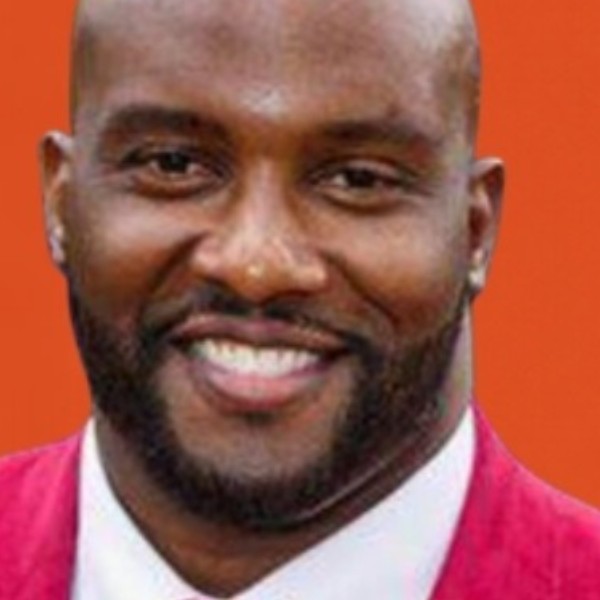
Rodney Flowers grew up on a farm in North Carolina with his heart set on football. At 15, in the first game of his sophomore season, he made a tackle and couldn't get back up: a spinal cord injury left him unable to move from the neck down. He spent 18 years in a wheelchair while he worked toward walking again, and today he walks with canes. Rodney has written three books, including Get Up! I Can't. I Will. I Did…Here's How! He is the founder and president of Inspirational Endeavors, LLC, and works as a keynote speaker, resilience trainer, master facilitator and executive coach. He also hosts the Game Changer Mentality Podcast.
Want help putting this into practice?
Book a Business Logjam Session with Kathi
A private 75-minute online session to find the one thing holding your business back and leave with your next steps, using the same F.L.O.W. process Kathi uses with her own clients: Focus on your goals, Locate your logjams, Outline your solutions, Walk away knowing your next steps.
Prefer to start small? Download Kathi's free eBook 6 Steps to Organize & Energize Your Life.
Published · Updated
This episode page is for general information. Guests speak for themselves, and their opinions, statistics and examples are their own. Nothing here is legal, financial, medical or mental-health advice; talk to a qualified professional about your own situation. Some links go to the guest's own products or free offers; addSpace does not earn a commission from them unless stated.