

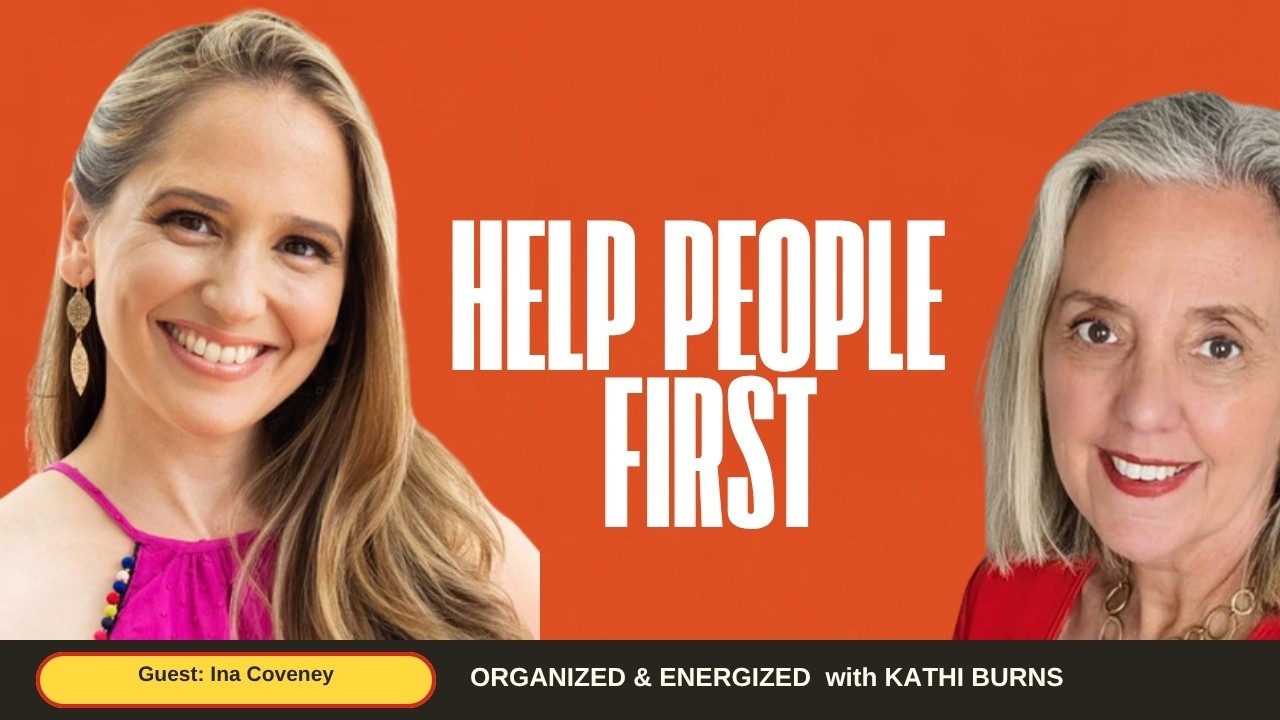
Episode 40
with Ina Coveney, business coach for online coaches and host of The Global Phenomenon podcast · August 10, 2022 · 36 min
Business coach Ina Coveney spent eight months building her first online course and sold four copies of it.
Her first paying client came from LinkedIn: someone she had met at a training 10 years earlier saw her posts and asked for help.
Ina says Facebook relies on historical data to find an audience, so paying an agency to run ads in her first year brought in about three sign-ups.
She defines engagement as the number of conversations you start with new people each day and week, not the likes, comments and shares you wait for.
Ina reached six figures before she had 1,000 followers on any platform.
Published · Updated
What is this episode about?
Ina Coveney is a business coach who helps up-and-coming online coaches get clients from a tiny audience, and she reached six figures before she had 1,000 followers on any platform. She tells Kathi Burns, CPO®, Business FLOW Strategist, how she went from 15 years as a software project manager to running her own business, why her first online course sold only four copies, and how her first paying client found her through LinkedIn. If you want to get coaching clients before you have a big following, you'll hear why Ina waited four years to test Facebook ads, why she counts conversations instead of likes, how she and her husband shared weekends during the pandemic, the short daily list that keeps her on task, and why she says the best advice she ever got was simply to help people.
For me, engagement is something that I have control over.Ina Coveney
Jump to links and resources · Part of How do I get more clients? · All episodes · Every guest
What are the key takeaways?
- Ina's coach urged her to stop building an online course and start helping real people; the course sold four copies after eight months of work.
- Her first paying client was someone she had met 10 years earlier, who reached out after Ina started posting on LinkedIn despite her worry that her former bosses would see it.
- Ina says Facebook ads need historical data, a tested message and a proven offer, so she waited four years before testing them in small amounts.
- Her approach to getting clients is to identify people who could be your ideal clients, ask what they need, offer to help and name your price.
- During the pandemic, Ina and her husband each took one weekend day off while the other looked after the kids, and she decided her business would take a backseat whenever it got in the way of parenting.
- Ina writes a list of three to five things to aim for each day and keeps the longer to-do list in tools like Trello and Asana.
- She counts engagement as how many conversations she starts each day and how many new people she talks to each week.
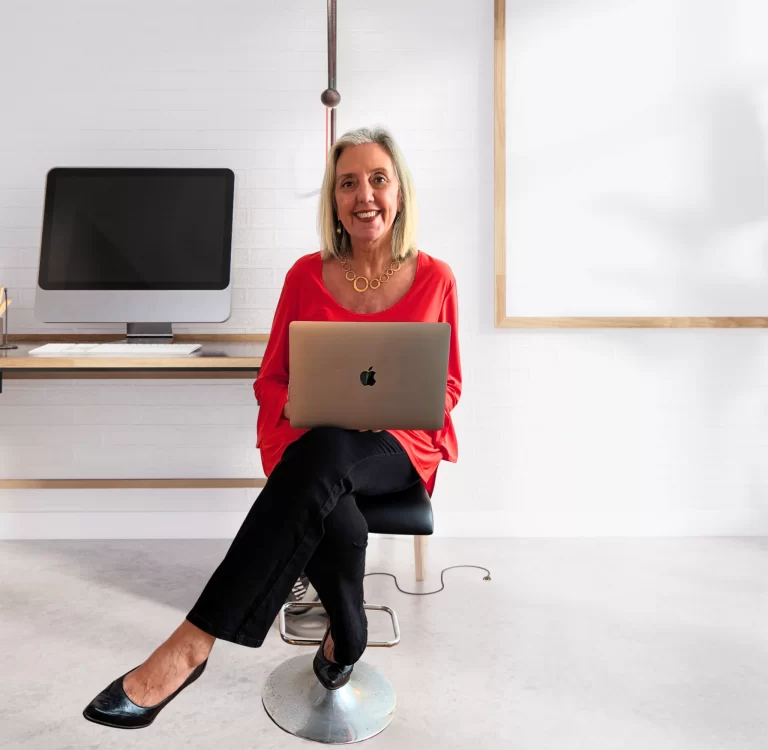
This episode is brought to you by the Business Logjam Session
A private 75-minute online session with Kathi Burns to find the one thing holding your business back and leave with your next steps. It is the same F.L.O.W. process Kathi uses with her own clients: Focus on your goals, Locate your logjams, Outline your solutions, Walk away knowing your next steps.
Find What's Holding Me BackInterested in sponsoring the show? Get in touch.How do you go from a corporate job to starting your own business?
Ina Coveney started with a side business before she left her job. On maternity leave with her first child, she offered to build her local diner's website for free, posted it on Facebook and began getting referrals that earned a few hundred dollars a month. After a bad experience at work during her second maternity leave, she and her husband looked at their finances, saw she could be off work for a year, and agreed to give her business a fair chance.
How can I get my first coaching client quickly?
Start helping real people instead of building a product for strangers. Ina spent eight months on an online course and sold four copies. Her first paying client came after her coach pushed her to post on LinkedIn, where someone she met at a training 10 years earlier asked for help with her website and online marketing.
Do Facebook ads work for a new business?
Ina says they rarely work in a business's first year, because Facebook relies on historical data to predict who will respond. Against her coach's advice, she hired an agency for her course launch and got about three sign-ups. She waited four years, until her message and offer were proven, before testing ads in small amounts.
How do you run a business when your kids are home?
Ina's answer was to ask for help and set clear priorities. When the pandemic closed daycare in the middle of a launch, with her husband working 12-hour days at home, she found herself angry and lashing out. She got her family help, decided her business would take a backseat whenever it got in the way of parenting, and agreed with her husband that each would get one full weekend day off while the other looked after the kids.
Why is helping people the best business advice?
Ina says her business changed when she switched from thinking about making money to caring about her clients' outcomes. She describes herself as direct and logical, not motherly, yet once she started adding extra sessions or working on a Friday night to help a client finish, clients told her she felt like a motherly person. She says people can feel when you actually care.
How do you stay organized as a business owner?
Ina keeps a short list. After 15 years of project management she didn't want to project-manage herself, so each day she writes down three to five things she's aiming to finish, and anything not on the list waits. Most days she gets to two of them, and her longer to-do list lives in tools like Trello and Asana.
How do you get coaching clients with a small audience?
Ina says to get coaching clients with a small audience, start conversations instead of waiting for likes. She measures engagement by how many conversations she starts each day and how many new people she talks to each week, because that's something she controls. She built a list of 100 post ideas to help coaches start those conversations.
How do you find your why in business?
Ina found hers by asking why she kept going instead of getting a job. She realized she feared a life on rails, retiring from the company that hired her out of college and wondering where her youth and adventurous soul went. She asks listeners to decide what winning the game of life means on their own terms and to work toward it every day.
Where does each part of the conversation start?
- 0:00 Meet Ina Coveney
- 0:40 From software project manager to entrepreneur
- 1:22 A side business started on maternity leave
- 5:39 Her online course sold four copies
- 6:29 Her first paying client came from LinkedIn
- 10:14 What she'd do differently
- 11:25 Why Facebook ads don't work for new businesses
- 15:02 When the pandemic hit mid-launch
- 18:49 Ask your partner for help
- 21:53 Best advice: help people
- 25:35 Her hack: a short daily list
- 28:00 Engagement means starting conversations
- 30:12 Know your why
- 33:17 Her podcast, The Global Phenomenon
- 35:01 Wrap-up
What resources were mentioned?
These episodes continue the same thread as this one: Sue Kirchner, Yvonne McCoy, Louise McDonnell, Allan Ngo also answer the question "How do I get more clients?", and the rest are the most recent conversations on the show.


 Social MediaEpisode 144
How To Use Social Media More Strategically In 2026 To Find New Customers with Louise McDonnell

See every episode on the podcast archive or filter by topic on the How do I get more clients? hub.
How can I support the show?
- Subscribe on Apple Podcasts, Spotify or YouTube, or add the RSS feed to any app.
- Rate and review. A rating on Apple Podcasts helps new listeners find the show, and Kathi reads every review.
- Share the episode with one business owner who needs it; the share buttons are at the top of the page.
- Grab a free eBook: 6 Steps to Organize & Energize Your Home, 6 Steps to Organize Your Home Office or 6 Steps to Organize & Energize Your Life.
- Work with Kathi. The Business Logjam Session is a private 75-minute session to find what is holding your business back.
- Be a guest. Apply here if you have a story about clearing the obstacles in your business.
What did they say, word for word?
The transcript below is edited for readability: filler words and false starts are removed and speaker names are added. Nothing was added or summarized.
Read the full transcript +
Kathi: My guest today is Ina Coveney. She's a business coach and the host of The Global Phenomenon podcast. She helps up-and-coming online coaches monetize their tiny audience through organic lead generation strategies before they invest time and money in audience growth. Ina reached six figures in her business before ever cracking 1,000 followers on any of her platforms, and her mission is to help coaches do the same. We're going to talk today about how to get clients with a tiny audience and how she's overcome some of the obstacles in her business to grow her business. So, welcome to the show, Ina.
Ina: Thank you so much for having me, Kathi.
Kathi: Absolutely. So, talk to me about your life before you were this podcast maven and giant business coach. What did you do prior to all that? Tell me your backstory.
Ina: Before all of that, I was working in corporate. I was a project manager for software projects, and I was really, really good at it until I got screwed over for the last time at work. And that's when I decided, okay, I am done. I know my worth. I know that I can be doing so much better than this. And peace out. It's time to start my own thing.
Kathi: Wow. So, you stopped cold turkey and started being an entrepreneur right away?
Ina: Pretty much. I had had a side hustle for a while already. I have two kids. So, 10 years ago, when I was on maternity leave with my first baby, it was my first look at, wow, this is a time that I'm not going to be working. So, this is my opportunity to do something else. And at the time, I was really trying to find what it is that I liked to do. So I went down to my local diner and I asked them, "Can I make your website for free?" And they said yes. So I spent all that time just building the site. I published it on Facebook. I was very proud of it. It was a beautiful site, and I started to get referrals for work. So it was a few years of that, of just having a few clients, just making a few hundred dollars a month. Which was great for me, because I felt, I have a full-time job, it pays me great, I don't need the money. I'm just doing it to keep my skills sharp. I wasn't really into the whole entrepreneurship thing yet. I was just testing the waters to see what else was out there.
Ina: So when this thing happened at work, and it was a whole dramatic story involving lawyers and things, I just decided, you know what? This was in my second maternity leave round. I'm like, it's not worth it to me to come back to work here, commute 2 hours a day, be away from my newborn baby, just to be here with you guys who clearly don't appreciate what you have. So, once that happened, I talked to my husband. I told him, I'd really like to give my business a fair chance, a fair go. Not do freelancing anymore, but do something else. And at that point, I started to become more aware of digital course creation, and I have a technical background. I'm like, I can do this, right? I am great on video. I can do this. Let me just do this and see what happens. And I was starry-eyed. I really thought that this was going to be me going viral overnight, and I was going to be making so much money that I was going to live like I was on a paid vacation all the time. That was the mentality going into it. Turns out business doesn't quite work that way. But my husband was very supportive. He said, "Okay, we looked at our finances. It looks like you could be off work for a year before you would have to go back. So, sure, let's give this a try." And that's how everything started. And from there, it's just been a process of evolution since day one. It's never looked the same as it did the year before.
Kathi: Well, you're cracking me up, because you're like, "Okay, so I have my first baby. I'm on maternity leave. In all that time, I had all that extra time. I'll just start a business." Really?
Ina: So, I know that it's probably not a common thing, but this is a feeling that some moms have, especially if they've been in the workforce for a long time. When you're on maternity leave, yes, you're dealing with a baby, and every mom is different and every kid is different. For me, the first month I was dealing with just staying awake. The second month I was starting to see more people. People were coming to visit me. I was getting out there. So, okay, getting more comfortable with it. But the third month of maternity leave, that's when I was like, "Okay, I got it down. I got the groove. Now, I want to do something with my life." And this is the first time in years that I've had this much time without full-time work. So it was an opportunity, and I've met so many other entrepreneurs who took that time in maternity leave to start their businesses because they felt the same way. Like I said, it's not everybody's opinion, but some moms like me, we just found that as a great opportunity to focus on something else, which was great.
Kathi: Yeah. Well, anytime you have a pattern interrupt. I started my company 17 years ago because I had a pattern interrupt of having time off for the first time ever in my life. So it gave me the space and clarity to launch a business. So I'm with you on that. I just thought that's really cool, to be a first-time mom and launch and all that good stuff. So you quit your job. You had already been sidelining and everything. Talk to me about your first big client. How did that look? What happened there?
Ina: First of all, you need to know that the first eight months of my business, I was so focused on creating an online course, because I thought that was the way that I was just going to live this vacation-forever life. So, I created an online course, and I sold all of four copies of it, and I never talked about it again. That was just not the way to go. So, it was through talking to other people that they started to let me know, listen, you need to start helping real people. You need to stop thinking of this entrepreneur thing as, hey, I'm going to make something and faceless people are going to buy it, and a million faceless people are going to buy it, and then you're going to leverage off of people you don't even know. That's a fallacy. That's not a thing. You've got to go out there and help people.
You've got to go out there and help people.
Ina: So my very first paying client was because my coach had been telling me that I needed to post more on LinkedIn, because I was talking to corporate women, and I kept telling her, I can't. That's where my former bosses are. That's where my former co-workers are. I can't. So, I decided to let go of that for a minute, and I started posting on LinkedIn, and the person that I least expected, somebody that I met 10 years before at a training, she comes up and she tells me, "I think you can help me with this. Can you help me?" And it was my first sales call. I didn't know what to do. I'm like, "Do you want to do it for this much?" "Okay, great." And I go to my coach, because I had hired my own coach. I'm like, "So, she's going to pay me?" And she's like, "Amazing." I'm like, "What is happening?"
Ina: And it was someone who was starting this coaching journey. She knew more about the coaching industry than I did, but I knew more about online marketing than she did. So, it was one of those things: she knows what she wants to do, and I just helped her by being a sounding board and helping her down the right path. I helped her put together her website and put everything else in place. And it's one of those things that shows you that you can't just come into this thinking, I'm going to set it up and it's going to be a get-rich-quick scheme. My first client started prioritizing other things in her own family life, and her business did not advance from there. But I stay in touch with her, and it's something that she keeps having in her mind. In the meantime, it's been four years, and my business has continued to thrive. So, when you enter into this business, you've got to realize that things are not going to happen fast. Things are not going to happen overnight. The only way to really succeed doing this is by not giving up, by being open to evolution and just not giving up, and continually shifting and changing for what you want to do and the clients that you want and what they need.
Kathi: And it's funny how you said that you were an expert in the marketing, she was the expert in the coaching. That's what happens a lot of times, what I find. My coaches know a lot more than me, or my clients know a lot more than me, and I know a lot more than them. That's the whole marriage of a business relationship, is to have people who can push you out of your boundaries, I think. And that was a really good first client for you.
Ina: Absolutely, and I completely agree. At this point I work with coaches. I specialize in monetizing small audiences for coaches, and I have coaches who are brilliant minds in what they do. I will never pretend to be an expert at what they do. But I'm an expert in business, and I'm an expert in online marketing. I'm an expert on how to get clients. So that's what they come to me for. But if they came to me and they told me, "Okay, Ina, what should be my exact message, and who is my ideal client?" I'm like, I'm going to give you the tools so that you can find it, so that you can figure it out, and I will help you get there. But I don't have all the answers in my head for every niche out there. I have the process. This is the way that you do it and you find it, and that's what my clients find now.
Kathi: Yep. And processes are where it's at, girlfriend, aren't they?
Ina: Yep. I came from establishing processes in corporate. I'm telling you, process is everything.
Kathi: Project management girl. There you go. That's right. So, if you had to do this all over again, what would you change in your process?
Ina: I would not have started with creating an online course. I had a coach during those first six months that I was developing the course, and she was telling me, "Ina, I want you to start making money. I want you to start helping people. Can we get out there?" And I'm like, "No, I'm smarter than you. I'm smarter than everybody. I'm just going to create an online course. That's really where the riches are. I'm just going to do that." I was very, very stubborn in thinking that I had all the answers, that I knew what to do. And guess what? I fell flat on my face. That course that I wanted to sell, I had a launch, which my coach was helping me with because she was an expert at launches. So, she helped me carve out the launch, and I'm like, "I think I'm going to go and pay for Facebook ads." And she's like, "Oh, you don't need to do that right now." And she would tell me, "I would be saving your money." I'm like, "No, no, no." Again, I'm smarter than you. I'm smarter than everybody. So, I hired a Facebook ads agency.
Ina: By the way, it's not that Facebook ads don't work. It's that Facebook relies on historical data to understand and to be able to predict the future data. So if I start on Facebook, maybe I spend a year boosting posts, testing audiences, testing messages. By the end of the year, Facebook will have enough information to say, "Okay, I think we know your audience, and this type of audience is resonating with it, so we can show it to them and we can do a really, really great campaign." But when you start fresh and you pretend that, oh, I'm just going to throw money at the problem, that is just not how Facebook ads work. So I hired an entire agency. I dropped money into it, and I got all of maybe three signups for my class. And I'm like, I thought this was going to work. I thought it was like magic. You pay and they bring you leads. That's not how it works, especially not in your first year.
When you start fresh and you pretend that, oh, I'm just going to throw money at the problem, that is just not how Facebook ads work.
Ina: So, how would I change? I would have just gotten rid of that online course idea. I would have started helping people right away, getting to know people in my network. And this is something that I preach now: talk to people who would be your ideal clients. Identify them and get to know them better. What is it that you need? Can I help you with that? Let me help you with that. Here's my price. And you start doing that. If I had started doing that in the first year, I would have saved myself so many pivots, so many changes in my decisions, because I was so stubborn thinking that things had to be one single way. So, I would start with getting clients right away and getting to know my audience and understanding what it is that I could do for them.
Kathi: Yeah. And I agree. I mean, you were drinking the digital marketing Kool-Aid, baby. Do an online course and you'll be rich immediately. And I ran Facebook ads and it was fairly successful, but you do have to drop so much money into Facebook before they know where to send the people to you. It's a long-haulers game, in my opinion, which means that it's a lot of money. So, that's two good tips. Don't do a course for no apparent reason, and don't do Facebook ads thinking that you're going to make a million, because it's very, very rare, unless you have millions to put into it. Then you can do it.
Ina: That's what I think. You need a lot of money. You need money, and you need to have tested the message and the audiences already. So I'm not a Facebook ad expert, so please don't take this from me, but I'm going to tell you right now: I've been in business for four years. I'm finally at the point where I'm like, I've got a great message that people are resonating with. I've got a great offer at a great price. I believe in this. It's time to start growing. And I'm about to start dipping my toes into Facebook ads. But you bet it's not going to be to the tune of thousands of dollars overnight to hope that it works. I'm going to start testing the waters. I'm going to start training Facebook, checking audiences, see where exactly my people are, what is giving me the best bang for my buck. It's going to be a process that is going to take me time.
Kathi: Yeah. And money.
Ina: And I'm just starting it now, four years into the business. You do not start with Facebook ads.
Kathi: Yeah. I totally agree. And you'll kick butt this time because you'll know, and it's the slow, small game. I think that really helps you as far as tweaking this stuff. Okay. So, tell me about a time when you felt stuck and you were just busy, overwhelmed, stressed out, weren't going where you wanted to. What did you do to have a comeback from that?
Ina: I don't even have to think about it. This happened when the pandemic hit. So when the pandemic hit, I was in the middle of launching one of my programs, and all of a sudden both my kids lost their daycare. Kids had to come back home. And not only were they going to be home all day, but also my husband didn't stop working. He couldn't go to the office because of the pandemic. So he was at home, but he didn't have any bandwidth to help, because people that he works with, they don't have kids. So guess what happened to people who don't have kids in the pandemic? They spent a lot more time at home, and they were a lot more productive. So there's people in his team telling him, oh my god, there's all these new things we can do. So he is in his dungeon in his office while I'm watching the kids. Plus, I need to continue homeschooling the kids. Plus, I am launching my program. I was on a freight train, and the freight train ran into a wall. There was a wall and the freight train stopped. And that's what happened. I started to lash out at my own kids. I started to really not understand why I was so angry. I was so angry during that time.
Ina: We all have unexpected things happen in life. This was way out there, with a pandemic that nobody predicted. But when things like that happen, I think it's really important to figure out where your priorities are. So, one thing that really helped me is just get us help. Not just assume that everything is fine, not sweep things under the rug, but actually get help to solve it. And the second thing was to realize, you know what, my priorities here are to make sure that my kids are going to be well-adjusted grown-ups and that they're going to be good people. And if at any point I feel like my business is getting in the way of me mothering them in the way that I want to, then my business is going to have to take a backseat. It's just having a constant balance, because guess what? Even though my business doesn't have feelings, my business is not there crying because I'm not giving it attention. I am crying because I'm not giving it attention. Because my business is my thing. My business is what I decided to use to give myself a place in the world and give myself purpose in the world. So when I'm not focused on it, my insides scream at the same time. So I have real kids, and then I have this baby business. So it's all a balancing act.
Ina: I would just advise anybody out there, and I'm going to say this in the most loving possible way: use your partners. Just because we're the mom doesn't mean that we're meant to do everything. Use your partners. My husband was in a really, really tough spot back then, because he was working 12-hour days stuck in a dungeon in his office, which was not ideal for him either. We were all under stress. But when I started asking him for help, he started also asking for help. He started asking me for what he needed. And you know what really worked during that time? We realized that we both really needed some space, and we started using weekends for that. We said, "Okay, every weekend, one day is yours, one day is mine. One day you take care of the kids and I can do anything, and the other day it's all yours. You can sleep all day if you want. Nobody's going to need anything from you." And that helped for several months, and it started to fill our buckets again, so that we weren't overwhelmed anymore. Talk to your partner, communicate with your partner, and help each other out. I'm going to put that out there.
Just because we're the mom doesn't mean that we're meant to do everything. Use your partners.
Kathi: Yeah, that's really good, Ina. Masters hire masters. I talk about that in my book, that the most masterful people will hire other people. That's how we become masterful. And having talking about what you need. This has been a recurring theme actually when people talk about COVID on this podcast, is actually talking about how you feel and what you need, because all of our needs changed dramatically during COVID. Everything changed. So without the discourse, you can only imagine what your husband was thinking. You could only imagine what your son was thinking. Your son probably had no idea about your business and how much it meant to you. So, I think that was really smart, and that's good advice for anybody who's going through anything, is again having a masterful and objective observer to just get it open and get the conversation going.
Ina: Yeah. I think open communication is the main goal here: ask for what you need, and then don't pretend that you're the only person with needs here. Make sure that everybody else around you gets to voice them out too.
Kathi: I love the one day off each week for each person. And what I do when I work with families too is I say, "Okay, it'll be mom and son night one night, and the next week it's dad and son night." And so there's always one-on-one for individuals in the family. And I think that's important as well. That gets lost oftentimes. Well, good for you getting through COVID.
Ina: Yeah, we got through it. We got through it.
Kathi: So, what's the best piece of advice that anyone's ever given you that you think about?
Ina: The thing with good advice is that you don't listen to it the first time. So, once it finally hits you, you realize, man, if I had listened to it years ago, where would I be? And it is really to help people. I know it sounds so trivial. It sounds so simple. But really, I came into my business with a mentality not of service, not of helping people, but of making me money, of getting me out of my uncomfortable situation at work. It was all about me and giving me money so that my life can be different. And it's been over time, over years of actually getting out there. Even while I was working with clients, I'm here thinking, okay, I'm putting out a product and hopefully more people will buy it and then I'll make money, until it finally hits you that being of service, that actually helping people, is a thing.
Ina: I'm going to tell you, because I'm such a pragmatic person. I'm very direct. I'm very logical, rational. Everything has to be just so. I grew up with friends who were very motherly. And we all know that person that when they talk to you, you feel like they're wrapping you in love. They're giving you advice just by the way they talk to you. "Oh, honey." There are people that are just motherly. And I would look up to them, because I'm such a square thinker. I don't think anybody has ever said that I'm motherly in my life, because I'm so direct with everything. And I'm going to tell you that once I started to really switch my focus to actually caring about the outcome of my clients, and putting my feet in their shoes and saying, "You know what? I'm not going to limit myself by what my offer was." For example, if I said, "Okay, I'm just going to meet with you on a weekly basis for 12 weeks and we're going to crank this out," if one of my clients needed help and they needed an extra session, I would get on the phone with them. Or if they ran out of time to do something, we would get together on a Friday night for two hours and we would crank it out. It's, you know what, I'm not just going to stand behind my contract. No, no, no, wait. Come here and let's do this together.
Ina: I actually started hearing my clients saying that they thought of me as a motherly person. I'm like, what? It almost makes me cry just thinking about it. What do you mean? I'm still the same direct, rational person. But they started to see it's not the way you talk. It's not saying honey and calling everybody sweetheart. It's caring, and people can feel it, and people know it. And that's what really started to make a shift in me, really feeling like I'm out there making an impact and having a purpose, when people started telling me, "I feel like you actually care." I'm like, I've always cared. But it's actually doing it and being there for them. So a piece of advice that I wish I had heard way in the beginning is: you need to be helping people.
It's not saying honey and calling everybody sweetheart. It's caring, and people can feel it, and people know it.
Kathi: Helping people. Yeah. Good advice, for sure. So, do you have a hack that you use to stay organized? I always like to talk about interesting organizing methods or tactics. Do you have anything that you love that you use to keep yourself on task and organized?
Ina: I'll tell you one thing. I came from a project management background, and it's one of those things that they say, the blacksmith uses wooden knives. I know that that's directly translated from Spanish. There's an expression like that: if you are a tradesman, you don't necessarily act that way at home. So I came from 15 years of project management, so when it became time to really do my business, I'm like, I don't want to be strapped with these constraints anymore. I want to be more free-flowy. So one thing that helps me keep my scatterbrain organized, because I don't want to project manage myself because I'll go crazy, is I realized that there's a very limited number of things that I can do per day, especially with kids, especially with the pandemic, especially with everything. It's just short lists. If the thing that you need to do next is not on that list, then it's not going to get done, and then it wasn't that important anyway. Because what is the point of me having a list of 20 things that I'm never going to get to?
Ina: So, every single day I write myself a list: okay, what are the things that I'm going to aim for getting done today? Anything that is not on this short list of three or five things, it's just not getting done. And most times I only get to two of them, but I know that I did the right thing, the most important thing for me to do today. So, everything else gets handled by tools like Trello and Asana. Your to-do list is never going to go away. But if I'm going to be productive, I've got to focus on one thing today.
Kathi: Yeah. One, two, three. You got it. Three to five is the most that we can tackle. And I love that, because at the end of the day, you'll at least know what you did.
Ina: Exactly.
Kathi: Otherwise you can finish the day going, what happened? What did I do? I don't even know what I did. I was stuck in busyness all day long, which is a common phenomenon for entrepreneurs. So, good for you for your list. It's awesome. Okay. So, I know you have something free to offer the listeners. What is it? What's the valuable free resource that we're going to put out there for everybody?
Ina: So, this comes straight from me teaching my people how to monetize small audiences. Getting to know your people, getting to know your network, and really figuring out where your clients are all around you, without having to pay money in Facebook ads or grow your audience at all. And that is that you really have to level up your engagement. Now, we've been taught to believe that engagement is something that you wait for. I'm going to post, and then I just cross my arms and wait for engagement to roll in, in the form of comments or likes or shares. And then when somebody asks you, "How's your engagement?" that's what you're looking at, the comments and likes and the shares. That's not how I view engagement. For me, engagement is something that I have control over. And that is: how many conversations am I starting per day? How many conversations do I have with new people every single week? That is engagement.
For me, engagement is something that I have control over.
Ina: So, what I did was, I'm like, okay, what can I do to help people level up their engagement in a way that feels natural? Because if you ask anybody, "What do you think you should be doing to get clients?" they're all going to tell you, "I should post more," or "I should post more consistently." That's what everybody tells you. I'm like, okay, I'm going to meet you halfway. So I created a list of 100 post ideas. This is for Instagram, but it can be used really on any platform. 100 post ideas that put you in the driver's seat of engagement, that put you in a proactive state to start conversations. And anybody can go and get that for free at 100postideas.com. Completely free guide, and start talking to people.
Kathi: Perfect. I love that. Everybody can use that for sure. So, make sure you download that, you that are listening. Okay. So, is there anything that we should have talked about or anything I should have asked you that we haven't talked about yet?
Ina: I just wanted to hammer this point home, and that is: think of why you started the business. Your why may be to leave a better legacy for your kids. It may be to live the life you want. I had to really take a hard look at what my why was. Why am I not out there just getting a job? Why am I doing this? It's not like I'm making eight figures and taking my family on vacations. Why am I still doing this? And I realized that it was because I didn't want to wake up and it be the time to retire from the company that hired me out of college. I had a huge fear that my life was on rails, that somebody else was leading the charge, and somebody else was paying me, and that's what it was going to be for the rest of my life. And I was going to wake up one day wondering where my youth went, where my ability to create a better life went, where my adventurous soul went, and I didn't want that.
Ina: So, if I can leave everybody with something here, it's when you think about your why, I just want you to realize that we're all here for a purpose. And the only way to figure that out is to do your best at figuring out what it is you're supposed to be doing every single day. So I wake up every day thinking, what am I supposed to be doing now so that 40 years down the line I am not regretful, so that I feel like I really put myself out there, that I lived the best life that I could, and I did everything that I wanted to do without reservation, without caring about the risks. I just went and I did it. So I would like to encourage everybody who's listening to this to really think of their life as the game of life. What do you need to do to win the game of life on your terms? And for many people, it's different. For some people it's making a million dollars. For some people, it means impacting tons of lives. For some people, it means saving as many endangered species as possible. What is the thing that you were put on earth to do? And do everything you can so that every day you're working towards it, so that by the end of your life, you can look back without regret. I just wanted to put that out there for everybody.
Kathi: No, I think that's brilliant. And finding the what, I agree with you, begins with the why. Why are you feeling this discomfort, or why are you feeling this excitement, or why are you feeling this way? And once you figure out your why, you can figure out the what. What can I do to amplify that why that just makes me totally excited?
Ina: Yeah. So, yeah, I love that. That's really good.
Kathi: Gosh, I feel like we could actually talk for a very long time. There's lots of things to talk about on this subject.
Ina: Yeah.
Kathi: But everybody make sure that you download the resource that you've so kindly offered, Ina. I think that's great. Oh, I know what I was going to say. Let's talk about your podcast just a little bit. We might as well give some promotion to your podcast, right?
Ina: Sure. So, if you're listening to this on a podcast, you can actually just go straight to your app and look up The Global Phenomenon. This podcast is my love child. This is my baby. In it I interview people who are my heroes in the coaching world. I've had Pat Flynn, John Lee Dumas, people who are huge in my industry, and I get to ask them how they started and what they were like before they became the next global phenomenon. And then, because I couldn't help myself, I also come in with solo episodes to teach about what it is that everybody should be doing to get there, to become the next global phenomenon. So, if you would like to check it out, all of the interviews are amazing, with incredible people who have surpassed every expectation that they had for their life, and they tell you. I ask them really personal questions, and I really try to surprise them with where we go in the interview. So, it's not going to be an interview like you've seen them in anywhere else. It's always going to be from a very, very personal lens. And the lessons that I teach, I always try to keep it to three things. I'm always going to really narrow it down. It's not me rambling on. It's me telling you three things about this topic that you need to know or that you need to do, to try to keep it really, really concise. So I invite everybody to go and check it out. The Global Phenomenon podcast.
Kathi: Yes. And while you're there, give it a good review and a good rating.
Ina: And while you're on this one, give me a good review and rating as well, please. I would love the love.
Kathi: Right. Tip your hosts. That's right. Okay. Thank you so much, and we'll see you next week, and we'll see you hopefully very soon in person, Ina.
Ina: Thank you very much, Kathi. This was fun.
Kathi: Yeah. Take care.
Where can I find the links and resources from this episode?
Connect with Ina
Organizations and companies
Inspired? Here Are Your Action Steps:
- Stop building a product for strangers and start helping real people now.
- List people in your network who could be your ideal clients.
- Ask each of them what they need and whether you can help, then name your price.
- Post where your ideal clients are, even if former bosses or co-workers will see it.
- Hold off on paid ads until your message and offer are proven, then test with small amounts.
- Count how many conversations you start each day and how many new people you talk to each week.
- Ask your partner for help and agree on one day off each for the weekend.
- Write a list of three to five things to aim for each day, and keep the rest in a tool like Trello or Asana.
- Write down why you started your business and what winning means on your own terms.
Frequently asked questions
How can I get my first coaching client quickly?
+
Ina Coveney's advice is to start helping people right away instead of building a course first. Talk to people in your network who could be your ideal clients, ask what they need, offer to help and give them your price. Her own first paying client came from posting on LinkedIn.
What is the fastest way to attract clients?
+
In Ina's experience, it's starting real conversations with people you already know. She says that if she had done this in her first year instead of building an online course and paying for ads, she would have saved herself many pivots.
How do you get clients with a tiny audience?
+
Ina says to stop waiting for likes and comments. To her, engagement means the conversations you start: talk to people who could be your ideal client, ask what they need, and offer to help at a price.
Why don't Facebook ads work for a new business?
+
Ina explains that Facebook relies on past data to find the right audience, and a new business has none. Paying an agency to run ads in her first year brought her about three sign-ups. She waited four years, until her message and offer were proven, before testing ads again.
What's Ina Coveney's daily organizing hack?
+
A short list. Each day Ina writes the three to five things she's aiming to finish, and anything not on the list waits. The bigger to-do list lives in tools like Trello and Asana.
Who is talking in this episode?

About the Host, Kathi Burns
Kathi Burns, CPO®, is a Business FLOW Strategist based in San Diego. For the last 20+ years, Kathi has helped clients create systems they can stick to. She is the author of How to Master Your Muck, Organizing With Tetris and Home Organization, The Smart Guide, and co-author of four more titles; all are in Kathi's shop. Kathi's business has been featured on Good Morning America, and her advice has been featured in Oprah Magazine, Martha Stewart Living, Better Homes and Gardens and Entrepreneur Magazine.
More about Kathi · Shop Kathi's books · Business Logjam Session · Apply to be a guest
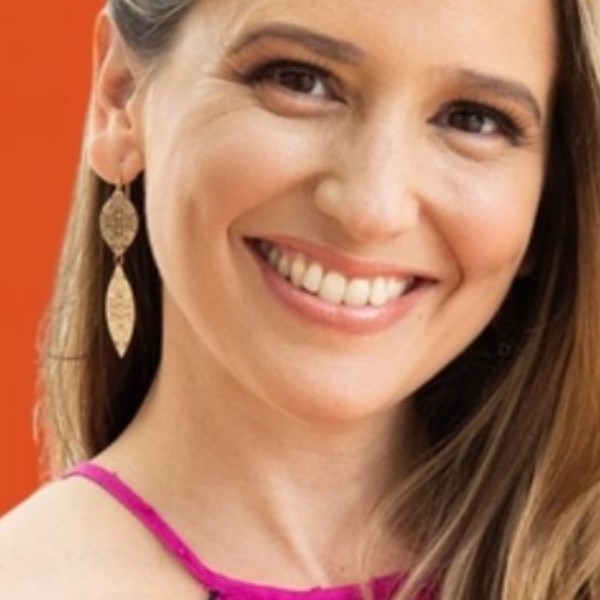
About Ina Coveney
Ina Coveney spent 15 years as a project manager for software projects before starting her own business. She began with a side business building websites while on maternity leave with her first child, and after leaving her corporate job she built and launched an online course. She now works with up-and-coming online coaches, specializing in monetizing small audiences through organic lead generation before they invest time and money in audience growth. Ina reached six figures in her business before she had 1,000 followers on any platform. She hosts The Global Phenomenon podcast, where she interviews people she calls her heroes in the coaching world and teaches solo episodes built around three points.
Want help putting this into practice?
Book a Business Logjam Session with Kathi
A private 75-minute online session to find the one thing holding your business back and leave with your next steps, using the same F.L.O.W. process Kathi uses with her own clients: Focus on your goals, Locate your logjams, Outline your solutions, Walk away knowing your next steps.
Prefer to start small? Download Kathi's free eBook 6 Steps to Organize Your Home Office.
Published · Updated
This episode page is for general information. Guests speak for themselves, and their opinions, statistics and examples are their own. Nothing here is legal, financial, medical or mental-health advice; talk to a qualified professional about your own situation. Some links go to the guest's own products or free offers; addSpace does not earn a commission from them unless stated.