


Episode 41
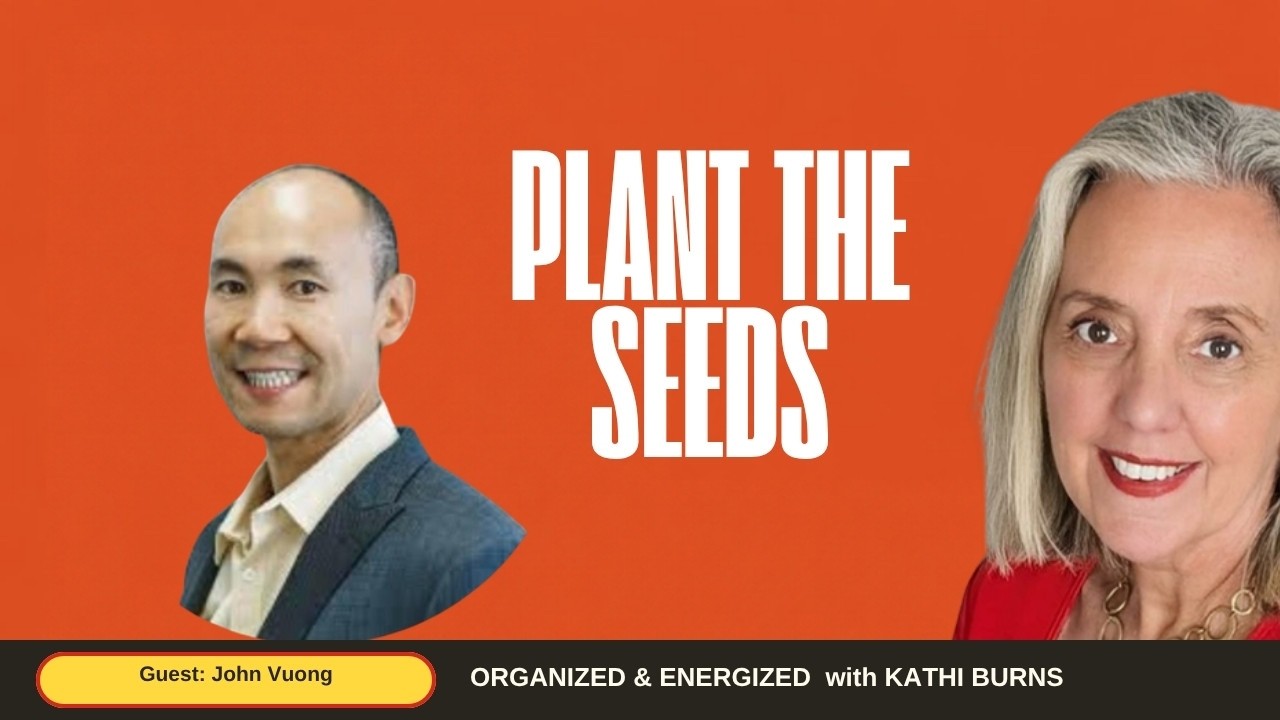
with John Vuong, owner and founder of Local SEO Search, a boutique SEO agency in Toronto · August 17, 2022 · 28 min
John Vuong founded Local SEO Search, a Toronto agency that helps small and medium-sized businesses rank on Google, in 2013 after more than five years selling Yellow Pages advertising.
He started with no SEO knowledge and taught himself by reading, joining forums and working 16-hour days, seven days a week, for years.
John says there is no secret trick to ranking: build a website that stands for your values and keep publishing useful content consistently.
He says backlinks still matter, but the authority, age, niche and trustworthiness of the linking site count more than the number of links.
John got unstuck by building specialist teams with a manager over them, which freed him to market the business.
Published · Updated
What is this episode about?
Kathi Burns, CPO®, Business FLOW Strategist, talks with John Vuong, owner and founder of Local SEO Search, a boutique agency in Toronto that helps small and medium-sized businesses rank on Google and win their local market. Before starting the company in 2013, John spent 10 years in advertising sales, including more than five years at Yellow Pages working with thousands of business owners. You'll hear why those clients pushed him toward digital, how he learned SEO with no background, and what he says about local SEO for small business: why there is no secret trick, why consistent content beats waiting for perfect, and why the quality of backlinks matters more than the count. John also explains how specialist teams got him unstuck, what he learned from business owners who never chased money, and where to get his free SEO checklist.
There's no secret. It's time more than anything, and consistency, and it's adding value to the people that you want to attract.John Vuong
Jump to links and resources · Part of How do I get more clients? · All episodes · Every guest
What are the key takeaways?
- John Vuong left a six-figure advertising sales job at Yellow Pages after clients told him their returns were falling and they wanted to try digital but didn't know whom to trust.
- He taught himself SEO by reading, joining forums and communities, and working 16-hour days, seven days a week, for many years.
- John says the businesses that last for generations take care of their customers, listen, build case studies and testimonials, and understand pricing and value.
- His advice for ranking on Google is to build a website that stands for your values and keep publishing good content and resources consistently; he says there is no secret.
- Backlinks are still critical, according to John, but the authority, niche, age and trustworthiness of the linking site matter more than the number of links.
- John says feeling stuck comes from trying to do everything yourself, and he got past it by hiring specialist teams and a manager to run them.
- From thousands of small business owners, he learned that the successful ones had a purpose and never chased money or more stuff.

This episode is brought to you by the Business Logjam Session
A private 75-minute online session with Kathi Burns to find the one thing holding your business back and leave with your next steps. It is the same F.L.O.W. process Kathi uses with her own clients: Focus on your goals, Locate your logjams, Outline your solutions, Walk away knowing your next steps.
Find What's Holding Me BackInterested in sponsoring the show? Get in touch.How did John Vuong get into SEO?
John Vuong got into SEO because his Yellow Pages clients asked for it. In his last two years there, almost every meeting was with business owners frustrated by lower returns who wanted to try Google and social media but didn't know whom to trust. He left that job in 2013 and started Local SEO Search, knowing nothing about SEO, to give small businesses a trustworthy option.
How do you learn SEO with no experience?
John learned SEO on the fly, by reading, taking in tons of content and joining as many communities and forums as he could. He says it was like a new language, with its own terminology. He worked 16-hour days, seven days a week, for many years, and signed clients while he learned, using his sales strength. He made a lot of mistakes at the start and says that pushed him to learn quickly.
What helps a small business last for generations?
John says the bricks-and-mortar businesses that survived for generations took care of their customers. They listened, built case studies, testimonials and white papers, and understood pricing and value. Even though Google's algorithm changes all the time and his agency is always testing, he says those basics are what carry a business through the ups and downs over the long term.
Where should you start with local SEO for small business?
Start with local SEO for small business by building a website that stands for your values, then keep publishing useful content and resources on different platforms. John says there is no secret trick. It takes time, consistency and adding value for the people you want to attract, and putting something out is better than waiting until it's perfect.
Do backlinks still matter for SEO?
Yes, backlinks still matter, but John Vuong says quality beats quantity. What counts is the linking site's authority, niche, industry, age and trustworthiness, along with the anchor text or branded keyword it uses. He tells business owners to stop chasing a number of links and focus on the kinds of websites linking back to them.
How do you get unstuck when you're trying to do everything yourself?
Stop doing everything yourself and hire specialists. John says he felt stuck because an SEO agency has too many moving parts for one person. He built content, link building, social, development, SEO and graphics teams, with one manager over all of them, which freed him to market the business, book speaking engagements and do PR.
What is the best advice for running a small business?
John's best advice is to find your purpose, the thing that makes you excited to go to work every day. He saw it in Yellow Pages clients who were still running their businesses at 70, 80 and 90. He says those owners never chased money or more stuff; they took care of their people and community. He also suggests asking the business owners you respect how they grew, because most are glad to help.
What is on John Vuong's free SEO checklist?
John's free SEO checklist shows where the gaps are on your website and what you need to do to optimize it so you can start outranking your major competitors. It's a free download on the Local SEO Search homepage. He says it gives you a head start whether you do the work yourself, hire consultants or work with a company.
Where does each part of the conversation start?
- 0:00 Meet John Vuong
- 0:29 From Yellow Pages to SEO
- 2:21 Making the switch to digital
- 3:46 Learning SEO on the fly
- 5:42 Keeping up with Google's changes
- 6:15 What helps a business last for generations
- 7:13 What he'd do differently
- 9:15 No cookie-cutter approach
- 10:36 His ideal client
- 11:20 Where to start with SEO
- 13:35 Do backlinks still matter?
- 14:45 Feeling stuck: you can't do it all
- 15:25 Building specialist teams
- 16:51 Best advice: find your purpose
- 19:16 Successful owners never chased the money
- 20:15 Ask the people you respect
- 21:44 Expect challenges and trust your gut
- 22:54 Breathe and let go
- 23:20 His free SEO checklist
- 24:55 Business ownership takes time
- 26:39 Wrap-up
What resources were mentioned?
These episodes continue the same thread as this one: Sue Kirchner, Yvonne McCoy, Louise McDonnell, Allan Ngo also answer the question "How do I get more clients?", and the rest are the most recent conversations on the show.


 Social MediaEpisode 144
How To Use Social Media More Strategically In 2026 To Find New Customers with Louise McDonnell

See every episode on the podcast archive or filter by topic on the How do I get more clients? hub.
How can I support the show?
- Subscribe on Apple Podcasts, Spotify or YouTube, or add the RSS feed to any app.
- Rate and review. A rating on Apple Podcasts helps new listeners find the show, and Kathi reads every review.
- Share the episode with one business owner who needs it; the share buttons are at the top of the page.
- Grab a free eBook: 6 Steps to Organize & Energize Your Home, 6 Steps to Organize Your Home Office or 6 Steps to Organize & Energize Your Life.
- Work with Kathi. The Business Logjam Session is a private 75-minute session to find what is holding your business back.
- Be a guest. Apply here if you have a story about clearing the obstacles in your business.
What did they say, word for word?
The transcript below is edited for readability: filler words and false starts are removed and speaker names are added. Nothing was added or summarized.
Read the full transcript +
Kathi: Hi, everyone. I am back with John Vuong. He's the owner and founder of Local SEO Search, a boutique agency from Toronto, Canada, one of my favorite places. He helps small and medium-sized businesses rank on Google and dominate their local market. So we're going to learn how to dominate your local market right now with John. John, I am so psyched that you're here, and I can't wait to hear what you have to say about local search engine optimization. I know it's a big daddy deal, but tell me a little bit about your background. How did you get into all this crazy world?
John: Yeah, well, thanks a lot for the intro. So I started this company, Local SEO Search, back in 2013. And I didn't know much about SEO, actually. I was in sales, in advertising sales, for 10 years prior to that. I worked in online, digital, traditional, and then I worked at a directory that some of you may know of called Yellow Pages. So I was there for over five years. I worked with thousands of business owners and got to really understand the true meaning of what small and medium-sized businesses were all about. They valued customers, they really took care of their community, and they understood how to build a business foundationally. And what they informed me was there was a transition going on. A lot of the traditional ways to market and advertise were going through a lot of change and disruption, and I either wanted to be a part of that or try something unique. So that's how I started this company, not knowing anything about SEO. I knew that I wanted to help serve that huge community of SMBs, and I had to learn how to do it and be one of those good guys out there to offer a solution people can trust, doing things the right way. And that's how I started, almost 10 years ago now.
Kathi: That's pretty amazing. And yeah, the demise of the Yellow Pages is pretty funny. But I know doing advertising sales for anything is really hard. I did that for a while myself, for about a decade, and you've got to be really good at what you do in order to sell advertising and print ads. So I commend you for that. So how did you switch into it? When you decided, okay, I'm going to start trailblazing and doing my own thing, what was the sequence of that?
John: So I was there for five years at Yellow Pages, and the last two years, every single meeting I would be going into, they were upset with me and the brand. They were frustrated because they were getting lower ROI, return on investment. They were spending more than ever. It was no longer the Yellow Pages that they once knew and trusted. And they informed me that they wanted to try this new avenue of digital. They hear about Google, social media. They understand that there's another platform and different ways to market themselves, but they didn't know who to go to, who to trust, what it really meant, because all they knew was they were bricks-and-mortar business owners that understood their business and their clients. They didn't understand this new digital world that was being transformed. So I needed to get in and learn about that. My strength was always sales, so I went out there and got new clients to really build something that I can take to the market. And I made so many mistakes at the beginning because I didn't know anything about SEO. So going into this new world, being the sales rep learning about this new digital world, I was learning on the fly. I was reading, ingesting tons of content. I was joining as many communities and forums as possible. It's new terminology as well. It's like this new language altogether, so everything was brand new. And it took me a lot of time, investing a lot of hours every single day, like 16-hour days, seven days a week, for many years. I just had to put in the time, because I knew eventually it would pay off.
Kathi: So did I get this right, that you were actually paid by the Yellow Pages to start learning how to do SEO?
John: No, so I left. Those two years gave me a good foundation of what I wanted to do, which was build something. I had a good idea: there's paid ads, there's social media, but when I really looked at search engines, there was this organic, natural way that people were seeking things out, very similar to Yellow Pages, but they didn't have to really pay for placement. So I had to figure out the algorithm and how Google really shifted things on a regular basis. And that's where it allowed me to build clients who paid for a service. So I understood the way Yellow Pages built their business, and then built something similar, but in this whole SEO space.
Kathi: That's so super interesting. And back then it was more of a wild frontier. I know my husband did SEO about 15, 18 years ago, and he was always white hat and he was always organic, and he did a lot of reputation management. But things change so much and so frequently. I bet your head is spinning all the time with something new on the block that you have to deal with.
John: Yeah, so you have to stay top of mind. You have to be on the pulse of the algorithm, and we're always testing a lot of things. We have so many different ongoing projects. We're always doing a lot of go-to-market strategies to see what works and what doesn't, sniffing on competitors to see what worked for them and maybe we can integrate it for ourselves and some of our clients. So there's so many factors, so many moving parts. But foundationally, if you look at how those bricks-and-mortar SMBs survived for not just five or ten years but generations: they took care of their customers, they listened, they really built good case studies, testimonials, white papers, served them, understood pricing and value. That's what is going to make you survive through ups and downs in any environment, in any community, over the course of the long term.
Took care of their customers, listened, really built good case studies, testimonials, white papers. That's what is going to make you survive through ups and downs.
Kathi: I understand totally. And I think more and more we're all spinning around to customer service: put the customer first, do the right thing. It seems remedial, but at some point I think it wasn't quite like that, and now we're all coming right back around to serving our client and looking out for their best interests. Because if their best interest is served, then we continue doing business with them. So that's what it's all about. So if you had to do this over again, flash back almost 10 years, would you have changed anything in the way that you went about it?
John: Actually, it pushed me to learn quick, because I wasn't comfortable. So I was ultra curious and I wanted to survive. I was at a really interesting stage of my life where I left a good, cushy job, six figures, doing well, to then nothing. So it pushed me. I just got married, I bought a place, I had to really figure things out. So there are life stages in people's lifetimes, and then business stages. I wasn't content and comfortable working for someone else. I wanted to be someone that built something that can be more of an impact in society, to help people transition into this new world. So I was always a servant. So looking back, yeah, maybe I could have saved some time by hiring the right people earlier, but I didn't know what I didn't know at the beginning. So it's better to make mistakes on the fly.
Kathi: Well, and I think too, whenever you're starting out and you're hiring the guru, so to speak, you don't even know how to qualify them. Because until you've made some mistakes, or know what you shouldn't be doing, you really don't know what you should be doing. And I fell into that, where I would hire people who would help me, but it was their way. It wasn't my way, and it wasn't organic, and then it didn't feel right. And then once you know what you know, and you know who you are, I think it's easier to hire a coach or to hire someone to help you with what you want help with. Because oftentimes people will try to put you into their cookie cutter and say, oh good, this is the way that you should do it, this is the system, and maybe it's not right. And actually, that's what I love about my job: there's no cookie-cutter way. It's all about the client, and I get the jam off of the creativity of creating new things for each client, because we're all individuals and we all need different things. And I'm sure, being customer service oriented, you're doing the same exact thing.
John: Yeah, and I think you just nailed it. Having full clarity on what you want to be, having ownership, and understanding the context and perspectives of what's going on in the situation of individuals, let it be on your team, people you hire, or your clients. And letting them understand where they currently want to be and how you transform them to their ideal, peak situation. And with time, over the course of many years, learning and figuring things out, that's the only way to ultimately learn. You can't know everything at the onset. You don't know who your ideal avatar client is, your pricing standpoint, your values. It changes on a regular basis, so you have to be nimble. And being a small business owner myself, I'm always trying to cultivate good people, get good clients, and serve more of my type of avatar persona client.
You can't know everything at the onset. It changes on a regular basis, so you have to be nimble.
John: Over the years, there's so many different profiles out there. But the ones that want to be a part of our team, like our client base, are someone that acknowledges they do have a problem and they can't do it themselves, so they're seeking an expert that they can trust, that can form and nurture that long-term relationship. So understanding what you bring to the table, your value prop, and who you want to work with is so key to success.
Kathi: Absolutely. So I know there's a lot of people that are actually in a great resignation. Everybody's launching and starting new things. As you're starting a business, or maybe you've been seasoned for a few years, what's a big piece of advice that you would give them as far as increasing their SEO ranking, or making Google notice them more often and more frequently? I know that's kind of a hard question, but as a generic suggestion, what would you say they should do first on their own?
John: So SEO is becoming much more complex, and it's also getting more difficult because of the competition, and there's so much out there in the world that you don't even know where to navigate and get content that's rich. I always say stay true to yourself. Figure out who you want to be, create a website that stands for your values, and then figure out how to present it in the world by creating good information, content, resources, links, or whatever it may be, on different platforms, and continuously do it. So there's no secret. I would say it's time more than anything, and consistency, and it's adding value to the people that you want to attract. And it takes a lot of effort, energy and hard work, and you've got to be consistent and persistent. So in terms of tricks, just keep doing and moving forward, and don't be afraid of trying to put out the best content. At least you're doing something. Progress is important.
There's no secret. It's time more than anything, and consistency, and it's adding value to the people that you want to attract.
Kathi: Yeah. I had this mantra a long time ago when I was writing my first book: perfection is overrated and simply not worth it. It's better to have things out there, things half-baked, than not going for it. Just put it out there. Because I think Google loves words, but quite honestly, I don't think your readers are going to read every single word that you write anyhow. So I know that writing articles and posting blogs and that type of thing is huge. What about now? Are other websites pointing to your website still very important, or has that shifted?
John: Yes, backlinks are still very critical, which means, like you mentioned, other websites linking to your website with either anchor tags or a branded keyword. But also the authority of that existing website linking back to you is very important: the niche, the industry, the keywords that you're going after, the age, the authority of that site, the trustworthiness. So in trying to harvest a lot of these links, it's not the quantity so much as the quality. So always focus on creating quality content, pushing to those that are actively seeking your services out, quality versus quantity. Everyone's looking for a number. I would say focus more so on the type of websites that are linking back to you.
Always focus on creating quality content, pushing to those that are actively seeking your services out, quality versus quantity.
Kathi: Yeah, absolutely. That's a really good tip. So you've been doing this for almost a decade. Tell me about a time where you just felt stuck. I know year three, four, five, it generally hits us and we're like, what is going on? Tell me about a time when you felt stuck and what you did to get over that hurdle and to move forward with more confidence.
John: So feeling stuck is when you try to do everything yourself. Running a business, especially an SEO agency, there's so many moving parts. There's so many different specialists that are required, and you can't do everything yourself. You have limited time and capacity and bandwidth. And so when I started hiring people, I had to hire managers to manage those different pillars, the subsets that run a good SEO campaign. So right now I have teams. I have a content team, I have a link building team, I have a social team, I have a development team, I have an SEO specialist team, I have a graphics team. All these people have to be working together, but then I also have a manager that manages all of them. And it allowed me to move away from that whole process of watching the team, and then I can focus on doing stuff like this, and marketing the business, looking at ways to captivate more speaking engagements and more PR-related activities to generate and harvest more brand awareness.
Kathi: Yeah, that's fantastic. It's a good case in point of working on your business as opposed to in your business. And we all need teams. This has just been a recurring theme over and over during my podcast: grab a team, get a team, build it. Even if you think you can't afford someone, there's always someone who is willing to learn, and there's always a way that you can get a helper, at least one to start out with, and then build the teams just like you did.
John: Yeah, that's great advice.
Kathi: So is there one thing that sticks in your mind, the best advice that you've ever received from anyone about running a business, or even actually about living life?
John: Running a business, so I was fortunate to work with thousands of SMBs, working at Yellow Pages. I always short-form it to YP. And in there I got to really understand and meet people of all ages, ethnicities, in every industry. And what I saw at the root of it was the passion of people. The ones that were actually successful, in my eyes, were someone that actually looked forward to going to work every single day, serving and building something of value for their people, their clients, their community, their family. They had a purpose. And that's what really resonated with me when I started my own company. Those are the people I wanted to be like when I grew up, because some of them were 60, 70, 80, 90 years old and still woke up every morning doing something they loved. So that's what it is all about: wake up every morning being excited, doing something that you can say, I'm bringing value to the people that really mean the most to me.
Kathi: Yeah, that's so very important: being on purpose, doing your purpose, and knowing what your purpose is. And for those of you who are listening, if you are looking at your job, your real job, and you're not feeling on your own purpose and you're not feeling inspired, then this is the wake-up call. This is the time to reinvent. In fact, I'm talking about this in my Insiders Club this week. It's the time to reinvent, it's the time to change, and there's no better time than now, especially when economies are a little bit funky. This is a great time to launch. I mean, Microsoft launched in the softest time period of all, and they're cruising. Same thing with Mac, or Apple. So this is the time to launch. And if you're feeling like you're not on purpose, listen to what John says here and find your purpose. Find something that's going to make you excited to get up, because if you're excited to get up and go to work every day, the money's going to follow. Don't you think that's true?
John: And this is one thing I also learned from all these business owners: they were never chasing a car, a home, a bigger property or a bigger business. They were just taking care of their people, their community. They were adding value. Price was never something they were going after, like more stuff. It was all about that purpose of what mattered to them at that stage of their life. So maybe it is spending more time with their family by building a business that allowed them to support that, or running a business to create charities and give more philanthropy to others, supporting their children at that stage of their life. Whatever it is. A lot of seasonal businesses: I run a business for six months, I spend six months in Spain in my villa. Whatever it is, figure that out. And I've got so many of these business owners I can just knock on the door and ask them these things: 20 years ago, what did you do, and how did you grow your business? So reach out as well. Find people that you really respect, and don't be afraid to ask, because they're so willing to help people that are going through those same challenges. And business owners are so nice. They're people that actually are human and real. So if you reach out to them and have questions, they're more than willing to help support you.
Find people that you really respect, and don't be afraid to ask, because they're so willing to help people that are going through those same challenges.
Kathi: Well, just like you, John. I think the more successful you are, the more open you are, and the more intimidating it might be for someone to reach out: oh, we can't talk to him, he does all this. But the more successful a person is, I think the more open they are to providing advice and providing guidance, because, you know what, we've all been there. We've all been in the trenches, we've all been in the downs too, we've all been freaked out and overwhelmed, but we all bounce back. And how do we do it? In fact, that's what this podcast is all about. So I really appreciate you telling your story and showing people that what it takes to be good in a business is to love your people and to really feel that you're helping the masses. And the better you are, the more people you can serve, and that's the idea here.
John: The more you grow, the more you can constantly have fun. There's always going to be challenges. You're going to be thrown problem situations. There are things out of your control, like the pandemic. There's wars, there's supply chain issues, there's mass resignations. Stuff will happen. And then there's family problems, like older parents, children. There's going to be things that grab you, and then you're going to figure out what's important to you at that stage of time, and get a handle on time management, all of it, and figure out how to really stay true to yourself. I always say your gut is so important on what you need to continually do to get better and improve your situation, and for others that really mean the most to you.
Kathi: Yeah, and have fun and get over it. I'm cracking up at what you're saying, because for those of you who don't know, we started this five to ten minutes late because my internet didn't work. So my first podcast was canceled today. This is just what happens. This is part of doing business. And I love what you said. The first thing is, breathe. Thank you for reminding me of that.
John: Yeah, and let go. What's the worst that can happen? We're here in North America doing something that we love. There's people in the world that would love to just have one day of their lives like what we have. So be grateful for what we have, and have a different perspective of what's going on in the world. We are blessed.
Kathi: So I know you have something that you want to offer the kiddos here who are listening. What is your valuable free resource? They're going to be able to download it right below the podcast, but talk to me about what it is and how it's going to help them.
John: Yeah, so it's a checklist. For us, we do offer SEO, but it's so critical to understand where the gaps are, what is required to really optimize your site, and really figure out how you compare to your competitors and what needs to be done. So on our website, on our homepage actually, there's a free download that says download a checklist to figure out what you need to do to get started to optimize, so that you can start outranking some of your major competitors. So then you can take those steps of trying to do it yourself, or hire consultants, or work with a company, but at least it gives you a head start.
Kathi: Yeah, it gives you an understanding of what you should even do, or what's falling through the cracks. I'm definitely going to do it. I'm on my second website, and who knows what's going on with it. My first website was really optimized. It's really old, and this new website, who knows. So I'm going to do that checklist too, to see what's falling through the cracks in my world, because there's always something that has to be done. So thank you for that. And we'll have your website below. We'll also have the free download; they can go directly to that download and download it from the podcast page. Is there anything that I should have asked you, John, that we haven't discussed, or anything that's on your mind that you really wanted to say?
John: Yeah. As a business owner, I know it's going to be hard. There's always going to be things that are going to be stressful. You're going to have doubts. You're going to wonder, is it better to just have a job? Business ownership is not for everyone, but timing is so critical as well. You need to figure out and put in the time to make sure that it is successful. So you've got to plan ahead. You're going to try different things and work at it. Just like if you have children, or you have family or relationships, you've got to put in that time to harvest it. You're going to plant those seeds. So business ownership is exactly the same way. There's no one size that fits all. There's no making a million dollars in a month. You've got to put in that time. And that's what I learned about not just running a business but also SEO. It's like owning a home. You've got to plant those seeds: the down payment, pay the mortgage, all that stuff, doing a rental project, harvesting children. So with business ownership, just have fun throughout that process. Don't give up.
Kathi: Harvesting children. I have to crack up with that.
John: But you know what I mean. It's all about putting in that time, because you don't even know if you're doing the right thing by nurturing and teaching them and coaching them. As a parent, I have no idea if I'm doing the right or wrong thing, but I'm enjoying that process.
Kathi: Yeah, just have fun along the way, and do the best that you can, and make sure that you put them first. That's all.
John: Exactly.

Kathi: That's just funny. Hey, well, this has been a blast. You're so sweet and so dear and so trustworthy, and that's what it's all about. I just appreciate your time, and I'm so happy to introduce the viewers to you. And hey, gang, if you cannot afford to hire someone as a staffer, try to hire someone that can help you with SEO, like John, because it'll definitely help your business and create more income. And that's what it's all about: launching that business and getting going. And I'm going to look into it as well, because there's always something to be done on a website. It goes on and on, and Google loves to change their stuff. So thank you, John, so much for being on the show. I really, really appreciate your time.
John: Thank you for having me, Kathi. I really had a great time today.
Kathi: Absolutely.
Where can I find the links and resources from this episode?
Connect with John
Organizations and companies
Inspired? Here Are Your Action Steps:
- Write down what your business stands for before you build or rebuild your website.
- Make sure your website reflects your values, not someone else's template.
- Publish useful content and resources on a regular schedule, even if it isn't perfect.
- Look at which websites link to yours and judge them by authority, niche and trustworthiness, not count.
- Collect case studies and testimonials from the customers you take care of.
- List the tasks you're doing yourself and hire a specialist for at least one of them.
- Ask a business owner you respect how they grew their business.
- Download John's free SEO checklist and use it to find the gaps on your site.
Frequently asked questions
How to promote your business locally online?
+
John Vuong's advice is to build a website that stands for your values and then keep presenting it to the world through good information, content, resources and links on different platforms. He says it takes time, consistency, effort and persistence, and that putting out content is better than waiting for perfect. Links from trusted, relevant websites also help.
How did John Vuong get into SEO?
+
In his last two years at Yellow Pages, clients told him their returns were falling and they wanted to try digital, but didn't know who to trust. He left a six-figure job, knowing nothing about SEO, and taught himself by reading, joining forums and working 16-hour days, seven days a week, for years.
How can a small business improve its Google ranking?
+
John says there's no secret trick. Build a website that stands for your values, then keep publishing useful content and resources consistently. It takes time, effort and persistence, and putting something out is better than waiting for perfect.
Do backlinks still matter?
+
Yes. John says other websites linking to yours are still critical, but quality matters more than quantity. The authority, age, niche and trustworthiness of the linking site count, so focus on the kinds of sites linking to you rather than chasing a number.
What would John Vuong do differently?
+
He'd hire the right people sooner. But he says you don't know what you don't know at the start, and making mistakes on the fly taught him what to look for. Kathi adds that it's hard to qualify a coach or expert until you know what you want.
Who is talking in this episode?

About the Host, Kathi Burns
Kathi Burns, CPO®, is a Business FLOW Strategist based in San Diego. For the last 20+ years, Kathi has helped clients create systems they can stick to. She is the author of How to Master Your Muck, Organizing With Tetris and Home Organization, The Smart Guide, and co-author of four more titles; all are in Kathi's shop. Kathi's business has been featured on Good Morning America, and her advice has been featured in Oprah Magazine, Martha Stewart Living, Better Homes and Gardens and Entrepreneur Magazine.
More about Kathi · Shop Kathi's books · Business Logjam Session · Apply to be a guest

About John Vuong
John Vuong is the owner and founder of Local SEO Search, a boutique agency in Toronto that helps small and medium-sized businesses rank on Google and win their local market. Before he started the company in 2013, he spent 10 years in advertising sales across online, digital and traditional media, including more than five years at Yellow Pages, where he worked with thousands of business owners. When those clients told him their returns were falling and they wanted to try digital, he left a six-figure job, taught himself SEO from scratch, and built the agency into a business run by specialist teams for content, link building, social media, development, SEO and graphics.
Want help putting this into practice?
Book a Business Logjam Session with Kathi
A private 75-minute online session to find the one thing holding your business back and leave with your next steps, using the same F.L.O.W. process Kathi uses with her own clients: Focus on your goals, Locate your logjams, Outline your solutions, Walk away knowing your next steps.
Prefer to start small? Download Kathi's free eBook 6 Steps to Organize Your Home Office.
Published · Updated
This episode page is for general information. Guests speak for themselves, and their opinions, statistics and examples are their own. Nothing here is legal, financial, medical or mental-health advice; talk to a qualified professional about your own situation. Some links go to the guest's own products or free offers; addSpace does not earn a commission from them unless stated.