


Episode 128
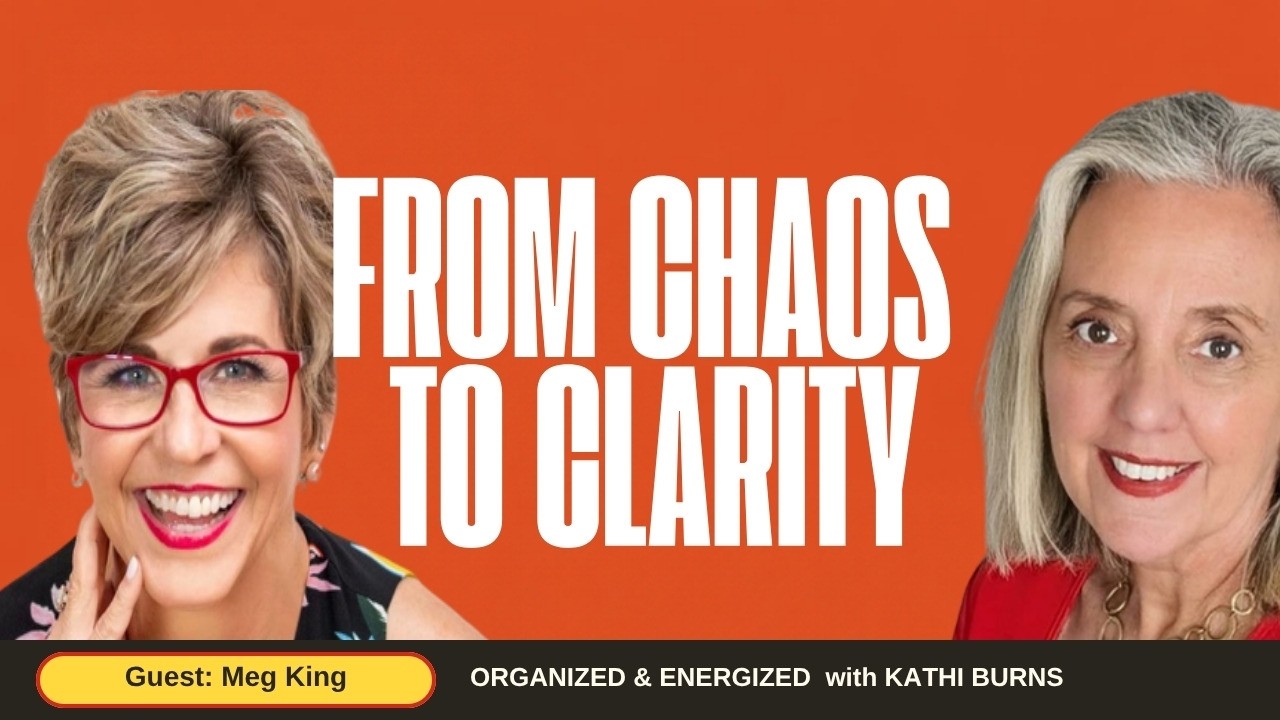
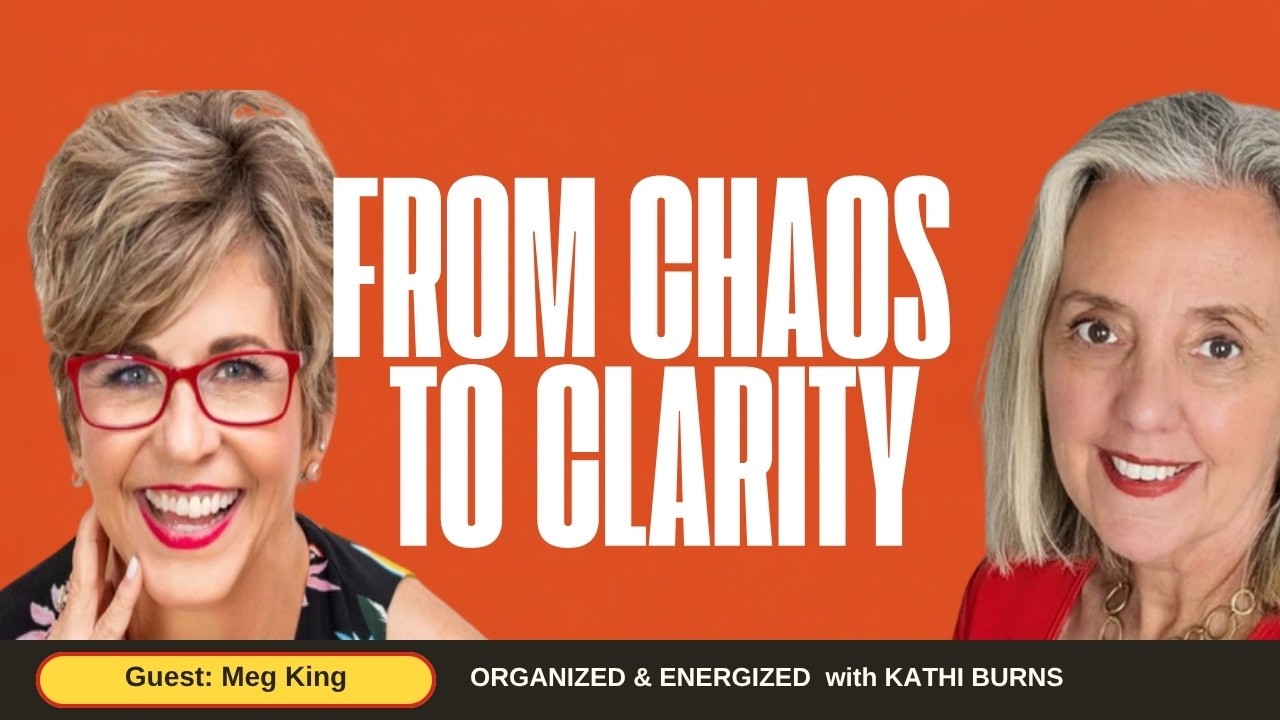
with Meg King, business coach and founder of Meg King Coaching & Consulting · November 5, 2025 · 17 min
Business coach Meg King helps women entrepreneurs solve "pricey problems," decisions or habits that quietly cost a business money, time, balance or peace of mind.
Meg's own pricey problem: she skipped her attorney on a decision, and it cost her the business.
Her method for a tangled business is to ask one question: if we could solve one thing today, what would it be?
One salon owner Meg coached started with a new compensation structure that kept the salon profitable without taking money from the team, and her business is now well over a million dollars.
Meg and Kathi Burns both say to pay yourself first, because profits don't fall from the sky; you have to plan for them.
Published · Updated
What is this episode about?
Kathi Burns, CPO®, Business FLOW Strategist, talks with business coach Meg King about taking yourself and your business from chaos to clarity. Meg was a top salon technician who opened her own salon and ended up on the floor in a fetal position, because she didn't know what she didn't know about running a business. Hiring a coach showed her she didn't have to know it all, and she has now spent more than 20 years coaching and consulting. You'll hear what Meg means by "pricey problems," why she untangles a business one noodle at a time, how one salon owner rebuilt her team's pay and grew past a million dollars, why Meg and Kathi both say to pay yourself first, and why it's fine when your business plan changes.
Profits don't fall from the sky. You actually have to plan for them.Meg King
Jump to links and resources · Part of How do I grow my business without burning out? · All episodes · Every guest
What are the key takeaways?
- Being a top technician did not prepare Meg to run a salon; hiring a coach showed her she didn't have to know it all and needed support and a network behind her.
- A pricey problem is anything that costs a business money, time, balance or peace of mind, such as Meg's own decision to skip her attorney, which cost her the business.
- When everything feels tangled, Meg starts with one question: if we could solve one thing today, what would it be?
- A salon owner Meg coached began with her compensation structure, built one that kept the salon profitable without taking money from the team, and now runs a business well over a million dollars.
- Kathi didn't pay herself for years; after reading Profit First she now pays herself first every week.
- Meg points out that if the business pays your car payment or your Costco run, that is your paycheck.
- A business plan is not written in stone: review it often, expect it to change, and stay flexible.

This episode is brought to you by the Business Logjam Session
A private 75-minute online session with Kathi Burns to find the one thing holding your business back and leave with your next steps. It is the same F.L.O.W. process Kathi uses with her own clients: Focus on your goals, Locate your logjams, Outline your solutions, Walk away knowing your next steps.
Find What's Holding Me BackInterested in sponsoring the show? Get in touch.Why should a business owner hire a coach?
Because being good at the work isn't the same as knowing how to run the business, and a coach fills in what you don't know. Meg King was a top salon technician who opened her own salon and soon found herself in a fetal position on the floor. The coach she hired showed her she didn't have to know it all and simplified things with processes and resources. Kathi calls this Masters Hire Masters, a chapter in her book.
What is a pricey problem in business?
A pricey problem is a decision or habit that costs your business money, time, balance or peace of mind. Meg King's own example: she trusted herself, didn't think she needed her attorney, and it cost her the business. For her clients it can be budgets, time, work-life balance or mindset, and it looks different for everyone.
How do you go from chaos to clarity in your business?
Untangle one problem at a time, starting with the one that matters most today. Meg King compares a stuck business to a bowl of spaghetti: turn it upside down and tease out the noodles one by one. She asks, if we could solve one thing today, what would it be? The result you want matters more than the why.
How can a salon owner change her team's compensation structure?
Start there first, map out a new structure that keeps the business profitable without taking money away from the team, and then present it as a confident leader. Meg met a young salon owner at a beauty show who wanted to change her pay structure, how she served clients and more, but didn't know where to start or how to have tough conversations. They picked compensation as the one thing to solve. Today her business is well over a million dollars, and she knows her people are paid what they deserve.
Why should you pay yourself first as a business owner?
Pay yourself first because profits don't fall from the sky; you have to plan for them, and paying yourself first is how you do it. Kathi didn't pay herself for years, then read Profit First and now pays herself every week. Meg adds that if the business covers your car payment or your Costco run, that is your paycheck.
Is it okay if your business plan changes?
Yes. Meg King says that writing down goals, action steps and milestones doesn't mean things will go exactly as planned, and that's okay; a plan isn't written in stone. Kathi tells her clients that if you don't know what you were going to do, you don't know what you didn't do, so have a plan and expect it to change. Both review their plans often, and Meg suggests looking at your business plan and your life plan together.
Where does each part of the conversation start?
- 0:00 Meet Meg King
- 0:40 From top salon technician to business owner
- 2:05 What working with a coach taught her
- 3:25 Advice to her 18-year-old self
- 4:40 Pricey problems
- 6:00 Untangle one noodle at a time
- 7:03 The salon owner who learned to lead
- 9:00 Pay yourself first
- 11:06 Planning tools and a strategy session
- 13:08 Your plan will change, and that's okay
- 14:30 Wrap-up
What resources were mentioned?
- Connecting to Your Chaos: Reclaiming Your Power with Purpose, Meg's free ebook
- Book a free consultation with Meg
- Profit First by Mike Michalowicz
- How to Master Your Muck by Kathi Burns (chapter: Masters Hire Masters)
- Spanx
These episodes continue the same thread as this one: Lia Dunlap, Carly Church, Ginny Priem, Stephanie Wall Morrow also answer the question "How do I grow my business without burning out?", and the rest are the most recent conversations on the show.

 MotherhoodEpisode 147
How To Build a Village That Supports Your Business and Your Life with Carly Church

See every episode on the podcast archive or filter by topic on the How do I grow my business without burning out? hub.
How can I support the show?
- Subscribe on Apple Podcasts, Spotify or YouTube, or add the RSS feed to any app.
- Rate and review. A rating on Apple Podcasts helps new listeners find the show, and Kathi reads every review.
- Share the episode with one business owner who needs it; the share buttons are at the top of the page.
- Grab a free eBook: 6 Steps to Organize & Energize Your Home, 6 Steps to Organize Your Home Office or 6 Steps to Organize & Energize Your Life.
- Work with Kathi. The Business Logjam Session is a private 75-minute session to find what is holding your business back.
- Be a guest. Apply here if you have a story about clearing the obstacles in your business.
What did they say, word for word?
The transcript below is edited for readability: filler words and false starts are removed and speaker names are added. Nothing was added or summarized.
Read the full transcript +
Kathi: Hi everyone. Thanks for joining me for the podcast again. I am with my girlfriend Meg King, and we are going to talk about chaos, clarity, how to get yourself together and really get your business fine-tuned. So Meg, thanks so much for joining me.
Meg: Thanks for having me, Kathi. I was so excited to be offered this opportunity and to spend some time with you.
Kathi: It's just so much fun, because we have very similar messaging. We're all about getting rid of the chaos and getting in clarity, so it's a perfect marriage for me and you on this podcast. So tell the people, for those who don't know Meg, a little bit about your journey and why you do what you do.
Meg: Well, my journey started out in the salon industry. I was that top technician, and I thought I knew how to be a business owner because I was a really good technician. So I opened up my own business, and yeah, I found myself in a fetal position on the floor, because I did not know what I didn't know about how to run a business. Shortly thereafter I hired a coach, and I was inspired by her. She really helped me to see that I didn't have to know it all, that I really needed to have the support and the network behind me, and that she was one of those people on my team. That really started me off in the coaching and consulting business, and now I've been doing that, wow, for 20-plus years.
She really helped me to see that I didn't have to know it all.
Kathi: Yeah, long time. That's amazing. One of the chapters in my book is Masters Hire Masters, and that's exactly what we all do. Those of us who are in business, who are thriving in our business, count on other people to teach us what we don't know, because we don't know what we don't know.
Meg: Exactly.
Kathi: Just like you. You got into the salon business and you're like, uh-oh, there's all this and more that I have to do to run this business. What was your big takeaway from working with the coach? What was your main pain point at that point in time?
Meg: Well, my main pain point, as a child growing up and through my adult life, is that I'm very dyslexic. I'm dyslexic, and I have dyscalculia and dysgraphia. So it comes down to writing, arithmetic, reading and things like that. What happened was my coach was able to help me see that I actually knew what I needed to know inside of me. I knew a lot, but she was able to simplify some things for me and give me processes and resources to utilize. And the impact that had on me, not only in my business, but really truly, Kathi, the emotional impact of that was huge. It was really huge. And dyslexia was so undiagnosed back in the day. My sister had it, and everybody just thought, oh, she's just a C student. And she was so smart, and no one could figure out why she was a C student when she really had the capacity. She was an A student in reality.
Kathi: That's fantastic. What a good journey. So if you had to tell your younger self, at 18, what would be the advice that you would give her?
Meg: Do you know the company Spanx?
Kathi: Yes.
Meg: Okay. So Sara, I forget her last name, but Sara who owns Spanx, on the bottom of every Spanx bag she has a quote that I love, and it is: don't take yourself or the rules so seriously.
Kathi: Love it. Love it. It's so true.
Meg: And that's what I would tell my 18-year-old self, who was trying to prove how smart I was, who was trying to prove how valuable I was, who was trying to prove everything. Don't take it so seriously.
Kathi: Yeah.
Meg: Life's supposed to be fun and a journey, and I think we often forget that.
Kathi: Even if you told her at 18, I don't know if it would have really held water until you turned 30. Then you'd be like, oh, yeah, I was supposed to do that. I love Sara. I met her at a conference. She is just a fireball of energy. Just love that. That's fantastic. So right now, as you're helping clients with your coaching, what seems to be the pain point that most of your people are experiencing that you're guiding them through?
Meg: Well, what I like to say is that, besides going from chaos to clarity, I really like to help female entrepreneurs, women entrepreneurs, to be able to solve their pricey problems. Now, Kathi, you know what that means, but not everybody might know what that really means. Pricey problems in business could be making a decision like I did, where I trusted myself and didn't think I needed my attorney, and therefore it cost me my business.
Kathi: Yeah. That's a pricey problem.
Meg: That's a pricey problem. So I like to look at what those pain points are. What is really happening, and what is it costing them? It could be budgets. It could be time. It could be balance. There's no real balance; work-life balance is a fallacy. But there is a way to manage it in a better way. It could be mindset. Those things all pop up, and they're all different for everybody. There's no one cookie-cutter piece where I solved this problem. But I like to say, let's take the bowl of spaghetti, turn it upside down, and tease out the noodles and really see what's happening so that we can help solve that.
Let's take the bowl of spaghetti, turn it upside down, and tease out the noodles and really see what's happening.
Kathi: I love that analogy. And that's what makes consulting and coaching so interesting for us, don't you think? Because no two people are alike. Everybody has that noodle that's crooked that should be straight, and they don't know why, because it's mixed up in the whole pot of pasta.
Meg: Exactly. And sometimes it's not about the why. Sometimes the why has nothing to do with it. It's: what's the end result that you're really looking for, and what's the cost and the payoff? And it is different for everybody.
Kathi: Yeah, I agree. Tell me a story about one of your clients that you helped guide through their bowl of noodles.
Meg: Well, coming from the background of the salon industry, I've worked with a lot of salons and spas and other entrepreneurs, but I have this one story. I met this young woman at a beauty show, and she had a salon, but she was very confused about how to be the leader. She really didn't know how to have those tough conversations. She knew that she wanted to change her compensation structure. She wanted to change the direction of how she was serving her clients. She wanted to change all of these different things. But the noodles were all tangled up, and she didn't know where to start. So by coming in, I really got her to focus: if we could solve one thing, one thing today, what would that be? For her, it was her compensation structure. So we had to start there and really map out a new compensation structure for her existing team that made sense for her business to be profitable, but on top of that, one where we weren't taking money away from the team.
Kathi: Yeah.
Meg: And then, how could she present that as a confident leader? It was a great story, a great adventure for me. And in the end, what I want you to know is that her business is well over a million-dollar business now.
Kathi: Yay. Fantastic.
Meg: And she's confident and she's poised, and she knows that her people are getting paid what they deserve, and that, yes, she's making the money that she deserves. That's the main thing that I find with a lot of entrepreneurs. They don't pay themselves first.
Kathi: Exactly. I know. I was there. I didn't pay myself for years.
Meg: Yeah. Exactly.
Kathi: I just read this Profit First book. One of my co-coaches had turned me onto that, and I'm like, that's an interesting concept. So now I pay myself first every single week, and it feels good, and I don't feel like I'm taking money from the business. I feel like this is the way it should be. It took me this many years to figure that part out.
Meg: Right. And profits don't fall from the sky. You actually have to plan for them.
Profits don't fall from the sky. You actually have to plan for them.
Kathi: Yeah. Exactly.
Meg: And the only way you do that is to pay yourself first, actually.
Kathi: Yes. So that you do have that fallback if you need it. We work so much as entrepreneurs that it makes sense for us to pay ourselves, but sometimes we think, oh, that's stealing from the company. But no, it's not.
Meg: Well, the other thing I find with entrepreneurs and paying themselves, just a real quick note here: when I talk to them about taking their pay, taking home a paycheck or some sort of income off of their business, and then I'm going through their expenses, I'm like, well, who's paying for the car payment? They're like, well, I'm putting it through the business. I said, that's your paycheck.
Kathi: Yeah.
Meg: Who's paying for that Costco run? Oh, well, the business.
Kathi: Right. But then half the time, unless they're a corporation, the company shouldn't be paying for the car anyhow. So, of course, back to that. We don't know what we don't know until we know and it's too late. Hence attorneys or fees or legal or any of that good stuff. So yeah, what you do is so important in the world, for sure. Now, I know that you have something that the audience can download, and I wanted to get everybody on board with this, to know what you're offering. So let's talk about that a little bit.
Meg: Yeah. So I have my downloadable ebook. It's a great little book, and it's right behind me right here: Connecting to Your Chaos.
Kathi: I like that we both have circles behind us. We are so in alignment, Meg. We have our circles. We have our books. I love your bird circle.
Meg: My book is called Connecting to Your Chaos: Reclaiming Your Power with Purpose. And it is with purpose that we have to go into our businesses and really reflect on them in a way that brings purpose to our life, that we are doing it intentionally. Let me put it that way. So we have intention and we have purpose, and I offer some great information there. And then I have some great tools that I can share if anybody would want to hop on my calendar and have a strategy session. I have a great planning tool that helps people to really separate out some of those thoughts easily and creates some movement in where they want to go.
Kathi: Yeah, that's very generous. I appreciate that. We'll put the link in the show notes. And even if you feel like you have a plan, I think it's always good to relook at your plan and see, is this where I still am? I'm reviewing that all the time. Is this really the good plan, or could this plan be made better or more succinct, or more in alignment with where I am in my life? Because here's the thing, I think, with what you do, Meg, that's so invaluable: we change all the time. And if we don't stop and notice where we are at the time, and whether we're still in alignment with where we thought we were going, that's a critical thing.
Meg: Yeah, for sure. I just had a conversation earlier with a group of women, and it was about really looking at your business plan. This is a great time of year to look at your business plan or your life plan. We have to look at both. This is a great time of year to start planning for the next year. But just because we write it down and we create our goals and we create some action steps and some milestones that we want to achieve doesn't mean that it's going to go exactly as planned, and that's okay. I hate the word pivot because of what the pandemic did to it, but we have to be flexible, and we do have to be able to pivot and know that it's okay. It's really okay. It's not written in stone.
It's really okay. It's not written in stone.
Kathi: Well, that's the beauty of plans, actually: they morph. And I always tell my people, if you don't know what you were going to do, you don't know what you didn't do. So at least have a plan, and it's going to change, because the one thing in life that's constant is change.
Meg: Change. Yes.
Kathi: But you need a path forward, some type of linear path forward that will change. It's guaranteed your plans are going to change.
Meg: Yes.
Kathi: But again, if you know where you're headed, you go off in the right direction. So I'm with you on that one.
Meg: Absolutely.
Kathi: Well, this has been a pleasure. It's so good to reconnect with you. We go back a ways, and I'm so happy to have you on the podcast, Meg. I wish you big success. And everybody, make sure and download what Meg's offering to you, because it's valuable and it doesn't cost you anything, just your time and your brain to figure out what you don't know that you thought you might know.
Meg: Absolutely. Thank you, Kathi, so much. I want to acknowledge you for really bringing this to light for people and helping them with getting organized, and for all of the things that you offer for people who are in the chaos.
Kathi: Yeah, there's a lot in chaos. I go into chaos from time to time. Thank you, that's appreciated. One more thing: is there anything that I should have asked you that I didn't, that you really wanted to talk about, or are we good?
Meg: I think we're good.
Kathi: Okay. Well, until next week, you guys, I will see you. Thanks for tuning in, and until then, I'll see you next time. And thanks, Meg.
Where can I find the links and resources from this episode?
Connect with Meg
Organizations and companies
Books and resources
- Connecting to Your Chaos: Reclaiming Your Power with Purpose by Meg King
- Profit First by Mike Michalowicz
- How to Master Your Muck by Kathi Burns
- How to Master Your Muck by Kathi Burns
- Organizing With Tetris by Kathi Burns
- Home Organization, The Smart Guide by Kathi Burns
- Simple Family Organizing by Kathi Burns
- All of Kathi's books in her shop
Inspired? Here Are Your Action Steps:
- List the decisions or habits costing your business money, time, balance or peace of mind.
- Ask yourself: if I could solve one thing today, what would it be? Start there.
- Focus on the result you want and what it costs, not only on why the problem exists.
- Get support from people who know what you don't, such as a coach or an attorney.
- Before changing your team's pay, map a structure that keeps the business profitable without taking money from the team.
- Pay yourself first, every week, and plan for profit instead of waiting for what's left.
- Check which personal costs, like your car or a Costco run, the business is paying, and count them as part of your paycheck.
- Review your business plan and your life plan together, and adjust them when things change.
- Download Meg's free ebook, Connecting to Your Chaos.
Frequently asked questions
What is a pricey problem?
+
Meg King uses the term for a decision or habit that costs your business money, time, balance or peace of mind. Her own example is skipping her attorney on a decision, which cost her the business. It looks different for every business owner.
Where do you start when everything in your business is tangled?
+
Meg compares it to turning a bowl of spaghetti upside down and teasing out one noodle at a time. She asks: if we could solve one thing today, what would it be? Then she starts there.
When should a business owner start paying themselves?
+
In this episode, Meg King and Kathi Burns both say to pay yourself first, not last. Kathi went years without paying herself; after reading Profit First she now pays herself every single week. Meg says profits don't fall from the sky, so you have to plan for them.
As a business owner, how should I pay myself?
+
Kathi and Meg's answer is to pay yourself first, on a regular schedule, so you have a fallback if you need it. Meg also asks clients who pays their car payment and their Costco run; if the business covers those, that is part of your paycheck. Kathi adds that you shouldn't feel like you're stealing from the company by paying yourself.
Is it okay when your business plan changes?
+
Yes. Meg says a plan isn't written in stone and you have to stay flexible. Kathi says if you don't have a plan, you can't tell what you didn't do, so review it often and adjust.
Who is talking in this episode?

About the Host, Kathi Burns
Kathi Burns, CPO®, is a Business FLOW Strategist based in San Diego. For the last 20+ years, Kathi has helped clients create systems they can stick to. She is the author of How to Master Your Muck, Organizing With Tetris and Home Organization, The Smart Guide, and co-author of four more titles; all are in Kathi's shop. Kathi's business has been featured on Good Morning America, and her advice has been featured in Oprah Magazine, Martha Stewart Living, Better Homes and Gardens and Entrepreneur Magazine.
More about Kathi · Shop Kathi's books · Business Logjam Session · Apply to be a guest

About Meg King
Meg King is the founder of Meg King Coaching & Consulting. She was a top salon technician who opened her own salon and quickly learned that being great at the work isn't the same as running the business. Hiring a coach changed that, and it led her into coaching and consulting, which she has now done for more than 20 years. Meg owned and ran her own brick-and-mortar business for over 20 years and managed a large corporate salon and spa operation. She helps women entrepreneurs and service-based business owners solve their "pricey problems" and lead with confidence, through coaching and consulting on sales process, team communication and client experience, a 12-week program based on Positive Intelligence, and speaking.
Want help putting this into practice?
Book a Business Logjam Session with Kathi
A private 75-minute online session to find the one thing holding your business back and leave with your next steps, using the same F.L.O.W. process Kathi uses with her own clients: Focus on your goals, Locate your logjams, Outline your solutions, Walk away knowing your next steps.
Prefer to start small? Download Kathi's free eBook 6 Steps to Organize Your Home Office.
Published · Updated
This episode page is for general information. Guests speak for themselves, and their opinions, statistics and examples are their own. Nothing here is legal, financial, medical or mental-health advice; talk to a qualified professional about your own situation. Some links go to the guest's own products or free offers; addSpace does not earn a commission from them unless stated.