


Episode 84
with Sarah Duran, freelance project manager and solopreneur coach at Fruition Initiatives · July 26, 2023 · 39 min
Project manager and solopreneur coach Sarah Duran says long-term SMART goals with numbers and hard deadlines often trick people into thinking they know what life will look like in six months or a year.
Her four rules for better goals are: set qualitative goals, think ambitiously but ambiguously, plan in short cycles, and use timelines instead of deadlines.
Sarah suggests never setting a goal more than six months out, setting milestones quarterly, and making plans only within the current quarter.
She says the biggest challenge her solopreneur clients face is accepting that the business has to keep changing as their life changes.
Sarah keeps her own plans on track with daily, weekly, monthly, quarterly and annual time rituals blocked on her calendar, plus Sunsama, Shift, Reclaim and Boomerang.
Published · Updated
What is this episode about?
Kathi Burns, CPO®, Business FLOW Strategist, talks with Sarah Duran of Fruition Initiatives about how solopreneurs can set better goals. Sarah started out as a teacher, moved into project management and operations in the nonprofit sector, and became a solopreneur almost by accident after quitting the best job she'd ever had. Eight years later she runs a freelance project management business that manages large-scale research projects for universities, and she coaches and writes for freelancers, consultants and solopreneurs. You'll hear why she thinks long-term SMART goals often backfire, her four rules for setting goals that stay relevant, why she says passive income from an online course is more complicated than the internet suggests, why competition is a myth, and the time rituals and apps she uses to stay organized.
Almost all of the best things in my life I never saw coming.Sarah Duran
Jump to links and resources · Part of How do I grow my business without burning out? · All episodes · Every guest
What are the key takeaways?
- Sarah became a solopreneur without planning to: contract work she took to make ends meet kept growing, and after about a year she incorporated her business.
- She says the biggest challenge for solopreneurs is accepting that the business needs to adapt as life changes, and that the upfront thinking about what you need from your business is the step people most often skip.
- Her first rule for goals is to define what success looks and feels like instead of picking a number, such as 10 clients by the end of the year.
- She plans in short cycles: no goal more than six months out, quarterly milestones, and plans made only within the current quarter, with timelines rather than hard deadlines.
- Sarah says growing her coaching and content business has been her biggest struggle, and that her picture of a course earning passive income every month is not how it worked.
- She asks coaching clients to start by understanding their own traits, strengths and preferences, and agrees with Kathi that you are your own avatar.
- Her advice to her 18-year-old self: stop trying to be like everyone else, and know that it's okay not to know who you are yet.

This episode is brought to you by the Business Logjam Session
A private 75-minute online session with Kathi Burns to find the one thing holding your business back and leave with your next steps. It is the same F.L.O.W. process Kathi uses with her own clients: Focus on your goals, Locate your logjams, Outline your solutions, Walk away knowing your next steps.
Find What's Holding Me BackInterested in sponsoring the show? Get in touch.How did Sarah Duran become a solopreneur?
Sarah became a solopreneur by accident: she quit the best job she'd ever had and took contract work to make ends meet. She had started as a teacher and moved into nonprofit project management and operations. Clients kept asking for more work, so after about a year she incorporated. Her first official client, someone at the University of Colorado running a large, long-term research project, was still her client eight years later.
Should you quit your job if you feel the itch to work for yourself?
Sarah's advice is that life is too short to ignore that itch. She says many people chase things they think will make them happy that don't match what actually does. When someone told her their work just pays the bills, she called that a very low bar for what work should be. Her view: don't ignore your instincts, and take the risk.
What is the biggest challenge for solopreneurs?
Sarah says the biggest challenge is accepting that your business has to keep changing as your life changes. Solopreneurs can change what they do, how and for whom whenever they want, which is freeing but intimidating after all the work it took to build. She helps clients first work out what they need from the business.
How do you set better goals for your business?
To set better goals, Sarah Duran follows four rules: set qualitative goals, think ambitiously but ambiguously, plan in short cycles, and use timelines, not deadlines. Instead of aiming for 10 clients by year end, describe what that growth would look and feel like. She notes that almost all of the best things in her life she never saw coming.
What is short-cycle planning?
Short-cycle planning means you never set a goal more than six months out and only make plans inside the current quarter. Sarah helps clients set quarterly milestones and keep goals time-bound with timelines rather than hard deadlines. She says a fully mapped year becomes useless by month six, while short cycles help manage the anxiety of uncertainty.
Can an online course really be passive income?
In Sarah's experience, not the way the internet suggests. She pictured building a course that hundreds of people would buy every month while she sat back, and says that's not how it works. She also thinks static, non-evolving content isn't the right way to help people grow a business. Growing her coaching and content business has been her biggest obstacle, and she has rebuilt it many times as she learned.
What does it mean that you are your own avatar?
It means your best clients tend to be people like you, so building your business around who you really are draws them in. Sarah says the first thing she has coaching clients do is look deeply at their own traits, strengths and preferences, because many people build businesses that don't fit them. Kathi adds that as an artistic, creative organizer, she attracts creative women who wouldn't connect with a more analytical organizer.
What tools help solopreneurs stay organized?
Sarah relies on time rituals and four apps. She blocks daily, weekly, monthly, quarterly and annual planning sessions on her calendar. She uses Sunsama for daily task planning, Shift to manage about seven Gmail accounts in one place, Reclaim to hold movable blocks like lunch around her Calendly bookings, and Boomerang to schedule emails, see if they were opened and pause her inbox.
Where does each part of the conversation start?
- 0:00 Meet Sarah Duran
- 0:49 A solopreneur by accident
- 1:10 Her early midlife crisis
- 1:39 When contract work turned into a business
- 4:26 Advice if you feel the itch
- 5:41 Her first client
- 6:52 Writing and coaching
- 9:22 The biggest challenge for solopreneurs
- 11:25 The only constant is change
- 12:23 Getting clarity before you change
- 13:48 How to set better goals
- 14:51 Qualitative, not quantitative
- 15:12 Ambitious but ambiguous
- 16:18 Short-cycle planning
- 17:01 Timelines, not deadlines
- 19:05 Her biggest obstacle
- 20:42 The passive income myth
- 22:55 Competition is a myth
- 24:23 You are your own avatar
- 27:11 Time rituals on the calendar
- 28:17 Sunsama
- 29:10 Shift, Reclaim and Boomerang
- 31:38 Advice to her younger self
- 32:45 Her solopreneur growth cycle assessment
- 35:23 Organizing for creative minds
- 36:55 Wrap-up
What resources were mentioned?
- Sarah's free solopreneur growth cycle assessment (on the Fruition Initiatives homepage)
- Sunsama
- Shift
- Reclaim
- Boomerang for Gmail
- Calendly
- Kathi's free download: 8 steps to organize your home office
These episodes continue the same thread as this one: Lia Dunlap, Carly Church, Ginny Priem, Stephanie Wall Morrow also answer the question "How do I grow my business without burning out?", and the rest are the most recent conversations on the show.

 MotherhoodEpisode 147
How To Build a Village That Supports Your Business and Your Life with Carly Church

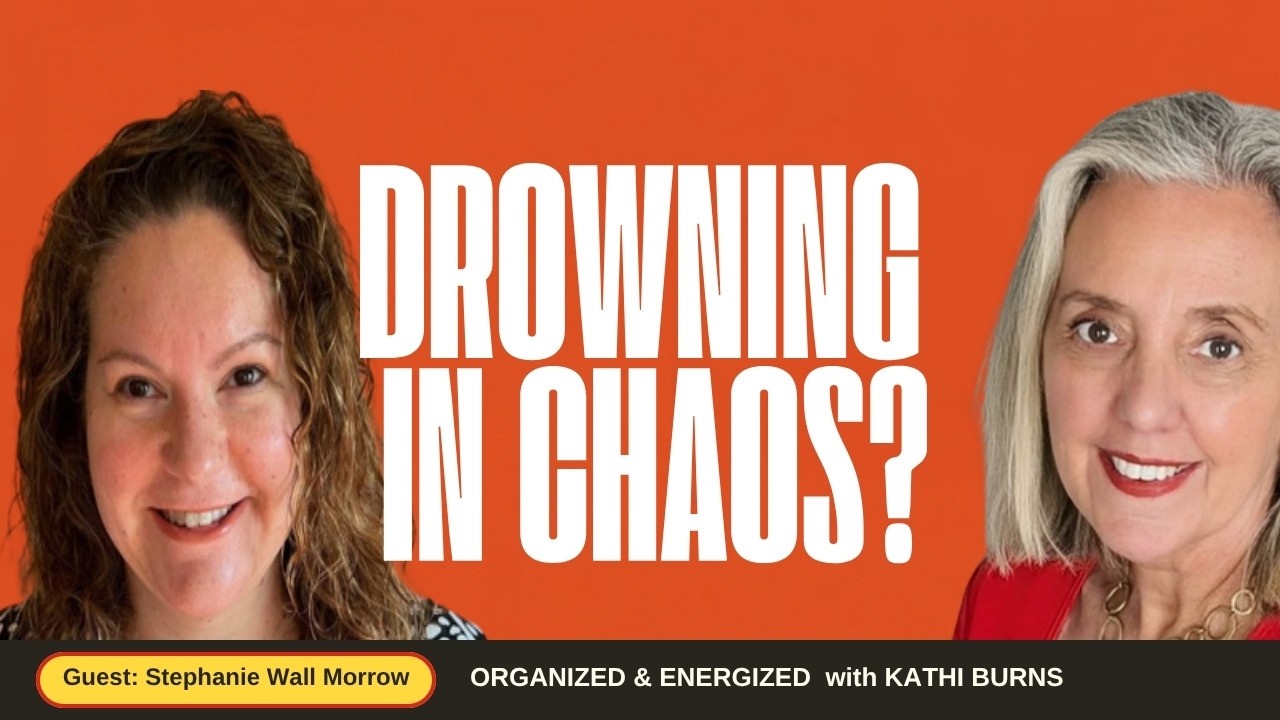
See every episode on the podcast archive or filter by topic on the How do I grow my business without burning out? hub.
How can I support the show?
- Subscribe on Apple Podcasts, Spotify or YouTube, or add the RSS feed to any app.
- Rate and review. A rating on Apple Podcasts helps new listeners find the show, and Kathi reads every review.
- Share the episode with one business owner who needs it; the share buttons are at the top of the page.
- Grab a free eBook: 6 Steps to Organize & Energize Your Home, 6 Steps to Organize Your Home Office or 6 Steps to Organize & Energize Your Life.
- Work with Kathi. The Business Logjam Session is a private 75-minute session to find what is holding your business back.
- Be a guest. Apply here if you have a story about clearing the obstacles in your business.
What did they say, word for word?
The transcript below is edited for readability: filler words and false starts are removed and speaker names are added. Nothing was added or summarized.
Read the full transcript +
Kathi: Hi everyone, I'm back. Thanks so much for joining us. Today we're going to talk about goals. Not just any goals, but the best goals that you could set for your company. And I'm with Sarah Duran, and she is with Fruition Initiation. Right? Did I get that right?
Sarah: Initiatives.
Kathi: There we go. Anyhow, we're going to take the initiative from her to you and have you set some goals that are really, really good for yourself. So thanks, Sarah, for joining us. It's really nice to have you on the show.
Sarah: Yeah. Thanks so much for having me.
Kathi: So I know you've been a solopreneur for a while, and you're rocking it as a solopreneur. So talk to me a little bit about your background. How did you get into this space where you're helping other solopreneurs?
Sarah: Sure. So my solopreneur journey happened by accident, which I think happens to a lot of us, actually. I started my career as a teacher, and then from there progressed into the nonprofit sector, where I was doing a lot of project management. And I woke up one day and was like, this isn't working for me anymore. I describe it as my first early midlife crisis. And so I quit my job. Best job I had ever had. It had checked all of the boxes that I had set out for myself to check, and I still wasn't feeling happy and fulfilled. I didn't quit my job planning to go out on my own as an entrepreneur, but I ended up taking some contract work to make ends meet while I was figuring out what my next step was going to be. And that contract work turned out to be pretty lucrative. People kept asking me to do more work for them. And so after, let's see, about a year of doing contract work, I incorporated my business and decided to make it a real thing, and acknowledged what the universe had been telling me the whole time: that this is what I was supposed to be doing. That's about eight years ago this summer, actually. And what I've been doing for the past eight years is I wear a bunch of different hats. I run a freelance project management business where I help businesses and universities run large-scale projects. So I'm a professional project manager, and I do project strategy and goal setting and business strategy with universities and entrepreneurs. And then over the last, I would say, three to four years, I realized that, A, I had worked really hard, and B, I had been very lucky to discover this level of freedom in working for myself, and I wanted to be able to help other people do the same thing. And so I started. It was pretty messy in the beginning. I was like, I'm not totally sure what this means. I started writing a blog. I started offering one-on-one coaching with other solopreneurs. And that has definitely progressed over the last three years to get more dialed in on exactly who I serve in that section of my business. So that's what I continue to do today. I run a project management company, and I am a coach and a content creator that specifically helps freelancers, consultants and solopreneurs.
Kathi: I love that. I love that you followed your little itch. You're like, this is a great job, but it's just not floating my boat. So were you doing curriculum and whatnot? Curriculum design for the nonprofit at that point?
Sarah: At that point, I was actually managing a programmatic arm of a specific nonprofit. And it was great. Again, one of the best jobs I had ever had in my life. But mostly in my nonprofit work, I was doing operations and project management, which is how I spun that off into doing what one side of my company does today.
Kathi: Yeah, that's fantastic. Well, congratulations on eight years doing your own thing and following your bliss, so to speak. I think a lot of us on this podcast that are listeners are doing the same thing or considering it. So if you had any advice for people who are just feeling that itch, what would you tell them?
Sarah: I would say that life is too short to ignore it. Whether you work for yourself or are imagining working for yourself, I think we all get into a place where we think that there are certain things that are going to make us happy. And maybe those aren't exactly the things that we have defined as what make us happy. And so I would say don't ignore your instincts. I was talking to someone the other day, and I was like, how's work? And he was like, it pays the bills. And I was like, that is a very low bar for what work should be. And so I would say take the risk. If taking the risk means starting your own business, then I have other, more specific things about how to do that. But I would say life is too short to continue to go to work every day and hate what you do.
Life is too short to continue to go to work every day and hate what you do.
Kathi: I totally agree. And I think it's funny that you quit your job and you didn't really know that you were going to be a solopreneur. You're just like, I've got to get out of here, and something's going to come to me. Tell me about your first client after you quit your gig. How did that first client happen, and what type of work were you doing?
Sarah: Oh, that's a great question. Some of the folks I was working for as a contractor ended up being some of my first clients. I actually have a kind of weird niche, where I manage large-scale research projects for universities. And so I was managing a couple of research projects, and then I got referred to someone who worked at the University of Colorado and was embarking on this very large-scale, long-term research project that had very complicated logistics. Someone referred her to me, and she was my actual first client after I started my business. And she is still my client today. She is my longest-running client. I love her to the ends of the earth and hope that we continue to work together forever and ever. I came highly recommended, and she had a lot of faith in me for getting started.
Kathi: Wow, that's fantastic. So what's the favorite part of your job? What's your favorite thing to do with what you're doing now? Because I know you're multifaceted, and I know we're going to talk about goals here in a bit. Do you like all of it? For me, being a Gemini, I like doing all of it, so I can't say a favorite. But do you have a favorite type of work that just really makes you sing?
Sarah: Yeah. I have a couple. I've discovered over the last few years that writing is very fulfilling for me, which I didn't really realize until I started writing the type of blogs, and now I have a Substack too, that I write specifically for solopreneurs. That is something that helps me really process. So I have ideas about, maybe this is a framework, or maybe this is a process that I've gone through and maybe I could help replicate for others to go through. And oftentimes it's through the process of writing that I'm able to solidify those ideas. I don't actually know the answer until I start writing it down. But that's a very internal thing. And I think what's nice about what I do, and about working for yourself in general, because you can design it however you want, is that checks a box of what I like to do alone, focus time by myself. But I also do one-on-one and group coaching with my solopreneur clients. I love being able to sit in those spaces and interact with people in community, and just have a place where solopreneurs can talk about the struggles of solopreneurship together, because it can be very isolating. So that's the opposite side of the spectrum, where being with other people, usually via Zoom, that share similar types of work is also very invigorating.
Kathi: Yeah, I love that. I like that you have the internal and the external, and I find that as solopreneurs we are very much isolated. Thank goodness for Zoom. It's a great thing now that we're all on Zoom and we can meet up more easily. I love my group coaching program, and I love being able to be around other like-minded people and help them as they need it. What do you find is the number one challenge that your groups seem to struggle with, if you can identify one?
Sarah: Yeah, totally. I think that the number one challenge, and this is definitely the way that I've progressed in my solopreneur journey too, is just realizing that your business needs to constantly adapt as your life changes. It's the same as if you have a quote-unquote nine-to-five job. It's so easy to be like, okay, I found the dream job. I check the box. I stay here for 30 years. I get my pension. I go retire. I walk off into the sunset. I don't think that's ever actually been how work works, but we were conditioned to think that's how work works. And so for solopreneurs, I think the level of control and empowerment that you have over your work can be a little bit intimidating, because you literally can change what you do and how you do it and who you do it for whenever you want. But it can be scary. Recognizing that's true can be a revelation. And then knowing how to change things can be really intimidating, because it takes a lot of blood, sweat and tears to build up a successful business on your own. And coming to a place where you're like, maybe I need to tweak something, or maybe I need to completely try something different, can feel really intimidating. And so helping people have a supportive structure and system to be able to reinvent things for themselves is, I think, my mission in the world, and that is the biggest thing that I find people coming to me with over and over again.
Your business needs to constantly adapt as your life changes.
Kathi: Wow. Okay. So this is so cool, because we're in parallel universes, because I feel like the only thing constant is change, and solopreneurs, we're going to change no matter what. And the idea is you're helping them facilitate change with premeditation and maybe some foresight, especially because you've done curriculum development and you've got that project management background, so you can help them say, okay, it's not that scary. You can take this one step to move the dial forward. And I agree, there are so many moving parts as a small business owner. I find that my clients know something's not working, but they're not quite sure what part is broken. Or maybe they have two things that are fighting against each other, duplicated systems, because we're shiny object people, right? They're like, oh, I think I did that. Add that one. Add that one. And then all of a sudden you have two things trying to do the same thing. I find that happens a lot. I'm sure you do too with your clients.
Sarah: Yeah. I think helping people get clarity around the right way to move forward is the number one thing, because that's really hard to do by yourself. I've done the exact same thing with my business, where I will sit there and be like, okay, I'm going to make a strategy. I'm going to change this thing. I'm going to figure out what needs changing. I'm going to go do the things that I need to do to change it. And it's just really hard to do that type of thinking in isolation, because you have to really dig deep to understand what your underlying motivations are and what you need to get out of your business in order to design the right way to move forward. And I think it's that upfront deep work that people often miss, and then they start implementing a bunch of things that actually aren't going to get them where they need to go.
Kathi: Yeah. Being reactionary. And as you're getting ready to make change, I totally agree with you, Sarah, that having someone you can just say, hey, I'm thinking about doing this, what do you think? Having a group of peers or mentors around you that can say, yeah, I think you should do that. I think the most successful people have coaches, at least people they can bounce things off of, so that it's not so scary to take that next step forward. So you're doing really, really good work in the world. Okay. So now we're going to talk about goals. The whole top of this hour is all about how to create the right goals for your business. So can you talk a little bit about goal setting and what you recommend for people as they climb new vistas, looking towards the top of that mountain to a new goal?
Sarah: Sure. I think it ties into a lot of the things that we've talked about already. Like you said, the only thing that's certain is change. And a lot of times we start off with setting these super long-term, concrete, quote-unquote SMART goals, with numbers and metrics and deadlines, only to realize that in six months everything is going to be different, and maybe that goal is irrelevant, or maybe our tactics completely changed, or maybe we achieved it in a different way. We didn't meet the number, but we actually did check the box. And so when I talk to people about goal setting, there are four things that I like to remind them of. The first one is to think about qualitative instead of quantitative goals. So what does success look like and feel like? Not, what is the number? So instead of, I'm going to get 10 clients by the end of the year, it's, I want to grow my business in order for X to happen. What does it look like and feel like to have that level of growth by the end of the year?
Kathi: Yeah.
Sarah: The other one is to think ambitiously but ambiguously. I often think that we can get to a place where we are super focused on, this is the thing that is going to check that box for me. Whereas if you're setting a qualitative goal and you're like, okay, this is what it looks like and feels like, but I don't know exactly what that thing is, you're able to move through a flexible plan and see what comes up, right? And follow some different pathways to see what happens. I often say that almost all of the best things in my life I never saw coming. And so if I had set out eight years ago and said, in eight years I will be running X business, that would have never occurred to me, and I would have been following some long-term plan that led me into something that I didn't actually want. I think that also allows people to dream bigger, so you're not limiting yourself to what you think is possible in this moment.
Almost all of the best things in my life I never saw coming.
Sarah: The other thing that I like to have people focus on is short-cycle planning. And so I suggest never setting a goal more than six months in advance. I help people set milestones, usually quarterly. So what would a milestone look like three months, six months or a year from now? And then you're only making plans within that quarterly increment. That means that if you've mapped out your entire year, it's completely useless, because you're going to hit six months down the line, everything is going to have changed, and you're going to have no point of reference. And so that, I think, is the biggest one, which feeds into the last one, which I think is timelines, not deadlines. If you have no time boundaries around your goals, then they're never going to happen. You need to make them time-bound in some way, but without setting hard deadlines that, again, make us feel like things are more certain than they are. I think a lot of quote-unquote SMART goal setting strategies just continue to trick us into thinking that we know what life is going to be like in six months or a year or five years, when we don't. And so this helps us to manage the anxiety of uncertainty by having these flexible plans and knowing that things are structured and we're going to keep revisiting things, but it also helps us keep our goals relevant to who we are and where we are in this moment.
Kathi: Yeah. Because we change in six months. We're completely different, especially as entrepreneurs. We're completely different people. We've learned so much. We've had good things and bad things happen to us, and then our perspective has changed. I am with you on that. I think that is so important: to know, how am I going to feel about this? How do I want to see it? What's it going to bring to me? Not, I'm going to make $50,000, and blah, blah, blah. It's more, how are you going to feel? I'm going to feel empowered. I'm going to feel motivated. I'm going to feel inspired. I will have reached this milestone. So I absolutely love your tactics and your techniques. We're on a similar wavelength with this, because I always say you can't give God a four-color brochure, right? So get your ideas of how you want to feel and what it's going to be like for you, and then set these little stepping stones, the bigger milestones, as you call them, to reach your goals. I love it. I can see why you're doing really, really well in the world. Absolutely. So tell me about the biggest obstacle that you've had to face as a solopreneur. What happened? Do you have an experience? And how did you dig your way out of it? Because we all have these ups and downs, and crazy things happen in our business.
Sarah: Sure. I would say trying to figure out how to grow my coaching and my content business has definitely been the biggest struggle. I think that there's tons of information out there that leads you to believe, oh, just create an online course and you're going to be a millionaire. Or if you have good content, your blog is going to have 5,000 subscribers in a few months. And I think that is all much more complicated and nuanced than the internet leads you to believe. And also, going back to what we were just saying, when I started that stuff, I didn't actually know why I wanted it. I knew deep down, this is important to me, and I know I can help other people do it, but I didn't know what I wanted this to look like in the end. I was just like, I'm just going to try some things out and see what happens. And so I've had to rebuild that over and over and over again every time I learn something new, as I evolve as a solopreneur, as I evolve as a writer, as I evolve as a coach. I had this picture in my head where I was like, I'm going to build this course. It's going to be quote-unquote passive income. Hundreds of people are going to buy it every month, and I'm just going to sit back and rake in the money. And that's not the way it works. And rightfully so. I also think that having static, non-evolving content out there is not the right way to help people make growth in their own business. And so I've had to adapt over and over again how I'm thinking about it, who I know I'm here to help on their solopreneur journey, how I'm targeting my messaging specifically to those people, and how I'm getting more focused on the type of support that I put out there to be able to help people take their businesses to the next level.
Kathi: Yeah, I'm with you on that. I think it's the same thing. They think, oh, it's so easy, create. I've created so many online courses and written so many books, and it just doesn't happen that billions of people are going to find the information. And if they find it, they might resonate, they might not. Or how are they even going to find it, right? So putting the message out in the world right now, with all of the noise pollution that we have going on, is a challenge. And I'm with you. It's all constantly evolving, how we're going to get out there and be out there. That's why we're on this podcast, right? It's one more way to say, hey, here I am. This is what I do. And what I love about this is there are going to be people that resonate with you, people that resonate with me, people that don't resonate with either of us, and they're going to find that person. Now it's easier, because we do have so much information floating out there. I don't think there's ever too much competition, in my opinion, because we're all going to be the attractor magnets of the people that need us. And so I think that's always the kicker, right? Figuring out, okay, how are we going to find the people that we resonate with, that resonate with us? Don't you think?
Sarah: Yeah, I 100 percent agree. I think that competition is a myth. We can all do so much better if we're supporting each other, because I think you're right, we all have our own unique contributions to bring to the world, and our people will find us, and that means that they will get what they need. And also, what I've been reflecting on over the last, I don't know, six months to a year, is that the more focused I get on the exact type of people that I am meant to support, the more I can advocate for those people when I find them, because I'm positive. I'm like, I know that I can help you. And I am not afraid of saying that I want to make lots of money. I do. But ultimately that's not what it's about. Now, when I see those people and I interact with those people, I know instantly that they are the people that I was put here to help. And I can be so focused about that and be able to point everyone else in a different direction, which is why, again, I love being on podcasts like this and building my network of other people, so that when people come to me and I'm like, hey, I'm not actually the right person to help you, I have someone to push them towards that is the right person to help them. So I could not agree more.
Competition is a myth. We can all do so much better if we're supporting each other.
Kathi: Yeah, absolutely. How do you feel about the statement that you are your own avatar?
Sarah: Oh, I think that's 100 percent true. The first thing that I have people do when I start working with them as a coach is have them go deep into who they are, which I think is the fundamental piece that we all overlook when we're building a business. So many people build businesses that are not actually very conducive to their innate traits, strengths, talents, preferences, all the things. And so that's the first thing I have people do, always. And then one of the things that I'm always asking people that I work with as they progress through their business journey is, how do you feel like you're your most authentic self when you're interacting with your clients, your peers, your community? Because I think we all, myself included, can get to places in our business where we're putting on personas that we're not, in order to get the next client or appear a certain way in front of a certain group. Which, going back to our unique strengths, you're never going to find the people that are meant to be in your environment if you're not operating as your most authentic self.

Kathi: I am with you on that. I think we are our own avatar. When I started my business as a professional organizer and image consultant, most organizers were more type A and more analytical, and I'm definitely not. I'm an artistic, creative organizer, right? So the people that would come to a normal organizer wouldn't really resonate with me. And the people that I resonate with are the artistic, creative women out there that are just like, I love that. And being your authentic self will draw those people to you. And I'm with you. I think a lot of people will start businesses and try to be who they think they need to be based on their avatar, who is their ideal client, and that's not even their ideal client. Let's just cut to the chase and make it basic. Your ideal client, I think, is you. Who do you resonate with? People that are like you. Who are your friends? People that are like you. After doing so much avatar training over the past 18 years, I finally came to that realization: hey, it's easy. Just who are you? Be you, and the people that are like you will love you, and that'll be your client.
Sarah: Yeah, that's right. That's right. You'll draw the right people towards you.
Kathi: That's right. Yeah, absolutely. Okay, so let's talk about organizing systems. Girl, you are the project manager mistress queen. What do you use to stay organized in your day-to-day business? What's your favorite hack or tool or app or whatever?
Sarah: Perfect. So the first thing that I use, like I said before, is quarterly short-cycle planning. I have appointments on my calendar every quarter, and then every month, where I go through slightly different versions of the same process. That is the same process that I use with my coaching clients. So that's the first one: you have to have these, I call them time rituals, literally blocked out on your calendar at the intervals that you need them. So I have daily ones, I have weekly ones, I have monthly ones, I have quarterly ones, and I have annual ones. That's what I would say is my first one. And then in terms of specific apps and tools, I have a couple that have really changed my life. The first one is a task tracking app called Sunsama. It is based off of agile project management practices, and it builds in some of those time rituals. So it has you do a daily review every time you open it up in the morning. What are you going to do? How much time is it going to take? Then it's like, you actually have 11 hours of work on your calendar. That's probably too much. What are you going to trim? In addition to many, many other things, they also have an amazing blog. They think very, very deeply about productivity, time and task management. So that's a really good one. I also use, and I don't know if I'm the only one that this is true of, but across myself, my clients and the various businesses that I run, I think I have seven Gmail accounts. And so I use an app, or a software program, called Shift. It basically takes all your various Gmail accounts and organizes them so that you're not toggling back and forth across Google Drive, Google Calendar and Gmail for multiple different accounts. Those would be my number one and two.
Kathi: I love that.
Sarah: And then the two that I have started using more recently that I also really like: one is called Reclaim.io.
Kathi: Reclaim. I think it's reclaim.ai.
Sarah: Reclaim.io. I can't remember. Oh, do you use it too?
Kathi: Yes, I've dabbled with it.
Sarah: Yeah, I like it a lot. I'm still playing around with how to make it work the best, but because I use Calendly so much for people to book on my calendar, it's really nice that what it does is it helps you hold blocks on your calendar, but they can move. So it's like, I want to have an hour every day when I eat lunch. And when people look at my calendar through Calendly, they can book, and that block will move around, but it never goes away. So once everything else is eaten up on my calendar, that block has to be somewhere between the hours of 11 and 2, I think, is mine. So that's just one example of what that one does. There was something else. Oh, the last one I would say is an email tool called Boomerang.
Kathi: Yeah, I love Boomerang.
Sarah: Yes, it's a great one. So you can schedule emails in advance. You can see if people have opened your emails. You can pause your inbox, and either turn on an autoresponder or not, in addition to many other things, I think. But those are the things that I love the most.
Kathi: I love that one. So I'm not familiar with Sunsama. I think I'm going to put the link in there. I'm going to check that one out. And I totally agree about having all your email in one place. I have my clients put all their emails into one inbox. It's a similar thing. You don't need to be logging in, logging out, logging in, having multiple things happening. It's just way too confusing, right?
Sarah: Yeah, I agree.
Kathi: Okay, so that's awesome. Now, if you had to roll back time and talk to your 18-year-old self, what advice would you give her?
Sarah: Oh, what a good question. I would say stop trying to be like everyone else.
Kathi: Bingo. Yeah. Be your true, authentic self. That's really good advice. And I think at 18 we're always trying on different hats and different personas and trying to see where we fit. Just be yourself. Revel in it. You are you. There's no one like you.
Sarah: Yeah. And I guess on that, I would also tell myself, you may not know who you are yet, and that's okay. Maybe that would be the second thing I would say. Stop trying to be like everyone else, and don't feel like you have to pick one direction right now. This is your time to explore. You may not actually know who you are until you're 30, or ever.
Kathi: Or ever. You think you know at 30, and then at 35 you're completely different.
Sarah: So yeah, back to the change thing, right?
Kathi: Yes. I love it. Okay, so I know you have something to offer the listeners here. What do you want to put out there as a freebie for the people who are listening?
Sarah: Yes. So like I said, I've really been super conscious of my own solopreneur journey and all the solopreneurs that I've been working with over the last several years. And through that work, I've identified these growth cycles of solopreneur business development. What I've found with the people that I work with, over and over again, is that you can fit into these three different phases of solopreneur growth cycles. And the next steps you need to take with your business are really driven by where you are today. A lot of us get into this place, and I think we talked about it before, where we get distracted by shiny objects. We're trying all these different things, and we're not focused on, what is the actual thing I need to move into the next phase of my business? And the thing about when you're at a crossroads and you're ready to go to the next step is that you have to know what happened previously and where you stand now before you can know how to move forward. And so what I'm about to launch will be a solopreneur growth cycle assessment, and you'll be able to access it for free on the homepage of my website. It's a completely free tool. It'll help you diagnose and see exactly where you are in the solopreneur growth cycle, and then give you some really concrete tools and strategies specifically tailored to that cycle of growth.
Kathi: Perfect. Perfect. We all need that. I think it's good to get an assessment all the way through your journey, so I think people could use that over and over again. Every year, do another assessment and see, where does Sarah think I am now? What are the tools that I need to implement? So that's a really valuable resource. I really appreciate that. That's generous. And it is live at this point. By the time you hear this podcast, it'll be up there and ready, so you'll see the link down below for sure. And for those of you who want to get more out of your time, you can also go ahead and download the eight steps to organize your amazing home office. That's also available for you from me. So I love this. Now, is there anything that we should have talked about, or that was on your mind, that you wanted to bring forth during this conversation?
Sarah: I don't think so. I think we've covered everything. I think the thing that you said that I like so much is having this creative frame to organizing, which I think is so powerful, because I'm a type A person myself. Very type A. But a lot of times, when you're creative-brained, and that's a lot of the types of people that I work with too, freelance creatives, you need structure, but you also need someone that thinks the way you think. So I think that's really powerful, to be able to offer people a more type A type of service in terms of organizing, but be able to cater to that more creative person.

Kathi: Yeah, it's pretty funny, because they're all like, I don't want to set goals. I don't want to have a calendar. So nothing is cookie cutter in my world, and that's what makes me really, really enjoy it: creating a unique system for each client, because they all think differently. They're all rebels, because as entrepreneurs we're typically rebels anyhow. We're always thinking a little bit outside the box, which is why we invented new companies. So it's just a gas. It's just so much fun. The creative is my juice, right? To create a system specifically for each client and not try to put them in a cookie cutter, because if I put them in a cookie cutter, it ain't going to last anyhow. They'll chuck it as soon as I walk out the door.
Sarah: That's cool.
Kathi: Well, thank you for that. Okay, cool. Well, this has been a really, really good show. I've so enjoyed getting to know you. Everybody, make sure to download this assessment. I'm going to go ahead and take it, because no matter how many years you've been in business, you need to get an outside observer's viewpoint of where you really are compared to where you think you are in your business. So that's valuable. Thank you, Sarah. I really appreciate it, and thank you for being on the show.
Sarah: Yeah. Thank you so much for having me.
Kathi: Yeah, we will see you soon. Hopefully I'll be on your podcast and we can chat a little bit more.
Sarah: Yeah, absolutely.
Kathi: Okay, take care. Thanks, guys.
Where can I find the links and resources from this episode?
Connect with Sarah
Organizations and companies
Inspired? Here Are Your Action Steps:
- Write down what success would look and feel like this year instead of picking a number.
- Set your next milestone no more than six months out, and break it into quarterly milestones.
- Plan only within the current quarter, then revisit the plan at the next one.
- Give each goal a timeline rather than a hard deadline.
- Block daily, weekly, monthly, quarterly and annual planning time on your calendar.
- Before you change anything in your business, get clear on what you need from it.
- List your own strengths, traits and preferences, and check whether your business fits them.
- Build a network of peers you can refer people to when you aren't the right fit.
- Put shared calendars and inboxes in one place so you aren't logging in and out of accounts.
Frequently asked questions
How did Sarah become a solopreneur?
+
She quit the best job she'd ever had in what she calls her first early midlife crisis, without planning to work for herself. She took contract work to make ends meet, clients kept asking for more, and after about a year she incorporated. Her first official client, at the University of Colorado, was still her client eight years later.
What's the biggest challenge her solopreneur clients face?
+
Accepting that the business has to keep changing as life changes. Sarah says solopreneurs can change what they do, how and for whom whenever they want, which is freeing but intimidating after all the work it took to build. She helps people do the deep upfront thinking about what they need from the business before they change anything.
What are her four rules for setting better goals?
+
First, set qualitative goals: what success looks and feels like, not a number like 10 clients. Second, think ambitiously but ambiguously, because most of the best things in her life she never saw coming. Third, plan in short cycles: never set a goal more than six months out, set quarterly milestones, and plan only within the quarter. Fourth, use timelines, not deadlines.
What tools does Sarah use to stay organized?
+
Time rituals blocked on her calendar daily, weekly, monthly, quarterly and yearly. She uses Sunsama for task planning, Shift to manage about seven Gmail accounts in one place, Reclaim to hold movable blocks like lunch around her Calendly bookings, and Boomerang to schedule emails and pause her inbox.
What would she tell her 18-year-old self?
+
Stop trying to be like everyone else. And it's okay not to know who you are yet: you don't have to pick one direction, because this is your time to explore.
Who is talking in this episode?

About the Host, Kathi Burns
Kathi Burns, CPO®, is a Business FLOW Strategist based in San Diego. For the last 20+ years, Kathi has helped clients create systems they can stick to. She is the author of How to Master Your Muck, Organizing With Tetris and Home Organization, The Smart Guide, and co-author of four more titles; all are in Kathi's shop. Kathi's business has been featured on Good Morning America, and her advice has been featured in Oprah Magazine, Martha Stewart Living, Better Homes and Gardens and Entrepreneur Magazine.
More about Kathi · Shop Kathi's books · Business Logjam Session · Apply to be a guest

About Sarah Duran
Sarah Duran is a professional project manager and a coach and content creator for freelancers, consultants and solopreneurs. She started her career as a teacher, then moved into the nonprofit sector, where she managed a programmatic arm of a nonprofit and did operations and project management. After quitting what she calls the best job she'd ever had, she took contract work to make ends meet and incorporated her business about a year later. She runs a freelance project management business with a niche in large-scale university research projects, writes a blog and a Substack for solopreneurs, and offers one-on-one and group coaching built on short-cycle planning.
Want help putting this into practice?
Book a Business Logjam Session with Kathi
A private 75-minute online session to find the one thing holding your business back and leave with your next steps, using the same F.L.O.W. process Kathi uses with her own clients: Focus on your goals, Locate your logjams, Outline your solutions, Walk away knowing your next steps.
Prefer to start small? Download Kathi's free eBook 6 Steps to Organize Your Home Office.
Published · Updated
This episode page is for general information. Guests speak for themselves, and their opinions, statistics and examples are their own. Nothing here is legal, financial, medical or mental-health advice; talk to a qualified professional about your own situation. Some links go to the guest's own products or free offers; addSpace does not earn a commission from them unless stated.