

Episode 148
with Yvonne McCoy, business strategist, MBA, and creator of the Be Found framework · July 22, 2026 · 27 min
Yvonne McCoy calls a business that is a collection of old systems and products, rather than a well-oiled operation, a "junk drawer" business; she found her own when COVID cut her nonprofit clients' funding.
She says owners cannot see their own strengths from inside the business, and the thing that comes easiest to them is usually what clients are looking for.
Both Yvonne and Kathi Burns say structure gives creative owners freedom rather than taking it away, because reacting all day with no systems leads to burnout.
Yvonne recommends showing up regularly in the same place at a pace you can keep, whether that is once a month or twice a week.
She offers a free monthly workshop and a free 30-minute call for owners who want to know which clients to go after.
Published · Updated
What is this episode about?
Yvonne McCoy coached executive directors of nonprofits until COVID cut their funding. When she needed clients fast, she discovered her business was a "junk drawer" of old systems and products rather than the well-oiled operation she thought she had. In this conversation with Kathi Burns, Yvonne explains how she rebuilt around her own strengths and why she sees the same pattern in owners ten years in: what made them successful a decade ago is no longer as relevant. Listeners will learn what dead reckoning means for a business, why one system can serve both your business and your life, why client retention is a productivity issue, why structure gives creative owners more freedom, how to pick a channel and show up regularly, and why your clients want the gooey brownie, not the recipe.
The thing that comes the easiest to you is the thing that your clients are looking for, and you just take it for granted.Yvonne McCoy
Jump to links and resources · Part of How do I get more clients? · All episodes · Every guest
What are the key takeaways?
- A junk drawer business is a pile of everything you have done over the years, and it shows up when you suddenly need clients fast.
- Owners who have been in business ten years often keep doing what worked a decade ago; sometimes only the messaging needs updating, sometimes the approach does.
- You cannot see your own strengths; an outside perspective finds the thing that comes easiest to you, which is what clients are looking for.
- Dead reckoning is Yvonne's term for your north star, the destination you are headed towards no matter how much you have to adjust.
- Focusing on one thing makes you more productive and faster because you stop setting up new systems every time, as with Yvonne's monthly workshop.
- Keeping a client for two to three years lets you go deep with them, so retention is a productivity issue, not just a sales one.
- Pick a channel, a time and a modality you can sustain and show up there regularly, because moving around confuses clients the way a shop with random hours does.
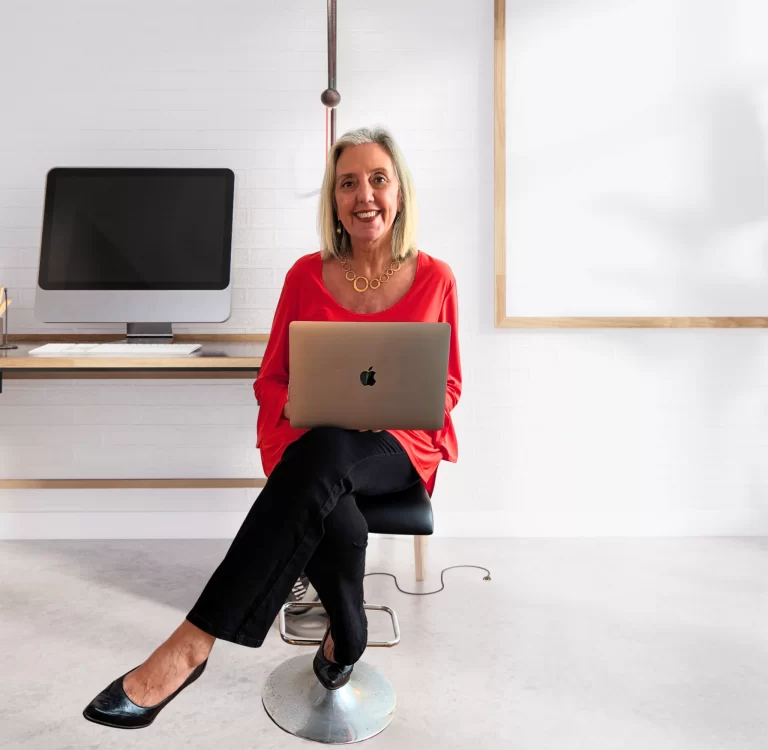
This episode is brought to you by the Business Logjam Session
A private 75-minute online session with Kathi Burns to find the one thing holding your business back and leave with your next steps. It is the same F.L.O.W. process Kathi uses with her own clients: Focus on your goals, Locate your logjams, Outline your solutions, Walk away knowing your next steps.
Find What's Holding Me BackInterested in sponsoring the show? Get in touch.What is a junk drawer business?
A junk drawer business is a collection of everything you have done over the years, with different systems and products, but not a well-oiled business. Yvonne McCoy found hers when COVID cut her nonprofit clients' funding and she needed clients fast. She had a lot of stuff, but not a real business.
Why does what worked 10 years ago stop working?
Because the thing that made an owner successful a decade ago is no longer as relevant, and they have not stopped to update it with their strengths. Yvonne thought her framework was for people two or three years in, then met successful ten-year owners with the same gap. Sometimes it is just the messaging, because they are talking to a different group of people at a different stage of life. Sometimes it is the approach itself.
What does dead reckoning mean for a business?
Dead reckoning is Yvonne's term for your north star: what you are headed towards no matter how much you have to adjust along the way. She teaches it in her workshop and used it with her ninth-grade grandson, who looked the term up on his phone and decided to use it.
Why does client retention matter for productivity?
Client retention matters because if you have to find a new client every month, you never get to go deep with anyone. Yvonne says a client you keep for two to three years is a joy, and Kathi adds that you can help them more because you have been down the road with them. In Yvonne's Be Found framework the last letter stands for deliver and delight: if she delights a client before they start working together, they tend to stay longer.
Why can't you see your own strengths?
You can't see your own strengths because the thing that comes easiest to you feels ordinary, so you take it for granted, yet it is exactly what clients are looking for. Yvonne's life insurance client never mentioned her extensive military background in dangerous situations until Yvonne asked why not. Another client who sold video realized people wanted a way to tell their story; the video was just the tool. Kathi says this is why the most masterful people hire coaches: they are in the woods and can't see out.
Does structure kill creativity?
No, structure gives creative owners freedom. Yvonne says entrepreneurs with squirrel syndrome expect focus to be boring, but once the linear parts of a business are in place you can use your gifts where they count most. Kathi says owners who react all day lose their juice and burn out.
How often should you show up for your audience?
Show up regularly in the same place, at whatever pace you know you can keep, whether that is once a month or twice a week. Yvonne says promising five times a week and lasting one week confuses clients, so start with less and build. She compares moving around to a store that is supposed to be open but is closed, so people stop coming. She started with monthly office hours and surveyed the room for topics; some attendees became clients.
How do you become the expert in your field?
You become the expert by focusing on what you do instead of trying to be one expert among many. Yvonne says entrepreneurship is not a straight line and treats it as an experiment; one year her motto was fail forward faster. When your right client finds you and recognizes your value, they are willing to pay what you are worth. She offers a free 30-minute call for owners who want to know which clients to go after.
Where does each part of the conversation start?
- 0:00 Meet business strategist Yvonne McCoy
- 0:52 When your business is a junk drawer
- 3:05 Why what worked 10 years ago stops working
- 5:38 Coach yourself the way you'd coach a client
- 6:36 Dead reckoning: finding your north star
- 7:32 One system for your business and your life
- 9:15 Deliver and delight: why client retention matters
- 10:11 The client who hid her military background
- 12:08 Sell the gooey brownie, not the recipe
- 13:28 Why you can't see your own strengths
- 14:08 Squirrel syndrome and why structure gives you freedom
- 18:03 Make your own stage and show up regularly
- 21:05 Inside Yvonne's monthly workshop
- 23:07 Fail forward faster
- 24:53 Be the expert, not an expert
- 25:34 Wrap-up
What resources were mentioned?
- Yvonne McCoy's free monthly Be F.O.U.N.D. Workshop
- Book a free 30-minute call with Yvonne
- Yvonne's Be Found framework (dead reckoning; deliver and delight)
- Kathi's Business Logjam Session
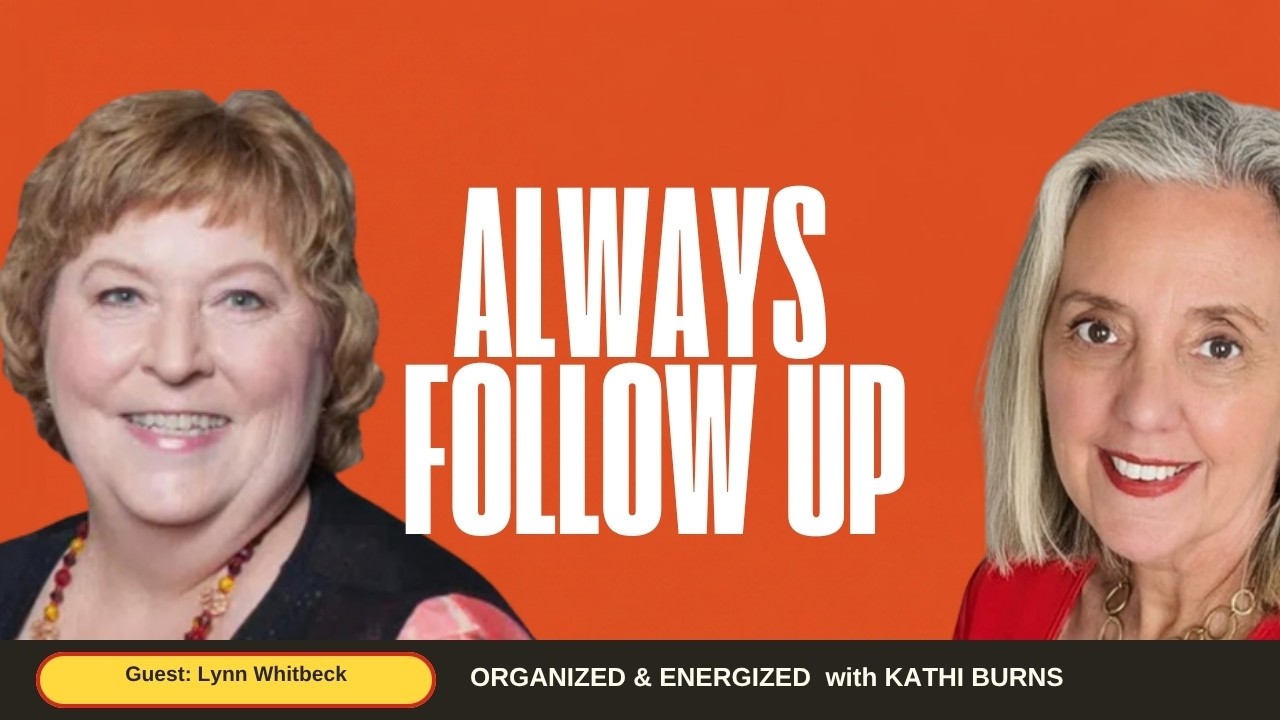
These episodes continue the same thread as this one: Sue Kirchner, Louise McDonnell, Allan Ngo, Lynn Whitbeck also answer the question "How do I get more clients?", and the rest are the most recent conversations on the show.

 Social MediaEpisode 144
How To Use Social Media More Strategically In 2026 To Find New Customers with Louise McDonnell

See every episode on the podcast archive or filter by topic on the How do I get more clients? hub.
How can I support the show?
- Subscribe on Apple Podcasts, Spotify or YouTube, or add the RSS feed to any app.
- Rate and review. A rating on Apple Podcasts helps new listeners find the show, and Kathi reads every review.
- Share the episode with one business owner who needs it; the share buttons are at the top of the page.
- Grab a free eBook: 6 Steps to Organize & Energize Your Home, 6 Steps to Organize Your Home Office or 6 Steps to Organize & Energize Your Life.
- Work with Kathi. The Business Logjam Session is a private 75-minute session to find what is holding your business back.
- Be a guest. Apply here if you have a story about clearing the obstacles in your business.
What did they say, word for word?
The transcript below is edited for readability: filler words and false starts are removed and speaker names are added. Nothing was added or summarized.
Read the full transcript +
Kathi: Hi everyone. I want to introduce you to Yvonne McCoy, my girlfriend. She is going to help us get our business together. She's a business strategist, she's been doing it for a long time, and she's really good at it. So thanks for joining us, Yvonne.
Yvonne: I'm so excited to be here. I'm so glad you asked me. Thank you, Kathi.
Kathi: Absolutely. This is fun stuff. So let's let everybody know a little bit about you. Where'd you come from? What are you doing? What are you about?
Yvonne: Okay. I'm actually in Philadelphia and I've been here most of my life, although I was an exchange student when I was 16 and lived in Holland for a year, which was great fun and gave me a totally different perspective about the world, which I am appreciating more than ever. Probably one of the best things that I can say is I've tried a little bit of everything along the way. And like a lot of people, my business had to pivot with COVID. I was coaching executive women directors of nonprofits. And then when COVID came, everybody lost their funding, and so I was not essential when you were trying to figure out how to pay your staff. And I had to say, okay, I need some clients and I need it fast. And I think the thing that amazed me was I did not have a well-oiled business that I thought I had. I had a junk drawer. It was a collection of everything I had done over the years. Different systems, different products, just a lot of stuff. And it was like, oh my god, I don't really have a business. But I have a lot of stuff. I got a lot of stuff. And so that was the beginning of me starting to take a look at, if I'm going to reinvent myself, what is it that I really want to spend my time doing? Not what can I do, but what do I want to do?
I did not have a well-oiled business that I thought I had. I had a junk drawer.
Kathi: And what brings you joy?
Yvonne: Yeah. Exactly. And one of the things that I learned, especially in my Be Found framework, is when you focus on the thing, on your own strength and the thing that you love that you're good at, not 50 other things that other people tell you you should do, first of all, you work really hard at that, but that's still usually less than working hard at five different balls that you're juggling in the air. Not only that, you do it better, because you get deeper into it and you enjoy it. And I think the thing that I like the most is you really get to see how powerful your voice is. You take a look at something and you go, this is a great business strategy, or a great course, or whatever, and then you say, oh my god, this same thing is going to help them in other parts of their life, or this thing would work in a different area. So for instance, I thought for a long time that my framework was really for people who'd only been in business two or three years. They had the fundamentals and they were ready to scale. And then I started talking to people who had been in business 10 years, who'd been very successful. And what I realized is the thing that made them successful 10 years ago was not as relevant as it was 10 years ago. And they hadn't taken the time to go, okay, how can I use my strengths in a way that updates this and makes me current? Sometimes it's just the messaging, that you're talking to a different group of people, a different stage in their life. And sometimes it's actually the approach. But the thing that I find is we do not see our gifts. We do not see our own strengths. And you really need an outside perspective to see that, because the thing that comes the easiest to you is the thing that your clients are looking for, and you just take it for granted. I'll never forget the first time I sat down with one of my clients and did a deep dive with them. We put together their message. We put together the package that they had in an order that made sense. We gave them a runway about how to get people into their world. We came up with a model for them, like an acronym, and we did it in an hour and a half. And she was like, "Oh my god. I had no idea we could do this this fast."
Kathi: Yeah.
Yvonne: And I was like, "Well, why wouldn't you want to do it this fast?" And she goes, "You never said this, though. You never said we will do this and get you moving really fast," which is one of my key things. Why take 20 steps when you can do it in three or five? But I had never said that.
Kathi: Well, it cracks me up, because you're saying, "Okay, I found out that my clients were doing the same thing after 10 years, but they hadn't pivoted." And then you take all their assets and you pivot them, and it's exactly what you did with you right after COVID. So isn't it so funny that we teach what we most need to learn, and then we teach what we learned well?
Yvonne: You know, one of the things when I get into a struggle or I get into a funk, one of the questions that I ask myself is, what would I say to a client in this situation? And when I talk about that, you go deeper. One of the things that was just so much fun this year was I had two of my grandchildren, two of my grandsons, that I was talking with, and I actually took them through some of the coaching process as they were making decisions. One was graduating from college and wasn't quite sure what he wanted to do. And one of them is in ninth grade, and he said to me, "I think I'm going to go to a different high school every year." And so my judgmental side went, "Are you kidding me?" And the other part of me goes, "That's not how I would treat a client." I would say, "Tell me more. Why is that important?" And we went through the thing, and it was like, this actually works in my life as well. This is great. And it was so funny, because I talked about dead reckoning, which I talk about in my workshop that you guys are all invited to attend. Dead reckoning is what some people call your north star. What is it that you're headed towards, no matter how much you have to adjust? And so it just really tickled me, because they're always on their phone, and I said, what is your dead reckoning? Where do you want to end up? What's your goal? He's like, wait a minute. He goes in his phone and he puts in dead reckoning, and he goes, "Oh, this is interesting. I'm going to use this." So I feel like it was like, oh my god, my grandkids, you're taking my advice. This is a wonderful thing.
Kathi: Is that your ninth grader that looked it up? That's awesome. I love that.
Yvonne: Yeah. So that's what happens when you stick with one thing. My theory is… I have a bunch of theories, so let's be honest about that. But one is, if you can't remember it, you can't use it. How many times have you been in a situation and something happens, and afterwards you go, "Oh my god, I could have used this"? So I got a system for that. The other thing, though, is you only get 24 hours a day. You don't get 24 hours for your business, 24 hours to be a spouse, 24 hours to be a grandparent. You get 24 hours. That's it. And so if you can find some philosophies and some models that cross over, that you can use everywhere, you get much stronger at them and you're much more consistent, because you don't have to go, what book do I have to pull off the shelf for my life? Which book do I need for my business? It is the same system. And I think that's the thing that's so powerful when you focus, because the two things I know is, when you focus on something, you become much more productive because you get better at it. You're not constantly learning, learning, learning. The other thing is you can do it faster. So for instance, I do my monthly workshop. I don't have to set up new systems for that every month. I do tweak it. I do take a look at it. I evaluate it. But I don't have to start from scratch to make it work. The second thing I know is, in the Be Found framework, the last D and the only D is delight: deliver and delight. If I can delight you before we start working together, it will make working together so much better, and the delivery, and you will probably stay with me longer, because I will continue to delight you. And client retention is a huge productivity thing. If you have to look for a new client every month, you never get to go deep with them. If you have a client that you keep for two to three years, it is a joy.
Kathi: Absolutely. And you develop a relationship, and you're better able to help them, actually, because you've been down the road with them.
Yvonne: For sure.

Kathi: Tell me about a client that you worked with. What happened? Where were they at with the transition? How did you transition them into more ease and flow and joy?
Yvonne: I think with most clients, the first thing that I work with them on is, what are their strengths? And then we take a look and match their strengths to who they're looking for. And the big thing that I do is have people not do the typical marketing stuff, but talk as if you're talking to your client, to a real person.
Kathi: So, one person.
Yvonne: Right. So I had one client that was selling life insurance, and she had an extensive military background where she had been in really dangerous situations. And she never talked about that. And I'm like, why would you not talk about this? Especially when you're telling me, "I didn't realize I needed life insurance and I was in life and death situations." So it's not unusual that you wouldn't think about it. And whenever people get to whatever makes them different, it is the most amazing, wonderful thing. It's like a weight is lifted off their shoulder. They get so excited. Someone else that helps people with video and marketing, we started talking, and what she realized was it really wasn't the video that people were looking for. The video was the tool. What they were really looking for was a way to tell their story.
Kathi: Ah, I knew you were gonna say the story.
Yvonne: So one of my favorite posts, and I don't think I've done it lately, but one of my favorite posts that I do, because I repurpose my posts. If I have a post that gets a good open, I use it again. And this one I just love, and it's called, "Your client doesn't want the recipe, they want the gooey brownie." If I walked into a bakery and I said, "I want your best brownie," and you said to me, "I got a recipe for you, and you need flour and eggs, and I have all these pieces I can give you," they're not going to be satisfied. That's not what they came for. And that's what so many people do. They go, "I have a seven-step process, and I'm gonna…" and they're like, "We don't care. That's not a gooey brownie." And so I think it's like having the curtains come up, and suddenly it's like, oh my god, I am good at this. I do have a way to present this. And so then you don't have to worry about confidence, because you're so excited. You want to tell people, this is amazing. And so that's what I hope for all my clients. And that's what I find fuels me, that I find really exciting.
Your client doesn't want the recipe, they want the gooey brownie.
Kathi: That's the interesting part, is to find each person's unique gifts and talents. And that's where objectivity comes involved. That's why we have jobs, right? Because we can oversee and say, well, isn't that interesting? Why don't you talk about that? Or, wow, that's in your background? Really? I didn't know that. And then that fires them up and gives them joy, and it gives them their unique angle. And we can't see it for ourselves. We just can't. I've hired coaches. You've hired coaches. The most masterful people in the world hire coaches to help them see what they can't see, because we're in the woods.
Yvonne: Here's the thing that I find interesting, because one of my strengths is I see patterns. And one of the entrepreneurial patterns is that we are a curious lot of people. We all have the squirrel syndrome.
Kathi: Oh, yeah.
Yvonne: And so when you say to them, you need to focus and follow a certain procedure, their first reaction is, this is going to be so boring. I don't want to do this. And yet what I have found is that it is very freeing, because you get to use your creativity and your innovation on that thing. I actually had someone I talked to once who was a spiritual healer, and she said to me, "You are just way too linear for me." And I said to her, "But here's the thing. Once you have some of the linear things in your business, then you're free to use your gifts where it counts the most, not being sidelined and missing the mark because your business is a mess."
Once you have some of the linear things in your business, then you're free to use your gifts where it counts the most.
Kathi: Yeah, this is exactly why I wanted to have you as a guest on the podcast, because it's exactly what I say all the time. If you have structure, then you have freedom. Artistic, creative entrepreneurs think the structure impacts their freedom, but it doesn't. They don't have time to be creative if they're constantly reacting and being busy and doing all the stuff that they maybe should not be doing, or don't have the structure around that. Then they lose their juice. I think that's why a lot of people become burned out and fried and quit.
Yvonne: Yeah, exactly. I absolutely agree with you, because you've got too many irons in the fire, whatever you call it, and so you can't really get good at any one thing.
Kathi: Yeah. I mean, I'm guilty. I'm a reformed squirrel chaser. I have to really focus hard on staying linear, because I love creating. But I know that those guardrails sit underneath me, which is why I teach about the systems underneath your business. If you have that, then you can really jam and be as creative as you want without screwing things up.
Yvonne: The thing that I like is, after each workshop, I evaluate the workshop and I tweak it. And it's funny, because ChatGPT goes, "All right, we're not rewriting the workshop, right? You're not redoing and adding slides?" I go, "No, I just want some insights and what worked well." And it works really well. You get a chance to really know your material inside and out, particularly if you're presenting, and so you don't have to worry about, do I have the content, do I have this? It frees you up to interact with the people, because if somebody stops you, you don't get all flustered, because you know what you're talking about. And that's what I love. I love the interaction. I love the fact that people are doing things and making comments, that they're not just sitting there.
Kathi: Well, I love your business model. I'm starting to do it as well, doing one every month that's the same, that just helps people grow into wherever they need to grow. And for all of you listening out there, you might want to take that as a piece of advice from us as well: focus on the one thing and don't reinvent, reinvent, reinvent, which I've been known to do. Stop reinventing.
Yvonne: And here's the thing. This is what I say to everybody. You can make your own stage. You doing a monthly workshop might not be something that you want to do, but you can do something else. When I first started, I had office hours once a month that I invited people to. Sometimes I had nobody and sometimes I had five people. And when I first started, it was so scripted. And then I just said to people… I was doing it at a time when I was doing productivity and profit. And so when people came, I'd go, "What's your challenge? What would you like to hear?" And I'd do a survey around the room and go, "Okay, this is something everybody's interested in. I'm going to talk about this." And some of those people became clients.
Kathi: Of course. Because you gave them advice that they needed to use and needed to do.
Yvonne: Yeah. But you don't have to wait for somebody to ask you to be on a podcast or ask you to be on a summit or whatever. Probably the most important thing is that you show up regularly at the same place. Now, regularly for some people is once a month. Regularly for other people is twice a week. You pick what you know you can do, because if you say, "I'm going to do this five times a week," and it only lasts a week, then you totally confuse your clients. Better to start with less and to build. And then they know where to find you, because otherwise it's like a mobile store. You're on one corner on Monday and you're someplace else every other day. And when that person who sees you Monday comes back on Wednesday, you're not there anymore.
Kathi: Right. It's like going to a store, and oh, they're closed. But wait, they're supposed to be open. But they're not open. They're closed. So then we stop going.
Yvonne: Yeah. So pick your channel, pick your time, and pick your modality, and then just go for it.
Kathi: I agree totally with you. Start small, keep it simple. Do the thing that you know that you can do. What's that one thing you can do, that you're gonna do over and over and over again, and that you like to do?
Yvonne: I mean, that was fun. Put fun in it. It's so funny, because somebody said to me, "You need to be on social media." And I was like, "I'm not doing social media. I'm not dancing and I'm not showing pictures of my food. This has no appeal to me whatsoever." And they said, "Well, what have you done over a period of time that you really like doing?" And I said, "Well, I had a BlogTalkRadio show for three years." And she said, "Then do that and post that on social." I was like, "Oh, that's easy. I can do that. I've already done that."

Kathi: Beautiful. So let's talk about the workshop. Everyone that's listening, I want you to attend one of these workshops. It's free. You're going to learn a lot and see more about what Yvonne's about. But how does it flow? What happens during these workshops?
Yvonne: Well, one of the things that we ask, which not everybody does, but it is really helpful, is when you sign up, there's a survey, so we can get a feel about where you are in your business and tailor it a little bit more to the people that are coming. I talk about why you're having some of the problems that you're having in standing out, and that really is a systematic issue. When we were growing up, we were told not to have a big head. Don't brag on yourself, be quiet, sit down, be seen, not heard. It goes against everything that we were educated. And on top of that, our educational system was meant to have followers, to follow the instructions, to be a good person that somebody else can manage. It did not encourage you to step out of the box. So we go through some of that and some of the things that have happened to you, and then we start talking about what makes you different and why your client is looking for that, and what is the benefit of that. And if I have resonated with you at all, you have the opportunity of doing a call with me. And what I would say to you is, if this podcast resonates with you, you can still book a call with me without coming to the workshop. I don't know if I gave that to you or not, Kathi, the book-a-call link.
Kathi: No, but we'll put it in the show notes. I'll make sure to drop it there.
Yvonne: Because it is so important to take action. I am definitely a person about taking action. And one of the advantages of that is, this sounds really terrible, but entrepreneurship is an experiment. And with every experiment, not everything works. And so I went through a whole year where "fail forward faster" was my motto.
Kathi: I love it. Fail forward faster.
Yvonne: Just to see what worked and what didn't work. And so if this resonates with you and you want to know where you can get the biggest bang for your buck in terms of what you're doing and the kind of clients you should be going after, it's a 30-minute call. And I always say to people, I know that when these kinds of opportunities were presented to me, I was like, well, I'm not ready, and what do I have to prepare, and what am I going to say, and I don't want to take up this person's time. So I'm giving you permission to call. It's fine. My goal is only that we both leave better. So whatever comes out of it, we're better off than before we started. So it's a win-win.
Kathi: I love it. I'll make sure to put that in the show notes so you can attend a workshop, or you can just speak directly with Yvonne, or both. And you're gonna learn something about yourself. That's the whole reason that we have coaches. That's the whole reason why we call on people that can see what we can't see. And that's the whole kicker right there.
Yvonne: I was just going to say, they say wisdom is learning from other people, so that you don't have to make the same mistakes that they made. It frees you up to make your own.
Kathi: I love it. Is there anything that we should have talked about that I didn't ask you before we wrap?
Yvonne: No, I think we got it all. Entrepreneurship is not a straight line. I think the idea is that if you focus on what you're doing, you will be the expert instead of just an expert in a field of other experts. And that's what you want. You want your right client to find you. And when you do that and they recognize your value, they're willing to pay you for what you're worth.
If you focus on what you're doing, you will be the expert instead of just an expert in a field of other experts.
Kathi: Absolutely. I totally agree with you on that. It's so true. And for those of you who are just wondering, what's my unicorn? What am I that's different than other people? That's what Yvonne can absolutely help you with. So I really appreciate you coming on to the show.
Yvonne: I am so glad to be here.
Kathi: We have fun playing together, Yvonne. I really respect what you do, and you're a true pro at it. So that's going to be a wrap for today's episode. But listen, if something landed for you today, don't keep it for yourself. Share this episode. Share Yvonne's details. If you like it, give me a thumbs up. And if you're on YouTube, subscribe. I'm this much close to a thousand subscribers. I'd very much appreciate your help. And if you're ready to stop paying tax on things that you are doing that you shouldn't be doing, go ahead and keep listening, because every podcast is designed to give you tools and skills so you can move forward, make more money, and have more freedom. That's what it's all about, right?
Yvonne: Absolutely.
Kathi: Thanks, Yvonne. I really appreciate it. Until next week, you guys, we will see you then. Keep on keeping on. Grab the show notes and pop the links. Thank you.
Where can I find the links and resources from this episode?
Connect with Yvonne
Organizations and companies
Inspired? Here Are Your Action Steps:
- List every system, product and offer in your business and ask whether it is a working business or a junk drawer.
- Decide what you want to spend your time doing, not just what you can do.
- Name the one strength that comes easiest to you and build your offer around it.
- Ask an outside person what they see as your unique angle, including background you never mention.
- Write down your dead reckoning: where you want to end up no matter how much you adjust.
- When you are stuck, ask yourself what you would say to a client in the same situation.
- Describe the result your client gets, the gooey brownie, instead of your seven-step process.
- Pick one channel, one time and one modality you can keep up, and show up there regularly.
- Start with less frequency and build, rather than promising five times a week and quitting.
- Review and tweak a repeatable offer after each run instead of rebuilding it from scratch.
Frequently asked questions
What is a junk drawer business?
+
It is Yvonne McCoy's name for a business that is a collection of everything you have done over the years: different systems, different products, a lot of stuff, but not a well-oiled business. She found hers when COVID forced her to find clients fast.
How do I focus on my business?
+
Yvonne says to focus on your own strength, the thing you love and are good at, rather than the 50 things other people say you should do. Working hard on one thing is still less work than juggling five, and you do it better because you get deeper into it. Ask what you want to do, not just what you can do.
Should I focus on one business or manage multiple businesses?
+
Yvonne argues for one thing. You only get 24 hours a day, not 24 for the business, 24 for being a spouse and 24 for being a grandparent, so models that cross over between business and life make you stronger and more consistent. Focus also makes you more productive and faster because you stop setting up new systems every time.
Does structure kill creativity?
+
Both Kathi and Yvonne say no. Kathi says if you have structure, you have freedom, and that creative owners without it spend their days reacting and burn out. Yvonne says once the linear parts of your business are in place, you are free to use your gifts where they count most.
How do you become an expert in your field?
+
Yvonne says that if you focus on what you are doing, you will be the expert instead of just an expert in a field of other experts. Your right client then finds you, recognizes your value, and is willing to pay what you are worth.
Why is niching important?
+
Yvonne says you cannot get good at any one thing with too many irons in the fire. Focusing on one strength lets you go deeper, do it faster, and see where the same idea helps clients in other areas. It also means clients know where to find you.
Who is talking in this episode?

About the Host, Kathi Burns
Kathi Burns, CPO®, is a Business FLOW Strategist based in San Diego. For the last 20+ years, Kathi has helped clients create systems they can stick to. She is the author of How to Master Your Muck, Organizing With Tetris and Home Organization, The Smart Guide, and co-author of four more titles; all are in Kathi's shop. Kathi's business has been featured on Good Morning America, and her advice has been featured in Oprah Magazine, Martha Stewart Living, Better Homes and Gardens and Entrepreneur Magazine.
More about Kathi · Shop Kathi's books · Business Logjam Session · Apply to be a guest

About Yvonne McCoy
Yvonne McCoy, MBA, is a business strategist based in Philadelphia, where she has lived most of her life apart from a year in Holland as a 16-year-old exchange student. She coached executive women directors of nonprofits until COVID cut their funding, then rebuilt her own business around her Be Found framework. Today she helps experienced entrepreneurs who are tired of inconsistent sales and scattered messaging find their strengths, match them to the right clients, and talk to those clients like real people. She runs a free monthly Be F.O.U.N.D. Workshop, offers a free 30-minute call, and previously hosted a BlogTalkRadio show for three years.
Want help putting this into practice?
Book a Business Logjam Session with Kathi
A private 75-minute online session to find the one thing holding your business back and leave with your next steps, using the same F.L.O.W. process Kathi uses with her own clients: Focus on your goals, Locate your logjams, Outline your solutions, Walk away knowing your next steps.
Prefer to start small? Download Kathi's free eBook 6 Steps to Organize Your Home Office.
Published · Updated
This episode page is for general information. Guests speak for themselves, and their opinions, statistics and examples are their own. Nothing here is legal, financial, medical or mental-health advice; talk to a qualified professional about your own situation. Some links go to the guest's own products or free offers; addSpace does not earn a commission from them unless stated.